




PRP Injection Recovery Time: The Quick Answer
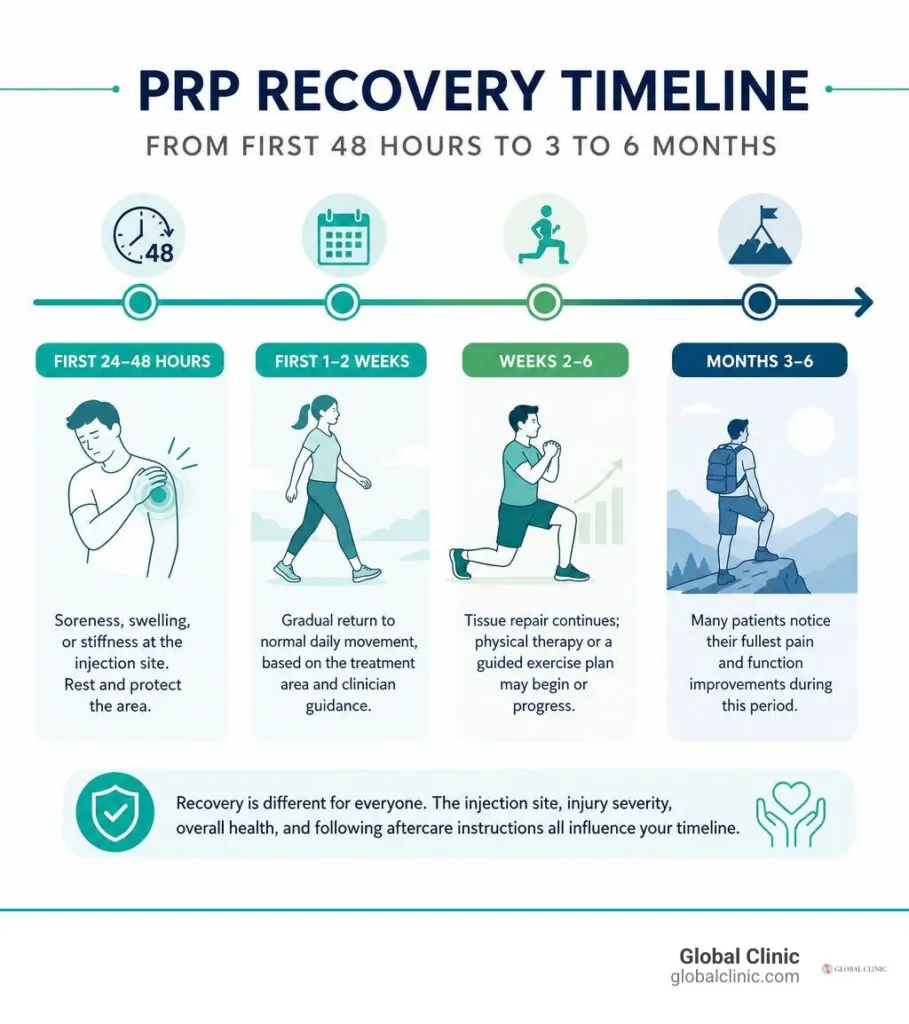
PRP injection recovery time is usually short for everyday activity: most people return to work and routine tasks within 24 to 48 hours. However, the treated tissue needs longer to heal. For joint, tendon, and sports injury injections, reduced activity may last 2 to 6 weeks, while meaningful improvement often develops over 3 to 6 months.
| Recovery stage | What many patients can expect |
|---|---|
| First 24-48 hours | Soreness, swelling, or stiffness at the injection site; rest and protect the area |
| First 1-2 weeks | Gradual return to normal daily movement, based on the treatment area and clinician guidance |
| Weeks 2-6 | Tissue repair continues; physical therapy or a guided exercise plan may begin or progress |
| Months 3-6 | Many patients notice their fullest pain and function improvements during this period |
PRP, or platelet-rich plasma, uses concentrated components from your own blood to support the body’s natural healing response. Recovery is not the same for everyone. The injection site, the severity of the injury, your general health, and how closely you follow aftercare instructions can all affect the timeline.
At Global Clinic, our team draws on more than 20 years of global medical experience to serve the Northern Chicago area with pain management, physical therapy, and regenerative medicine care. I am Anna Slavin, Practice Manager, and I help patients understand what can influence PRP injection recovery time so they can feel prepared for each stage of treatment.
Understanding General PRP Injection Recovery Time and Expectations
When you choose platelet-rich plasma therapy, you are inviting your body’s natural biological machinery to take center stage. Unlike treatments that simply numb pain signals, PRP works by triggering a biological healing process right at the site of damage. To feel confident throughout your healing journey, it helps to understand what is happening under the surface.
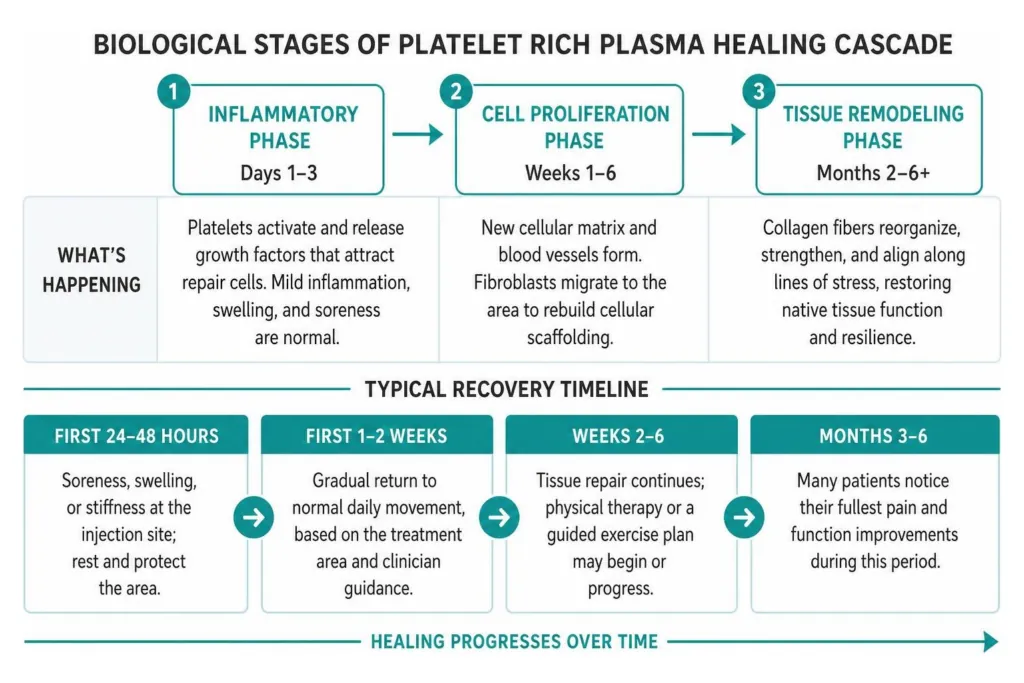
The underlying mechanism relies on growth factors harvested directly from your blood. When injected into injured tendons, ligaments, or joint tissue, concentrated platelets release localized signaling proteins. This initiates three distinct healing phases:
- Initial Inflammatory Phase (Days 1 to 3): Platelets activate and attract specialized repair cells. Temporary inflammation, mild swelling, and localized soreness are expected signs that the biological alarm system is working.
- Cell Proliferation Phase (Weeks 1 to 6): New cellular matrix and blood vessels begin to form. Fibroblasts migrate to the region to rebuild cellular scaffolding.
- Tissue Remodeling Phase (Months 2 to 6+): Fresh collagen fibers reorganize, strengthen, and align along lines of mechanical stress, restoring native tissue function.
Because PRP relies on this biological progression, healing takes time. For a full breakdown of the biological machinery involved, check out our guide on Understanding PRP Injections Benefits Risks and What to Expect.
Day-by-Day Timeline for PRP Injection Recovery Time
While every patient’s biological clock ticks a little differently, knowing what to anticipate day by day keeps uncertainty at bay.
- First 24 to 48 Hours: Expect localized stiffness, dull aches, or mild swelling. Most patients can easily return to office work or light desk tasks within 24 to 48 hours, provided they protect the treated area from sudden impact or strenuous strain.
- Days 3 to 7: The acute soreness usually subsides significantly. Daily non-strenuous routines can be resumed, though high-impact athletic activities or heavy lifting must remain on pause.
- Weeks 2 to 6: This represents the active cellular repair window. Soreness drops away, but the newly forming tissue remains delicate. Guided physical therapy often starts during this window to encourage tissue alignment without overloading the joint or tendon.
- Months 3 to 6: This is when many patients notice the biggest functional changes. Many patients report improvement in pain and overall joint function within 3 to 6 months post-injection, although results vary.
To learn more about localized sensations during these initial days, explore The Ouch Factor What to Expect Pain Wise from PRP Injections.
Key Factors Influencing PRP Injection Recovery Time
Why does one neighbor jog again in six weeks while another needs a full three months? Individual recovery velocity depends on several distinct factors:
- Patient Age and General Wellness: Biological repair mechanisms naturally slow as we age. Optimal hydration, balanced nutrition, and metabolic health provide better raw materials for biological restoration.
- Severity of Tissue Damage: A mild tendinopathy resolves faster than a complex partial tear or advanced joint degeneration.
- Anatomical Injection Site: Areas with high native blood supply (like facial skin or well-vascularized muscles) heal faster than poorly vascularized structures like intra-articular cartilage or thick tendons.
- Post-Care Adherence: Patients who adhere strictly to initial rest periods and follow tailored physical therapy protocols often recover more smoothly.
Explore how these biological factors tie into pain relief in our guide to PRP Therapy Benefits Key Advantages for Pain Relief.
PRP Recovery Differences by Treatment Area
Not all PRP injections are treated equal. Injecting a knee joint involves entirely different weight-bearing forces than stimulating hair follicles on the scalp. Understanding how anatomical location affects your recovery timeline ensures you set realistic expectations for your daily life.
Knee and Joint Injections
Knee joint osteoarthritis and cartilage erosion are among the most common reasons patients visit our clinicians in Niles, IL and surrounding communities like Skokie and Glenview. Because knees carry your entire body weight with every step, post-injection protocols demand careful pacing.
Following a knee injection, expect 2 to 6 weeks of reduced physical activity. Strenuous sports, running, squatting, and heavy lifting must be postponed while cellular matrix repair gets underway. Many knee PRP patients notice pain reduction and improved mobility between 3 and 6 months post-treatment, although results vary.
To dive deeper into knee care, review our approach to Regenerative Joint Therapy.
Tendon and Shoulder Recovery
Tendons—such as the rotator cuff, Achilles, or lateral elbow tendons responsible for tennis elbow—have naturally limited blood flow. Consequently, structural collagen remodeling in tendinopathy takes time.
Studies of PRP for tendinopathy report pain reduction for many patients at 6-month follow-up, although results vary. Early weeks require restricting aggressive pulling or lifting motions, allowing new collagen strands to align properly.
To review shoulder-specific protocols, read our PRP for Shoulder Pain Guide and learn about treatment for tendon issues in PRP for Tendinopathy.
Scalp and Facial PRP Recovery
When PRP is applied for hair restoration or cosmetic skin rejuvenation, recovery is usually quick:
- Downtime: Typically minimal—ranging from zero to 24 hours.
- Common Symptoms: Mild localized redness, faint tightness, or pinpoint sensitivity akin to a light sunburn.
- Resuming Routines: Normal cosmetic routines, mild hair washing, and daily social activities can usually be resumed within 24 hours.
Post-Treatment Care: What to Avoid and How to Speed Up Recovery
Protecting activated platelets during the critical initial days helps you get the most from your treatment. What you don’t do after your procedure is just as vital as what you do.
Essential Post-Injection Restrictions
To safeguard the delicate biological signaling cascade, keep these key post-care rules in mind:
- Avoid Anti-Inflammatory Medications (NSAIDs): Avoid ibuprofen, naproxen, and other over-the-counter NSAIDs for the period your provider recommends (often 2 to 4 weeks); do not stop prescribed aspirin or other prescription medications without talking to your doctor. NSAIDs block the natural inflammatory pathway required for platelet signaling.
- Restrict Intense Physical Exertion: Refrain from heavy lifting, high-impact cardiovascular exercise, or aggressive sports for the initial timeframe prescribed by your specialist (typically 2 to 6 weeks depending on joint location).
- Avoid Applying Direct Intense Heat: Skip hot tubs, saunas, and heating pads on the treated area for the first 48 to 72 hours to prevent excessive local congestion.
- Avoid Nicotine and Alcohol: Both interfere with micro-vascular blood flow and cellular repair pathways, dragging out overall recovery timelines.
For comprehensive post-procedure instructions, consult our PRP Pain Management Ultimate Guide.
Strategies to Support Healing
While tissue repair takes natural biological time, you can actively optimize your body’s healing environment:
- Integrated Physical Therapy: Gradual, targeted movement restores joint mechanics without compromising fragile soft tissue. Physical therapy helps collagen fibers align along functional stress lines.
- Gentle Range-of-Motion Exercises: Light non-weight-bearing stretches prevent joint stiffness while promoting lymphatic circulation.
- Hydration and Nutrition: Drink plenty of water and maintain a diet rich in lean protein, vitamin C, and zinc to support tissue rebuilding.
Discover how structured rehabilitation speeds up sports recovery in Healing at the Speed of Sound with PRP for Sports Injuries.
Comparing PRP Recovery to Alternative Treatments
Choosing the right treatment involves weighing immediate downtime against long-term repair benefits. Here is how PRP compares to other common joint and soft tissue interventions:
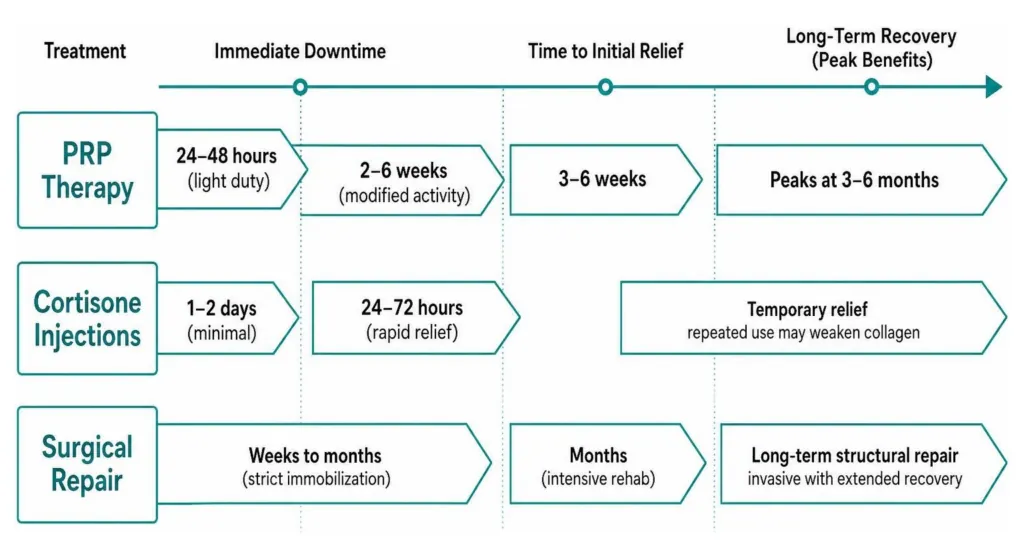
| Treatment Type | Immediate Downtime | Time to Initial Relief | Long-Term Tissue Impact |
|---|---|---|---|
| PRP Therapy | 24–48 hours (light duty); 2–6 weeks modified activity | 3–6 weeks (peaks at 3–6 months) | Promotes natural tissue repair and matrix rebuilding |
| Cortisone Injections | Minimal (1–2 days) | Rapid (24–72 hours) | Temporarily masks inflammation; repeated use may weaken collagen |
| Surgical Repair | Weeks to months of strict immobilization | Months of intensive rehabilitation | Structural mechanical correction; invasive with extended recovery |
While cortisone offers immediate symptom masking, it does not repair damaged underlying structure. Surgery fixes major tears but carries significant operative risks and lengthy downtime. PRP offers a balanced middle ground—aiming to support tissue repair with minimal lifestyle interruption.
Frequently Asked Questions About PRP Injections
When can I return to work and exercise after a PRP injection?
Most patients resume sedentary or desk-based work within 24 to 48 hours. If your job requires heavy physical labor, lifting, or continuous standing, your specialist may recommend temporary duty modifications for 1 to 2 weeks. High-impact exercise and heavy weightlifting should generally be paused for 2 to 6 weeks, gradually reintroducing exertion under clinical guidance.
Why must anti-inflammatory medications be avoided after PRP?
PRP relies intentionally on a localized inflammatory response. When platelets release growth factors, they call upon repair cells to rebuild damaged tissues. NSAID medications (like ibuprofen or naproxen) halt this inflammatory signal, essentially turning off the recovery alarm before repair cells can do their job. Safe pain management alternatives, such as acetaminophen or cold compresses (as advised by your provider), can be used instead.
When will I notice full results from my PRP treatment?
Initial structural repair begins within 2 to 3 weeks, but functional improvements develop progressively. Many patients notice pain relief and improved joint range between 6 and 12 weeks, with the greatest functional gains often occurring between 3 and 6 months, although results vary.
Conclusion
Understanding your PRP injection recovery time empowers you to take an active role in your healing journey. While immediate daily routines can resume within 24 to 48 hours, allowing tissue 2 to 6 weeks of protected healing paves the way for optimal long-term joint and tendon recovery.
At Global Clinic, our multidisciplinary team brings over 20 years of global medical experience to the Northern Chicago area—including Niles, Chicago, Skokie, Glenview, Park Ridge, Morton Grove, Des Plaines, and Mount Prospect. By combining physical therapy, pain management, chiropractic care, and state-of-the-art regenerative medicine, we design customized recovery protocols focused on lasting relief and active living.
To explore whether biological therapy aligns with your health goals, call our Niles clinic at (847) 299-7000 to schedule an appointment.