





Arm Muscle Pain Treatment: What to Do First
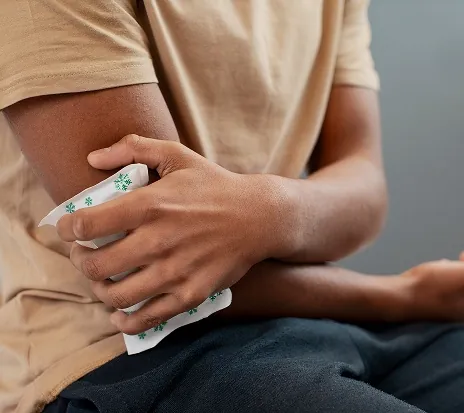
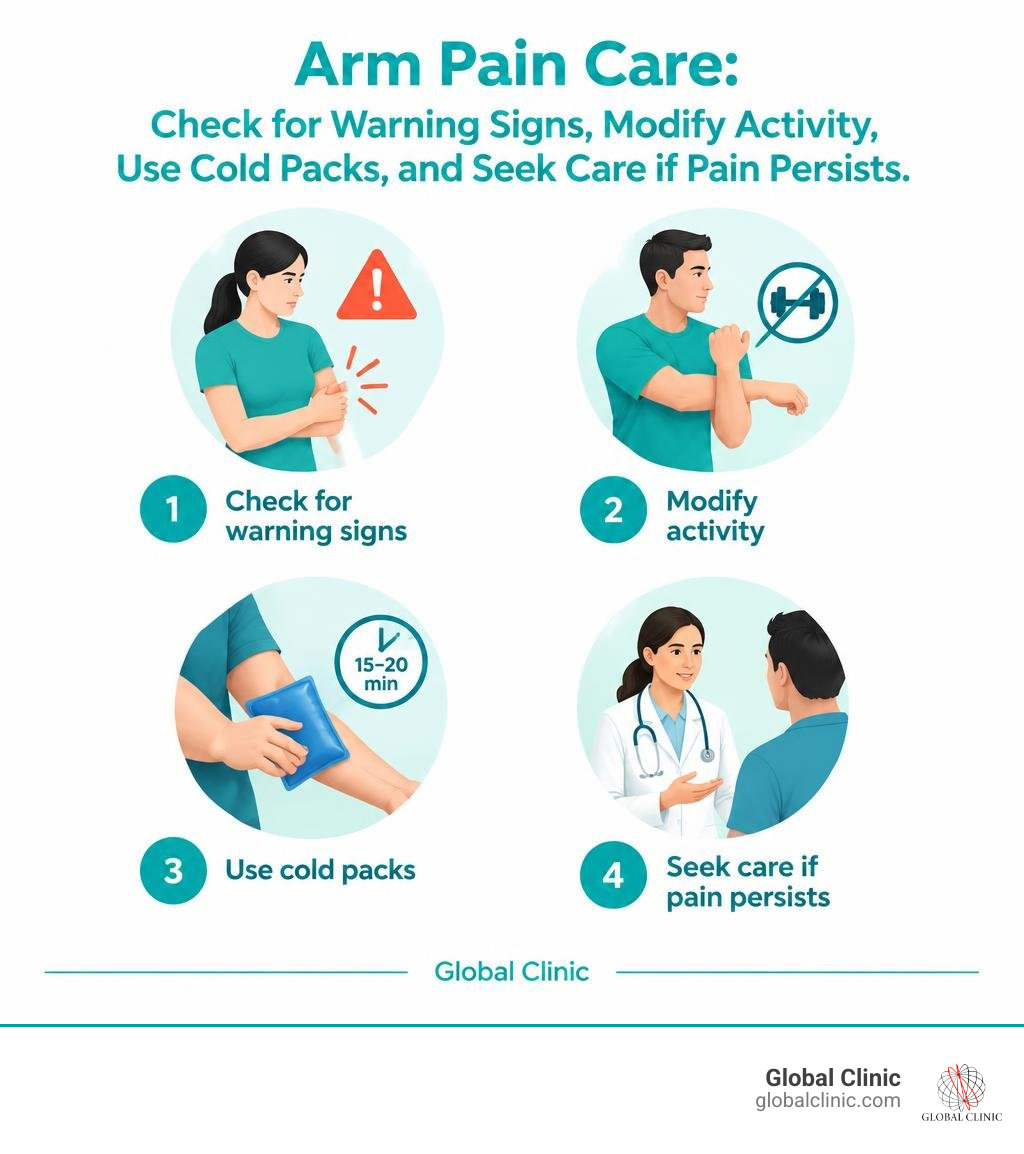
For mild soreness after lifting or repeated motion, arm muscle pain treatment starts with avoiding movements that make it worse. Apply a cold pack for 15 to 20 minutes at a time, and move your arm gently as pain allows. If the pain worsens or does not improve, get it checked. If arm pain comes with chest pressure or shortness of breath, call 911.
A sore arm may come from a muscle strain, an irritated tendon, or pain that starts in the neck. Knowing the cause helps you choose the right next step, from home care to physical therapy.
I’m Anna Slavin, Practice Manager at Global Pain & Spine Clinic. Through my work with patients and our care team, I know that clear guidance is an important part of finding the right arm muscle pain treatment.
Arm muscle pain treatment helpful reading:
Understanding Arm Muscle Pain: Causes, Strains, and Referred Discomfort
Arm muscle discomfort can range from a dull, persistent ache in the biceps to sharp, burning tension across the forearms. Daily tasks like typing at a desk, lifting groceries, or practicing a tennis serve put steady demands on the upper limbs. According to the Health and Safety Executive (HSE 2020), upper limb symptoms affect up to one in two people each week.
Muscle soreness frequently stems from straightforward overuse or minor micro-tears in muscle fibers. When movements are repeated continuously without adequate rest, soft tissues develop fatigue. This pattern often leads to a repetitive strain injury, causing localized stiffness, aching, and reduced grip strength. The NHS guidance on repetitive strain injury emphasizes that most people can manage these symptoms successfully by combining brief activity modifications with gradual movement.
Identifying Muscular Strains vs. Tendonitis and Joint Issues
Distinguishing between a muscle belly strain and connective tissue irritation is key to picking the right recovery path. A muscle strain involves stretching or tearing of contractile muscle fibers, typically producing pain directly within the thickest part of the biceps, triceps, or forearm flexors. The soreness tends to feel broad, tender to the touch, and noticeable when actively flexing the muscle against resistance.
In contrast, tendon inflammation, such as biceps tendonitis or epicondylitis, centers where the muscle anchors to bone. The evidence on upper limb disorders from the Faculty of Occupational Medicine highlights that tendon and soft tissue issues often present with pinpoint tenderness near joints. Overuse often leads to localized shoulder pain when the long head of the biceps is stressed, or sharp elbow pain when repetitive wrist motions strain the common extensor tendons. Managing these sports injuries requires addressing both the tendon irritation and the joint mechanics supporting it.
When Arm Pain Signals Neck Nerve Irritation or Cardiac Red Flags
Not all arm discomfort originates in the arm itself. The cervical spine houses the nerve roots that provide sensation and motor control to the entire upper extremity. When poor posture or a herniated disc compresses these pathways, it can generate radiating symptoms down the shoulder and arm. If you suffer from underlying neck pain, cervical radiculopathy can cause burning sensations, “pins and needles,” or sudden grip weakness in your hand.
However, certain arm symptoms represent critical medical emergencies. Pain radiating into the left arm, jaw, upper back, or neck accompanied by chest tightness, shortness of breath, dizziness, cold sweats, or nausea requires immediate emergency evaluation. If you experience any of these symptoms, call 911 immediately.
Immediate Arm Muscle Pain Treatment and At-Home Relief Strategies
For typical muscle strains without red-flag symptoms, effective treatment begins right at home. The primary goals during the initial 48 hours are to control swelling, soothe aching tissues, and protect the muscle from further injury without immobilizing the limb entirely. While complete rest used to be standard advice, modern medical guidelines warn that resting for more than a few days can weaken muscles and decrease joint flexibility.
Step-by-Step Self-Care: The Modified R.I.C.E. Method and Active Recovery
Applying an updated, active version of the traditional R.I.C.E. protocol provides excellent early support for arm muscle discomfort:
- Relative Rest: Avoid the specific heavy lifting, sports, or repetitive tasks that triggered the strain. Keep the rest of your body moving and gently use the arm for light, non-painful daily activities.
- Ice (Cold Therapy): Apply a cold pack or bag of frozen vegetables wrapped in a thin cloth to the sore area for 15 to 20 minutes every 2 to 3 hours during the first 48 hours. This helps calm local inflammation and numbs sharp pain.
- Compression: Use a flexible elastic bandage or supportive compression sleeve around the muscle to provide stability and reduce swelling. Ensure the wrap is snug but not tight enough to restrict circulation or cause tingling in your fingers.
- Elevation: Whenever you are sitting or resting, prop your arm on a pillow so it rests near or above heart level to encourage fluid drainage.
- Active Mobilization: As sharp pain eases, introduce gentle wrist circles, elbow bends, and shoulder rolls. Movement delivers oxygenated blood and nutrients necessary for soft tissue repair.
Over-the-Counter Relief, Heat, and Topical Solutions
Over-the-counter options can help reduce soreness so you can maintain gentle movement. Topical pain creams containing menthol, capsaicin, or anti-inflammatory agents can soothe localized muscular aches when applied directly to the skin.
Oral pain relievers, including acetaminophen or nonsteroidal anti-inflammatory drugs (NSAIDs) such as ibuprofen, may also assist with pain management. Check with a pharmacist or your doctor before starting any new medication to verify it is safe for your health history, and never stop or adjust prescribed medications without talking to your doctor.
After the initial 48-hour swelling phase has passed, moist heat therapy can be introduced. Applying a warm heating pad or warm damp towel for 15 to 20 minutes helps relax tight muscle bands, increases tissue elasticity, and improves blood flow to stiff upper or lower arm muscles.
Safe Stretches and Exercises for Arm Muscle Pain Recovery
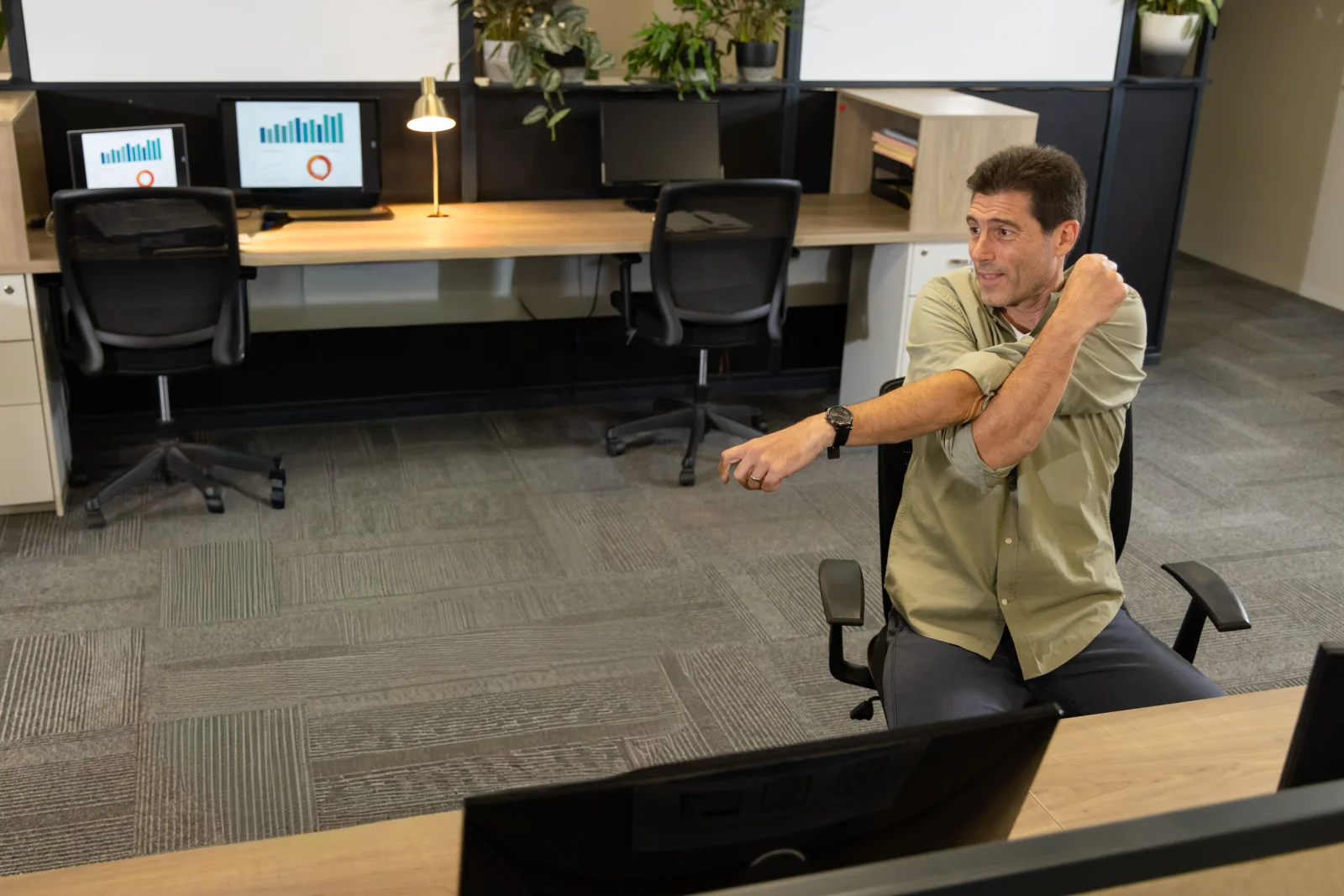
Restoring normal tissue length and muscle balance is essential for long-term recovery. When performing stretches and strengthening exercises, move slowly and remain within a comfortable range of motion. Stretches should produce a mild, gentle pulling sensation, never sharp or pinching discomfort.
Gentle Arm Stretches to Restore Range of Motion
- Wrist Flexor Stretch: Extend your sore arm straight in front of you at shoulder height with your palm facing forward (fingers pointing toward the ceiling). Use your opposite hand to gently pull your fingers back toward your body until you feel a comfortable stretch along your inner forearm. Hold for 20 to 30 seconds and repeat 2 to 3 times.
- Wrist Extensor Stretch: Extend your arm in front of you with your palm facing down. Gently bend your wrist downward so your fingers point toward the floor. Use your other hand to apply light pressure to the back of your hand. Hold for 20 to 30 seconds.
- Overhead Triceps Stretch: Raise your affected arm, bend your elbow, and reach your hand down your upper back. Use your opposite hand to lightly guide your elbow upward and backward until a stretch is felt along the back of the upper arm. Hold for 20 seconds.
- Cross-Body Shoulder Stretch: Bring your arm across your chest at shoulder level. Use your other hand or forearm to gently hug the arm closer to your chest, stretching the posterior shoulder and upper arm muscles. Hold for 20 to 30 seconds.
Progressive Strengthening Exercises for Forearms and Biceps
Once simple range-of-motion exercises feel comfortable, beginning light strengthening helps rebuild muscle resilience:
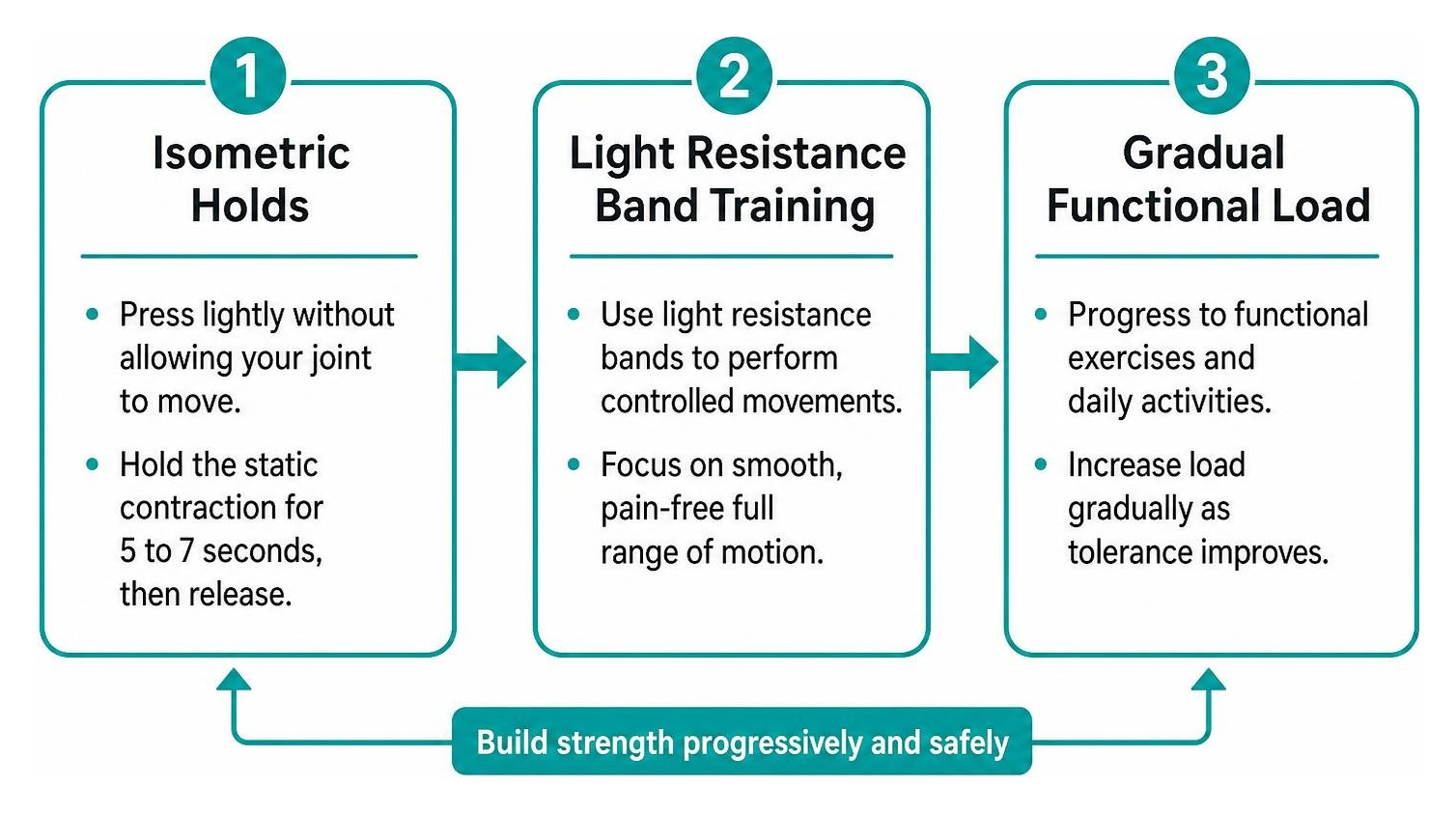
- Isometric Holds: Stand facing a wall or table. Place your forearm against the surface and press lightly without allowing your joint to move. Hold the static contraction for 5 to 7 seconds, then release. This activates muscle fibers safely without placing strain on healing connective tissues.
- Eccentric Forearm Curls: Rest your forearm on a table with your hand hanging over the edge holding a very light weight (such as a soup can). Use your unaffected hand to help lift the weight upward, then slowly lower the weight downward using only the recovering arm over a count of 3 to 4 seconds.
- Grip Strengthening: Squeeze a soft stress ball or foam sponge gently for 5 seconds, repeating 10 to 12 times. This builds dynamic forearm stability, supporting the tendons around the elbow and wrist.
Clinical Solutions: Comprehensive Treatment for Arm Muscle Pain
If home care, cold packs, and gentle stretching do not resolve your arm pain within one to two weeks, clinical care can help determine the root problem and restore function. Modern pain management focuses on non-surgical, collaborative care designed to eliminate muscle dysfunction and encourage natural healing.
At Global Pain & Spine Clinic, our providers deliver targeted non-surgical therapies under one roof. Our clinical team—including Clinical Director Peter Slavin, DC, board-certified pain management specialist Amit Mehta, MD, MBA, Physical Therapy Director Valerie Shternberg, MSPT, and chiropractic physician Eliud Sierra, DC—evaluates musculoskeletal conditions with customized rehabilitation programs.
Evidence-Based Arm Muscle Pain Treatment: Physical Therapy and Chiropractic Alignment
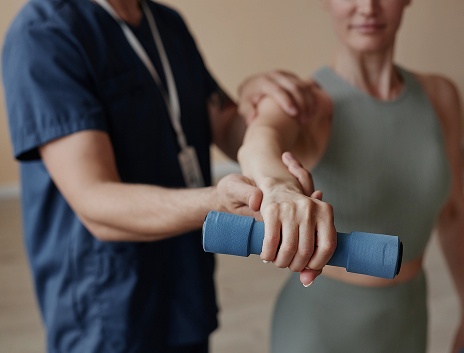
A structured program of physical therapy helps resolve soft tissue restrictions and corrects underlying movement imbalances. Our therapists utilize manual therapy techniques, joint mobilization, electrical stimulation, and therapeutic ultrasound to calm irritable muscle fibers and restore tissue flexibility.
Patients recovering from trauma, sports injuries, or repetitive strains benefit from targeted post-injury rehabilitation that rebuilds muscular balance from the neck down to the fingers.
When arm symptoms are complicated by cervical spine misalignment or joint restrictions, chiropractic care provides essential support. Gentle spinal adjustments, joint mobilization, and spinal decompression relieve mechanical pressure on irritated nerve roots, helping eliminate referred pain traveling down the arm.
Advanced Modalities: Injections, LightForce XLi Laser Therapy, and PRP
For stubborn muscle knots, severe inflammatory conditions, or chronic tendon wear, advanced conservative modalities provide meaningful relief:
- Therapeutic Injections: Trigger point injections and targeted therapeutic injections can disrupt chronic muscle spasm cycles, providing rapid relief to tight bands in the shoulder, neck, and upper arm.
- LightForce XLi Laser Therapy: Advanced deep-tissue laser therapy utilizes specific wavelengths of light to stimulate cellular activity, improve localized blood flow, and accelerate soft tissue recovery.
- Acupuncture and Dry Needling: Our clinicians utilize acupuncture dry needling to release myofascial trigger points, reduce nerve sensitivity, and encourage muscle relaxation.
- Platelet-Rich Plasma (PRP): In cases of persistent tendon irritation or chronic micro-tearing, regenerative medicine therapies like PRP use concentrated growth factors from your own blood to promote natural tissue healing.
Preventing Arm Muscle Pain: Ergonomics, Posture, and Daily Habits
Preventing recurrent arm pain requires looking at daily movement habits and workplace setup. Repetitive micro-trauma from poor workstation mechanics is a leading contributor to upper limb disorders and work injuries.
- Optimize Your Desk Setup: Position your keyboard and mouse so your elbows rest comfortably at a 90-degree angle, with your wrists remaining in a straight, neutral position. Avoid resting your forearms on hard, sharp desk edges.
- Take Frequent Micro-Breaks: Follow the 30-minute rule: for every 30 minutes of continuous typing or repetitive motion, take a 30- to 60-second break to drop your arms, roll your shoulders, and relax your grip.
- Vary Your Movement: Avoid performing the same physical task in an identical posture for hours. Alternate tasks when possible to give specific muscle groups time to recover.
- Warm Up Before Demanding Tasks: Treat physical work, gardening, or athletic activities like an athletic event. Spend 3 to 5 minutes doing arm circles, gentle wrist rolls, and light stretches before lifting or swinging tools.
Frequently Asked Questions About Arm Muscle Pain
How long does an arm muscle strain take to heal?
A mild arm muscle strain generally begins to improve within a few days and often resolves within 2 to 3 weeks with relative rest and proper self-care. Moderate strains involving partial fiber tearing can take 4 to 8 weeks to regain complete strength and range of motion. If your arm pain shows no improvement after 10 to 14 days, or if weakness worsens, consult a healthcare provider for an evaluation.
Can stress and anxiety cause tightness and muscle pain in my arms?
Yes. Chronic psychological stress triggers sustained muscle contraction, particularly around the shoulders, neck, and upper arms. This unconscious tension restricts local blood flow, leading to metabolic buildup, trigger point formation, and a persistent, dull muscle ache. Combining relaxation strategies, such as deep breathing exercises, with daily stretching can relieve stress-related muscle tightness.
When should I see a specialist rather than treating my arm pain at home?
You should schedule an evaluation with a specialist if your pain persists beyond two weeks of home care, causes progressive muscle weakness, prevents you from lifting everyday objects, or is accompanied by joint instability. If you experience sudden numbness, shooting electrical pains down your fingers, or severe swelling, seek medical attention promptly.
Conclusion
Arm muscle pain can disrupt your work, workouts, and daily comfort, but non-surgical, multidisciplinary care offers an effective path toward recovery. By combining initial home relief, active stretching, and targeted clinical therapies, you can resolve tissue irritation and restore lasting arm mobility.
At Global Pain & Spine Clinic, located at 8565 W. Dempster St. in Niles, IL, our practitioners bring over 20 years of experience from the US and Europe to help you recover. We offer comprehensive, non-surgical pain management, physical therapy, and chiropractic solutions under one roof. Patients from Chicago, Skokie, Glenview, Park Ridge, Morton Grove, Des Plaines, Mount Prospect, Norridge, and Rosemont visit our Niles clinic for personalized musculoskeletal care.
We accept Medicare, personal injury, workers’ compensation, and PPO plans from Aetna, AARP, BCBS, CIGNA, and United Healthcare. Coverage depends on your plan – our team can help you check. To learn more about our whole-body treatment approaches, explore our comprehensive pain management guide.
Call Global Clinic in Niles at (847) 299-7000 to schedule an appointment.