







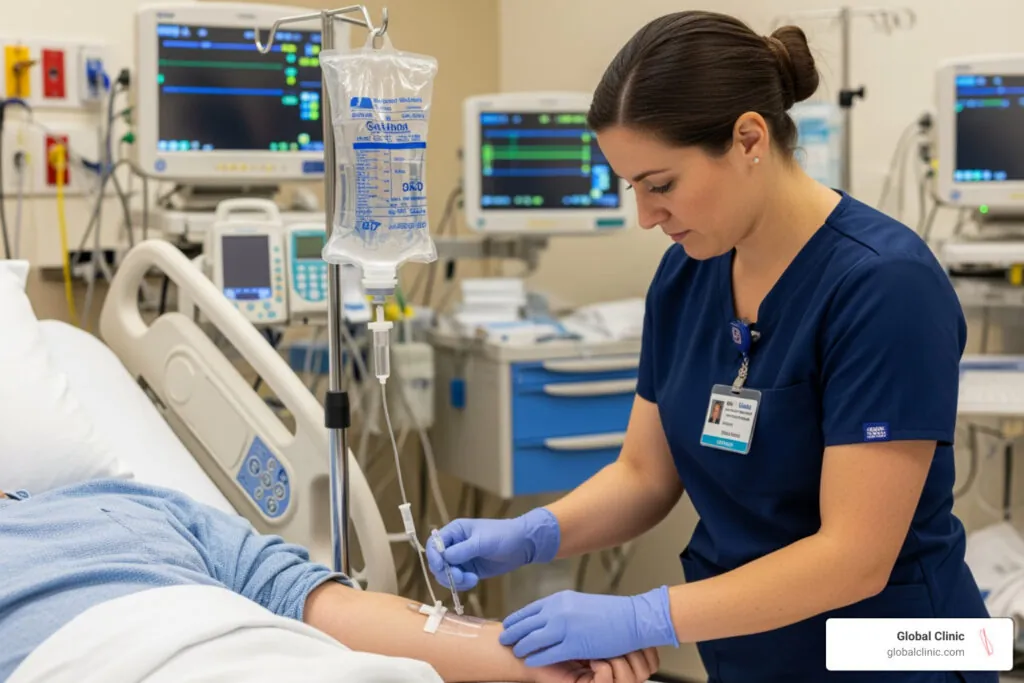
What is Intravenous Hydration Therapy?
Intravenous hydration therapy is a clinic-based service that delivers fluids and selected nutrients directly into a vein under the supervision of a licensed medical professional.
Quick answer: What is intravenous hydration therapy?
| Feature | Details |
|---|---|
| What it is | Fluids and selected nutrients delivered into a vein through an IV |
| How it works | IV delivery places nutrients directly into the bloodstream |
| Clinic options | B12, Lipo-Minomix, Biotin, Vitamin D3, Tri Immune Boost, Brain Boost, Reboot, Meyer’s Cocktail, and NAD+ |
| Session | Timing and recommendations depend on the treatment plan and provider assessment |
| Who provides it | Licensed medical professionals in a clinical setting |
Oral fluids are appropriate for many everyday hydration needs. In some situations, a provider may discuss IV therapy as part of an individualized care plan after reviewing a person’s health history and goals.
That’s where IV therapy comes in.
IV therapy has a long history in medical care. Modern clinic-based IV services use sterile equipment and provider oversight to deliver fluids and selected nutrients when a clinician determines they are appropriate.
At Global Clinic, IV therapy is provided in a clinical setting as part of wellness-focused care. A provider reviews each person’s health history and treatment goals before recommending an option.
This guide explains how IV therapy works, the clinic options available, potential risks, and questions to discuss with a provider.
Anna Slavin is the Practice Manager at Global Clinic in Niles, Illinois. As a non-clinician, she helps patients understand the clinic’s services and connect with the appropriate provider for care questions.
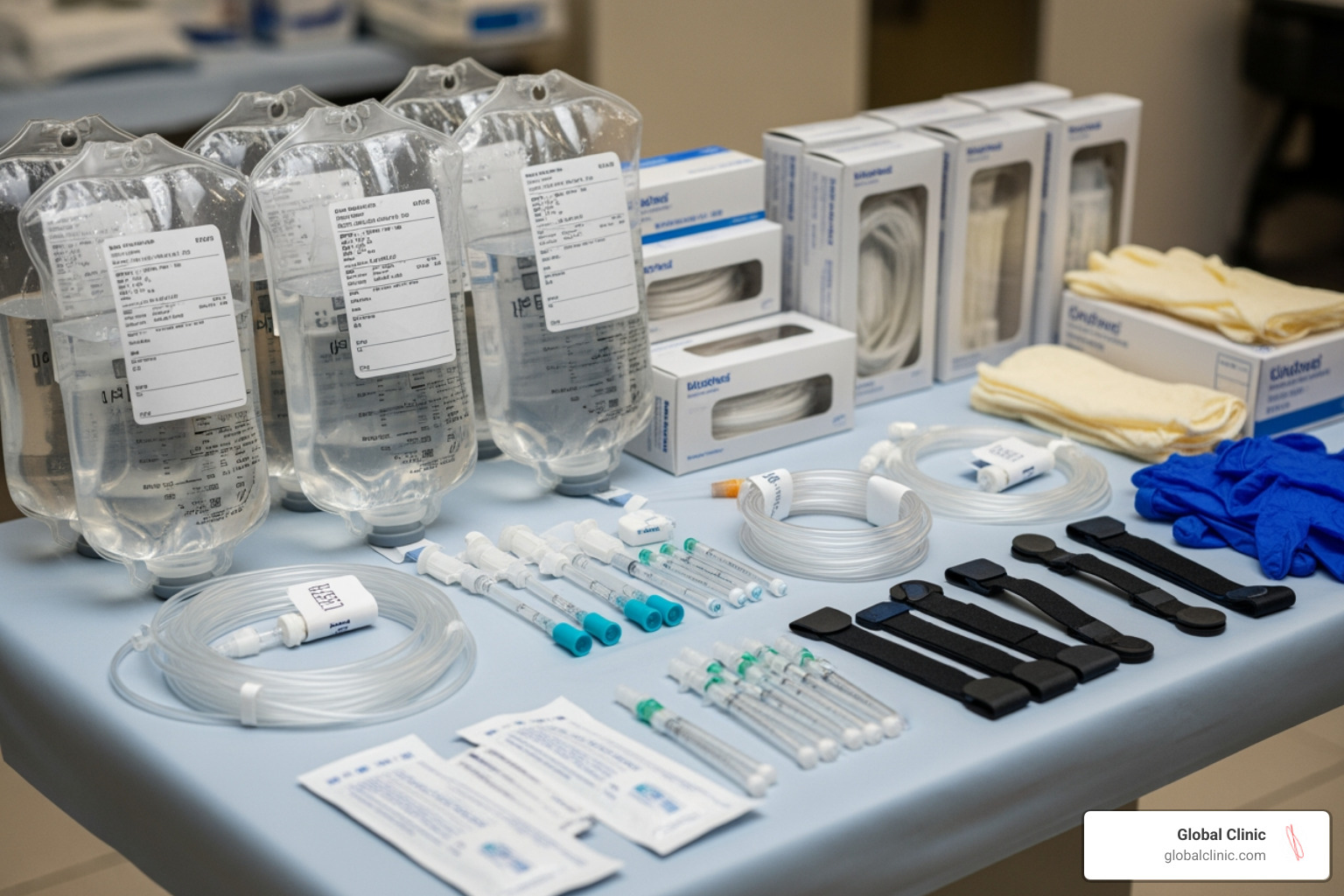
At its core, intravenous hydration therapy delivers a liquid mixture through a small tube, called a cannula, placed into a vein by a healthcare professional. The clinician monitors the infusion and determines whether it is appropriate for the person’s needs.
Because the infusion enters a vein, IV delivery places fluids and selected nutrients directly into the bloodstream. A provider should determine the appropriate treatment plan after reviewing the person’s health history.
A Brief History of IV Therapy
IV therapy developed from medical efforts to replace fluids during serious illness and dehydration. Today, it remains a clinical procedure that requires sterile technique, trained staff, and appropriate patient screening.
The Science Behind Intravenous Hydration Therapy
When fluids or nutrients are taken by mouth, they pass through the digestive system. IV delivery places fluids and selected nutrients directly into the bloodstream, but it is not a substitute for a clinical assessment of the cause of symptoms.
Intravenous hydration therapy places fluids and selected nutrients directly into the bloodstream. Whether it is appropriate depends on the individual’s health history, current symptoms, and provider assessment.
Clinic IV Options
Global Clinic offers clinic-based IV therapy and vitamin-shot options that may include B12, Lipo-Minomix, Biotin, Vitamin D3, Tri Immune Boost, Brain Boost, Reboot, Meyer’s Cocktail, and NAD+. Your provider determines which option, if any, is appropriate for your care plan.
Benefits and Uses of Intravenous Hydration Therapy
Patients visit Global Clinic in Niles for wellness-focused care and support with a range of health concerns. A provider can discuss whether IV therapy fits an individual’s care plan.
- Hydration Support: A provider may discuss IV fluids when clinical assessment indicates they are appropriate.
- Wellness Support: Selected vitamin and nutrient options may be discussed as part of an individualized wellness plan.
- Recovery Support: Some people ask about IV therapy after travel, activity, or periods of reduced fluid intake; a provider can review symptoms and medical history.
- Vitamin Options: Global Clinic offers B12, Lipo-Minomix, Biotin, Vitamin D3, Tri Immune Boost, Brain Boost, Reboot, Meyer’s Cocktail, and NAD+ in a clinical setting.
Clinic-Based IV Options
Global Clinic’s clinic-based options include:
- B12
- Lipo-Minomix
- Biotin
- Vitamin D3
- Tri Immune Boost
- Brain Boost
- Reboot
- Meyer’s Cocktail
- NAD+
A licensed provider determines whether an option is appropriate and discusses the potential benefits, risks, and alternatives.
Research on wellness-focused IV therapy is still developing. A provider can explain what is known, what remains uncertain, and whether another form of care may be more appropriate for your concerns.
Comparing IV and Oral Hydration
For routine hydration, drinking fluids is often appropriate. IV therapy is a clinical procedure that a provider may recommend only after assessing the person’s symptoms, health history, and ability to take fluids orally.
| Consideration | Oral Hydration | Clinic-Based IV Therapy |
|---|---|---|
| How fluids are taken | By mouth | Through a vein in a clinical setting |
| Typical role | Everyday hydration needs | Provider-directed care after assessment |
| Professional oversight | Usually not required | Provided by licensed medical professionals |
| When to seek guidance | Persistent symptoms or difficulty drinking fluids warrant medical advice | A provider evaluates whether IV therapy is appropriate |
People with ongoing digestive symptoms, chronic health conditions, or difficulty maintaining hydration should speak with a qualified healthcare provider about the underlying cause and appropriate care options.
Safety, Risks, and What to Expect
IV therapy is a clinical procedure that requires professional care. At Global Clinic, the process includes a review of health history, medications, and treatment goals before a licensed professional administers an infusion when appropriate.
- Medical History Review: A provider reviews relevant health information and goals.
- Vital Signs: A nurse may check vital signs when clinically appropriate.
- Insertion: A licensed professional places the cannula using sterile technique.
- Monitoring: The care team monitors the infusion and addresses questions during the visit.
- Completion: The cannula is removed and a small bandage is applied.
Potential Side Effects and Complications
IV therapy is a medical procedure with potential risks. A provider should review your health history and explain relevant risks before treatment. Potential complications can include:
- Infiltration: Fluid can leak into surrounding tissue, causing swelling or discomfort.
- Phlebitis: The vein can become irritated or inflamed.
- Bruising: Bruising can occur at the insertion site.
- Fluid Overload: People with heart or kidney conditions may need additional evaluation because excess fluid can create complications.
- Allergic or other reactions: Tell the provider about allergies, medications, and new symptoms before or during treatment.
Frequently Asked Questions about IV Therapy
Where can I learn about IV therapy options?
For information about IV therapy options, contact Global Clinic in Niles. Coverage depends on your plan – our team can help you check.
Where should IV therapy be provided?
IV therapy should be administered by a licensed medical professional in an appropriate clinical setting. A clinical setting supports patient screening, sterile technique, and access to medical assistance if concerns arise.
What can I expect after an IV therapy visit?
Responses to IV therapy vary based on the person’s health, the treatment plan, and the reason for the visit. Ask your provider what to expect and when to seek follow-up care for persistent or worsening symptoms.
Conclusion
Intravenous hydration therapy is a clinic-based option for delivering fluids and selected nutrients into a vein under professional supervision. A provider can help determine whether it is appropriate for your health needs and treatment goals.
Global Clinic is located in Niles, Illinois. Our practitioners bring over 20 years of experience from the US and Europe, providing multidisciplinary non-surgical care under one roof.
Call Global Clinic in Niles at (847) 299-7000 to schedule an appointment.