







Can a Chiropractor Help With Sciatica? Here’s What You Need to Know

Can a chiropractor help with sciatica? Chiropractic care may be a conservative, non-surgical option for some people with sciatic nerve pain after an appropriate clinical evaluation.
Here’s a quick overview:
| Sciatica Type | Can Chiropractic Care Be Considered? |
|---|---|
| Lumbar disc herniation | Often considered as part of conservative care after evaluation |
| Piriformis syndrome | May be considered when muscle tension contributes to symptoms |
| Spinal stenosis | May be considered with an individualized, low-force approach |
| Cauda equina syndrome | No. This is a medical emergency. |
Conservative care for low back pain and sciatica can include chiropractic care, physical therapy, activity guidance, and other clinician-directed options. The right approach depends on the cause of symptoms, examination findings, and individual medical history.
Shooting pain that travels from the lower back through the hip and leg can make sitting, standing, and sleeping difficult. Many people are unsure whether chiropractic care is an appropriate first step or whether medication, imaging, or a specialist evaluation is needed.
For people without emergency symptoms, chiropractic care may be one option to discuss with a qualified clinician as part of an individualized treatment plan.
I’m Anna Slavin, Practice Manager at Global Pain & Spine Clinic. Our practitioners bring over 20 years of experience from the US and Europe. Our multidisciplinary team helps patients understand their options for sciatica-related symptoms and what to expect from an evaluation.
A thorough evaluation may include a review of symptoms, medical history, mobility, strength, sensation, and any warning signs that need medical attention. This helps the care team decide whether conservative treatment is appropriate or whether a referral is needed.
Understanding Sciatica: Symptoms, Causes, and Red Flags
To find the right treatment, it helps to understand the symptoms being evaluated. Sciatica is not a medical diagnosis by itself. It is a clinical term for symptoms caused by an underlying condition that irritates or compresses the sciatic nerve.
The sciatic nerve is the longest and thickest nerve in the human body. It originates in the lumbar spine, travels through the buttocks, and extends down the back of each leg. When one or more nerve roots become pinched, inflamed, or compressed, symptoms may include radiating pain, numbness, or tingling along that pathway.
What Is Sciatica and What Causes It?
True sciatica is characterized by radiating pain that travels past the knee and may be accompanied by numbness, tingling, or weakness in the leg or foot.
Several lower-back conditions can contribute to painful nerve pressure:
- Lumbar Disc Herniation: The soft, jelly-like center of a spinal disc pushes through a tear in its outer ring and may press against a nearby lumbosacral nerve root.
- Piriformis Syndrome: The piriformis muscle is located deep in the buttocks. When it spasms or tightens, it may irritate or compress the sciatic nerve.
- Lumbar Spinal Stenosis: This is a narrowing of the spinal canal or the openings where nerve roots exit, often related to age-related changes in the spine.
- Spondylolisthesis: This occurs when one vertebra slips forward over the one beneath it, which can narrow the space around a nerve pathway.
In addition to structural factors, prolonged sitting and limited movement can contribute to hip and gluteal muscle tension. If symptoms persist or worsen, a clinical evaluation can help identify an appropriate sciatica treatment plan.
When Can a Chiropractor Help with Sciatica Caused by a Herniated Disc?
A common misconception is that a chiropractor will physically “pop” or “shove” a herniated disc back into place. That is not how spinal biomechanics work.
Instead, chiropractic adjustments may address restricted spinal-joint movement around the affected area. A clinician considers the symptoms, examination findings, and medical history before recommending manual techniques.
The body can sometimes reabsorb herniated disc material over time through a process called disc resorption. Chiropractic care may help manage symptoms, reduce muscle guarding, and support mobility while a clinician monitors progress. A qualified provider can help determine when additional evaluation or a surgical referral is appropriate.
Patients may also discuss back pain treatment options with a qualified provider when symptoms affect daily activity.
A provider may also consider whether pain is improving, staying the same, or worsening over time. New weakness, changes in bladder or bowel function, numbness in the groin area, fever, or other concerning symptoms should be treated as reasons for urgent medical evaluation rather than routine chiropractic scheduling.
During a routine evaluation, it is also useful to explain where the pain travels, which movements increase or decrease symptoms, and whether numbness or weakness is present. This information can help distinguish a possible nerve-root pattern from pain that may be referred from muscles, joints, or other structures.
Red Flags: When to Skip the Chiropractor and Seek Emergency Care
Chiropractic care may be appropriate for many people with sciatica symptoms, but certain red flags can signal a medical emergency. If you experience any of the following, do not schedule a chiropractic visit; seek immediate emergency medical attention instead:
- Bowel or Bladder Dysfunction: Sudden difficulty urinating, loss of urinary control, or fecal incontinence.
- Saddle Anesthesia: Progressive numbness or a “pins-and-needles” sensation in the buttocks, groin, inner thighs, or perineum.
- Cauda Equina Syndrome: Severe compression of nerve roots at the base of the spinal cord, often marked by saddle anesthesia, bladder-control issues, and rapid loss of motor function.
- Progressive Motor Weakness: A sudden or rapidly worsening inability to lift the foot, or a feeling that the knee is buckling while walking.
- Constitutional Symptoms: Sciatica pain accompanied by unexplained fever, chills, night sweats, or unexplained weight loss, which may point to an infection or tumor.
Can a Chiropractor Help with Sciatica? What the Science Says
Manual therapy is one conservative option that may be considered for sciatic nerve pain, depending on the underlying cause and a patient’s clinical evaluation.
How Can a Chiropractor Help with Sciatica Pain?
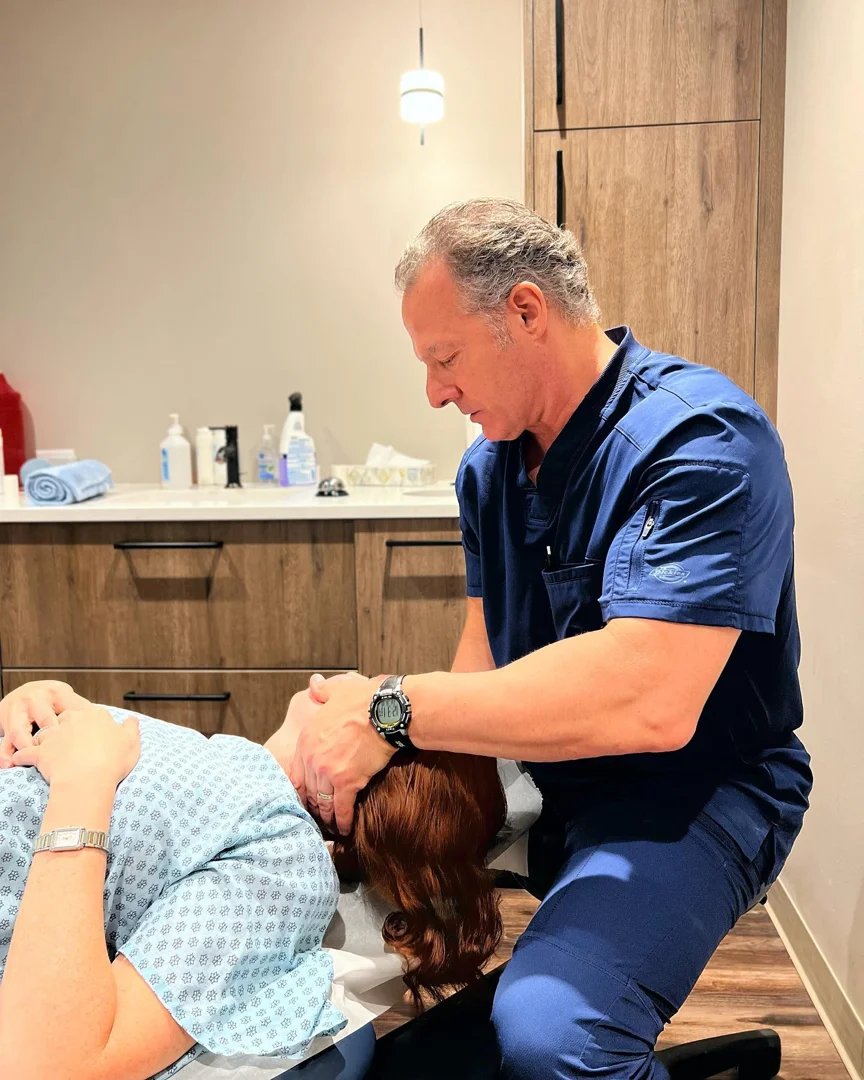
Chiropractors evaluate musculoskeletal factors that may contribute to nerve pain and may use targeted manual techniques as part of a conservative care plan. Spinal manipulation is one technique that may be used to address restricted spinal joints.
When a joint is restricted, surrounding muscles may become tense and movement can become uncomfortable. Chiropractic care may be used to:
- Support joint movement: Manual techniques may support movement in restricted spinal joints.
- Address muscle tension: Restoring comfortable movement may help reduce protective muscle guarding.
- Complement conservative care: A clinician may recommend a broader plan based on symptoms, function, and examination findings.
Learn more about chiropractic care and how a clinician may tailor conservative treatment to the source and severity of symptoms.
For a reputable patient-focused overview of hands-on care for low back pain and sciatica, see the Cleveland Clinic guide.
Reducing the Need for Opioids and Surgery
Early conservative care may help some patients discuss non-surgical options before considering more invasive interventions.
For low back pain, clinical guidelines often emphasize individualized conservative care before more invasive options when no emergency symptoms are present. A clinician can help determine which options fit the diagnosis and medical history.
Important considerations include:
- Conservative care: A care plan may include chiropractic care, physical therapy, activity guidance, and other clinician-directed options.
- Medication decisions: Discuss pain medicines and their potential benefits and risks with the prescribing clinician.
- Surgical evaluation: Surgery may be considered when symptoms, neurological findings, or imaging results warrant specialist assessment.
A clinician can help patients review conservative treatment options, medication considerations, and referral needs based on the cause and severity of sciatica symptoms.
For readers who want to review the research directly, see the PLOS ONE study on opioid reduction.
The goal of an evaluation is not to assume that every case of leg pain has the same cause. A clinician can identify when manual care may fit within a conservative plan and when medication management, imaging, physical therapy, or specialist referral should be considered.
Conservative care is typically monitored over time rather than judged by a single visit. Changes in pain, function, walking tolerance, sleep, strength, and neurological symptoms can help the clinician decide whether to continue, modify, or refer for further medical assessment.
Chiropractic Techniques and Exercises for Sciatic Nerve Relief
Every patient’s spine is unique. A skilled chiropractor does not use a one-size-fits-all technique. Instead, the clinical approach should reflect the structural diagnosis and may combine manual therapies with active home care.
Chiropractic Techniques for Sciatica
Depending on whether sciatica is associated with a herniated disc, stenosis, or piriformis syndrome, a chiropractor may use several techniques:
- Flexion-Distraction (Cox Technique): This is a gentle, traction-based approach performed on a specialized moving table. The chiropractor uses controlled movement intended to reduce strain on the lower spine.
- High-Velocity, Low-Amplitude (HVLA) Adjustments: This is a traditional chiropractic adjustment that uses a quick, precise manual thrust to address restricted spinal-joint motion.
- Pelvic Blocking (Sacro-Occipital Technique): Padded wedges are placed under the pelvis to support positioning and gentle movement without high-force thrusts.
- Soft Tissue Therapy and Myofascial Release: When muscle tension contributes to symptoms, manual pressure may be used to address tight soft tissue around the hip and lower back.
For patients with persistent symptoms, spinal decompression therapy may be discussed as part of a clinician-directed conservative care plan. Contact Global Clinic in Niles to arrange an evaluation with a licensed provider.
Patients seeking a local chiropractic evaluation can contact Global Clinic in Niles.
Before beginning treatment, the provider should review symptoms that may point to a disc problem, spinal stenosis, muscle-related pain, or another source of discomfort. The care plan can then be adjusted to avoid movements that aggravate symptoms and to support functional goals such as walking, sitting, and returning to daily activities.
Exercises and Stretches to Support Chiropractic Care
Active movement may be part of a sciatica care plan. A clinician may recommend targeted stretches and exercises based on the cause of symptoms.
Note: Consult with a qualified clinician before starting these exercises, as some movements can worsen disc-related sciatica.
1. The Piriformis Stretch (Figure-4 Stretch)
This stretch targets the deep gluteal muscles and may help reduce tension around the sciatic nerve.
- Lie on your back with both knees bent and feet flat on the floor.
- Cross the painful leg’s ankle over the opposite knee.
- Gently pull the uninjured leg’s thigh toward the chest until you feel a comfortable stretch in the buttock.
- Hold for a comfortable interval and repeat as directed by your clinician.
2. McKenzie Extension Press-Up
For some people with disc-related sciatica, this movement may help shift symptoms toward the lower back.
- Lie flat on your stomach on a firm surface.
- Place your hands flat on the floor under your shoulders, as if starting a push-up.
- Slowly press your upper body up, keeping your pelvis and hips relaxed on the floor.
- Only go as high as is comfortable, then lower down.
- Stop if this causes pain to travel farther down the leg.
3. Nerve Flossing (Sciatic Neural Mobilization)
This gentle exercise is intended to move the sciatic nerve through its surrounding tissues.
- Sit upright in a chair with your back supported.
- Slowly straighten the painful leg while tilting your head back to look at the ceiling.
- Then bend the knee while tucking the chin toward the chest.
- Use slow, comfortable repetitions. Do not force the movement or push into sharp pain.
Combining Chiropractic Care and Physical Therapy vs. Surgery
For many people with sciatica, a conservative, multidisciplinary approach may be considered before surgery when no emergency symptoms are present.
| Treatment Type | Approach | Recovery Timeline | Risks & Considerations |
|---|---|---|---|
| Conservative Care (Chiropractic and Physical Therapy) | Non-invasive joint mobilization, decompression, soft tissue therapy, and active strengthening. | Timing varies by diagnosis and response to care. | Requires an individualized evaluation and active participation in home exercises. |
| Lumbar Discectomy Surgery | Surgical removal of disc material pressing on a nerve. | Recovery varies by procedure and individual factors. | Surgical risks can include infection, nerve injury, scar tissue, and re-herniation. |
Treatment decisions should reflect symptom severity and duration, neurological findings, imaging when appropriate, and a discussion with a qualified specialist. Surgery may be considered when conservative care is not appropriate or when urgent neurological concerns are present.
Physical therapy and chiropractic care may address different parts of a conservative plan. Physical therapy can focus on movement, strength, and function, while chiropractic care may focus on manual techniques and spinal-joint mobility. Coordination with the broader care team can help keep recommendations aligned with the patient’s symptoms and goals.
Frequently Asked Questions About Chiropractic for Sciatica
How many chiropractic sessions are typically needed for sciatica?
The timeline for sciatica recovery depends on the underlying cause, the severity of nerve compression, and how long symptoms have been present.
- Early care: Visit frequency depends on the underlying cause, symptom severity, and examination findings. The initial focus is often symptom management and maintaining safe, comfortable movement.
- Rehabilitation: As symptoms change, a clinician may adjust the care plan to emphasize spinal stabilization, posture, and strengthening.
The length of an active care plan varies. Providers should establish progress checkpoints and re-evaluate symptoms when improvement is limited or new concerns appear.
What is the difference between true sciatica and referred pain?
Not all leg pain is sciatica, and making this distinction is important because referred pain and nerve-root irritation may require different treatment approaches.
- True Sciatica (Radiculopathy): Caused by direct compression of a nerve root in the spine. The pain may be sharp, electric, or burning and can travel past the knee into the calf, ankle, or foot. It may be accompanied by numbness, tingling, or muscle weakness.
- Referred Pain: May be associated with muscle tension, joint dysfunction in the sacroiliac joint, or arthritis in the hip. This pain is often a dull, aching sensation that remains localized in the lower back, hip, or buttock.
To differentiate the two, clinicians may perform orthopedic and neurological tests during a physical examination, such as the Straight Leg Raise test, the Slump test, and Kemp’s test.
Is imaging like an MRI required before starting chiropractic care?
No, a routine MRI or X-ray is not required before starting chiropractic care for sciatica unless specific red flags are present.
During an initial visit, a clinician reviews medical history and performs an appropriate examination of reflexes, muscle strength, and sensation. When progressive neurological deficits or red flags are present, prompt medical evaluation is important.
If symptoms do not improve with conservative care or neurological concerns develop, a clinician may recommend imaging or refer you to an appropriate medical specialist to guide next steps.
Imaging decisions are based on the clinical picture rather than being required for every episode of sciatica. A medical specialist may use imaging to clarify the source of symptoms when the examination raises concern or when symptoms do not respond as expected to an appropriate conservative plan.
When imaging is discussed, patients can ask why it is being considered and how the results may affect the treatment plan. The purpose is to use information from the examination and, when needed, imaging to support an appropriate next step rather than to rely on a routine test alone.
Conclusion
If you are struggling with shooting sciatica pain, a qualified clinician can help assess possible causes and discuss appropriate treatment options. Chiropractic care may be one part of a conservative plan to support mobility and symptom management.
At Global Pain & Spine Clinic in Niles, patients from Chicago, Skokie, Glenview, and nearby suburbs visit for multidisciplinary non-surgical care. Our practitioners bring over 20 years of experience from the US and Europe.
By combining chiropractic care with physical therapy, acupuncture, pain management, and PRP therapy for sciatica, clinicians can discuss treatment options based on each patient’s evaluation and needs.
The clinic’s multidisciplinary model allows patients to discuss chiropractic care, physical therapy, pain management, acupuncture, and other appropriate non-surgical options in one location. The recommended plan should follow the patient’s examination findings, medical history, and treatment goals.
Before starting a new treatment approach, share relevant medical conditions, previous injuries, current medications, and any recent changes in symptoms with the provider. Seek emergency care for red-flag symptoms such as loss of bladder or bowel control, numbness in the groin area, or sudden worsening weakness.
Dealing with back or neck pain in the Niles area? Request a chiropractic appointment online and our team will call you to schedule an exam with Peter Slavin, DC or Eliud Sierra, DC. Physical therapy and pain management are available in the same clinic.
Call Global Clinic in Niles at (847) 299-7000 to schedule an appointment.