



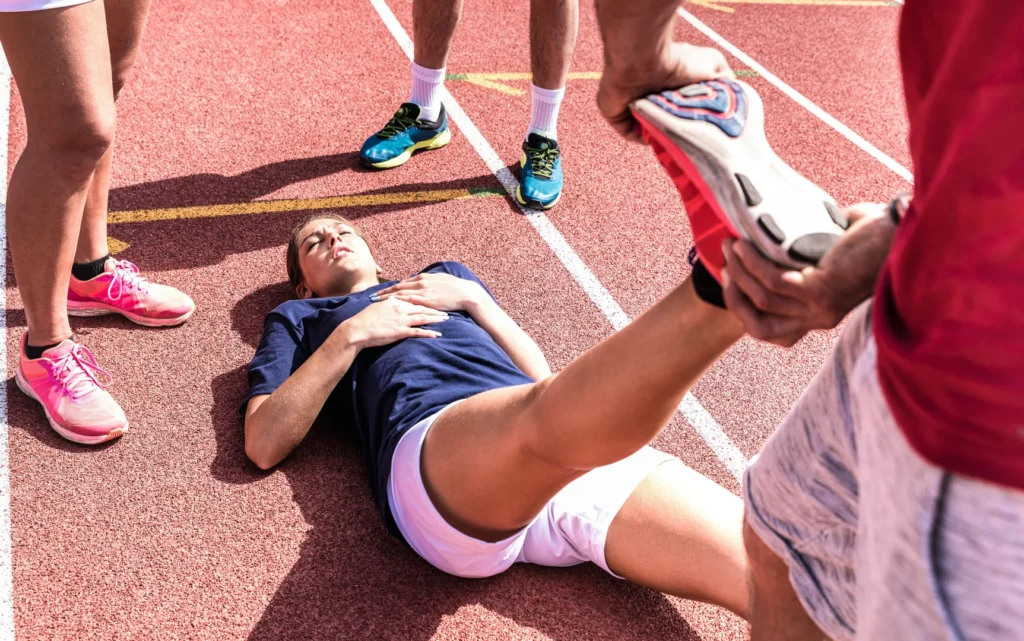
A Smarter Path to Sports Injury Recovery
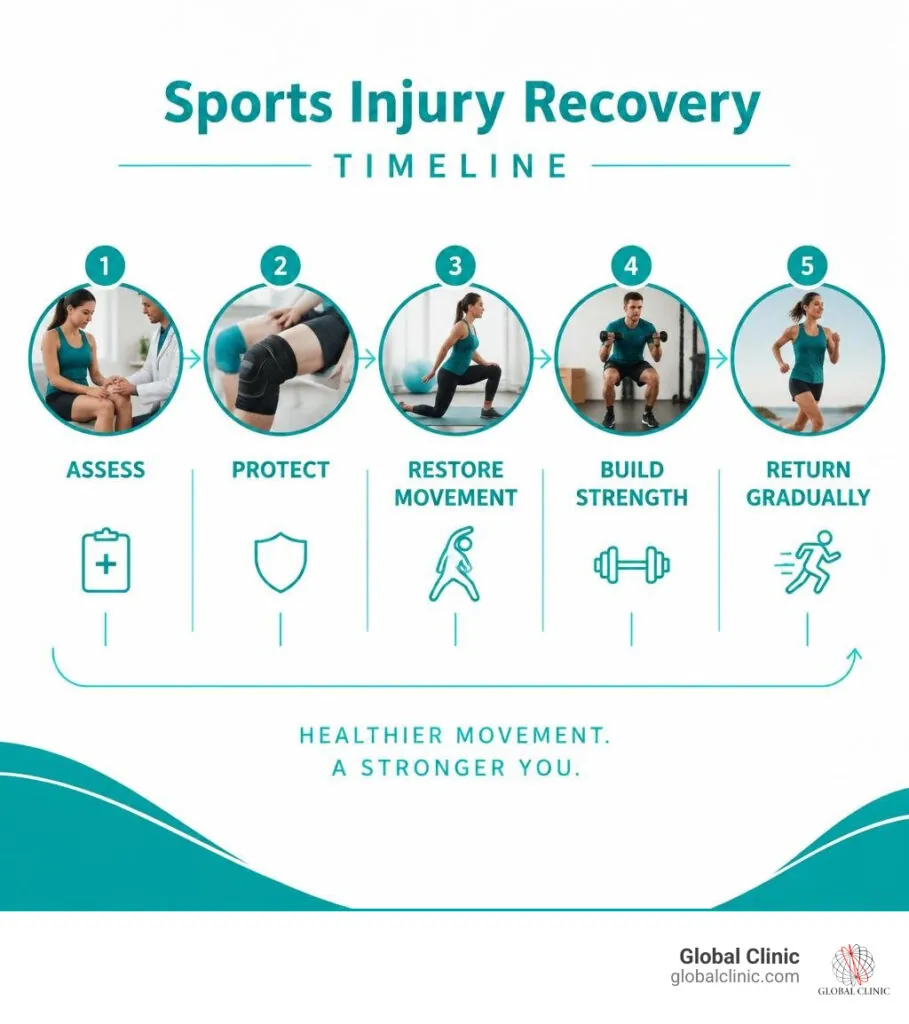
Sports injury recovery works best when you protect the injured area early, get an accurate diagnosis, and rebuild strength, movement, and sport-specific skills in stages. Do not judge readiness by pain alone. A safer return also requires normal range of motion, good balance and control, strength close to the uninjured side, and confidence in the movements your sport demands.
A practical recovery plan should include:
- Early medical evaluation for severe pain, major swelling, deformity, numbness, or inability to bear weight.
- Guided rehabilitation that restores mobility before progressing to strength, power, and agility.
- Gradual training loads, rather than jumping straight back into full practices or competition.
- Ongoing communication among the athlete, clinician, physical therapist, and coach to catch warning signs early.
Sprains, muscle strains, tendon problems, and knee or shoulder injuries can heal on very different timelines. Re-injury is also common when athletes return before their tissue capacity and movement control match the demands of sport. The goal is not simply to feel better. It is to return with a body that can tolerate running, cutting, lifting, landing, and repeated training.
At Global Clinic, our multidisciplinary team supports patients in Niles and surrounding Northern Chicago communities with evidence-based, non-surgical rehabilitation and advanced treatment options tailored to the injury and the person.
I am Anna Slavin, Practice Manager at Global Clinic, where our team draws on more than 20 years of global clinical experience in pain management, physical therapy, regenerative medicine, and sports injury recovery. We focus on compassionate, coordinated care that helps active adults move from injury management to safer, stronger daily activity and sport.
Understanding Athletic Trauma and Tissue Healing Mechanisms
Musculoskeletal trauma is an inherent risk across both competitive leagues and recreational activities. Re-injury is a common problem when athletes return to play before injured tissues have fully recovered.
Athletic trauma broadly categorizes into acute trauma and repetitive strain disorders. High-demand anatomical junctions—specifically the knee joint, ankle complex, rotator cuff, and hamstring muscle group—bear the highest incidence of mechanical failure. According to data from the Centers for Disease Control and Prevention (CDC), falls account for more than one out of every four sports injuries, while direct head impacts comprise less than two out of ten incidents.
Understanding the differences between acute and chronic tissue trauma is vital for structuring an effective rehabilitation strategy.
| Characteristic | Acute Sports Trauma | Repetitive Strain / Overuse |
|---|---|---|
| Onset Mechanism | Sudden macrotrauma (e.g., collisions, awkward landings, rapid pivots) | Gradual microtrauma accumulation exceeding tissue repair capacity |
| Primary Tissues Affected | Ligament tears (ACL/ATFL), muscle bellies, acute bone fractures | Tendons (patellar, Achilles), bursae, periosteum (stress fractures) |
| Early Clinical Presentation | Immediate sharp pain, localized edema, hematoma, structural instability | Insidious dull ache, stiffness post-exercise, localized point tenderness |
| Immediate Clinical Goal | Structural stabilization, joint protection, inflammation modulation | Load management, biomechanical correction, kinetic chain balancing |
| Healing Timeline | Phase-dependent tissue repair (weeks to several months) | Variable remodeling response dependent on chronic tendon unloading |
Whether dealing with acute joint damage or chronic degenerative wear, comprehensive clinical evaluation is the foundation for avoiding long-term physical impairment. For broader insights into joint and muscular conditions, explore our overview of sports injuries and how targeted care restores athletic health.
Biological Challenges in Soft Tissue Sports Injury Recovery
Tendons and ligaments present substantial biological hurdles during recovery. Unlike skeletal muscle, which features a robust microvascular network capable of delivering reparative cells rapidly, dense connective tissues are inherently hypovascular. This low blood supply limits the immediate influx of oxygen, systemic nutrients, and reparative signaling molecules.
When a tendon or ligament is injured, the body initiates a three-phase healing cascade:
- Inflammatory Phase: Early immune cells flood the site to clear damaged matrix. Macrophages initially express a pro-inflammatory M1 phenotype.
- Proliferative Phase: Fibroblasts migrate to synthesize a temporary structural bridge.
- Remodeling Phase: The temporary matrix undergoes reorganization and alignment under mechanical load.
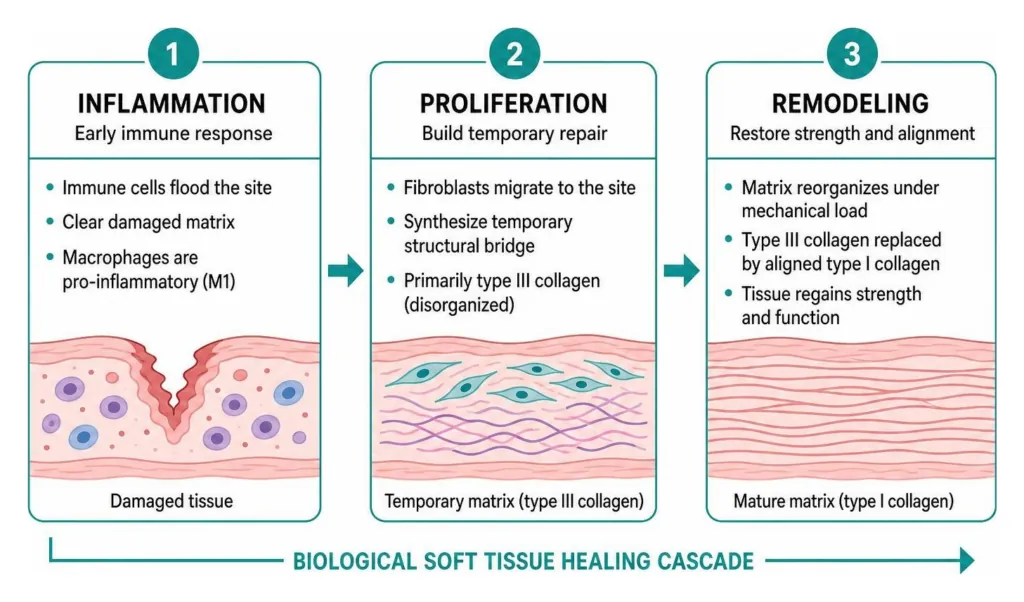
A critical bottleneck occurs during matrix deposition. Instead of immediately synthesizing strong, parallel-aligned type I collagen, the body deposits disorganized, mechanically inferior type III collagen. This forms fibrotic scar tissue that lacks the tensile strength and elasticity of native tissue.
Without sufficient cellular signaling to transition M1 macrophages to the reparative M2 phenotype, local growth factor delivery stalls. This deficit leaves the repaired tissue vulnerable to chronic tendinopathy or structural re-rupture upon returning to high-velocity sports. The Regenerative Trifecta research on soft tissue healing details how targeted biologic signaling addresses these cellular limitations to support functional remodeling.
Core Phases of Structured Sports Injury Recovery

Successful rehabilitation follows an evidence-based progression that respects biological tissue healing while systematically restoring functional performance.
During the initial acute phase, clinical priorities center on controlling excessive inflammation, protecting vulnerable structural tissues, and alleviating severe pain. While traditional protocols relied heavily on passive rest, modern sports medicine integrates active protection. Read our clinical review on the RICE method and beyond for acute pain relief to learn how progressive movement strategies support early recovery.
Once acute pain subsides, controlled progressive mechanical loading begins. Controlled tensile stress stimulates mechanotransduction within fibroblasts and tenocytes, encouraging the deposition and longitudinal alignment of mature type I collagen fibers. Early therapeutic exercise preserves joint kinematics, restores active range of motion, and prevents the muscular atrophy associated with prolonged immobilization.
As tissue integrity strengthens, neuromuscular re-education becomes paramount. Joint injuries damage localized mechanoreceptors, which impairs joint position sense (proprioception). Structured post-injury rehabilitation integrates dynamic balance tasks and multi-planar stability drills to recalibrate these neural feedback loops, protecting the joint against unexpected forces during dynamic sport.
Staged Progression in Physical Therapy
Physical therapy bridges initial medical care and full athletic performance through structured, measurable milestones:
- Stage 1: Isometric Stabilization and Closed-Kinetic-Chain Movement: Rehabilitation begins with static muscle contractions (isometrics) to maintain motor unit recruitment without placing shearing forces across healing joints. Closed-kinetic-chain exercises, such as bodyweight squats and supported step-ups, introduce ground reaction forces while stabilizing surrounding musculature.
- Stage 2: Progressive Eccentric Loading: Eccentric exercise—lengthening muscle-tendon units under tension—is essential for remodeling soft tissue architecture. It increases tensile tolerance and promotes fascicle lengthening, which significantly lowers the risk of recurrent muscle strains.
- Stage 3: Multi-Planar Dynamic Movement: Athletes progress to dynamic drills encompassing the frontal, sagittal, and transverse planes. Lateral bounds, deceleration training, and controlled rotational maneuvers restore multi-directional control.
- Stage 4: Sport-Specific Conditioning and Bilateral Symmetry: The final therapeutic phase replicates the specific metabolic and biomechanical demands of competition. High-intensity sprint mechanics, sudden directional cutting, and sport-specific motor patterns ensure the injured limb demonstrates structural symmetry with the uninjured side.
To explore how these movement protocols are customized for specific athletic goals, review our approach to sports physical therapy.
Advanced Regenerative Therapies and Modern Rehabilitation Technology
When hypovascular soft tissues struggle to heal through standard physical rehabilitation alone, advanced regenerative orthobiologics can provide essential biological support.
Platelet-Rich Plasma (PRP) therapy concentrates autologous platelets derived directly from the patient’s peripheral blood. When injected into damaged tissues, often with imaging guidance, these platelets degranulate and release critical growth factors, including:
- Platelet-Derived Growth Factor (PDGF)
- Transforming Growth Factor-Beta (TGF-β)
- Vascular Endothelial Growth Factor (VEGF)
- Insulin-like Growth Factor 1 (IGF-1)
These signaling proteins may support new blood vessel formation and the transition from disorganized type III collagen to stronger type I collagen fibers. Discover more about our approach to platelet-rich plasma therapy for pulled ligaments and our targeted protocols utilizing PRP injections for chronic tendinopathy.
Some peer-reviewed clinical research suggests these biological interventions may help:
- A randomized controlled trial evaluating 60 athletes with grade 2 hamstring injuries demonstrated that PRP combined with standard rehabilitation led to full return-to-play in 26.4 ± 4.5 days, compared to 34.2 ± 5.7 days for standard rehabilitation alone (P < 0.001).
- The same trial revealed that complete structural healing on MRI at 21 days was achieved in 70% of the PRP cohort versus just 36.7% of the standard care control group (P = 0.003).
- A meta-analysis of randomized controlled trials on PRP and return to sport found an overall reduction in return-to-play timelines of 5.5 to 7.5 days for acute muscle injuries without increasing re-injury rates.
To understand how our medical team incorporates these biologic therapies into comprehensive recovery protocols, read about PRP therapy for sports injuries.
Bridging Medical Care, Performance Conditioning, and Mental Resilience
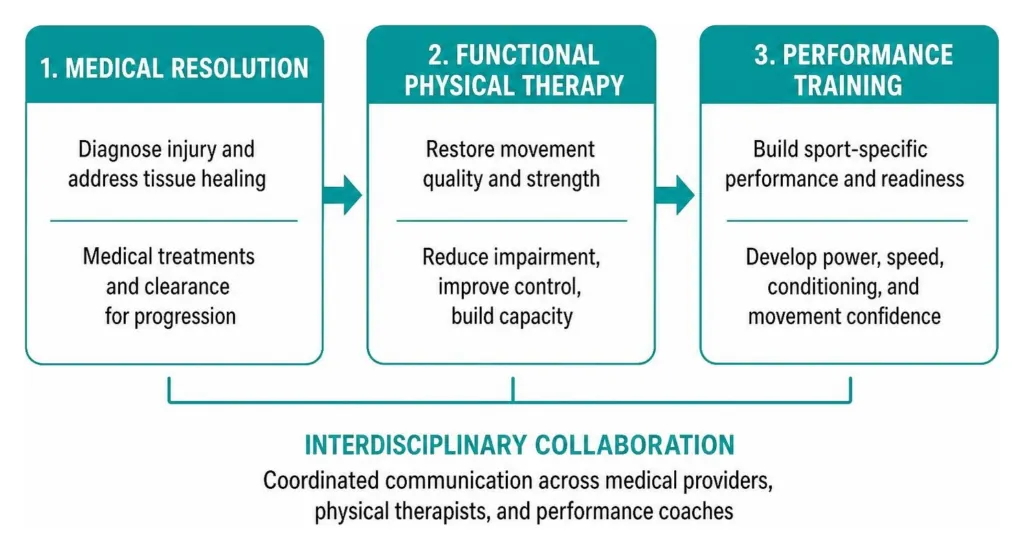
Returning safely to competitive athletics requires a coordinated hand-off between medical providers, physical therapists, and strength and conditioning coaches (Kraemer et al., 2009). An athlete may be medically cleared from an orthopedic standpoint, yet lack the rate of force development, metabolic conditioning, or movement confidence needed for full-contact play.
Coordinated interdisciplinary communication ensures that physical loading limits, movement restrictions, and tissue recovery benchmarks are clearly understood by the entire performance team.
Psychological readiness is just as critical as physical restoration. Many athletes encounter psychological barriers—particularly kinesiophobia (fear of re-injury)—when approaching full competition. This hesitation can cause altered movement mechanics, compensatory loading on uninjured limbs, and increased vulnerability to secondary trauma.
Mental resilience can be built systematically by:
- Establishing objective, short-term SMART milestones (e.g., reaching 90% single-leg hop symmetry rather than focusing solely on return dates).
- Utilizing mental imagery and visualization, which activates motor cortex pathways that support neuromuscular coordination.
- Adopting non-opioid pain strategies under clinical supervision to maintain mental focus during daily training.
- Leveraging multidisciplinary support networks that coordinate medical, rehabilitation, and strength coaching checkpoints.
Optimizing Sports Injury Recovery for Masters and Older Athletes
Rehabilitation strategies must adapt to the physiological realities of aging. Masters athletes and active older adults face biological shifts, including decreased baseline vascularity, slower stem cell proliferation, reduced cellular hydration within soft tissues, and decreased collagen turnover.
These biological factors are especially relevant given the growth of sports like pickleball among adults over 55, where fractures, sprains, and muscle strains are common injuries.
For older athletes, rehabilitation requires:
- Extended periods between high-intensity loading sessions to allow adequate tissue remodeling.
- A strong emphasis on progressive eccentric loading and multi-directional balance drills to prevent falls.
- Management of systemic factors, such as optimizing sleep quality, hydration, glycemic balance, and micronutrient status.
- Comprehensive, personalized programs utilizing clinical physical therapy to rebuild movement confidence safely.
Objective Clearance Criteria and Long-Term Re-Injury Prevention
Clearing an athlete to return to sport should never rely on elapsed calendar time or the absence of pain alone. Objective, functional testing provides the data needed to confirm that repaired tissues and the surrounding kinetic chain can tolerate dynamic sport demands.
Key functional clearance benchmarks include:
- Limb Symmetry Index (LSI): The injured limb must demonstrate at least 90% (often 95% for high-demand cutting sports) strength, power, and hop distance compared to the contralateral uninjured limb.
- Multi-Angle Force Plate Analysis: Dual force plate assessments evaluate ground reaction forces during take-off and landing to verify that the athlete is not offloading the injured side.
- Dynamic Deceleration and Change-of-Direction Testing: Timed agility drills (such as the Pro Agility or Y-Excursion Balance Test) assess movement control and dynamic joint stability under fatigue.
- Psychological Readiness Scoring: Validated questionnaires, such as the ACL-RSI (Return to Sport after Injury) scale, help ensure that cognitive confidence matches physical recovery.
Long-term re-injury prevention relies on periodized strength training, structured warm-up protocols (such as the FIFA 11+ model), and ongoing workload monitoring to balance training stress with adequate physiological recovery.
Frequently Asked Questions about Sports Rehabilitation
How long does sports injury recovery typically take?
Recovery timelines depend on the specific tissue involved, vascular supply, and the severity of the structural damage. Mild (Grade 1) muscle strains may resolve with targeted physical therapy within 2 to 4 weeks. Conversely, high-grade ligament tears or severe tendon ruptures require a structured, phased rehabilitation process spanning 6 to 12 months to achieve complete tissue remodeling and neuromuscular recovery.
When can an athlete safely transition from physical therapy to full competition?
An athlete is ready for full competitive play when they meet objective biomechanical criteria rather than subjective timelines. This includes achieving at least a 90% Limb Symmetry Index on strength and dynamic hop testing, demonstrating full pain-free range of motion, showing biomechanical control during deceleration drills, and exhibiting high psychological readiness scores.
What role do regenerative treatments play in muscle and tendon healing?
Regenerative treatments such as Platelet-Rich Plasma (PRP) deliver concentrated autologous growth factors directly to the injury site. These signaling proteins may support new blood vessel formation and the shift from inflammation to repair. Some clinical trials suggest PRP may shorten return-to-sport time for certain muscle injuries, although results vary.
Conclusion
Overcoming an athletic injury requires a comprehensive care strategy that combines accurate diagnostics, progressive physical loading, advanced regenerative medicine, and objective clearance testing. By taking a whole-body approach to tissue healing, athletes can rebuild strength, restore functional symmetry, and return to their sports with confidence.
Global Pain & Spine Clinic serves Northern Chicago communities—including Niles, Skokie, Glenview, Park Ridge, Des Plaines, Morton Grove, and Mount Prospect. Our experienced team combines physical therapy, chiropractic care, interventional pain management, and regenerative orthobiologics under one roof to create personalized, patient-first treatment plans.
Some active patients also ask about wellness support during recovery; learn how NAD+ therapy for active recovery may fit alongside your rehabilitation program.
Call our Niles clinic at (847) 299-7000 to speak with our specialists and schedule a comprehensive evaluation for your sports injury recovery.
Scientific References
Kraemer W, Denegar C, Flanagan S. “Recovery from injury in sport: considerations in the transition from medical care to performance care..” Sports health, 2009. PMCID PMC3445177.