






Neurological Rehabilitation near the Niles-Maine District Library in Niles, IL

REQUEST AN APPOINTMENT
Near Niles-Maine District Library
The Niles-Maine District Library sits at 6960 W. Oakton St., on the northeast corner of Oakton St and Waukegan Rd. Grennan Heights Park is close by, and the library itself got an early start in the Grennan Heights field house before moving to its own building.
The library district serves people in parts of Niles and Maine Townships. On a normal day you see older adults reading the paper, parents bringing kids to programs, and adult children helping a parent from the car to the front door. Many of those helpers are also the people who drive a family member to therapy.
This page is about neurological rehabilitation for people near the Niles-Maine District Library. It covers the conditions our program addresses, what therapy sessions work on, how balance and fall concerns fit in, the short drive to our Dempster St. clinic, and what caregivers can expect.
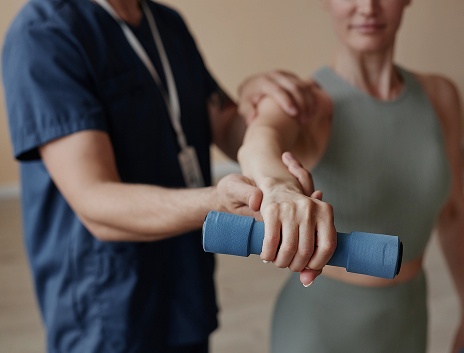
Your first visit at Global Pain & Spine Clinic starts with a functional evaluation, not a treatment session. Your therapist looks at strength, range of motion, balance, coordination, walking, and hand function. Then you talk through your goals, such as walking on your own or moving around home more safely.
Getting to Our Clinic from the Niles-Maine District Library
- Leave the library at Oakton St and Waukegan Rd and head north on Waukegan Rd for about 0.7 miles.
- Turn right onto Milwaukee Ave and continue for about 1.2 miles.
- Turn left (west) onto Dempster St and drive about 0.7 miles.
- Look for 8565 W. Dempster St. on your route; on-site parking makes drop-off easier for caregivers.
- Transit note: Pace route 250 runs along Dempster St, and the Niles Free Bus connects with Pace at the Golf Mill food court.
Central Niles Neighborhoods Around the Library
Grennan Heights Park and nearby streets
Homes around Grennan Heights Park are a short walk from the library. If a stroke or Parkinson’s disease has made the walk to the park feel unsteady, gait training may be worth asking about.
Oakton St and Waukegan Rd corner
This busy corner is where the library meets two of central Niles’ main roads. Crossing wide intersections asks a lot of balance and walking speed. If you live with multiple sclerosis or neuropathy, you may notice your limits here first.
Waukegan Rd north toward Milwaukee Ave
Waukegan Rd is the first leg of the drive to our clinic. If you juggle work with driving a parent to appointments, weekday evening and Saturday morning sessions can make a regular therapy schedule more realistic.
Golf Mill and Milwaukee Ave
Golf Mill on Milwaukee Ave is a place to shop and catch Pace buses. Walking long store aisles is a useful real-world test after a brain or spinal cord injury, and your therapist can build that endurance into your plan.
Dempster St near Notre Dame College Prep
The last part of your drive runs west along Dempster St past Notre Dame College Prep. If dizziness or trouble focusing lingers after a head injury, an evaluation can help you understand your next steps.
Touhy Ave and the Leaning Tower
Southeast Niles residents near the Leaning Tower on Touhy Ave can reach us by way of Milwaukee Ave. If you live with a balance or coordination disorder, the same neuro rehab program is open to you.
Rehab Services for Patients near the Library
Our outpatient neuro rehab program works on walking, balance, posture, coordination, fine motor control of the hands, and safe transfers at home. For central Niles residents, that means specialized care a few minutes from the library instead of a trip to downtown Chicago.
If you feel the room spin when you turn your head to read a shelf label, or feel foggy after a concussion, vestibular therapy may help. Your therapist first works to identify the disorder behind your dizziness, such as BPPV or vestibular neuritis.
For residents who walk to the library or around Grennan Heights Park, steadier steps matter. Gait and balance care can include therapeutic exercise, neuromuscular re-education, and unweighting therapy, where a harness supports you while you retrain walking.
Lifting, steadying and driving a loved one can strain your own back or shoulders. Our physical therapy team, led by Valerie Shternberg, MSPT, can see family members too, and you may be able to book on the same trip as a parent’s session.
Neuro Rehab Starts With the Conditions Central Niles Families Live With
Our neurological rehabilitation program addresses stroke, traumatic brain injury, concussion and post-concussion syndrome, Parkinson’s disease, multiple sclerosis, ALS and motor neuron disorders, spinal cord injuries, peripheral nerve injuries, and balance and coordination disorders. These conditions can cause muscle weakness, tremors, poor coordination, and difficulty walking. You may be referred by a neurologist, a hospital, or a primary care provider, or start therapy after a hospital stay.
For a library patron, the first signs can show up in ordinary moments. Turning pages may feel clumsy, the walk from the parking lot may feel longer, or stepping off a curb at Oakton St may feel uncertain. Telling your therapist about these specific moments helps shape a plan built around the tasks you actually want to get back to.


Caregivers Who Drive Family Members Are Part of the Plan
Family members and caregivers are encouraged to join sessions when appropriate. Your therapist can show you how to help with safe transfers from a chair, bed, or car seat, how to reduce fall risk at home, and which home support strategies fit your loved one’s stage of recovery. For homes with stairs or tight hallways, therapy may include stair training and practice moving through narrow spaces.
The drive itself is short. From the library corner, Waukegan Rd, Milwaukee Ave, and Dempster St bring you to our door in about 5 to 8 minutes, and on-site parking means you do not have to circle the block while your passenger waits. Weekday evening and Saturday hours can help caregivers who work during the day.
Progress Is Measured and Reviewed With You
Your therapist may track walking speed and endurance, balance and fall risk, grip strength, and the time it takes to complete daily tasks. These results give you, your physician, and your insurance plan clear documentation. If progress levels off, your plan may move to a home exercise program or maintenance therapy to help preserve the gains you have made.
For chronic conditions such as Parkinson's disease or multiple sclerosis, ongoing rehabilitation can play a role in managing symptoms over time. We accept Medicare and several PPO plans, including Aetna, AARP, BCBS, CIGNA, and United Healthcare. Coverage depends on your plan, so our front desk can help you check benefits and referral requirements before you start.
First visit
Functional evaluation of strength, balance, and walking
Why a Nearby Clinic Helps Niles Library Area Patients
Short, simple drive
Three roads and about 2.6 miles separate the library corner from our clinic. A short trip makes it easier to keep a steady therapy schedule, which matters when recovery depends on regular sessions.
Less strain on caregivers
On-site parking and a quick route mean less time in the car for the family member who drives. That leaves more energy for practicing transfers and home exercises together after each visit.
Balance care under one roof
Neurological rehabilitation, vestibular therapy, and gait and balance care all happen at our Dempster St. clinic. Your providers can coordinate without sending you to separate offices across the area.
More Areas We Serve in Niles
For people who drive, shop and work around Golf Rd and Milwaukee Ave. Our clinic is about 1.6 miles from Golf Mill, roughly four minutes south on Milwaukee Ave and west on Dempster St.
For southeast Niles along Touhy Ave, home of the 1934 Leaning Tower. Physical therapy with our team is about 3.9 miles away, north on Milwaukee Ave and west on Dempster St.
For families, coaches and commuters along Dempster St. The school is about 1.2 miles east of our clinic on the same street, a short, straight drive.
Cosmetic injections start with a consultation in our medical clinic, a short drive from Golf Mill, so an appointment can fit between errands and work.
FAQ
Questions from Niles-Maine District Library Patients
1. How far is your clinic from the Niles-Maine District Library?
Our clinic at 8565 W. Dempster St. is about 2.6 miles from the library at Oakton St and Waukegan Rd. The drive usually takes 5 to 8 minutes: north on Waukegan Rd, right on Milwaukee Ave, then left onto Dempster St. Parking is available on site, so caregivers can drop off and park without a long walk.
2. My parent lives near Grennan Heights and had a stroke. Can neuro rehab help with walking?
Walking and balance training are core parts of our neurological rehabilitation program after a stroke. Your parent's therapist will first assess strength, balance, coordination, and gait, then practice safe standing and walking with fall-prevention techniques. Progress is gradual and varies from person to person, and your provider will set realistic goals after the evaluation.
3. Can I come into the session as a caregiver?
Yes, family members and caregivers are encouraged to take part when appropriate. If a relative drives you to the clinic, they are welcome to join. Your therapist can teach you safe transfer techniques, fall-prevention steps for the home, and ways to support exercises between visits, so the work continues after you drive back toward Oakton St.
4. I get dizzy and unsteady when I walk to the library. Which service should I ask about?
Dizziness and unsteadiness can come from several sources. An inner ear problem may point to vestibular therapy, while weakness, neuropathy, or a neurological diagnosis may point to gait and balance care or neurological rehabilitation. Your first visit includes an evaluation to help sort this out, and your provider will recommend the approach that fits your findings.
5. How soon can I be seen at your Niles clinic from the Niles-Maine District Library?
Our clinic is open Monday through Friday from 9 AM to 8 PM and Saturday from 9 AM to 4 PM. Appointment availability changes from week to week, so we cannot promise a same-day visit. Please call our front desk to ask about the next opening for a neurological rehabilitation evaluation and to check your insurance and referral needs.