








Why Finding the Right Pain Clinic Matters
Searching for a pain clinic in your area is the first step toward finding relief from chronic or acute pain. Living with pain affects everything, from sleep and work to enjoying time with family. Chronic pain affects millions of people, but modern pain management offers real hope.
Pain management clinics provide specialized expertise that your regular doctor often can’t. They focus on diagnosing the root cause of your pain and creating a personalized, non-surgical treatment plan. These clinics bring together a team of specialists—including pain doctors, physical therapists, and chiropractors—to address your unique needs and help you regain your quality of life.
Here’s a quick overview of what to consider:
- Specialization: Clinics diagnose and treat conditions like back pain, arthritis, and nerve pain.
- Treatments: They offer physical therapy, interventional procedures, and regenerative medicine.
- Qualifications: Look for board-certified specialists and multidisciplinary teams.
- Logistics: Some clinics require a referral, and insurance coverage varies, so it’s best to check beforehand.
I’m Anna Slavin, Practice Manager at Global Clinic. This guide will walk you through what to expect from pain clinics, how to choose one, and what to ask before your first visit.
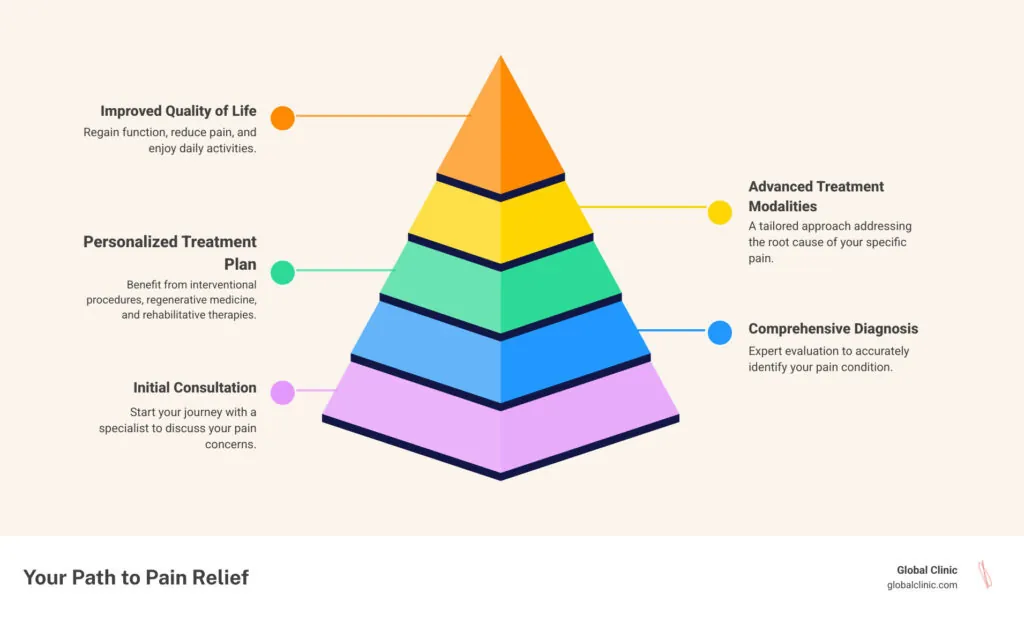
What to Expect: Conditions and Treatments at Pain Clinics
Unlike a general practitioner, pain clinics focus solely on understanding your pain and finding lasting relief. It’s not about a quick prescription; it’s about digging deep to find the root cause of your discomfort.
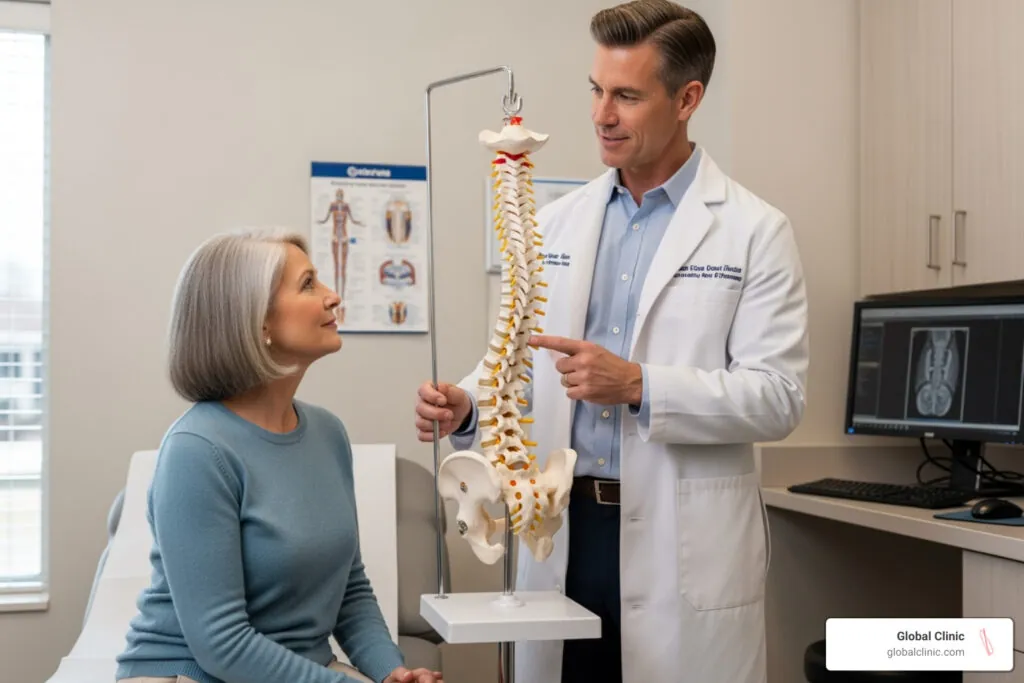
Think of acute pain as a temporary alarm and chronic pain as an alarm that won’t turn off. At Global Clinic, our comprehensive diagnostic process—including physical exams and advanced imaging—helps us understand what’s happening in your body. Once we have a diagnosis, we create a personalized treatment plan based on your condition, lifestyle, and goals, whether that’s gardening again or just sleeping through the night.
Common Conditions Treated
Many patients come to us after being told to just “live with it.” We treat a wide range of conditions that don’t have to be a life sentence.
- Back and Neck Pain: We offer lower back pain treatment for common issues like herniated discs, muscle strains, and spinal stenosis.
- Sciatica and Nerve Pain: We address the shooting pain of sciatica and the burning or tingling sensations of neuropathy, often caused by nerve compression or damage.
- Arthritis: We help manage joint pain from osteoarthritis and other forms of arthritis.
- Headaches and Migraines: We help patients with chronic migraines and tension-type headaches.
- Widespread and Post-Surgical Pain: Our multidisciplinary approach can help people living with fibromyalgia or persistent pain after surgery.
- Joint and Disc Issues: We treat degenerative disc disease, spinal stenosis, and pain in the shoulder, hip, and knee. For those with hip joint or hip muscle pain, our joint injection therapy offers targeted relief.
A Multidisciplinary Approach to Care
At Global Clinic, you get an entire team collaborating on your care. Your pain management doctor, often board-certified in anesthesiology or physical medicine, leads the team by performing evaluations, ordering tests, and conducting interventional procedures. They work alongside:
- Physical Therapists: Who design exercise programs to rebuild strength and restore movement. Learn more on our physical therapy page.
- Chiropractors: Who focus on spinal alignment and joint function through manual adjustments.
- Nurse Practitioner: Who helps coordinate your care, monitor progress, and answer questions.
This coordinated approach ensures everyone on your team is on the same page, providing comprehensive care that addresses every aspect of your pain.
Advanced Non-Surgical Treatment Modalities
Today’s pain clinics offer advanced treatments that target pain at its source without surgery.
- Interventional Procedures: These minimally invasive techniques deliver medication directly to the source of pain, guided by imaging. Examples include epidural steroid injections, facet injections, and nerve blocks.
- Radiofrequency Ablation (RFA): This procedure uses heat from radio waves to ablate nerve tissue, which can interrupt pain signals for months at a time. It is often used for arthritis pain in the spine.
- Regenerative Medicine: PRP (platelet-rich plasma) injections use your own blood’s growth factors to support healing in damaged tissues.
- Joint Injection Therapy: This involves injecting medication like corticosteroids or hyaluronic acid directly into affected joints to reduce inflammation and improve mobility.
Focus on Pain Management Without Opioids
We take the opioid crisis seriously. The best pain clinics focus on sustainable solutions that don’t carry the risks of addiction.
Our foundation is rehabilitative therapy. Regular movement and exercise are often the most effective long-term treatments. Our approach to addressing back pain with physical therapy and chiropractic care corrects underlying problems rather than just masking symptoms.
We also empower you with self-management skills and use a wide range of non-opioid medications when appropriate, aligning with recommendations such as the CDC Clinical Practice Guideline for Prescribing Opioids for Pain (2022). If opioids are necessary, they should be prescribed cautiously, using the lowest dose for the shortest time.
How to Find and Choose the Best Pain Clinic Near You
Searching for the right pain clinic is about finding a partner for your health journey. Knowing what to look for makes the process manageable and empowers you to take control.
Key Qualifications to Look for in Pain Specialists
Your specialist’s credentials are a crucial indicator of their ability to provide effective care. Look for:
- Board Certification: The physician should be board-certified in pain medicine, typically after a residency in Anesthesiology or Physical Medicine & Rehabilitation. This proves they have met rigorous standards of expertise.
- Fellowship Training: An additional year or more of intensive, specialized training in pain medicine demonstrates a deeper level of knowledge in complex conditions and advanced techniques.
- Experience: A specialist who has treated many patients with conditions similar to yours brings invaluable real-world wisdom to your care.
- Multidisciplinary Team: A clinic with in-house physical therapists, chiropractors, and other specialists signals a commitment to comprehensive care. You can learn more about how our team works together from our page on pain management consultants.
Evaluating the Patient Experience and Outcomes
Credentials show qualification, but patient reviews reveal results. When researching pain clinics, look for patterns in online testimonials. Do patients consistently report feeling heard and respected? Do they describe real improvements in their quality of life, like returning to hobbies or work?
Don’t hesitate to ask a clinic about their success rates. Reputable clinics can discuss their approach to measuring patient outcomes. A compassionate staff and a modern, state-of-the-art facility also contribute to a positive healing environment. At our Niles clinic, we’ve invested in modern equipment to provide the best tools for your recovery.
Practical Steps for Your Search
Once you’ve identified potential clinics, it’s time to take action.
- Check Insurance Coverage: Call your provider to confirm the clinic is in-network and to understand your coverage for consultations and procedures.
- Ask About Referrals: Many specialized clinics require a referral from your primary care physician. This ensures the specialist has your complete medical history. Some clinics accept direct appointments, so it’s always worth asking.
- Book Your Appointment: Most clinics offer flexible scheduling through online portals or by phone. A call can be a great way to get a feel for the clinic’s responsiveness.
Preparing for Your First Visit to a Pain Clinic
Being prepared for your first appointment helps the specialists create an effective plan right away. Gather these items beforehand:
- Medical Records: Collect relevant diagnoses, imaging results (X-rays, MRIs), and reports from other doctors.
- List of Medications: Include all prescription drugs, over-the-counter medications, and supplements with their dosages.
- Pain Diary: For a week or two, note when your pain occurs, its intensity, and what makes it better or worse. Also, describe how it affects your daily life.
- Insurance Card and ID: These are necessary for registration.
- List of Questions: Write down what you want to ask the doctor to ensure all your concerns are addressed.
Taking these steps allows you to play an active role in your care from day one.
Frequently Asked Questions about Pain Clinics
It’s natural to have questions when considering a pain clinic. Here are answers to some of the most common concerns we hear at Global Clinic.
What makes a pain clinic different from my regular doctor?
While your primary doctor manages your overall health, a pain clinic offers a deeper level of specialized expertise. The key differences are:
- Specialized Training: Pain specialists complete additional training focused on diagnosing and treating complex pain conditions.
- Advanced Diagnostics and Treatments: We use advanced techniques to find the root cause of your pain and offer non-surgical treatments—like interventional procedures and regenerative medicine—that aren’t available in a general practice.
- Team-Based Care: You gain access to a coordinated team of specialists, including physical therapists and chiropractors, who collaborate on your treatment plan for a comprehensive approach to your well-being.
Will I be prescribed opioids for my pain?
This is an important question. At responsible pain clinics, including Global Clinic, the primary goal is to find relief through the safest and most effective means, with a strong focus on non-opioid alternatives.
Our first line of treatment typically involves options like physical therapy, chiropractic care, interventional procedures, and self-management techniques. Our goal is to reduce or even eliminate your need for daily pain medication.
In the rare cases where opioids are considered, they are prescribed cautiously as part of a comprehensive plan, following strict national guidelines. The goal is always to use them for the shortest time possible while transitioning to more sustainable pain management strategies.
How long does it take to see results from pain management treatment?
This is unique to each person, as the timeline for improvement depends on your specific diagnosis, the severity of your pain, and your overall health. It’s not a one-size-fits-all answer.
That said, some patients notice improvement early. However, sustainable management of chronic pain requires patience and commitment. We are focused on long-term improvement, not just quick fixes.
Your active participation is key. Consistently attending therapy, doing home exercises, and practicing self-management techniques will significantly impact your success. During your first visit, we will discuss a realistic timeline and set expectations based on your individual situation.
Conclusion: Your Path to a Better Quality of Life
By learning about your options, you’ve taken a crucial step toward refusing to let pain control your life. Finding the right pain clinic is about partnering with experts who can help you reclaim the activities you love.
As we’ve covered, modern pain management uses sophisticated diagnostics to find the root cause of your pain and offers innovative non-surgical treatments. A multidisciplinary team of pain specialists, physical therapists, and chiropractors works together to address not just the physical symptoms, but the overall impact on your life.
Chronic pain is manageable. You don’t have to accept a diminished quality of life. With a personalized treatment plan, real relief is possible.
Global Clinic is a trusted partner for patients in Northern Chicago. Our team combines board-certified specialists and experienced therapists in a state-of-the-art facility, focusing on evidence-based treatments.
The journey to pain relief starts with seeking help from qualified specialists. Your body is sending you signals; it’s time to respond with expert care.
Ready to explore your treatment options? Call Global Pain & Spine Clinic at (847) 299-7000 or visit us at 8565 W. Dempster St. in Niles to schedule an evaluation.