




Knee Muscle Pain Relief: What to Do First
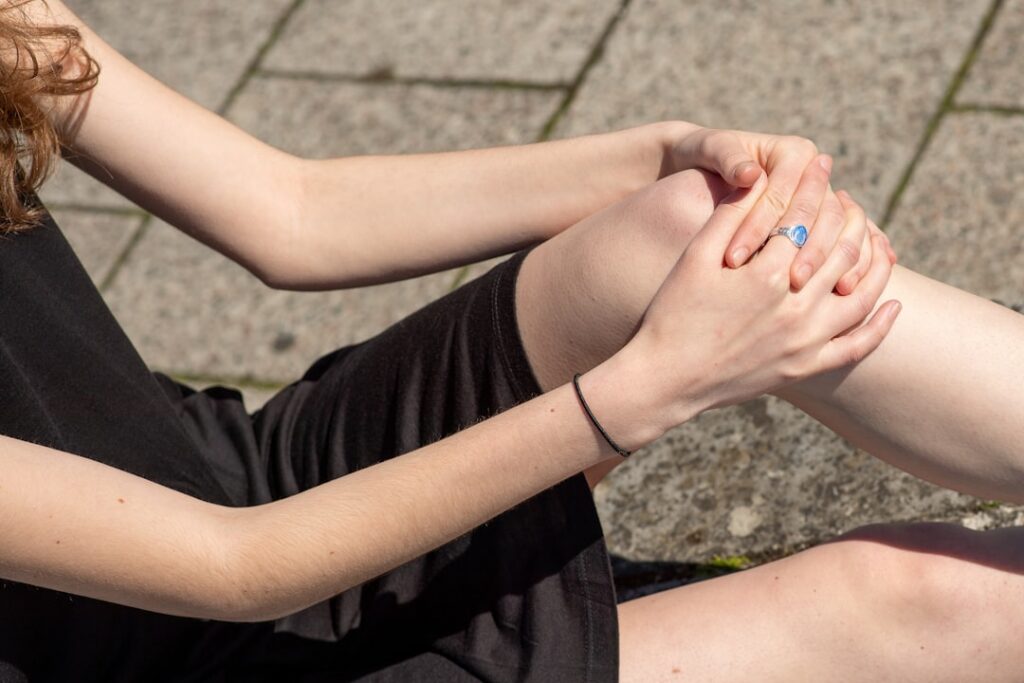
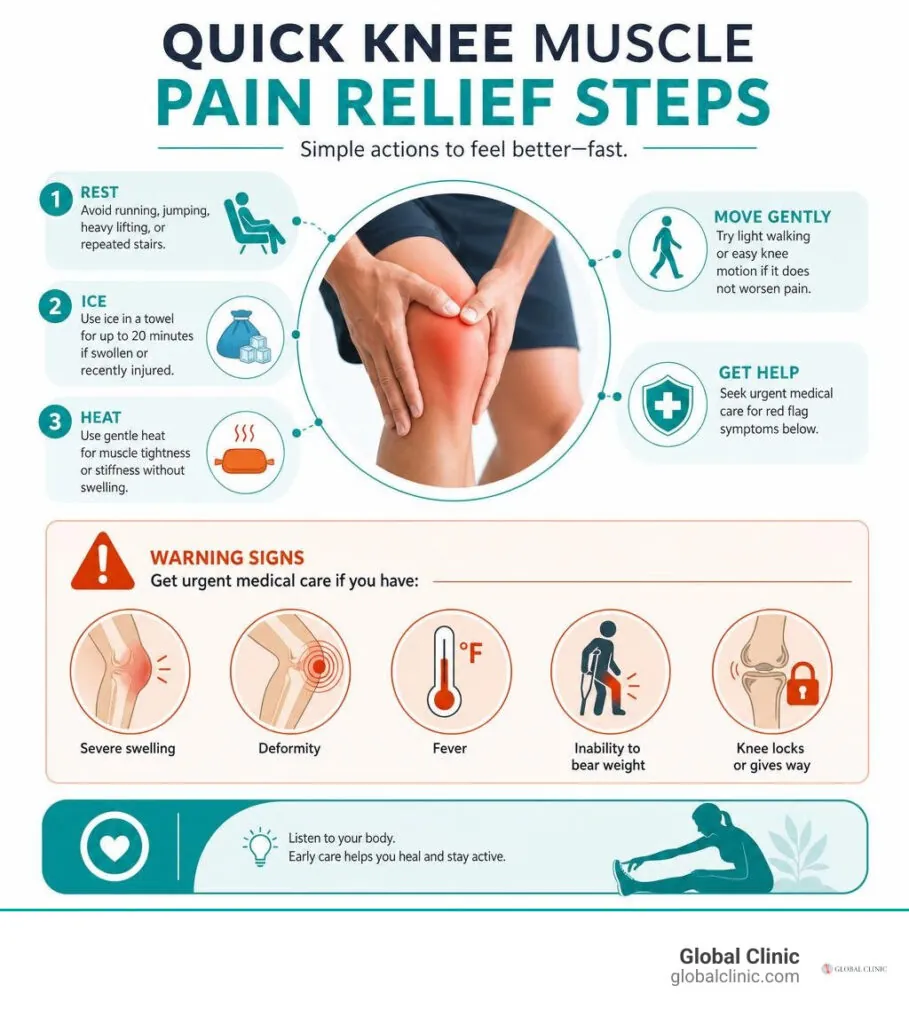
For fast knee muscle pain relief, pause the activity that triggered the pain, use ice for a new injury with swelling or gentle heat for tight, stiff muscles, and avoid deep bending until symptoms settle.
- Rest from running, jumping, heavy lifting, or repeated stairs for the day.
- Apply ice in a towel for up to 20 minutes if the knee is swollen or recently injured.
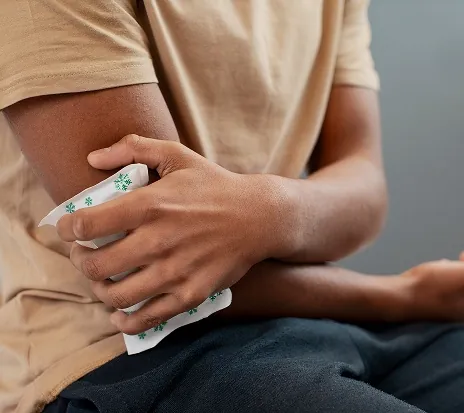
- Use gentle heat for muscle tightness or stiffness without swelling.
- Try light walking or easy knee motion if it does not worsen pain.
- Get urgent medical care for severe swelling, deformity, fever, inability to bear weight, or a knee that locks or gives way.
Knee pain does not always start inside the joint. Tight quadriceps, hamstrings, calves, or hip muscles can pull on the knee and change how the kneecap moves. Pain at the front, back, inside, or outside of the knee can point to different issues, from overuse and tendon irritation to arthritis or a sports injury.
I’m Anna Slavin, Practice Manager at Global Clinic, where our practitioners bring more than 20 years of experience in the US and Europe to patients in the Northern Chicago area. We help patients understand the source of their knee muscle pain and explore personalized care through physical therapy, pain management, chiropractic care, and other nonsurgical options.
Identifying Knee Pain Causes and Pain Locations
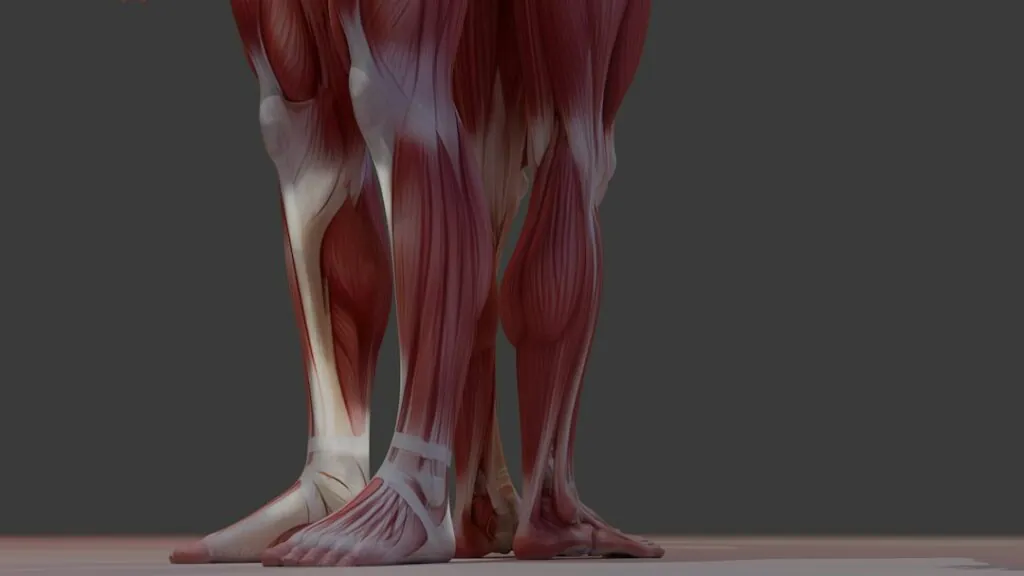
Understanding where your knee hurts is one of the most effective ways to narrow down which muscles, tendons, or joint structures are under stress. The knee is the largest joint in the human body, serving as a mechanical bridge between the upper leg and lower leg. Because it absorbs substantial body weight during daily movement, even slight imbalances in the surrounding musculature can manifest as localized pain.
In clinical practice, we often describe the knee as an “innocent bystander.” It is frequently caught between faulty mechanics at the hip above and the foot below. When hip abductors are weak, the thigh bone can collapse inward during functional activities like walking, squatting, or taking stairs. This inward collapse—known medically as dynamic knee valgus—is common in patients with patellofemoral pain and is associated with heightened discomfort.
Patellofemoral pain is common in the general population, affecting active adolescents, runners, and adults alike. Unfortunately, many patellofemoral pain cases become recurrent or chronic if the underlying mechanical causes remain unaddressed. Over time, poor tracking of the kneecap against the femur can contribute to wear-and-tear of articular cartilage, potentially progressing toward irreversible knee osteoarthritis.
Front, Back, and Side Knee Symptoms
Mapping symptoms based on exact anatomical regions helps us pinpoint the soft tissue structures responsible for discomfort:
- Front of the Knee (Anterior): Pain located directly under or around the kneecap (patella) frequently stems from patellofemoral pain syndrome or patellar tendinitis (jumper’s knee). Tightness in the quadriceps pulls on the patellar tendon, while weak hip muscles allow the kneecap to mistrack within its femoral groove.
- Back of the Knee (Posterior): Discomfort behind the knee joint often relates to tightness or strain in the popliteus muscle, upper calf (gastrocnemius), or hamstring tendons. Popliteus tightness can impair the knee’s ability to unlock smoothly from full extension.
- Inside of the Knee (Medial): Pain along the inner edge of the knee typically involves the vastus medialis oblique (VMO) muscle, pes anserine tendons, or the medial collateral ligament. An inward collapse of the knee puts excessive tensile strain on these medial structures.
- Outside of the Knee (Lateral): Discomfort along the outer border is frequently connected to iliotibial (IT) band tightness or strain in the vastus lateralis and biceps femoris. A tight IT band can rub against the lateral femoral epicondyle, producing sharp, activity-induced discomfort.
If you are experiencing persistent discomfort across any of these zones, reviewing comprehensive guidance on knee pain can help clarify your symptoms and highlight appropriate therapeutic pathways.
Home Strategies for Knee Muscle Pain Relief
When addressing acute soft tissue irritation or chronic muscular tightness, selecting the right self-care approach is essential. For decades, the traditional resting protocol known as RICE (Rest, Ice, Compression, Elevation) served as the standard home response. However, modern clinical science increasingly highlights the advantages of the MEAT protocol (Movement, Exercise, Analgesics, Treatment) for subacute soft tissue recovery, as controlled movement promotes tissue remodeling and joint fluid circulation.
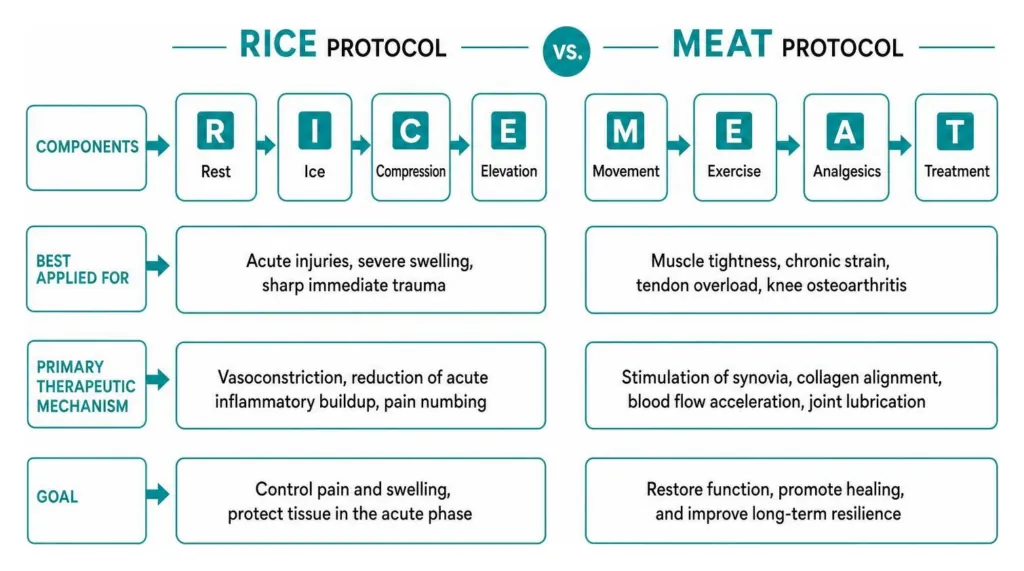
| Protocol | Components | Best Applied For | Primary Therapeutic Mechanism |
|---|---|---|---|
| RICE | Rest, Ice, Compression, Elevation | Acute injuries, severe swelling, sharp immediate trauma | Vasoconstriction, reduction of acute inflammatory buildup, pain numbing |
| MEAT | Movement, Exercise, Analgesics, Treatment | Muscle tightness, chronic strain, tendon overload, knee osteoarthritis | Stimulation of synovia, collagen alignment, blood flow acceleration, joint lubrication |
First-Line At-Home Management
For localized muscle tension surrounding the knee, thermal therapy plays a vital role. While ice is beneficial immediately following a sharp injury or severe swelling event, heat therapy is often more helpful for myofascial muscle pain and stiffness. Applying a large heating pad across the inner thigh, outer thigh, or calf for 15 to 20 minutes relaxes tight muscular bands, increases local metabolic blood flow, and decreases joint stiffness.
Muscular discomfort often originates from myofascial trigger points—hyperirritable spots within taut bands of muscle tissue. Research indicates that trigger points are common in people with knee osteoarthritis, especially in more severe cases. The vastus medialis oblique (VMO) on the inner thigh and the gastrocnemius in the calf are especially prone to developing these tender knots.
Targeting these muscles with evidence-based self-care can offer noticeable comfort. Exploring practical home treatments for knee muscle pain provides actionable ways to calm irritated tissues, while structured joint pain management ensures your recovery plan remains safe and effective.
Foam Rolling and Massage Techniques
Foam rolling provides self-myofascial release, which may ease muscle tension and lower sensitivity:
- Quadriceps Release: Lie face down on an exercise mat with a foam roller positioned under your front thighs. Gently roll from just above the kneecap up toward the hip crease. When you encounter a tender spot, hold your position for 30 seconds while taking slow, deep breaths.
- Inner Thigh (VMO) Focus: Angle your thigh outward to target the inner quad muscle directly above the knee joint. Roll slowly along the lower third of the inner thigh to release VMO tension.
- Calf (Gastrocnemius) Release: Sit on the floor with the foam roller under your calf muscle. Cross one leg over the other to increase pressure if comfortable, and gently roll from below the knee down to the lower calf.
- Friction Massage: Using your thumb or fingertips, apply firm, gentle cross-friction pressure across tight tendinous attachments directly above or below the kneecap for 2 to 3 minutes to improve local circulation.
Step-by-Step Exercise and Rehabilitation Protocols
Exercising with sore knees might seem intimidating, but targeted movement is one of the most reliable methods for long-term recovery. However, jumping straight into dynamic squats or heavy leg presses can trigger joint protection mechanisms. When a joint is swollen or painful, the brain dials down muscular access—a phenomenon called arthrogenic muscle inhibition. In this state, your quadriceps are not necessarily weak; rather, your nervous system is actively restricting access to them to protect the joint.
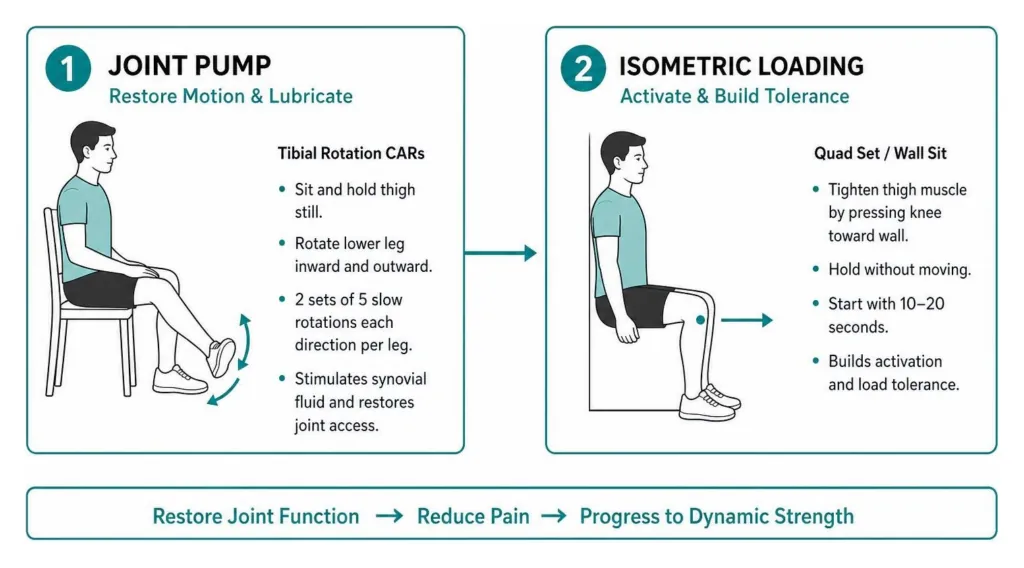
To overcome this protective response, exercise protocols must follow a precise logical order: first restore joint rotation and pump joint fluid, then apply non-moving (isometric) loads, and finally progress to dynamic strength building.
Joint Warm-Up and Access Activation
Before attempting strength exercises, perform gentle mobilization drills to stimulate the production of natural synovial fluid within the joint cavity. This acts as the knee’s built-in lubricant.
- Tibial Rotation CARs (Controlled Articular Rotations): Sit on the edge of a chair or floor. Hold your thigh still with both hands. Rotate your lower leg and foot inward and outward, feeling the shin bone (tibia) rotate relative to your thigh bone. Perform 2 sets of 5 slow, deliberate rotations in each direction per leg. Tibial rotation is often the first movement pattern lost in a painful knee joint.
- Terminal Knee Extensions (TKEs): Anchor a light resistance band around a secure post and loop the other end behind your knee joint. Stand facing the anchor point with your knee slightly bent. Slowly straighten your knee against the band’s resistance, fully contracting your quadriceps at the back of the motion. Perform 2 sets of 15 to 20 controlled repetitions.
For a deeper understanding of proper exercise sequencing, reviewing detailed insights on knee rehabilitation exercise ordering helps ensure you build capacity without provoking joint irritation.
Progressive Exercises for Knee Muscle Pain Relief
Once joint fluid is moving and neural inhibition is reduced, isometric exercises allow you to load supporting muscles safely without grinding joint surfaces:
- Isometric Wall Sits: Stand with your back flat against a smooth wall and slide down into a comfortable, shallow sit (keeping knees behind toes). Aim for a pain level no higher than a 2 or 3 on a 10-point scale. Work up toward holding this position for 60 seconds. To progress, transition toward single-leg wall sit holds.
- Foam Roller Co-Contraction Hamstring Bridges: Lie on your back with your knees bent and feet resting on a foam roller or short step. Press down through your heels, scoop your pelvis upward slightly, and engage both your hamstrings and calves simultaneously. Hold for 30 to 60 seconds.
- Single-Leg Straight Leg Raises: Lie flat on your back with one knee bent and the target leg extended straight. Tighten the quadriceps of the straight leg and lift it about 12 inches off the floor. Pause for 2 seconds at the top before slowly lowering down over 3 to 5 seconds. Perform 3 sets of 10 to 15 repetitions per leg.
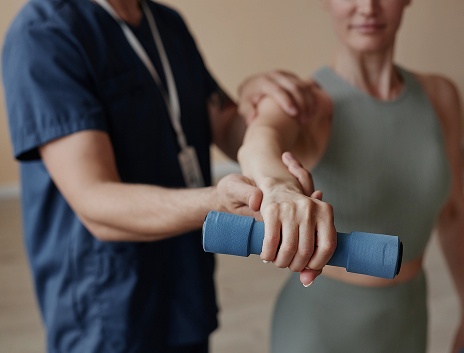
Implementing structured routines like these seven knee stabilization exercises systematically reinforces joint stability. If pain limits your progress, working directly with licensed clinical specialists through customized physical therapy ensures exercises are adapted to your individual anatomy.
Stretching and Flexibility Essentials
Flexible muscles act like supple shock absorbers, whereas tight muscles exert constant tensile pull on attached tendons:
- Standing Quadriceps Stretch: Stand near a wall or sturdy chair for balance. Bend one knee backward, reaching behind to grasp your ankle or foot. Gently pull your heel toward your glutes while keeping your knees together and standing tall. Hold for 30 seconds.
- Hamstring Stretch: Place one heel on a low step or stool with the leg extended straight and toes pointing upward. Hinge forward from the hips with a flat back until you feel a gentle stretch along the back of your thigh. Hold for 30 seconds.
- Standing Calf Stretch: Place your hands against a wall and step one foot back, keeping the back heel firmly flat on the floor and the rear leg straight. Lean forward into the wall until a release is felt in the upper calf. Hold for 30 seconds.
Consistently practicing these 3 stretches for knee pain relief may help restore muscle elasticity and improve kneecap tracking over a few weeks.
Advanced Therapies, EMS, and Lifestyle Modifications
Managing persistent knee discomfort frequently requires expanding beyond simple home exercise into advanced therapeutic techniques and functional lifestyle adjustments. Re-educating lower-limb biomechanics during daily tasks—such as walking, squatting, and descending stairs—is vital for lasting recovery.
Electrical Stimulation Techniques for Knee Muscle Pain Relief
Neuromuscular Electrical Muscle Stimulation (EMS) has emerged as a valuable tool for overcoming persistent quadriceps inhibition. EMS sends mild electrical impulses through skin electrodes directly into motor nerves, triggering involuntary muscular contractions in specific target tissues like the vastus medialis oblique (VMO).
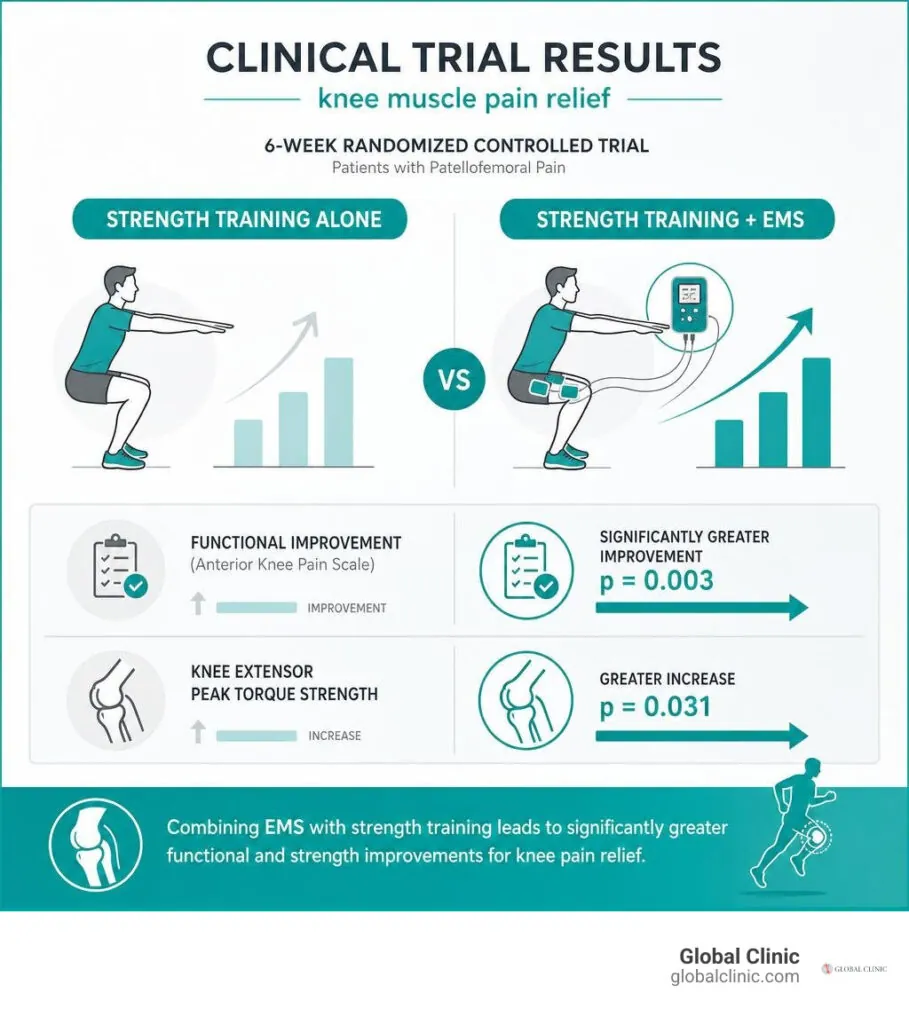
A 6-week randomized controlled clinical trial evaluated patients with patellofemoral pain. Researchers compared traditional functional strength training alone against strength training combined with VMO-targeted electrical muscle stimulation.
Key findings demonstrated that combining EMS with strength training yielded:
- Significantly greater functional improvements on the Anterior Knee Pain Scale (AKPS) (p = 0.003).
- Greater increases in knee extensor peak torque strength (p = 0.031).
- Improved medial-to-lateral quadriceps activation ratios (VM/VL).
- Superior corrections in lower-limb mechanics during stair descent, specifically reducing peak dynamic knee valgus (inward collapse) and excessive hip adduction.
Integrating these clinical insights into a structured sports physical therapy program may help individuals rebuild quad capacity while protecting sensitive joint structures. Interested readers can review the full clinical research on EMS and strength training for detailed parameter protocols.
Weight Management and Load Reduction
Mechanical force across the knee joint escalates dramatically during weight-bearing activities. During level-ground walking, the knee absorbs forces equal to approximately 1.5 to 3 times your body weight. However, during stair descent, patellofemoral joint loading increases to approximately twice as much pressure as flat-ground walking.
Because of this leverage effect, body weight modifications have a profound impact on knee stress:
- Every pound of weight reduced removes roughly 4 pounds of cumulative pressure from the knee joint during daily step cycles.
Combining activity modification—such as substituting high-impact running with low-impact swimming, cycling, or rowing—alongside gradual weight management provides significant mechanical relief to overworked knee muscles and cartilage.
Clinical Treatments and Medical Interventions
While conservative home care and rehabilitation exercises resolve many knee muscle issues, complex or chronic cases benefit from comprehensive medical evaluation. A thorough clinical diagnostic assessment identifies whether pain stems from muscular trigger points, ligament tears, meniscus injuries, or underlying joint degeneration.
For residents in Niles, IL, and surrounding communities like Skokie, IL, Glenview, IL, Park Ridge, IL, Morton Grove, IL, Des Plaines, IL, Chicago, IL, and Mount Prospect, IL, accessing multidisciplinary care ensures every aspect of joint health is addressed. Navigating options with expert guidance through professional pain management bridges the gap between symptom control and long-term functional restoration.
Nonsurgical and Injection Options
When muscle tightness and joint inflammation fail to respond to standard home care, specialized clinical interventions may help restore comfort and support recovery:
- Trigger Point Injections: Administering precise local anesthetic injections directly into hyperirritable muscle knots in the VMO or gastrocnemius releases persistent muscular guarding.
- Hyaluronic Acid Injections: These targeted therapies supplement the knee’s natural joint fluid, delivering lubrication that reduces mechanical friction and eases secondary muscular strain for up to 6 months.
- Platelet-Rich Plasma (PRP) Therapy: A key form of regenerative medicine, PRP utilizes concentrated blood platelets rich in growth factors that may help reduce localized inflammation and support the repair of connective tissue.
- Corticosteroid Injections: These anti-inflammatory injections provide rapid, localized relief during acute joint flare-ups, opening a comfortable window for physical therapy exercises.
Exploring modern non-surgical interventions like regenerative medicine, specialized platelet-rich plasma therapies, targeted therapeutic injections, and comprehensive joint injection therapy can help you resume active daily living without unnecessary downtime.
When to Seek Professional Evaluation
Self-care should be paused and prompt medical attention sought if any of the following warning signs occur:
- Inability to bear weight on the leg or feeling as though the knee will collapse.
- Severe, visible joint deformity or rapid, deep swelling.
- Fever accompanied by localized redness, warmth, or severe joint pain (which can signal joint infection).
- A knee joint that physically locks in place or catches repeatedly during movement.
- Pain that consistently wakes you from sleep at night or worsens progressively despite rest.
If you are dealing with persistent discomfort, scheduling an evaluation for specialized chronic pain treatment ensures you receive an accurate diagnosis and a clear, evidence-based recovery plan.
Frequently Asked Questions About Knee Muscle Pain
What is the fastest way to relieve knee muscle pain at home?
The fastest way to ease immediate knee muscle pain is to pause aggravating activities and apply a large heating pad across tight muscles like the quadriceps or calves for 15 to 20 minutes. Follow heat therapy with gentle self-massage using a foam roller on surrounding muscles, and perform isometric holds like shallow wall sits to restore muscular control without aggravating the joint.
How do weak hip muscles cause front knee pain?
The knee sits directly between the hip and foot. When hip abductors and external rotators are weak, the thigh bone tends to rotate and tilt inward during weight-bearing activities—a movement pattern called dynamic knee valgus. This inward angle pulls the kneecap out of its natural tracking groove, concentrating excessive mechanical pressure on the cartilage and soft tissues at the front of the knee.
When should you see a doctor for knee pain?
You should see a healthcare professional if you cannot bear weight on your leg, if the joint exhibits severe swelling, redness, or warmth, or if you experience a fever. Additionally, seek medical evaluation if the knee physically locks, catches, gives way, or fails to improve after two to three weeks of consistent conservative home care.
Conclusion
Finding lasting knee muscle pain relief requires a balanced, step-by-step approach. By identifying where your pain originates, releasing tight myofascial trigger points, applying structured rehabilitation protocols, and correcting lower-limb movement patterns, you can help relieve pressure on your knee joints and regain comfortable mobility.
At Global Clinic, our multidisciplinary team brings over 20 years of global medical experience to patients across Northern Chicago, including Niles, IL, Skokie, IL, Glenview, IL, Park Ridge, IL, Morton Grove, IL, Des Plaines, IL, and Mount Prospect, IL. Our patient-first philosophy focuses on identifying the root cause of discomfort and delivering lasting recovery through physical therapy, chiropractic care, pain management, acupuncture, and regenerative medicine.
If knee discomfort is limiting your daily routine, explore our comprehensive resource guide on the ultimate guide to pain management or call our Niles clinic at (847) 299-7000 to schedule an appointment.