





What Does Pain Relief for Muscle Strain Actually Look Like?
Finding effective pain relief for muscle strain starts with one simple truth: most strains heal well at home — but only if you treat them correctly from day one.
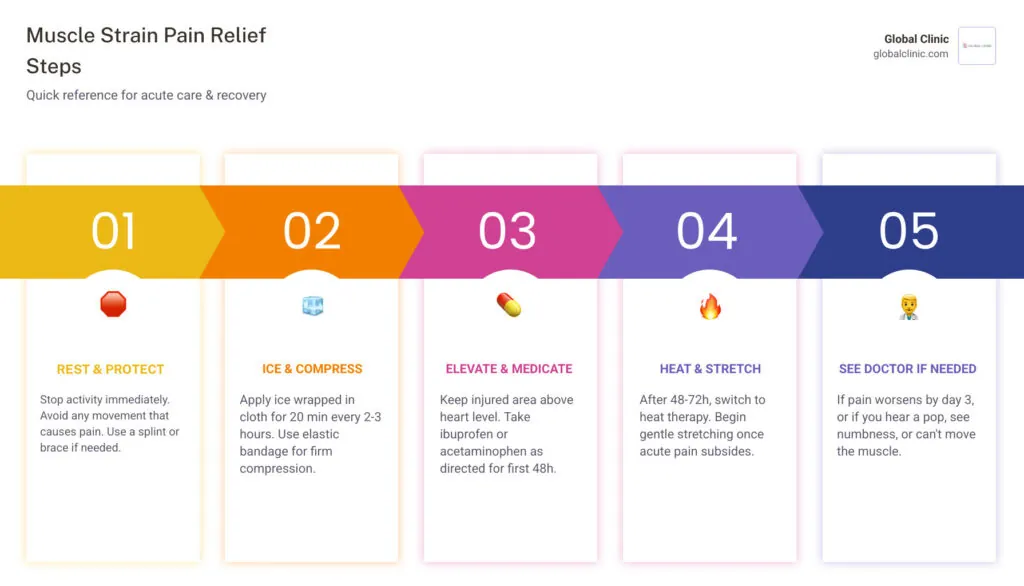
Here is a quick overview of the most effective approaches:
| Step | Action | When |
|---|---|---|
| 1 | Rest the injured muscle | Immediately |
| 2 | Apply ice (20 min, wrapped in cloth) | First 48–72 hours |
| 3 | Compress with elastic bandage | First few days |
| 4 | Elevate above heart level | First few days |
| 5 | Consider an over-the-counter pain reliever, if appropriate for you | As directed, first few days |
| 6 | Transition to heat therapy | After 48–72 hours |
| 7 | Begin gentle stretching | Once acute pain subsides |
| 8 | See a doctor if pain worsens by day 3 | If no improvement |
A muscle strain — also called a pulled muscle — happens when muscle fibers are stretched beyond their limit or torn. It can be as minor as a few microscopic nicks in the tissue, or as serious as a complete rupture where the muscle tears into two separate pieces.
Strains can strike suddenly (like reaching too far for a ball) or build slowly over time from repetitive movements. Either way, the pain is real — and knowing what to do next matters.
I’m Anna Slavin, Practice Manager at Global Pain & Spine Clinic, a multidisciplinary center whose team brings over 20 years of global medical experience to helping patients across the Northern Chicago area find lasting pain relief for muscle strain and other musculoskeletal conditions. In this guide, our clinical team walks you through everything — from immediate home care to advanced treatment options — so you can recover safely and confidently.
Understanding Muscle Strains: Soreness, Sprains, and Severity Grades
When you experience sudden pain in your back, shoulder, or leg, your first question is likely: What did I actually do to myself? It is incredibly easy to mistake a muscle strain for a joint sprain or just a bad case of post-workout soreness. However, treating these conditions the same way can delay your recovery.
Strains vs. Sprains: Muscle vs. Joint
The fundamental difference between a strain and a sprain comes down to the type of tissue injured:
- Muscle Strain: An injury to a muscle or a tendon (the thick, fibrous cords of tissue that connect muscle to bone). Strains commonly strike the shoulders, neck, lower back, hamstrings, and calves.
- Sprain: An injury to a ligament, which is the tough band of connective tissue linking bone to bone within a joint. Sprains typically happen during sudden twisting motions. To put this in perspective, approximately 25,000 people experience sprained ankles every day, making joint stability a major clinical concern.
Soreness vs. Strain: The Day Three Rule
Normal muscle soreness (often called Delayed Onset Muscle Soreness, or DOMS) is a widespread, dull ache that occurs after challenging your muscles. This mild microscopic damage actually prompts your body to rebuild the fibers stronger. Soreness typically peaks within 24 to 48 hours and steadily eases by day three.
A muscle strain, however, is highly localized to one specific, tender spot. If your pain intensity has increased by day three rather than fading, you are likely dealing with a strained muscle rather than simple soreness.
The Grading System and Healing Timelines
Clinicians categorize muscle strains into three distinct grades based on the level of tissue damage:
- Grade I (Mild): Only tiny, microscopic fibers within the fabric of your muscle are stretched or slightly torn. You will feel mild tenderness and minor swelling, but the muscle retains its overall strength. If you have a minor (grade I) muscle strain, it should heal within a few weeks with basic conservative care.
- Grade II (Moderate): A significant number of muscle fibers are torn, resulting in more intense pain, visible bruising, and a noticeable loss of strength. Moderate (grade II) muscle strains may take several weeks to months to heal completely.
- Grade III (Severe): The muscle or tendon is completely ruptured, sometimes tearing entirely away from the bone. This can cause a sudden “popping” sensation and may present as a visible dent or gap under the skin where the muscle pieces have separated. A severe (grade III) muscle strain can take four to six months to heal after surgery, often requiring up to six weeks of immobilization in a cast before rehabilitation can even begin.
Biomechanical Risk Factors: Why Certain Muscles Tear
To understand why muscles tear, think of them like a bungee cord. A new, elastic bungee cord stretches easily, but an old, stiff, or suddenly jerked cord will fray and pull apart under sudden force.
Certain muscles are highly vulnerable to this effect due to three specific biomechanical risk factors:
- Crossing Multiple Joints: Muscles like the hamstrings or calves cross more than one joint, acting as crucial restraints that absorb high-impact forces.
- Eccentric Contractions: This occurs when a muscle is forced to lengthen while under a load (such as lowering a heavy dumbbell or walking downhill). Eccentric contractions subject muscle fibers to intense mechanical stress.
- Fast-Twitch (Type II) Fibers: These fibers are designed for short, powerful bursts of speed and force, making them highly susceptible to acute tears during explosive movements.
When these damaged fibers heal naturally, the body often lays down stiff, brittle scar tissue instead of flexible, healthy muscle tissue. This makes a previously injured muscle highly prone to future re-injury if not rehabilitated correctly. To dive deeper into how these injuries present, you can read the Cleveland Clinic’s Scientific explanation of muscle strains.
| Sensation / Feature | Muscle Soreness (DOMS) | Muscle Strain (Pulled Muscle) | Joint Sprain |
|---|---|---|---|
| Affected Tissue | General muscle groups | Muscle or tendon (connects muscle to bone) | Ligament (connects bone to bone) |
| Location of Pain | Widespread, broad area | Highly localized to one specific spot | Centered directly over a joint |
| Pain Timeline | Peaks at 24–48 hours, improves by day 3 | Often worsens or persists past day 3 | Immediate sharp pain, swelling |
| Sensation | Dull, generalized ache | Sharp pain, localized tenderness, weakness | Sharp pain, joint instability, stiffness |
Immediate Home Care and Pain Relief for Muscle Strain
When a muscle strain strikes, taking immediate and correct action can help shorten your overall recovery timeline. The primary goal of acute treatment is to control swelling, protect the vulnerable tissue, and mitigate initial pain.
From RICE to PEACE & LOVE: Modern Soft Tissue Care
For decades, the standard treatment for soft tissue injuries was the RICE method (Rest, Ice, Compression, Elevation), which is still widely endorsed by organizations like the American Academy of Orthopaedic Surgeons (AAOS). Over time, this evolved into the PRICE protocol, adding “Protection” to the beginning of the process.
In recent sports medicine circles, however, there is an ongoing shift toward the PEACE & LOVE protocol. This modern framework balances immediate protection with active recovery, challenging the over-use of anti-inflammatory treatments (like ice and NSAIDs) during the early stages of healing, as some initial inflammation is necessary for natural tissue repair.
Here is how you can apply these combined principles for immediate relief:
- Protect: Shield the injured muscle from further damage. This might mean using crutches, a cane, or a temporary splint to keep weight off a lower-body injury.
- Rest: Stop any physical activities that cause pain or discomfort. However, do not remain completely sedentary; allow light, pain-free movement to maintain circulation.
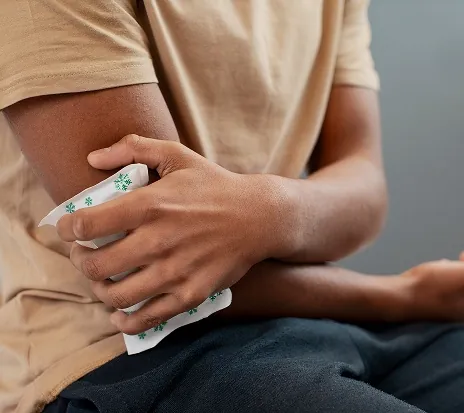
- Ice: Apply cold packs wrapped in a thin cloth to the injured area for 15 to 20 minutes at a time. Repeat this application every 2 to 3 hours while awake for the first few days to constrict blood vessels and numb acute pain.
- Compress: Snugly wrap the injured area with an elastic bandage to minimize swelling. Always start wrapping from the point farthest from your heart and move inward to avoid trapping fluid in your extremities. If you experience numbness, tingling, or increased pain below the wrap, loosen it immediately.
- Elevate: Raise the injured limb above heart level, especially when resting or sleeping, to assist gravity in draining excess fluid away from the injury.
Once the first few days of acute pain have passed, you can transition to the “LOVE” phase: Load (gradually reintroducing weight as tolerated), Optimism (maintaining a positive mindset, which directly benefits physical healing), Vascularization (engaging in pain-free cardiovascular activity to boost blood flow), and Exercise (performing targeted rehabilitation movements).
For a comprehensive breakdown of managing sudden injuries, see The No-Nonsense Guide to Acute Pain Treatment.
Optimizing Recovery: Ice vs. Heat and Medication Guidelines
One of the most common points of confusion for patients recovering from a muscle strain is deciding whether to reach for an ice pack or a heating pad.
The 48-to-72-Hour Rule
The general rule of thumb is to use cold therapy first, followed by heat therapy later:
- The Acute Phase (First 48 to 72 Hours): Use ice. Cold therapy constricts local blood vessels (vasoconstriction), which reduces swelling, limits internal bleeding, and numbs the sharp pain signals traveling to your brain.
- The Rehabilitation Phase (After 72 Hours): Once the initial swelling has subsided and the acute pain decreases, switch to heat. Applying a heating pad or warm compress for 20 minutes at a time causes blood vessels to widen (vasodilation). This increases local blood flow, delivering oxygen and essential nutrients to the damaged tissue to speed up healing and relax stiff muscles.
Pro-tip: A highly effective strategy during active recovery is to use warm compresses before stretching or light exercise to loosen the muscle fibers, and then apply ice to the area afterward to prevent post-workout swelling. For additional medically-vetted timelines on home care, consult the MedlinePlus Muscle strain treatment guidelines.
Over-the-Counter Medications for Pain Relief for Muscle Strain
When managing pain from a muscle strain, over-the-counter (OTC) medications can be highly effective when used correctly.
Oral Pain Relievers
- Nonsteroidal Anti-Inflammatory Drugs (NSAIDs): Medications such as ibuprofen (Advil, Motrin) and naproxen sodium (Aleve) help reduce both pain and local tissue inflammation. However, you should avoid over-relying on NSAIDs. Use them only during the initial days of recovery, and consult a doctor if you have a history of heart, liver, stomach, or kidney disease, as they can cause gastrointestinal upset.
- Acetaminophen: Medications like Tylenol relieve pain but do not target inflammation. This makes acetaminophen an excellent alternative for patients who are prone to stomach issues or cannot safely take NSAIDs.
Topical Pain Creams
Topical creams containing menthol or capsaicin offer a highly effective, non-systemic alternative to oral pills. These creams utilize a neurological phenomenon known as “sensory confusion.”
Because the human nervous system struggles to process multiple sensory inputs in a single area simultaneously, the cooling or warming sensation of the cream essentially “scrambles” and blocks the localized pain signals traveling to your brain. For a deeper look at balancing these options, explore our resource on Effective Pain Management.
Holistic Home Care and Lifestyle Strategies for Faster Healing
True recovery from a muscle strain requires more than just resting and waiting; it involves actively supporting your body’s natural cellular repair mechanisms.
- Gentle Stretching and Isometric Contractions: Once the initial sharp pain has subsided, begin performing very gentle stretches to re-establish normal muscle length and prevent stiff scar tissue from setting in. You can also perform gentle isometric contractions — squeezing the injured muscle without moving the joint — and holding it for 30 seconds at a time to promote normal tissue reknitting.
- Hydration: Drink plenty of water throughout the day. Proper hydration supports your body’s normal healing processes.
- Daily Protein Calculation: Your body requires amino acids to rebuild torn muscle fibers. A simple formula to calculate your daily protein needs during recovery is to multiply your body weight in pounds by 0.36 to find the minimum grams of protein you should consume daily (e.g., a 150-pound individual should aim for at least 54 grams of protein, ideally spread across meals).
- Sleep Hygiene: Aim for 7 to 9 hours of quality sleep per night. Deep sleep is when your body releases human growth hormone (HGH), which plays an important role in tissue repair and muscle recovery.
When to Seek Professional Medical Care
While most people can recover from a minor pulled muscle at home, certain symptoms serve as critical warning signs that you require professional medical attention.
Red Flag Symptoms
You should seek immediate medical evaluation if you experience any of the following:
- An audible “pop” or “snap” sensation at the moment of injury.
- A visible dent, gap, or unusual bulge under the skin.
- Severe swelling, intense bruising, or worsening pain after 48 hours.
- Inability to move the affected limb or bear weight.
- Neurological or vascular changes, such as the limb becoming cool, pale, numb, or tingling.
- Pain that does not improve after three days to a week of home care.
For a detailed look at how healthcare providers evaluate these symptoms, read Harvard Health on muscle strain pain.
Advanced Clinical Therapies and Pain Relief for Muscle Strain
If your muscle strain is severe, slow to heal, or keeps recurring, professional clinical care can support your recovery and help restore mobility. At Global Pain & Spine Clinic, our multidisciplinary team in Niles, IL, specializes in a wide range of advanced therapies tailored to your unique needs:
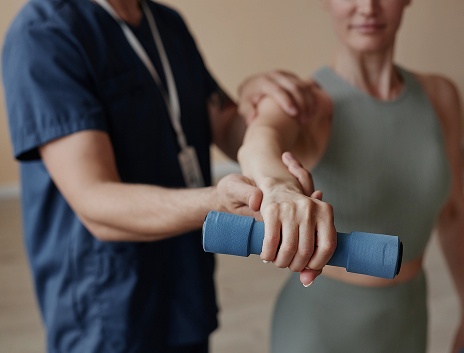
- Physical Therapy: Customized stretching and strengthening programs to rebuild muscle tissue, correct biomechanical imbalances, and prevent the formation of brittle scar tissue.
- Chiropractic Care: Gentle adjustments to ensure proper spinal and joint alignment, reducing compensatory stress on your strained muscles.
- Regenerative Medicine: Advanced therapies like Platelet-Rich Plasma (PRP) injections, which use concentrated growth factors from your own blood and may be considered for slow-healing muscle or tendon injuries after evaluation.
- Acupuncture and Dry Needling: Targeted therapies that release deep muscle knots, improve local blood flow, and disrupt chronic pain pathways. If you are looking for relief from deep tissue tension, search for Dry Needling Near Me to see how we help patients across Northern Chicago.
- Specialized Pain Care: For persistent discomfort or muscle spasms that interfere with your daily life, explore our specialized options for Back Spasm Treatment.
Proactive Prevention: Conditioning and Proper Biomechanics
The best way to manage a muscle strain is to prevent it from happening in the first place. By incorporating smart training principles and proper biomechanics, you can keep your muscles resilient and flexible.
- Dynamic Warm-Ups: Never stretch “cold” muscles. Before physical activity, perform a 5- to 10-minute dynamic warm-up (such as power walking, leg swings, arm circles, or bodyweight lunges) to increase blood flow and prepare your tissues for movement.
- Conditioning and Cross-Training: Gradually condition your muscles to absorb sudden forces. Incorporate cross-training to prevent repetitive strain on a single muscle group, and give your body adequate rest days to rebuild.
- Proper Lifting Technique: When lifting heavy objects, always bend at your knees and hips rather than your waist, keeping the load close to your body.
- Workplace Ergonomics and Posture: If you work at a desk, arrange your chair, monitor, and keyboard to support proper posture, reducing chronic strain on your neck, shoulders, and lower back. If you are struggling with pain in your lower body, check out our guide on Hip Muscle Pain Relief to learn how proper biomechanics can protect your joints.
Frequently Asked Questions about Muscle Strains
How can I tell the difference between a muscle strain and a pinched nerve?
The main difference lies in the character and path of the pain. Muscle strain pain is typically a localized, dull ache or sharp pain directly at the point of injury, which may be accompanied by swelling and bruising.
Nerve pain, on the other hand, is usually described as a sharp, burning, or electric sensation that radiates along a specific nerve path (such as down your leg or arm). It is also frequently accompanied by numbness, tingling, or sudden weakness.
How long does it take for a grade II or III muscle strain to heal?
A moderate Grade II strain typically takes several weeks to a few months to heal completely with dedicated physical therapy. A severe Grade III strain, which often involves a complete rupture, usually requires surgical intervention to stitch the separated ends of the muscle back together. Following surgery, recovery can take four to six months, often starting with a period of immobilization in a cast or brace.
Is it safe to massage a newly strained muscle?
During the acute phase (the first 48 hours), you should avoid deep tissue massage, as it can worsen internal bleeding and swelling. However, after the acute phase, very gentle massage or using a foam roller or tennis ball for exactly 30 seconds at a time can introduce sensory distraction to relieve pain and help promote the normal breakdown and reknitting of damaged muscle tissue. For persistent tightness, professional massage therapy can help.
Conclusion
At Global Pain & Spine Clinic, located in Niles, IL, we serve the Northern Chicago area, including Skokie, Glenview, Park Ridge, Morton Grove, Des Plaines, and Mount Prospect. Our multidisciplinary, patient-first philosophy is built around a simple goal: helping you achieve lasting recovery without an over-reliance on medication.
Whether you are dealing with a fresh sports injury or a stubborn, recurring muscle pull, our team of licensed specialists is here to design a personalized treatment plan that works for your body. For a comprehensive look at how we treat musculoskeletal injuries, explore our Pain Management Ultimate Guide, or call our Niles clinic at (847) 299-7000 to schedule your evaluation.