





Why a PRP Injection for Shoulder Pain Could Change Everything
A PRP injection for shoulder pain is one of the most promising non-surgical options available today for people dealing with rotator cuff injuries, tendinopathy, frozen shoulder, and arthritis. If you’re in pain and want to know the basics fast, here’s what matters most:
Quick Answer: What Is a PRP Injection for Shoulder Pain?
- What it is: A treatment using concentrated platelets from your own blood to stimulate healing in damaged shoulder tissue
- Who it helps: Patients with rotator cuff tears, tendinopathy, frozen shoulder, biceps tendonitis, or shoulder arthritis
- How long it takes: About 45–60 minutes in an outpatient setting
- When you’ll feel it: Many patients notice reduced pain within 1–3 weeks; peak results at 3–6 months
- How long it lasts: Varies; often several months or longer
- Sessions needed: Usually 1–3 injections spaced a few weeks apart
Shoulder pain is not just uncomfortable — it disrupts sleep, limits your range of motion, and gets in the way of everyday life. Whether it came on gradually from wear and tear or suddenly from an injury, the frustration is real.
The good news? You don’t always have to choose between living with the pain and going under the knife. PRP therapy sits in a middle ground — using your body’s own biology to support the repair of damaged tissue, rather than only masking symptoms.
And the evidence is catching up. A 2025 meta-analysis found that PRP outperformed corticosteroids for rotator cuff pain at 6 months. A double-blind RCT found PRP had just a 12% failure rate compared to 30% for corticosteroid injections at 12 months.
I’m Anna Slavin, Practice Manager at Global Pain & Spine Clinic, where our multidisciplinary team draws on over 20 years of global medical experience to help patients across the Northern Chicago area — including Niles, Skokie, and Glenview — find lasting relief through evidence-based treatments like PRP injection for shoulder pain. In this guide, we walk you through how PRP works, which conditions tend to respond best, and what to realistically expect.
Understanding the PRP Injection Shoulder Procedure
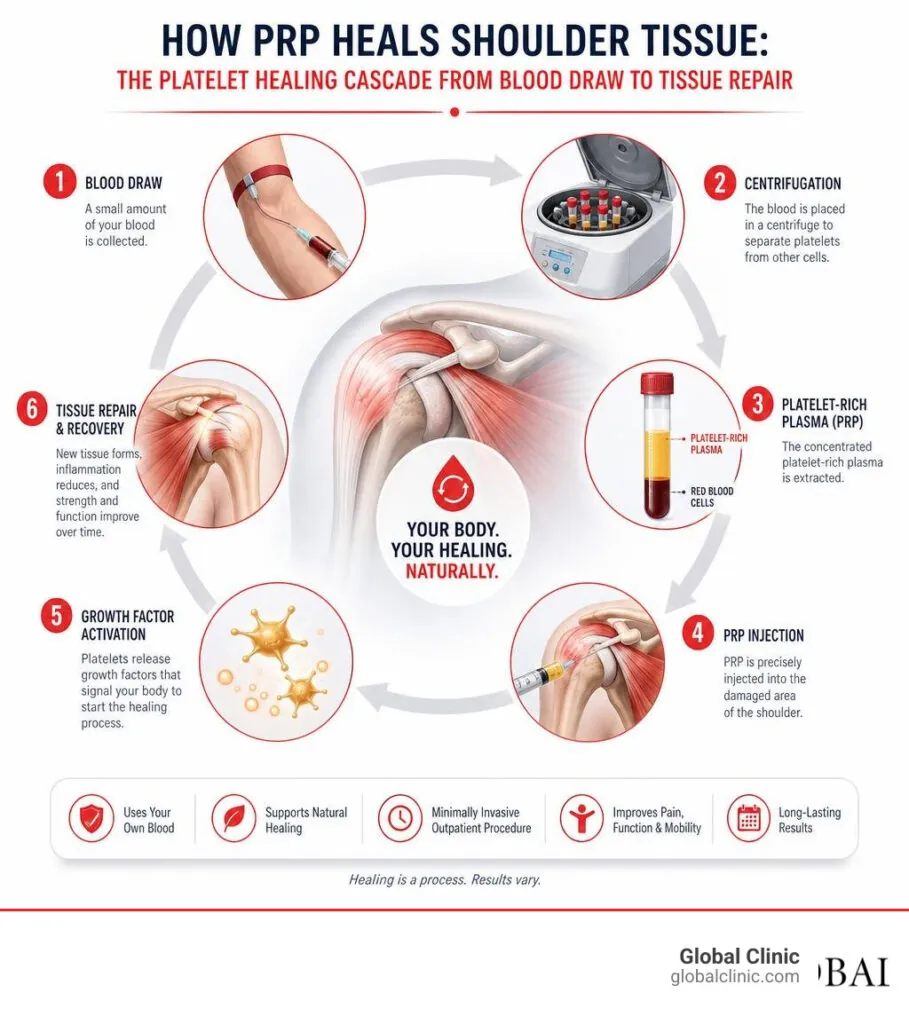
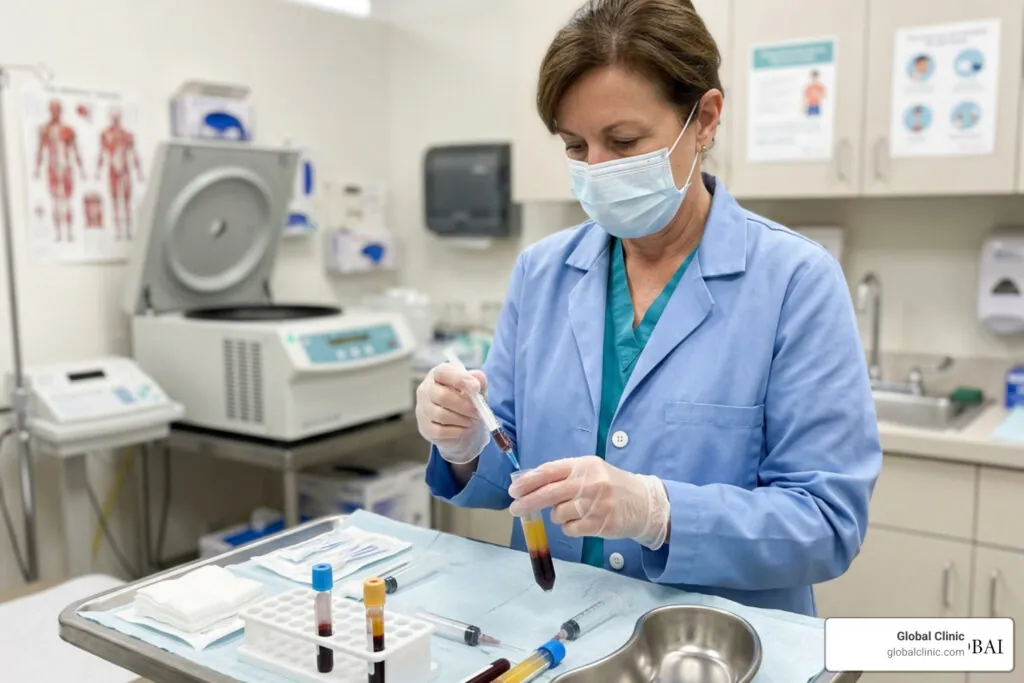
To understand how a PRP shoulder injection works, we have to look at how platelet-rich plasma is created. The entire procedure is autologous, meaning it uses your own blood. Because it relies entirely on your body’s natural cellular makeup, the risk of rejection or disease transmission is very low.
The treatment begins with a simple blood draw, typically from your arm. We then place this blood sample into a specialized machine called a centrifuge. This device spins the blood at high speeds to separate its components based on density. Through this process, we isolate and concentrate the platelets within the plasma, increasing their concentration by up to 500% compared to normal blood.
Once prepared, this highly concentrated platelet-rich plasma is ready for injection. When appropriate, imaging guidance such as ultrasound can be used to see the internal structures of the shoulder and help deliver the platelets precisely into the damaged tendon, ligament, or joint space. To learn more about how this works for various pain conditions, you can read our PRP pain management ultimate guide.
How Platelet-Rich Plasma Stimulates Natural Healing
Platelets are best known for their role in blood clotting, but they are also packed with bioactive proteins and essential growth factors (such as PDGF, VEGF, TGF-beta, and EGF). When we inject these concentrated platelets into injured shoulder tissue, they act as the body’s natural “repair crew.”
The sudden influx of growth factors triggers a controlled, localized inflammatory response. This is a crucial step because it kickstarts the body’s natural healing cascade. It recruits specialized stem cells to the site of the injury, promotes the development of new blood vessels (angiogenesis) to improve blood flow, and stimulates collagen formation. Over the course of several weeks, this biological reaction may help repair micro-tears and strengthen weakened connective tissue. For a deeper dive into these mechanisms, explore the PRP therapy benefits.
Step-by-Step: What to Expect During Your PRP Injection Shoulder Session
If you are planning to receive a PRP shoulder injection, here is what a typical session looks like:
- The Preparation: We recommend staying well-hydrated and eating a light meal before your appointment.
- The Blood Draw: We draw a small volume of blood, much like a routine lab test.
- The Centrifugation: Your blood is spun in the centrifuge for about 15 minutes to isolate the platelet-rich layer.
- The Numbing: We apply a local anesthetic to the target area on your shoulder to minimize any discomfort during the procedure.
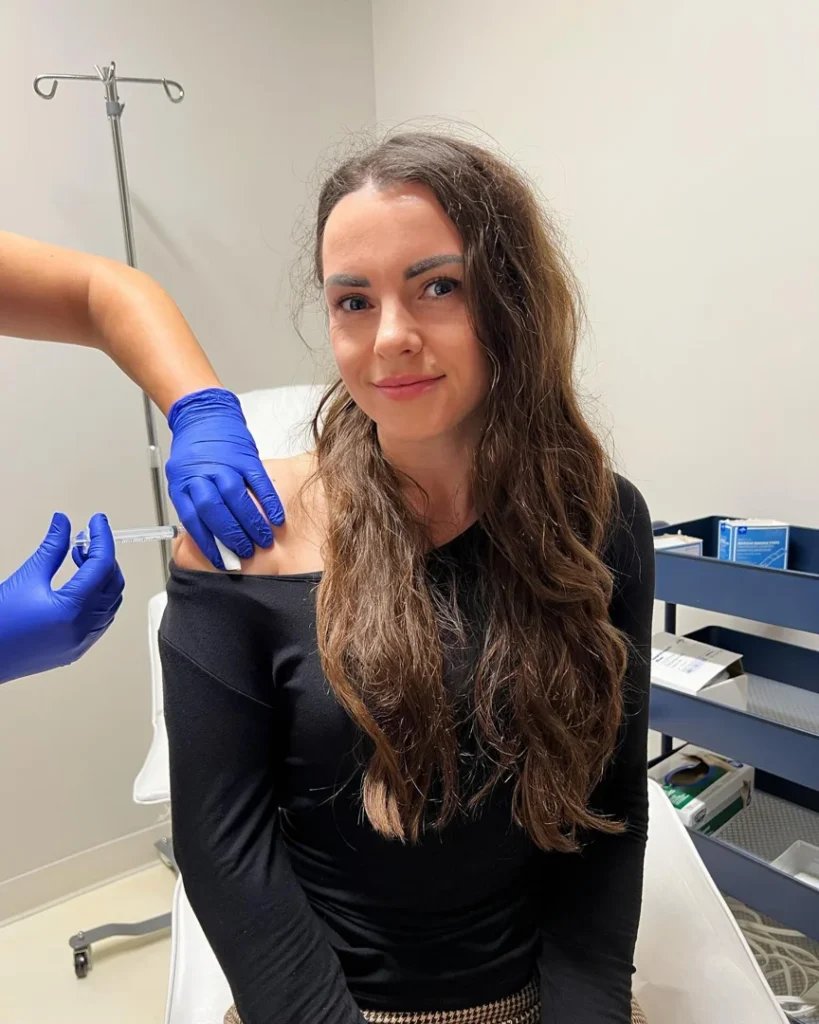
- The Injection: Your provider carefully guides the needle to the site of the tissue damage, using imaging guidance when appropriate, and injects the concentrated PRP.
The entire process takes approximately 45 to 60 minutes, and you are able to go home immediately afterward.
Shoulder Conditions That Benefit Most from PRP Therapy
The shoulder is an incredibly complex ball-and-socket joint. Because the upper arm bone (humerus) has a larger “ball” than the shoulder socket, the joint relies heavily on a network of muscles, tendons, and ligaments for stability. This unique anatomy makes the shoulder highly susceptible to wear, tear, and injury.
PRP therapy has emerged as a non-surgical option for several chronic and acute shoulder issues, and for some patients it may help delay or avoid more invasive treatment. For a broader look at how we address these joint issues, check out our PRP for shoulder pain guide.
Rotator Cuff Tears and Supraspinatus Tendon Tears
The rotator cuff is a group of four muscles and their tendons that keep the shoulder joint stable. Of these, the supraspinatus tendon is the most commonly injured, accounting for nearly 90% of all rotator cuff issues. Because the region located about one centimeter from where this tendon attaches to the bone has a naturally poor blood supply, spontaneous healing is incredibly difficult for the body to achieve.
When a patient suffers from a partial-thickness supraspinatus tear, fat infiltration can begin to occur in the muscle, weakening the shoulder’s overall structure. Clinical research suggests that PRP may help slow this decline:
- Superior Efficacy of PRP Gel: A scientific research study on PRP gel for supraspinatus tears published in Scientific Reports highlighted that at 6 months post-treatment, PRP gel achieved a remarkable 93.10% efficacy rate for treating supraspinatus tendon tears, compared to 80.77% for liquid PRP and 66.67% for sodium hyaluronate. The gel form provides better local adhesion, allowing for a sustained release of growth factors directly into the tear.
- Sustained Functional Recovery: Another key clinical study on PRP vs corticosteroids for supraspinatus tears showed that while both treatments help initially, patients who received a single ultrasound-guided PRP injection experienced significantly greater improvements in pain relief and shoulder function at the 6-month mark compared to those who received steroid shots.
Is a PRP Injection Shoulder Treatment Right for Frozen Shoulder?
Frozen shoulder, medically known as adhesive capsulitis, is a painful condition characterized by severe joint stiffness and a progressive loss of range of motion. It affects about 3% to 5% of the general population, but that number rises up to 20% for individuals living with diabetes.
While conventional treatments often rely on steroid injections to temporarily numb the pain, a comprehensive meta-analysis on PRP vs corticosteroids for frozen shoulder published in the Tzu Chi Medical Journal found that PRP was associated with better long-term recovery.
While corticosteroids may offer a slight edge in the very first few weeks, PRP showed better mid-term (12 weeks) and long-term (24 weeks) outcomes in that analysis. Patients treated with PRP showed significantly lower pain scores (VAS) and disability index scores (DASH and SPADI). Furthermore, PRP was shown to improve short-term range of motion—specifically external rotation, flexion, and abduction—more effectively than steroid alternatives.
PRP vs. Corticosteroid Injections: A Clear Comparison
For decades, corticosteroid injections have been the default treatment for chronic shoulder pain. While steroids are powerful anti-inflammatory agents that can provide rapid, temporary pain relief, they do not promote healing. In fact, repeated steroid injections can actually weaken the tendons over time, increase the risk of tendon rupture by 2 to 3 times, and accelerate cartilage degeneration in arthritic joints.
PRP, on the other hand, is a regenerative approach. Instead of temporarily turning off your body’s pain signals, PRP actively stimulates cellular repair.
This difference is clearly demonstrated in a landmark double-blind RCT on PRP vs corticosteroids for tendinopathy. The study tracked patients with supraspinatus tendinopathy over a full year and found that the PRP group experienced significantly greater pain relief and functional outcomes at 12 months. Most notably, the treatment failure rate for the corticosteroid group was 30%, while the PRP group had a failure rate of just 12%.
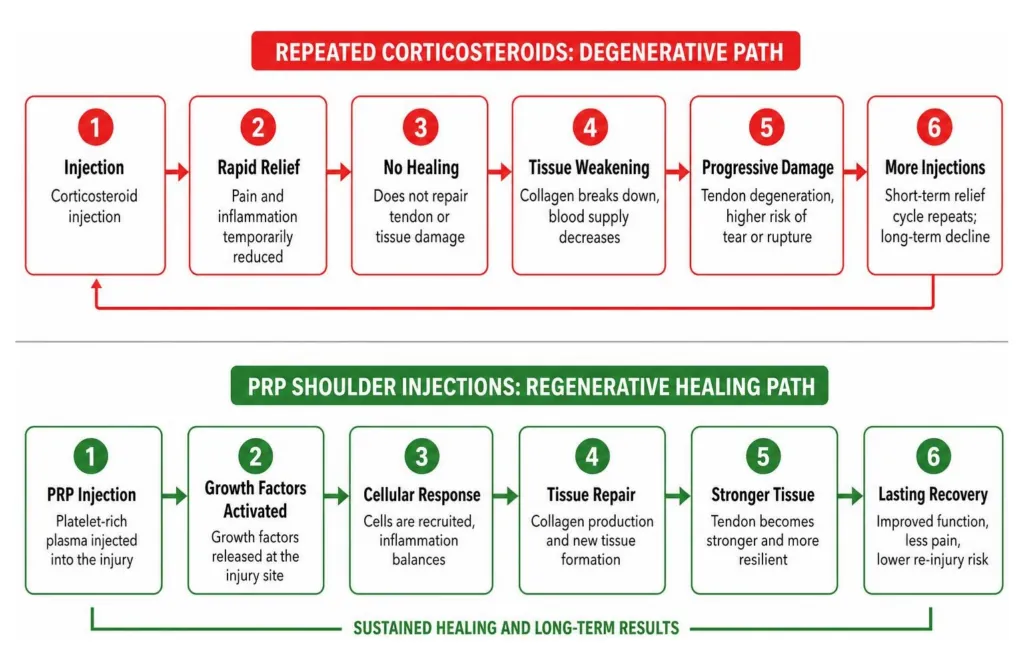
| Feature | Corticosteroid Injections | PRP Shoulder Injections |
|---|---|---|
| Primary Mechanism | Suppresses inflammation and masks pain | Stimulates natural tissue healing and collagen growth |
| Onset of Relief | Rapid (usually within 24–48 hours) | Gradual (typically starting at 1–3 weeks) |
| Duration of Effect | Short-term (typically wears off in 6–8 weeks) | Longer-lasting for many patients (results vary) |
| Impact on Tissue | Can weaken tendons and degrade cartilage over time | Promotes tissue regeneration and tendon strengthening |
| Failure Rate (at 1 Year) | High (~30% require further intervention) | Low (~12% require further intervention) |
| Safety Profile | Risks include tissue thinning and tendon rupture | Favorable safety profile; uses patient’s own blood cells |
Recovery Timeline and Rehabilitation After PRP
Unlike invasive surgical procedures that require months of immobilization, the recovery timeline for a PRP shoulder injection is relatively quick and manageable. However, because PRP relies on initiating a localized inflammatory response to heal the tissue, your post-injection care is slightly different than what you might expect.
- 0 to 48 Hours Post-Injection: It is completely normal to experience an increase in localized soreness, swelling, and stiffness during the first couple of days. This is an expected part of the inflammatory healing response. Follow your provider’s aftercare instructions regarding anti-inflammatory medications (like ibuprofen, naproxen, or aspirin) and ice, as these may suppress the inflammation that the PRP is trying to create. Ask your provider which pain relievers are appropriate for you.
- Weeks 1 to 2: As the initial soreness subsides, you can resume light daily activities. We advise avoiding heavy lifting, overhead reaching, or strenuous workouts. Focus on gentle, passive range-of-motion stretching.
- Weeks 2 to 6: This is the tissue remodeling phase. We typically recommend starting a structured, gentle physical therapy program during this time to help guide the alignment of new collagen fibers.
- Month 3 and Beyond: Most patients reach their maximum benefit around the 3-month mark, with continued improvements in strength, flexibility, and pain reduction continuing for up to 6 months.
Combining your PRP treatment with a tailored physical therapy program can help restore shoulder function and lower the risk of future injuries. You can find more details on how we approach comprehensive recovery in our guide to shoulder pain.
Frequently Asked Questions About PRP for Shoulder Pain
How long do the results of a shoulder PRP injection last?
For many patients, the positive results of a PRP shoulder injection last for months, although results vary. The exact duration depends heavily on the specific condition being treated. On the other hand, chronic, progressive conditions like shoulder osteoarthritis may require periodic booster injections every year or two to manage joint health and maintain mobility.
Are there any risks or side effects associated with PRP?
Because PRP is derived entirely from your own blood, the procedure has a favorable safety profile. The risk of an allergic reaction, foreign-body rejection, or contracting a blood-borne disease is very low. The most common side effects are mild and temporary, including soreness at the injection site, minor swelling, and light bruising. These symptoms typically resolve on their own within a few days. As with any injection, there is a small risk of infection or localized nerve irritation, and careful technique and imaging guidance, when used, help minimize these risks. To learn more, read our article on understanding PRP injections benefits, risks, and what to expect.
What patient factors influence the success of PRP therapy?
Several individual factors can play a role in how well your shoulder responds to PRP therapy:
- Severity of the Injury: Mild to moderate partial-thickness tears and chronic tendinopathies often respond well to PRP. Severe, full-thickness tears where the tendon has completely pulled away from the bone typically require surgical reattachment.
- Smoking and Nicotine Use: Nicotine significantly impairs blood circulation and cell replication, which directly hinders the regenerative process. We strongly advise patients to stop smoking before and after their treatment.
- Diabetes and Metabolic Health: Uncontrolled blood sugar can slow down the body’s natural tissue repair mechanisms, meaning diabetic patients may take slightly longer to see full results.
- Age and Overall Vitality: While PRP can help patients of various ages, younger patients or those with active lifestyles often experience slightly faster tissue remodeling.
Conclusion
If you are tired of living with nagging shoulder pain that keeps you awake at night, limits your range of motion, or prevents you from enjoying the activities you love, a PRP shoulder injection may be worth discussing with a specialist. By harnessing your body’s own cellular power, this innovative regenerative therapy offers an evidence-based option to support tissue healing without the risks of surgery or the degenerative side effects of repeated steroid shots.
At Global Pain & Spine Clinic, we believe in a comprehensive, multidisciplinary approach to pain management. Serving the Northern Chicago area—including Niles, Skokie, Glenview, Park Ridge, Morton Grove, Des Plaines, and Mount Prospect—our experienced medical professionals are dedicated to helping you find lasting relief and regain your mobility.
If you’re ready to explore whether regenerative medicine is the right choice for your shoulder health, speak with our specialists about PRP injections or call our Niles clinic at (847) 299-7000 to schedule a comprehensive evaluation.