







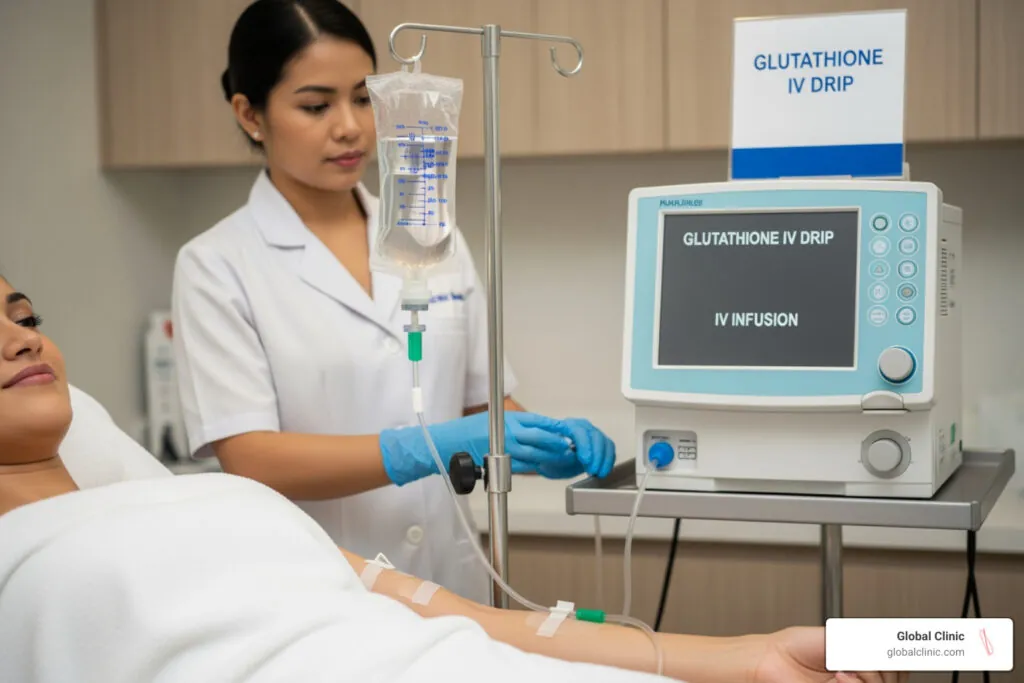
Is a Glutathione IV Infusion Right for You?
A glutathione IV infusion delivers one of your body’s most important antioxidants directly into your bloodstream — bypassing the digestive system entirely.
Quick answer for anyone researching this treatment:
| What you want to know | The short answer |
|---|---|
| What is it? | An intravenous dose of glutathione, the body’s “master antioxidant,” given directly into the bloodstream |
| Why IV instead of pills? | Oral glutathione is largely broken down in the gut; IV delivers it directly into the bloodstream |
| What can it help with? | Antioxidant support; also studied for liver health, immune function, and fatigue (evidence is limited) |
| Is it safe? | Generally yes, when administered by a qualified medical professional — but risks and contraindications exist |
| Who should avoid it? | People with sulfur sensitivity, asthma, or those currently on certain chemotherapy agents |
| How long does a session take? | Typically 15 to 60 minutes depending on dose and method |
If you’ve been dealing with chronic fatigue, persistent pain, or just feeling like your body isn’t recovering the way it used to — you’re not alone. Many patients across the Northern Chicago area are asking their doctors the same question: “Could my cells simply be running low on protection?”
That’s exactly what glutathione is designed to address. Your body makes it naturally, but levels drop with age, illness, and chronic stress. When that happens, oxidative damage builds up — and that shows up as inflammation, sluggish recovery, and a host of other symptoms that are easy to dismiss but hard to ignore.
This guide walks you through what the research actually says, what a real treatment session looks like, and what realistic expectations you should have — without the marketing hype.
I’m Anna Slavin, Practice Manager at Global Clinic, a multidisciplinary medical center whose team brings over 20 years of global medical experience to helping patients in the Northern Chicago area recover, heal, and feel their best — including through evidence-informed IV therapy options like glutathione IV infusion. Our team’s approach is always personalized, always supervised, and always grounded in what the clinical evidence supports.
What is Glutathione and Why is it the “Master Antioxidant”?
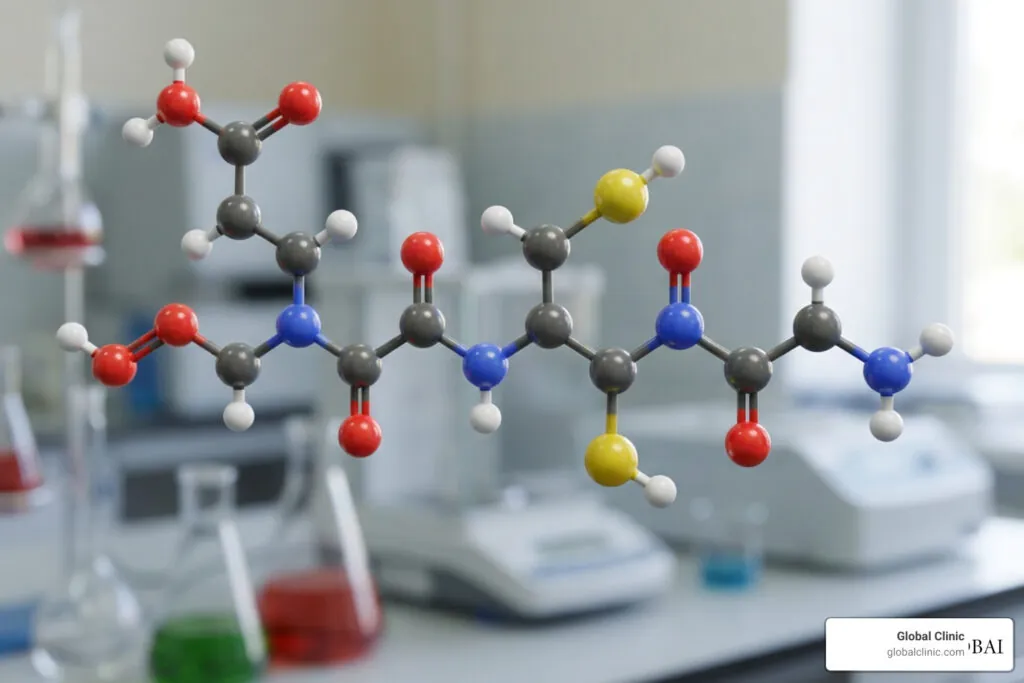
To understand why a glutathione IV infusion has become popular in modern wellness and integrative recovery protocols, we have to look at the cellular level. Glutathione is a tiny tripeptide—a simple protein structure—composed of three amino acids: cysteine, glutamic acid, and glycine. Despite its modest size, it is the most abundant non-protein thiol in mammalian cells, present in virtually every cell at millimolar concentrations.
But why does it earn the prestigious title of the “master antioxidant”?
The secret lies in its chemical structure, specifically the sulfur-containing thiol group carried by its cysteine residue. This sulfur component acts like biological “sticky paper.” It attracts and neutralizes reactive oxygen species (ROS), free radicals, heavy metals, and environmental toxins, converting them into harmless compounds that the body can safely filter out.
Beyond directly neutralizing free radicals, glutathione is the ultimate team player in cellular biochemistry. It actively recycles other vital antioxidants, such as vitamins C and E, returning them to their active, reduced states so they can continue fighting oxidative stress.
Furthermore, glutathione plays a critical role in mitochondrial protection. Your mitochondria are the powerhouses of your cells, generating the energy (ATP) you need to walk, think, and heal. Because mitochondria consume vast amounts of oxygen, they are highly vulnerable to oxidative damage. Glutathione stands as a shield around the mitochondrial pool, maintaining metabolic health and preventing cellular fatigue.
Unfortunately, our natural reservoir of this master antioxidant is not infinite. As we journey through life, our bodies face an inevitable age-related decline in glutathione production. This natural depletion is accelerated by chronic stress, environmental pollution, poor diet, and underlying inflammatory conditions. When demand outpaces supply, cellular detoxification slows down, leaving the body vulnerable to systemic oxidative damage.
Understanding the Science Behind a Glutathione IV Infusion
When we talk about restoring cellular health, the delivery method matters just as much as the nutrient itself. This is where the debate between oral supplementation and intravenous delivery comes to the forefront.
To visualize the differences in how your body processes these options, let’s look at a practical comparison:
| Feature | Oral Glutathione | Liposomal Glutathione | Intravenous (IV) Glutathione |
|---|---|---|---|
| Systemic Bioavailability | Poor (largely broken down in the gut) | Moderate | Highest (enters the bloodstream directly) |
| Digestive Bypass | No (Cleaved by gut enzymes) | Partial (Protective lipid layer) | Yes (Direct bloodstream delivery) |
| Peak Concentration | Low, slow rise | Moderate rise | Immediate, non-physiological peak |
| Primary Advantage | Convenient daily use | Better oral absorption | Rapid rise in blood levels |
The primary obstacle for standard oral glutathione is the digestive system. When you swallow a standard glutathione capsule, it must pass through the stomach and intestines, where active intestinal peptidases and enteric bacteria quickly cleave the tripeptide into its individual amino acids before it ever reaches systemic circulation.
A glutathione IV infusion bypasses first-pass metabolism entirely. Placing it directly into the venous system avoids digestive breakdown, so intact glutathione reaches the bloodstream.
Once in the bloodstream, intravenous glutathione has a plasma half-life of approximately 14.1 ± 9.2 minutes (measured after a standard 2 g/m² intravenous dose). While this short half-life means the compound clears from the plasma rapidly, it does so because it is quickly taken up by tissues, broken down at the cell membrane, and rapidly resynthesized intracellularly where it is needed most.
To explore how direct nutrient delivery can transform your recovery, read 4 Amazing Benefits of IV Therapy.
Why Choose a Glutathione IV Infusion Over Oral Supplements?
Choosing an IV infusion over oral capsules is a matter of therapeutic efficiency. Because oral glutathione is largely broken down during digestion, trying to achieve therapeutic blood levels via oral pills would require taking massive doses that would likely cause digestive upset.
By bypassing the digestive tract, we avoid the gastrointestinal irritation, bloating, and breakdown associated with oral supplements. This direct route delivers intact glutathione into circulation.
For a deeper look into how hydration and intravenous nutrients work synergistically to revitalize your body, check out our guide on beyond water exploring iv hydration and nutrition bags.
Primary Clinical Uses and Claimed Benefits
In clinical settings, intravenous glutathione is utilized for its powerful biochemical actions:
- Phase II Hepatic Detoxification: Glutathione binds directly to lipid-soluble toxins, heavy metals, and metabolic byproducts in the liver, transforming them into water-soluble compounds that can be easily excreted.
- Immune System Support: It supports the normal function of white blood cells.
- Fatigue Support: It helps protect mitochondrial membranes, and some patients report less fatigue and brain fog, although evidence is limited.
To learn more about how targeted infusions support a vibrant, healthy complexion, see IV therapy for skin your guide to a healthier brighter complexion.
Clinical Evidence: What the Research Says About Glutathione Therapy
In the medical community, we look beyond wellness trends and focus on what randomized controlled trials (RCTs), pilot studies, and systematic reviews actually demonstrate. The clinical evidence for intravenous glutathione is promising in a few specific areas, while other applications remain active areas of study.
Parkinson’s Disease and Neurological Support
The brain is highly susceptible to oxidative stress due to its high oxygen consumption and rich lipid content. In Parkinson’s disease, researchers have noted a significant depletion of glutathione in the substantia nigra—the area of the brain responsible for dopamine production.
A landmark 1996 uncontrolled pilot study by Sechi et al. administered 600 mg of IV glutathione twice daily for 30 days to patients with early, untreated Parkinson’s disease. The researchers reported a 42% improvement in motor disability, which lasted for several months after therapy ended. However, a subsequent 2009 randomized, double-blind, placebo-controlled trial led by Hauser et al. evaluated 1,400 mg of IV glutathione administered three times weekly for four weeks. While the treatment was well tolerated, the study did not show a statistically significant improvement in motor scores compared to the placebo group.
Interestingly, a 2009 pilot RCT investigating intranasal glutathione—which has a 40–60% bioavailability with direct pathway access to the central nervous system—showed promising improvements in motor symptoms over three months, indicating that delivery route and duration play a major role in neurological outcomes.
Nonalcoholic Fatty Liver Disease (NAFLD)
The liver is the primary reservoir for glutathione synthesis. In a small 2017 pilot study of glutathione in patients with NAFLD, researchers reported lower alanine aminotransferase (ALT) levels after four months of treatment, although larger studies are needed.
Safety, Side Effects, and Precursor Alternatives
At Global Clinic, patient safety is our absolute priority. While glutathione is a molecule naturally produced by the human body, introducing it intravenously requires careful screening, sterile compounding, and professional administration.
Known Contraindications and Risks
- Sulfur and Sulfite Sensitivities: Because glutathione contains a prominent sulfur-containing thiol group, individuals with known hypersensitivities to sulfur compounds or sulfites should avoid this therapy, as it can trigger allergic reactions.
- Asthma and Bronchospasm Risk: There are rare clinical reports of IV glutathione triggering bronchospasms in patients with a history of moderate-to-severe asthma. Asthmatic patients must be carefully monitored or directed toward alternative therapies.
- Chemotherapy Interactions: Its powerful antioxidant properties may theoretically protect cancer cells from oxidative therapies (like certain chemotherapies or radiation). It should never be administered during active oncological treatments without direct clearance from the treating oncologist.
- Compounding Quality Warnings: In 2019, the FDA issued a safety alert regarding adverse events linked to compounded sterile injectable glutathione. Some compounding facilities had used cheap, dietary-grade powder rather than sterile, pharmaceutical-grade materials to prepare the injectables. This highlights the vital importance of receiving IV therapies only from reputable, licensed medical clinics that source their ingredients from regulated, certified 503A compounding pharmacies.
- Reductive Stress: Flooding the system with excessive, non-physiological concentrations of exogenous antioxidants can occasionally trigger “reductive stress.” This is the biochemical opposite of oxidative stress, where a lack of necessary reactive oxygen species can temporarily impair mitochondrial signaling and immune cell functions.
What to Expect During Your Glutathione IV Infusion Session
At Global Clinic, we design your treatment experience to be as relaxing, safe, and efficient as possible.
Your dose is determined by your provider after an evaluation, and the administration method depends on your specific goals:
- Slow IV Push: Smaller doses may be given as a slow IV push over 15 to 20 minutes, typically administered at the end of a hydrating vitamin drip. Administering it slowly is crucial; a rapid push under 5 minutes can cause transient flushing, a strong sulfur odor in the mouth, or mild chest tightness.
- Intravenous Drip: For larger doses, the glutathione is diluted in a saline solution and administered as a slow drip over 45 to 60 minutes.
The frequency of sessions is tailored to your clinical needs. Your provider will recommend a schedule based on your goals and how you respond.
To learn more about preparing for your first appointment, review the ultimate guide to iv therapy benefits risks and what to expect.
Precursor Strategies: NAC vs. GlyNAC
For patients who are not ideal candidates for direct IV therapy, or those looking to support their glutathione levels between sessions, precursor strategies may be an alternative worth discussing with your provider.
- N-Acetylcysteine (NAC): NAC is a stable precursor that provides the rate-limiting amino acid, cysteine, directly to your cells. While oral NAC has a low bioavailability of about 6–11%, it can support intracellular glutathione synthesis in the liver and lungs over time.
- GlyNAC (Glycine + NAC): A 2021 clinical trial evaluated GlyNAC—a combination of glycine and N-acetylcysteine—administered to older adults for 16 weeks. The study demonstrated significant improvements in intracellular glutathione levels, mitochondrial fuel oxidation, and markers of systemic inflammation.
Frequently Asked Questions About Glutathione Infusions
Who is the ideal candidate for glutathione IV therapy?
The ideal candidate is an adult experiencing chronic fatigue, prolonged physical stress, or someone seeking support for liver detoxification or age-related cellular decline. Every candidate should undergo a thorough medical evaluation to ensure there are no underlying contraindications, and maintain realistic expectations about the gradual, cumulative nature of the results.
Can glutathione cause liver damage or other severe side effects?
While glutathione is primarily used to support liver health, prolonged, unsupervised high-dose therapy can occasionally have the opposite effect. A 2025 clinical review noted that nearly one-third of patients in a specific case series developed transient liver function abnormalities when given excessive doses of IV glutathione over extended periods without professional monitoring. This emphasizes why your treatment should always be supervised by experienced medical professionals who can monitor your liver enzymes (ALT/AST) and adjust your protocol accordingly.
What are the key gaps in current glutathione research?
While the biochemistry of glutathione is thoroughly understood, the primary gaps in clinical research include a lack of large-scale, multi-center Phase III clinical trials. Most existing studies are small pilots or localized trials. Additionally, there is a lack of standardized, universally accepted dosing protocols for specific chronic conditions, leaving much of the current clinical application to the expertise and empirical protocols of experienced integrative medicine physicians.
Conclusion
At Global Clinic, we believe that true wellness starts at the cellular level. Drawing on over 20 years of global medical experience, our multidisciplinary team provides personalized, innovative care to families across the Northern Chicago area, including the communities of Niles, IL, Skokie, IL, Glenview, IL, Park Ridge, IL, Morton Grove, IL, Des Plaines, IL, Mount Prospect, IL, and Chicago, IL.
We do not believe in one-size-fits-all treatments. Whether you are looking to recover from chronic fatigue, support your liver’s natural detoxification pathways, or revitalize your skin health, our medical professionals will design a customized, evidence-based protocol tailored specifically to your body’s unique biochemical needs.
If you are ready to experience the cellular protection of the master antioxidant under the care of a highly experienced medical team, speak with our specialists or call our Niles clinic at (847) 299-7000 to schedule your professional evaluation.