







Understanding Vitamin B12 and Its Role in the Body
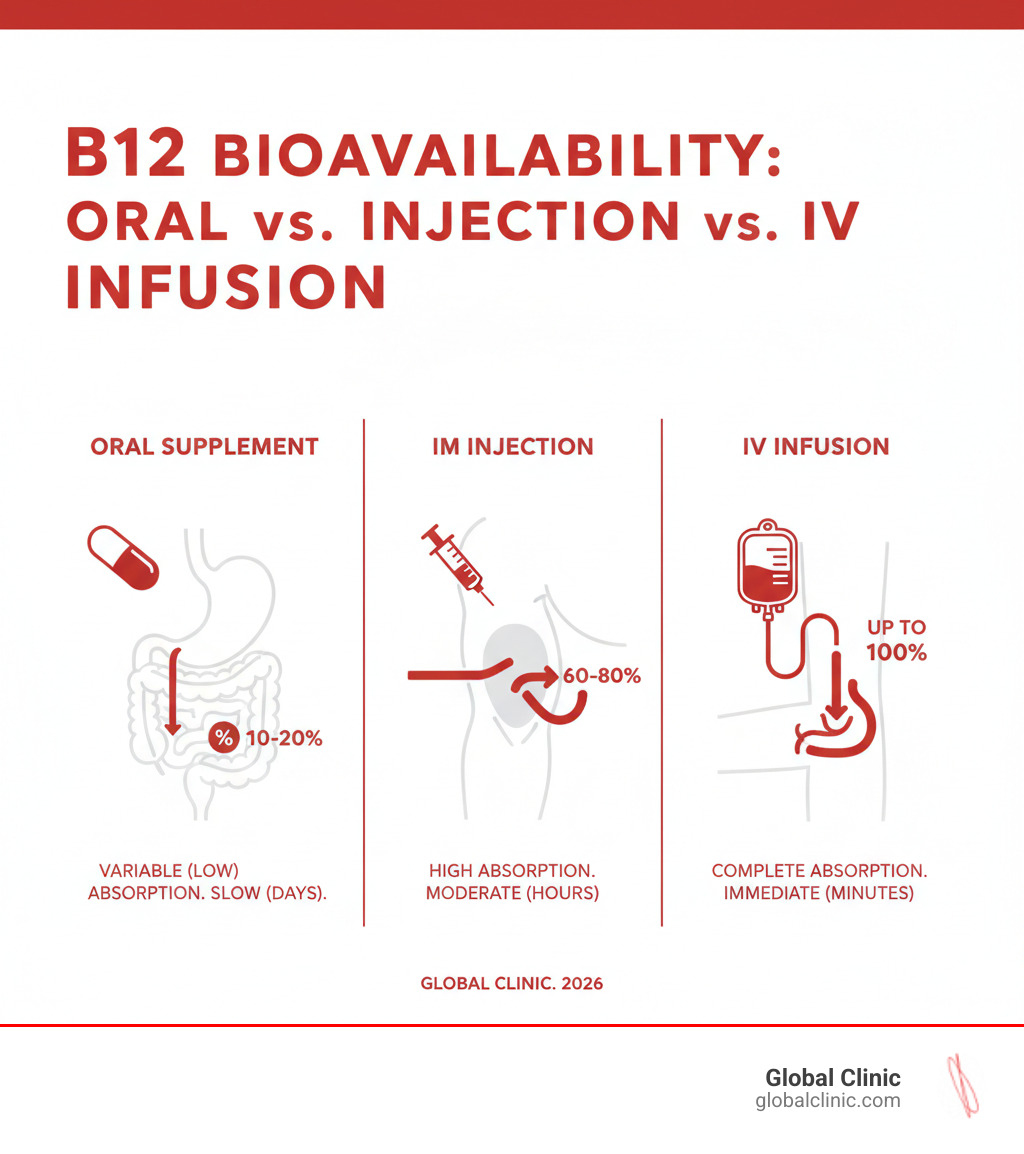
B12 IV infusion delivers vitamin B12 directly into your bloodstream, bypassing the digestive system entirely. Here’s a quick comparison to help you decide which option fits your needs:
| Method | Absorption | Speed | Best For |
|---|---|---|---|
| B12 IV Infusion | Up to 100% | Immediate | Severe deficiency, absorption issues |
| IM Injection | High | Hours | Maintenance, convenience |
| Oral Supplement | Variable (low) | Days | Mild deficiency, prevention |
- B12 IV infusion delivers nutrients directly into the bloodstream for the fastest, most complete absorption
- IM injections absorb more slowly but provide a longer, sustained release
- Oral supplements lose a significant portion of their potency during digestion
If you’re dealing with fatigue, brain fog, or a diagnosed B12 deficiency, knowing the difference between a B12 IV infusion and an injection could meaningfully change how quickly you feel better.
Both methods skip the digestive system — but they work differently, last differently, and suit different people. A clinical study found that weekly IV B12 raised serum B12 levels significantly more than daily oral supplementation (a mean increase of 1,100 pg/ml vs. 713 pg/ml). That gap matters when you’re trying to recover fast.
This guide breaks down exactly how each method works, who should use which, and what to expect at your appointment — so you can make a confident, informed choice.
I’m Ana Vinikov, Practice Manager at Global Clinic, a multidisciplinary medical center in Northern Chicago with over 20 years of experience in innovative treatments including B12 IV infusion therapy. Our patient-centered approach means every treatment plan — including IV therapy — is built around your specific health needs and goals.
Quick b12 iv infusion terms:
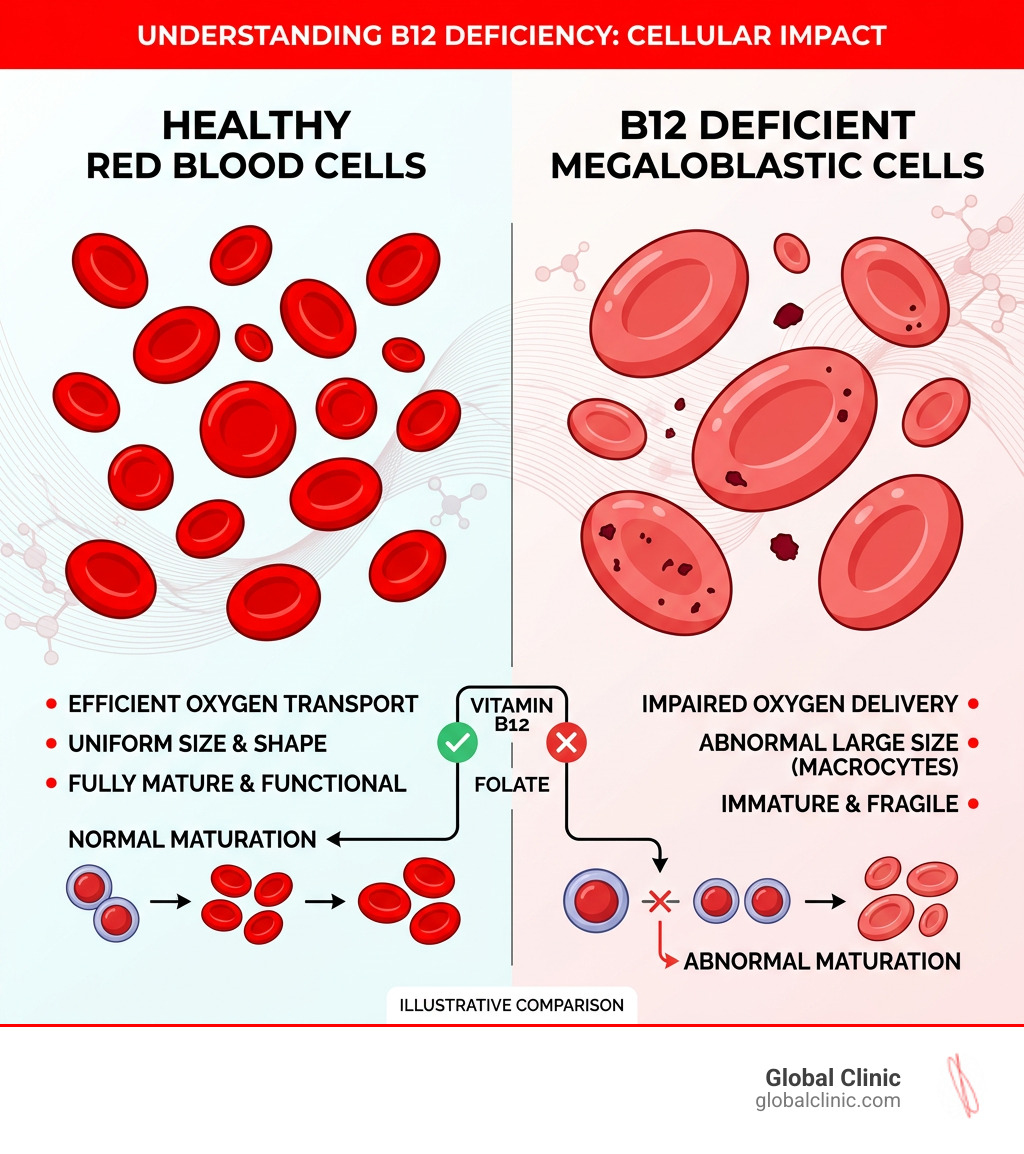
Vitamin B12, also known as cobalamin, is a water-soluble powerhouse that we simply cannot live without. Unlike some nutrients that play minor supporting roles, B12 is a lead actor in your body’s most critical biological scripts. It is essential for DNA synthesis—the very blueprint of your cells—and the formation of healthy red blood cells that carry oxygen to every corner of your body.
In our clinics across the Northern Chicago area, from Schaumburg to Glenview, we often see how B12 impacts neurological function. It helps maintain the myelin sheath, the protective coating around your nerves. Without enough B12, your nervous system essentially experiences “short circuits,” leading to the tingling or “pins and needles” sensations many people report.
According to the Office of Dietary Supplements B12 Fact Sheet, the recommended daily allowance (RDA) for most adults is 2.4 mcg. This number bumps up slightly for pregnant (2.6 mcg) and breastfeeding (2.8 mcg) women. In clinical supplementation, you will often hear about two main forms: Methylcobalamin and Cyanocobalamin. Methylcobalamin is the naturally occurring, active form that your body can use immediately, while Cyanocobalamin is a stable, lab-made version that the body converts into an active form.
Comparing Absorption: Oral vs. B12 IV Infusion
Why do so many people choose a b12 iv infusion over a standard daily pill? The answer lies in the “digestive gauntlet.” When you swallow a B12 tablet, it must survive stomach acid, bind with a protein called “intrinsic factor” in the gut, and then be absorbed by the small intestine. If you have any digestive issues—like Crohn’s, Celiac, or even age-related decline in stomach acid—this process fails.
A b12 iv infusion offers a complete digestive bypass. By delivering the vitamin directly into the vein, we achieve 100% bioavailability. Research shows that patients can receive up to 10 times the amount of vitamins in one IV session as they could realistically absorb orally in a full day. This leads to significantly higher serum levels, which is why clinical research on IV vs Oral B12 highlights that IV therapy is statistically superior for rapidly correcting severe deficiencies.
Common Symptoms of Vitamin B12 Deficiency
B12 deficiency is surprisingly common, affecting between 1.5% and 15% of the American population. Because the body can store B12 in the liver for several years, symptoms often creep up slowly, making them easy to ignore until they become disruptive.
Common “red flags” include:
- Chronic Fatigue: Feeling exhausted even after a full night’s sleep because your cells aren’t getting enough oxygen.
- Brain Fog and Memory Loss: Difficulty concentrating or feeling “fuzzy” due to the vitamin’s role in brain health.
- Neuropathy: Numbness or tingling in the hands and feet.
- Pale or Jaundiced Skin: A result of fragile red blood cells breaking down.
- Heart Palpitations: Your heart working harder to pump oxygenated blood.
B12 IV Infusion vs. Injections: Key Differences
While both methods bypass the gut, they are not identical. Choosing between them depends on your specific health goals and how quickly you need results.
| Feature | B12 IV Infusion | IM (Intramuscular) Injection | Oral Supplements |
|---|---|---|---|
| Absorption Speed | Instantaneous | Fast (Hours) | Slow (Days) |
| Nutrient Volume | High (can include other vitamins) | Low (limited by muscle space) | Low (limited by gut) |
| Session Time | 30–60 minutes | 5–10 minutes | Seconds |
| Duration of Effect | Strong initial peak | Sustained release | Short-lived |
| Risk of Muscle Pain | None | Potential soreness at site | None |
One major advantage of the b12 iv infusion is the ability to combine it with other nutrients, such as Vitamin C or Magnesium (often called a Myers’ Cocktail). Furthermore, IV delivery eliminates the risk of “injection site abscesses” or hematomas that can occasionally occur with high-volume intramuscular shots. For those interested in a holistic approach to their health, you can find more info about wellness services at our various locations.
How Often Should You Get a B12 IV Infusion?
There is no “one-size-fits-all” answer for frequency. At Global Clinic, we start with an initial consultation to review your health history and current depletion levels.
For those with severe deficiency or symptomatic anemia, we might recommend weekly sessions for the first month to “flood” the system and replenish liver stores. Once levels are stabilized, a maintenance protocol of one b12 iv infusion every 2 to 4 weeks is common for busy professionals or athletes looking to maintain peak performance. Because B12 is water-soluble, your body simply excretes what it doesn’t need, making it a very safe therapy to customize.
The Health Benefits of B12 IV Infusion
The benefits of optimizing your B12 levels go far beyond just “waking up.”
- Cognitive Enhancement: B12 is vital for the synthesis of neurotransmitters like serotonin and dopamine. This can lead to improved mood stability and mental clarity.
- Immune System Activation: B12 plays a role in white blood cell production, helping your body fight off seasonal bugs more effectively.
- Heart Health: Adequate B12 helps lower homocysteine levels. High homocysteine is a known risk factor for cardiovascular disease and stroke.
- Athletic Recovery: Athletes often use b12 iv infusion therapy to speed up recovery times. By improving oxygen delivery to tired muscles and assisting in DNA repair, it helps you get back to the gym or the field faster.
Who Benefits Most from B12 IV Therapy?
While anyone can benefit from a nutrient boost, certain groups are at a much higher risk for deficiency:
- Vegans and Vegetarians: Since B12 is found naturally almost exclusively in animal products (meat, fish, dairy, eggs), those on plant-based diets often struggle to get enough through food alone.
- Older Adults: As we age, our stomachs produce less hydrochloric acid and intrinsic factor, making it nearly impossible to absorb enough B12 from a standard diet.
- Pernicious Anemia Patients: This is an autoimmune condition where the body cannot make intrinsic factor, meaning oral supplements are largely useless.
- Gastrointestinal Disorders: People with Crohn’s disease, Celiac, or those who have had gastric bypass surgery have compromised absorption pathways.
- Chronic Fatigue Sufferers: For those dealing with “unexplained” exhaustion, a direct infusion can provide the “spark” their metabolism needs.
What to Expect During Your Session
If you’ve never had an IV drip before, don’t worry—it’s a very straightforward and relaxing process. When you visit one of our Global Clinic locations, such as our offices in Des Plaines or Arlington Heights, you’ll be seated in a comfortable chair.
First, a qualified medical professional will perform a quick health screen. They will then identify a suitable vein, usually in your arm, and insert a small, flexible catheter. The b12 iv infusion typically takes between 30 and 90 minutes. Many of our patients use this time to catch up on emails, read a book, or simply take a much-needed nap. We monitor your vitals throughout the session to ensure everything is progressing perfectly. For a deeper look at our clinical standards, you can find more info about medical services on our website.
Safety, Side Effects, and Contraindications
While b12 iv infusion therapy is remarkably safe, there are a few things to keep in mind.
- Pink or Orange Urine: Don’t panic! B12 has a natural red crystalline structure. When your body processes a high dose, it’s common for your urine to take on a reddish hue for a day or two.
- Mild Side Effects: Some people may experience mild diarrhea or a sense of “jitters” immediately after the infusion as their metabolism kicks into high gear.
- Contraindications: You should avoid B12 infusions if you have a known cobalt allergy or Leber’s disease (a rare hereditary eye condition).
- Drug Interactions: Certain medications, like the antibiotic Chloramphenicol, can interfere with how your body produces new blood cells in response to B12. Always disclose your current medications during your consultation.
Frequently Asked Questions about B12 Therapy
How much does B12 IV therapy typically cost?
The cost of a b12 iv infusion can vary depending on whether it is a standalone treatment or part of a nutrient cocktail (like a Myers’ Drip). Generally, prices range from $150 to $250 per session. We pride ourselves on offering competitive, affordable pricing for the Northern Chicago community.
Is B12 IV therapy covered by insurance?
In many cases, IV vitamin therapy is considered a wellness or elective treatment and may not be covered by standard private insurance. However, if you have a documented medical diagnosis of B12 deficiency or pernicious anemia, some portions of the consultation or lab work may be eligible. We recommend checking with your provider or using your HSA/FSA funds.
Can I get a B12 IV infusion if I am pregnant or breastfeeding?
Yes, but it must be done under strict medical supervision. While B12 is essential for fetal development and preventing birth defects, we ensure the dosage is tailored to the specific RDA guidelines for expectant and nursing mothers.
Conclusion
Whether you are an athlete in Northbrook looking for an edge, a busy professional in Chicago fighting off brain fog, or a senior in Mount Prospect looking to protect your cognitive health, b12 iv infusion therapy offers a powerful, efficient way to optimize your wellness. By bypassing the digestive system, you ensure that your body gets exactly what it needs to function at its best.
At Global Clinic, we have spent two decades providing personalized, innovative care to our neighbors across Northern Chicago. We don’t believe in “cookie-cutter” medicine; we believe in finding the right delivery method for your unique body.
Ready to reclaim your energy and focus? Schedule an appointment at Global Clinic today and discover the difference that professional nutrient optimization can make.