








NAD IV: What Is It and What Does It Do?
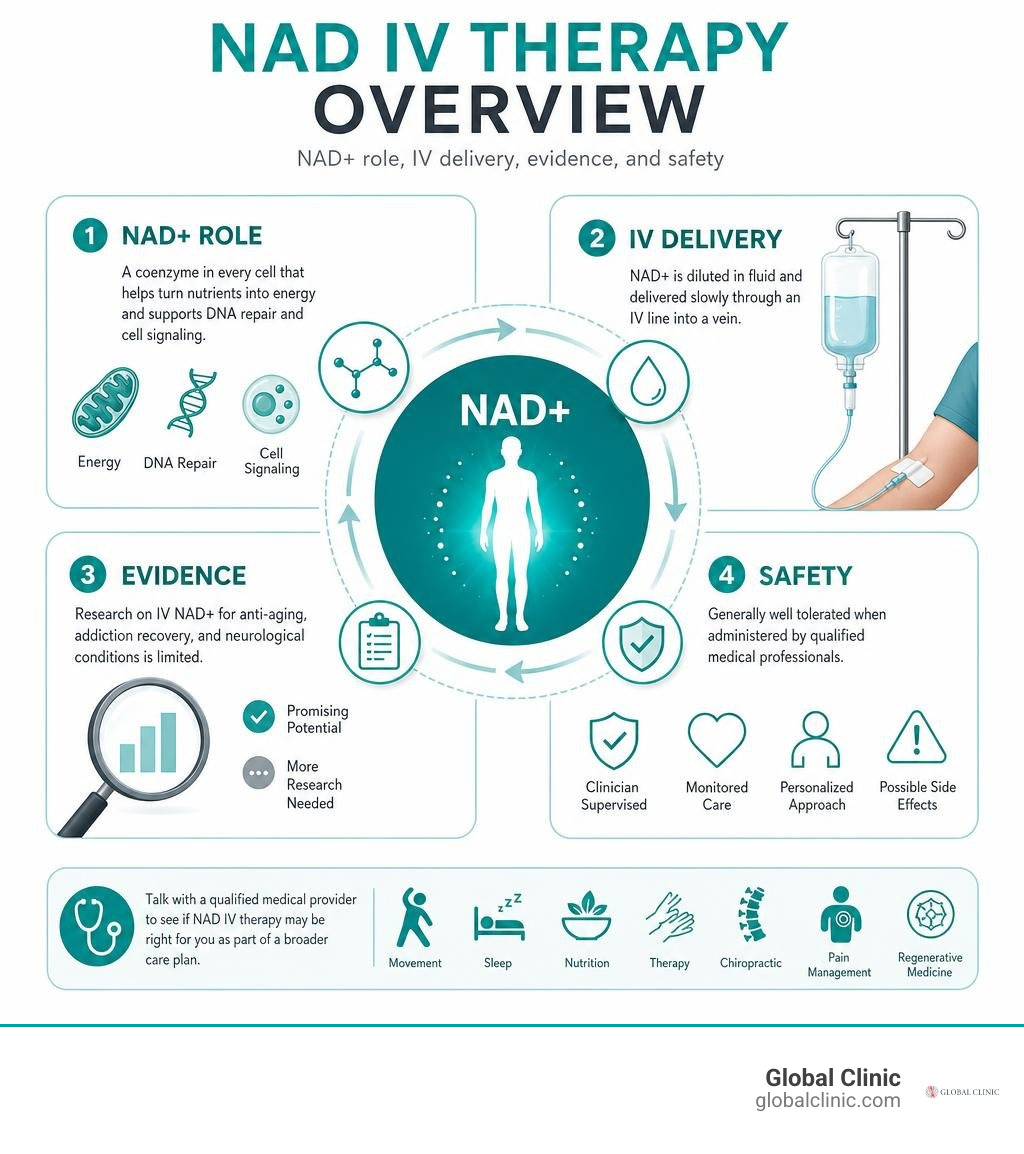
NAD IV what is it: NAD IV therapy is a clinician-supervised infusion of nicotinamide adenine dinucleotide (NAD+), a coenzyme that helps cells turn nutrients into energy and supports processes involved in DNA repair and cell signaling.
During treatment, NAD+ is diluted in fluid and delivered slowly through an IV line into a vein. People may seek it for wellness, fatigue, recovery, or support alongside a broader care plan. However, it is important to know that research on IV NAD+ for anti-aging, addiction recovery, and neurological conditions is still limited. It is not FDA-approved for those uses.
NAD+ naturally occurs in every cell, but levels can change with age, illness, stress, and metabolic demands. An IV delivers NAD+ into the bloodstream, though this does not automatically mean all of the infused compound reaches cells intact. The body processes circulating NAD+ quickly, and researchers are still studying what this means for real-world benefits.
For patients managing chronic pain, sports injuries, or recovery after an auto accident, IV therapy may be one supportive option considered alongside physical therapy, chiropractic care, pain management, regenerative medicine, sleep, nutrition, and movement-based rehabilitation.
I am Anna Slavin, Practice Manager at Global Clinic, where our team has provided patient-centered, non-surgical care in the Northern Chicago area for over 20 years. In this guide to nad iv what is it, we will explain the science, evidence, safety considerations, and practical questions to discuss with a qualified medical provider.
Nad iv what is it word list:
NAD IV What Is It and How Does Cellular Infusion Work?
When patients ask us, “nad iv what is it and why are people talking about it?”, we start with basic cellular biology. Nicotinamide adenine dinucleotide exists in two distinct forms inside the body: NAD+ (the oxidized form) and NADH (the reduced form). Together, they act as primary electron transporters in metabolic pathways, powering the mitochondria—the energy factories of your cells.
If you want to understand nad explained simply the science behind the name, think of NAD+ as an empty cellular delivery truck that collects electrons during food breakdown and delivers them to generate adenosine triphosphate (ATP), the universal currency of biological energy.
Intravenous infusion delivers pure NAD+ directly into systemic circulation. By bypassing the digestive tract, an intravenous drip delivers 100% of the active coenzyme into plasma without being broken down by gastric acid or hepatic first-pass metabolism. As highlighted in scientific reviews like IV NAD+ Therapy: What the Evidence Shows, while systemic circulation is achieved immediately, cellular entry involves complex physiological mechanisms.
Biological Rationale: NAD IV What Is It and Why Infuse Direct Coenzymes?
The biological rationale behind direct coenzyme infusion hinges on the role of NAD+ in cellular maintenance. Beyond energy conversion, NAD+ serves as a critical substrate for enzymes called sirtuins (SIRT1–SIRT7) and poly(ADP-ribose) polymerases (PARPs). Sirtuins regulate mitochondrial biogenesis, oxidative stress responses, and inflammatory signaling, while PARPs rely on NAD+ to execute DNA strand repair.
As people age or experience systemic stress—such as chronic inflammation, severe physical trauma, or metabolic strain—intracellular NAD+ pools gradually decline. Proponents of direct infusion suggest that restoring systemic levels may help support cellular repair mechanisms and mitochondrial activity. To explore these biochemical pathways further, review our detailed guide on the benefits of nad infusion.
Pharmacokinetics and Bioavailability in Bloodstream Delivery
Understanding the distinction between circulating plasma levels and actual tissue uptake is essential when evaluating nad iv what is it. Pharmacokinetic research reveals that intravenous NAD+ has a relatively short plasma half-life, measured in minutes rather than hours.
Once introduced into the bloodstream, intact NAD+ molecules encounter membrane-bound enzymes such as CD38 and ecto-nucleotidases (CD73 and CD39). These enzymes break down circulating extracellular NAD+ into smaller precursor molecules, such as nicotinamide and adenosine, prior to intracellular uptake.
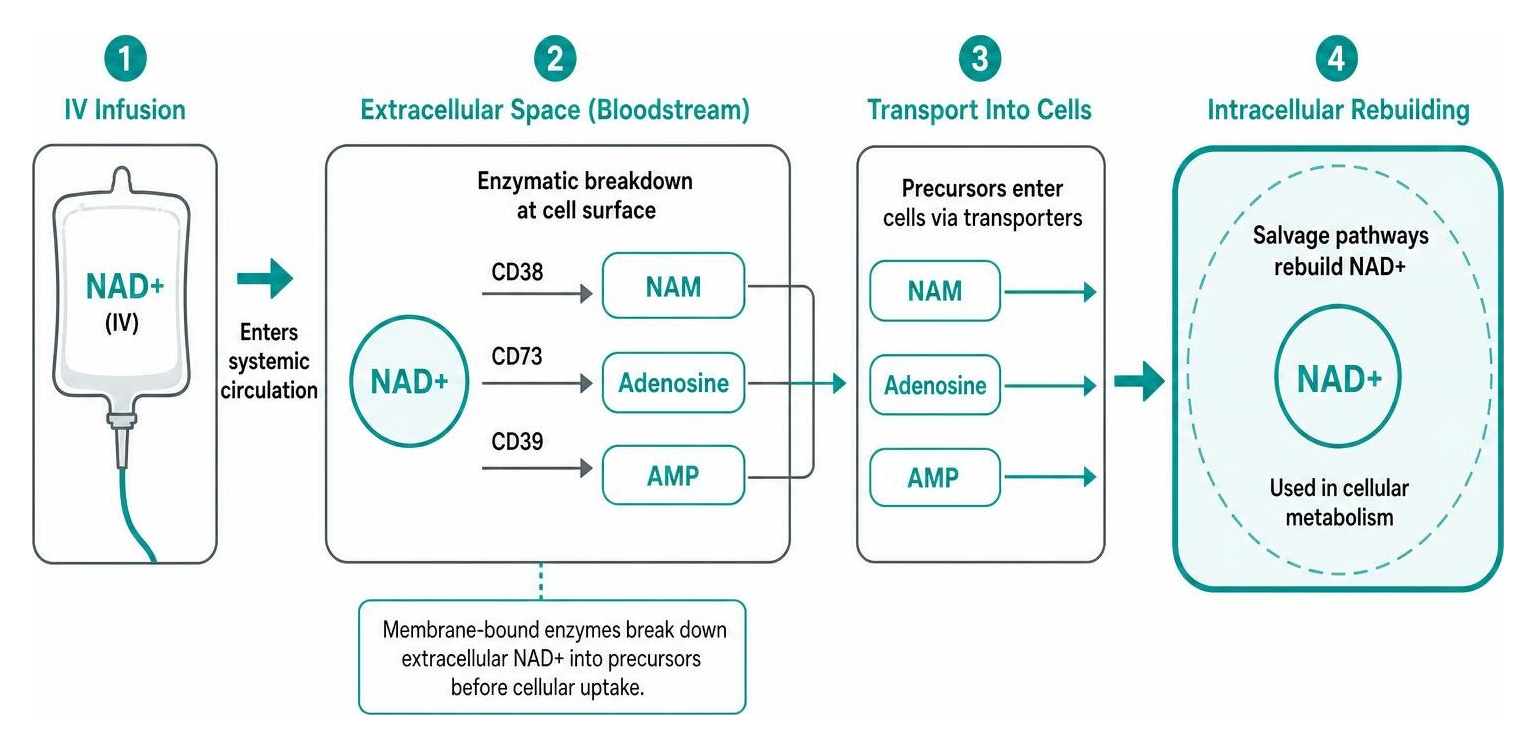
Because intact NAD+ is too large to pass freely through most cell membranes without specialized transporters, cells primarily rebuild NAD+ internally via salvage pathways. Therefore, an intravenous nad infusion functions by supplying the vascular compartment with a heavy concentration of coenzyme precursors that tissues rapidly absorb and utilize.
Clinical Evidence, Applications, and Research Findings

While clinical interest in intravenous coenzyme therapy has expanded rapidly across communities like Niles, Skokie, and Glenview, evaluating published scientific trials helps set realistic expectations regarding therapeutic outcomes.
Understanding NAD IV What Is It for Anti-Aging and Cellular Repair?
In longevity research, age-related NAD+ depletion is recognized as a key hallmark of biological aging. Restoring coenzyme levels in laboratory animal models has demonstrated improvements in mitochondrial function, insulin sensitivity, and cellular stress resistance.
However, human clinical trials specifically assessing intravenous NAD+ for anti-aging remain sparse. Most published human studies have evaluated oral precursors rather than direct intravenous administration. While open-label reports and observational human studies suggest subjective improvements in stamina, mental clarity, and fatigue recovery, robust large-scale placebo-controlled trials are still ongoing. You can learn more in the ultimate guide to nad infusions cellular health benefits and safety.
Addiction Recovery Protocols and Neurological Support
Historically, direct NAD+ infusions gained clinical attention as an adjunctive protocol in substance detox facilities during the mid-20th century. Practitioners observed that multi-day drip protocols (often delivering 500 mg to 1,000 mg over 3 to 6 hours daily) helped alleviate acute withdrawal distress, reduce cravings, and improve mental focus in individuals recovering from alcohol and opioid dependence.
In neurological research, preliminary human pilot trials have explored intravenous protocols for neurodegenerative conditions like Parkinson’s disease. These studies suggest potential supportive effects on cellular energy metabolism in brain tissue. Nevertheless, scientists emphasize that intravenous protocols should be viewed as complementary supportive care rather than a standalone cure. For a closer look at these applications, read about exploring the benefits and risks of nad injections for enhanced health.
Dosage Protocols: Comparing IV Drips, Injections, and Precursors
When evaluating cellular health options, patients frequently ask how intravenous protocols compare to alternative administration routes like subcutaneous injections or oral daily supplements.
Clinical IV Drip vs Subcutaneous Protocols
In a clinical clinic setting, intravenous protocols typically deliver 250 mg to 500 mg of active coenzyme per session, infused over 1 to 4 hours in a isotonic saline solution. Extended multi-hour infusions are deliberately used to limit rate-dependent infusion side effects.
Subcutaneous NAD+ injections involve smaller daily or multi-week doses (typically 25 mg to 100 mg). Because concentrated coenzyme formulations can cause localized tissue irritation and burning upon subcutaneous injection, clinical IV drips remain the preferred route for delivering larger total dosages safely. Detailed dosing insights can be found in the NAD+ Injection Dosage Guide 2026 – IV vs Subcutaneous Protocols and our resource on nad injection guide boosting your cells from the inside out.
Oral Precursors: NR and NMN Evidence
Oral supplements such as Nicotinamide Riboside (NR) and Nicotinamide Mononucleotide (NMN) operate differently. Instead of delivering intact coenzymes into plasma, oral precursors pass through the digestive system and liver, where they are converted into NAD+ inside cells.
Human clinical trials show that daily oral NR supplementation (ranging from 250 mg to 1,000 mg daily) can reliably elevate whole-blood NAD+ levels by approximately 60% over 6 weeks of consistent use. While oral supplements provide convenient daily maintenance, intravenous administration provides a rapid, high-concentration spike in circulating coenzyme levels. For an objective comparison of these approaches, see does nad therapy really work or is it just expensive water.
| Administration Route | Typical Dosage Range | Administration Duration | Key Advantages | Primary Considerations |
|---|---|---|---|---|
| Intravenous Drip (IV) | 250 mg – 500 mg | 1 – 4 hours per session | 100% systemic bio-delivery; rapid elevation | Requires clinical visit and slow drip titration |
| Subcutaneous Injection | 25 mg – 100 mg | Few seconds | Convenient home dosing; lower volume | Common localized burning and site irritation |
| Oral Precursors (NR/NMN) | 250 mg – 1,000 mg daily | Daily oral intake | Easy daily routine; strong long-term trial data | Subject to gastrointestinal absorption variability |
Safety Profile, Adverse Effects, and Regulation Standards

Patient safety and strict clinical protocols are paramount when administering intravenous care. Understanding nad iv what is it requires a realistic look at potential infusion side effects and medical oversight standards.
During an infusion, rapid delivery of NAD+ into plasma can trigger smooth muscle contraction and transient metabolic shifts. Reported side effects during active drips include:
- Mild to moderate chest tightness or pressure
- Abdominal cramping or nausea
- Facial flushing and warmth
- Transient muscle tension or fatigue
- Lightheadedness or headache
These physical reactions are rate-dependent. If a patient experiences discomfort, the supervising healthcare professional simply slows down the IV drip rate, which usually resolves symptoms within minutes.
From a regulatory standpoint, intravenous NAD+ is not an FDA-approved prescription drug for specific medical diagnoses; rather, it is prepared as a compounded formulation under sterile compounding standards (such as USP 797 guidelines) by licensed 503A or 503B compounding pharmacies. At Global Clinic, every patient undergoes a medical screening prior to receiving iv therapy to ensure suitability and personal safety.
Frequently Asked Questions About NAD IV Therapy
Is NAD IV therapy FDA-approved for anti-aging or wellness?
No. Intravenous NAD+ is not FDA-approved to treat, cure, or prevent anti-aging, chronic fatigue, or addiction. It is legally compounded and administered by licensed medical practitioners as a supportive wellness intervention under professional clinical supervision.
How long does an IV NAD+ drip session usually take?
A typical session lasting 250 mg to 500 mg takes anywhere between 1.5 to 4 hours. Because delivering the coenzyme too quickly causes transient side effects like nausea or chest tightness, the infusion rate is carefully adjusted to match each individual’s comfort level.
What are the most common side effects during an infusion?
The most common side effects are rate-dependent sensations including abdominal tightness, mild nausea, flushing, head pressure, and chest warmth. Slower infusion speeds effectively minimize or eliminate these temporary sensations.
Conclusion
Understanding nad iv what is it allows patients to make informed, realistic choices about their health and wellness routines. While intravenous coenzyme infusions provide a direct pathway for delivering key metabolic precursors into systemic circulation, direct cellular therapy is most effective when integrated into a comprehensive, multidisciplinary health strategy.
At Global Clinic, our team brings over 20 years of experience serving patients across Northern Chicago, including communities like Niles, Park Ridge, Morton Grove, Des Plaines, Mount Prospect, and Chicago, IL. Whether you are managing chronic musculoskeletal pain, recovering from an auto accident, restoring athletic performance, or exploring integrative wellness options, our licensed specialists evaluate your whole-body health to build a customized plan tailored to your goals.
To discuss your health goals and evaluate appropriate care options, Learn More About NAD+ Therapy or contact our clinic directly to schedule a medical evaluation with our team.