







What Is Upper Shoulder Blade Pain — and What Can You Do About It?
Upper shoulder blade pain is discomfort felt in or around the triangular bones in your upper back, known as the scapulae. It can range from a dull ache to a sharp, burning sensation — and it has many possible causes.
Here are the most common causes and first steps for relief:
| Cause | Quick Action |
|---|---|
| Muscle strain or poor posture | Rest, ice, gentle stretching |
| Prolonged desk work or tech neck | Ergonomic adjustments, movement breaks |
| Rotator cuff injury | See a physical therapist |
| Referred pain from organs (gallbladder, etc.) | See a doctor promptly |
| Heart or lung emergency | Call 911 immediately |
Pain in this area — also called interscapular pain — is extremely common. It can stem from something as simple as sitting at a desk all day, or something as serious as a gallbladder problem.
The good news: most cases respond well to conservative treatment — no surgery needed.
That said, some causes require immediate medical attention. This guide will help you tell the difference, understand what’s driving your pain, and find real relief.
I’m Anna Slavin, Practice Manager at Global Clinic, a multidisciplinary center whose team brings over 20 years of global medical experience to helping patients across Northern Chicago manage conditions like upper shoulder blade pain through personalized, non-surgical care. Whether your pain stems from a musculoskeletal issue or something more complex, our team is here to help you get back to living fully.
Introduction to Upper Shoulder Blade Pain
To understand why your back hurts, we first need to look at the “neighbors” living in your upper back. The scapula (shoulder blade) is a large, flat triangular bone that sits on the back of your rib cage. It’s a bit of an anatomical marvel because it isn’t bolted to other bones; instead, it “floats” held in place by a complex network of 17 different muscles.
These muscles, including the rhomboids, trapezius, and levator scapulae, connect your shoulder blade to your spine and neck. When these muscles are happy, you can throw a ball, reach for the top shelf, or give a high-five without a second thought. However, because the scapula is so mobile, it is also highly susceptible to musculoskeletal discomfort.
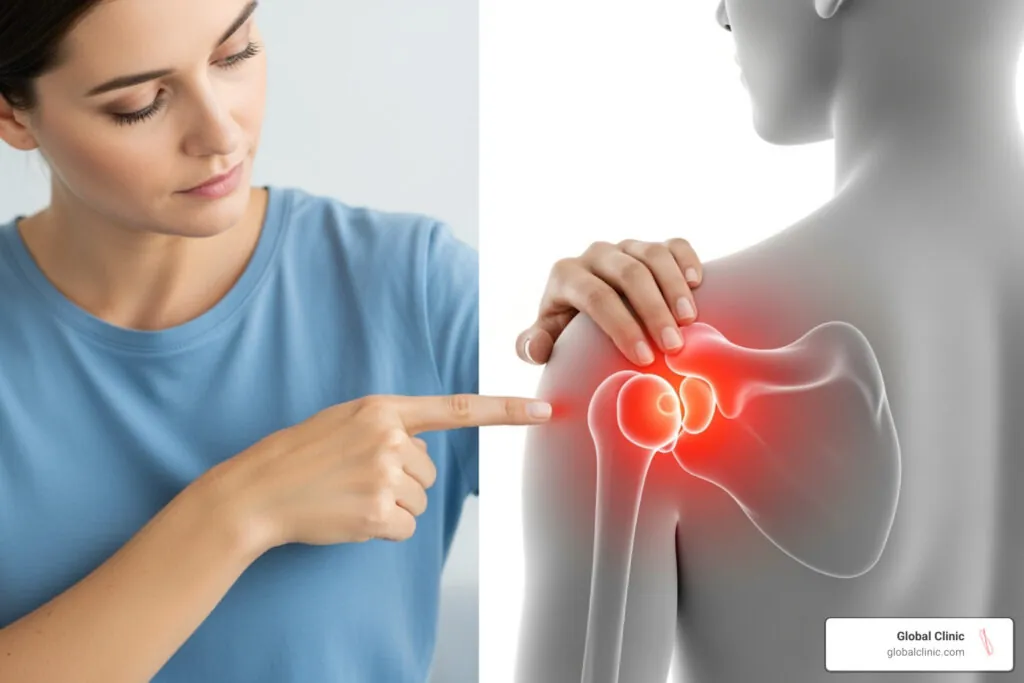
The connection between your scapula and your thoracic spine (the middle section of your back) is vital for posture. If one muscle becomes too tight or another too weak, the whole system falls out of alignment. This leads to interscapular pain—that nagging ache right between the blades. Furthermore, this area is a “hotspot” for referred pain, where the brain perceives pain in the shoulder blade that actually originates from an internal organ or a nerve in the neck.
Common Causes of Upper Shoulder Blade Pain
If you feel like someone is sticking a thumb into your back every time you sit at your computer, you aren’t alone. At our Niles clinic, which serves patients from Arlington Heights to Skokie, we see a wide variety of triggers for this discomfort.
Musculoskeletal Issues and Scapular Dyskinesis
The most frequent culprit is simple muscle strain. This can happen from a sudden “oops” moment—like lifting a heavy box incorrectly—or from repetitive motions like swimming or overhead reaching.
Scapular Dyskinesis: This is a fancy medical term for when your shoulder blade doesn’t move the way it should. If you look in the mirror and notice one shoulder blade sticking out like a wing (often called a “winging scapula”), you likely have muscle weakness or nerve issues affecting the stabilizers. You might also experience “snapping scapula syndrome,” where the bone literally grinds or pops against the ribs because the protective bursa is inflamed.
Myofascial Pain and Trigger Points: Have you ever felt a “knot” in your back that feels like a hard marble? That’s a trigger point. Myofascial pain syndrome involves chronic irritation of the muscle tissue. These knots can send pain radiating up into your neck or down your arm.
Degenerative Conditions: As we age, osteoarthritis can affect the joints where the ribs meet the spine, leading to stiffness. Similarly, scoliosis (an abnormal curvature of the spine) can put uneven pressure on one shoulder blade over the other.
Referred Pain from Internal Organs
Sometimes, the source of upper shoulder blade pain isn’t in the back at all. Because of how our nerves are wired, the brain can get “confused” about where a pain signal is coming from.
- Gallbladder issues: According to clinical research on gallstones, about 60% of people with the condition feel pain in the right shoulder blade.
- Pancreatitis: Inflammation of the pancreas often sends a deep ache to the left shoulder blade.
- Acid Reflux and Ulcers: Severe GERD or peptic ulcers can cause a burning sensation that travels through to the back.
- Cervical Disc Disease: A herniated disc in your neck can pinch a nerve, sending “shocks” or numbness directly to the shoulder blade area.
If you suspect an internal organ may be involved, see your primary care doctor promptly.
| Side of Pain | Potential Referred Source |
|---|---|
| Right Side | Gallstones, Liver Disease, Peptic Ulcer |
| Left Side | Pancreatitis, Heart Issues, Spleen Irritation |
| Both Sides | Lung Issues, Acid Reflux, Muscle Strain |
When to Seek Immediate Medical Attention
While most back pain is just a nuisance, some signs mean you need to stop reading and call 911 or head to the nearest ER in the Chicago area.
Heart Attack: In women especially, a heart attack may not feel like “a crushing weight on the chest.” Instead, it can present as sudden, unexplained upper shoulder blade pain, often on the left side, accompanied by shortness of breath, lightheadedness, or nausea.
Pulmonary Embolism (PE): A blood clot in the lung can cause sharp, stabbing pain in the shoulder blade that gets worse when you take a deep breath. This is a life-threatening emergency.
Other Red Flags:
- Coughing up blood: Could indicate a lung issue or a Pancoast tumor (a type of lung cancer that grows at the top of the lung and presses on nerves).
- Fever and chills: This could suggest an infection in the spine or an abscess.
- Sudden weakness: If you lose the ability to move your arm or feel a sudden “drop” in strength, it could be a severe nerve impingement or neurological event.
- Aortic Dissection: A tear in the body’s main artery often feels like a “tearing” or “ripping” sensation between the shoulder blades.
Effective Treatments and Relief Strategies
At Global Clinic, we believe in a “conservative-first” approach. You’d be surprised how much relief you can get without ever stepping foot in an operating room. In fact, research shows that exercise therapy is often just as effective as surgery for many shoulder-related conditions.
Medications and Initial Care: Over-the-counter pain relievers may help in the short term; ask your doctor or pharmacist which option is safe for you. We often recommend alternating between ice packs (to numb acute pain) and heat therapy (to relax tight muscles).
Advanced Non-Surgical Options: If the pain persists, we offer specialized treatments such as:
- Corticosteroid Injections: To quickly reduce severe inflammation in a joint or bursa.
- Regenerative Medicine: Using the body’s own healing properties to repair damaged tissue.
- Trigger Point Injections: To “reset” those stubborn muscle knots.
Home Remedies for Upper Shoulder Blade Pain
You don’t always need a doctor to start feeling better. Here are some of our favorite “at-home” fixes:
- The Tennis Ball Technique: Place a tennis ball (or a racquetball) between your shoulder blade and a wall. Lean into it and move slowly to massage out those tight knots.
- Epsom Salt Baths: The warm water and magnesium salts may help muscles relax.
- Rest (But Not Too Much): While you should avoid heavy lifting for 48 hours, staying in bed too long can actually make the pain worse. Gentle movement keeps the blood flowing.
- Anti-Inflammatory Diet: Loading up on Omega-3s (found in salmon and walnuts) and colorful berries can help lower the inflammation levels in your body.
Professional Diagnosis of Upper Shoulder Blade Pain
If your pain has lasted more than two weeks, it’s time for a professional evaluation. We don’t just guess; we use evidence-based diagnostics to find the root cause.
- Physical Exam: We check your range of motion, look for “winging,” and test your muscle strength.
- Imaging: X-rays can rule out fractures (though scapula fractures are rare, accounting for less than 1% of broken bones). MRIs or CT scans give us a detailed look at the soft tissues, discs, and nerves.
- Diagnostic Injections: Sometimes, the best way to find the pain is to numb a specific area. If the pain goes away, we’ve found the source!
For those in the Northern Chicago suburbs, you can learn more about our specialized services and how our diagnostic process works.
Prevention and Lifestyle Habits
The best way to treat upper shoulder blade pain is to never get it in the first place. This is especially true for our neighbors in Arlington Heights and Schaumburg who spend long hours commuting or working at desks.
Ergonomics is King: If you lean forward to look at your laptop, you are putting massive strain on your rhomboids.
- Monitor Height: Your eyes should be level with the top third of the screen.
- Standing Desks: These encourage “micro-movements” that keep your back muscles engaged.
- Lumbar Support: Keeping the curve in your lower back actually helps your upper back stay aligned.
The “1-1-2” Rule for Exercise: If you hit the gym, don’t just focus on your “mirror muscles” (chest and biceps). For every set of chest presses you do, you should do one set of flys and two sets of rows. This balances the pull on your shoulder blades and prevents that “hunched over” look.
Daily Habits:
- Shoulder Blade Squeezes: Imagine you are trying to hold a pencil between your blades. Hold for 5 seconds, repeat 10 times.
- Stress Management: Stress causes us to subconsciously “hike” our shoulders toward our ears. Yoga and deep breathing can lower cortisol and relax these muscles.
- Proper Lifting: Always bend at the knees, not the waist. If a bag is heavy, use two straps (backpack style) rather than slinging it over one shoulder.
Frequently Asked Questions about Shoulder Blade Pain
Can stress cause pain between the shoulder blades?
Absolutely. When we are stressed, our bodies enter “fight or flight” mode, which causes muscles in the neck and upper back to tighten. This chronic tension can restrict blood flow and cause that familiar burning ache. Shallow breathing—common during stressful times—also fails to expand the rib cage fully, leading to stiffness in the interscapular muscles.
Is shoulder blade pain a sign of lung cancer?
While rare, it is possible. A Pancoast tumor is a type of lung cancer located at the very top of the lung. As it grows, it can press on the nerves that lead to the shoulder blade and arm. If your back pain is accompanied by a persistent cough, chest pain, or a history of smoking, it is vital to get a chest X-ray to rule this out.
How long does it take for a strained shoulder blade muscle to heal?
For a mild strain, you can expect to feel better in about 1 to 2 weeks with rest and ice. However, a more significant tear or chronic condition like scapular dyskinesis may take 6 to 12 weeks of dedicated physical therapy to fully resolve. Consistency with your exercises is the most important factor in the recovery timeline.
Conclusion
Upper shoulder blade pain doesn’t have to be your “new normal.” Whether it’s a result of your desk setup, a sports injury, or a referred signal from elsewhere in the body, there are clear paths to relief.
At Global Clinic, we serve the Northern Chicago community, from Barrington to Melrose Park. We take pride in offering personalized, innovative care that avoids the “cookie-cutter” approach. Our clinic in Niles is designed to provide high-quality pain management that gets to the heart of the problem.
Don’t wait for a small ache to become a chronic limitation. If you’re ready to start moving freely again, call Global Clinic in Niles at (847) 299-7000 to schedule a consultation. We are here to support your journey to wellness every step of the way.