







Understanding Your Options for Joint Pain Relief
Autologous conditioned plasma injection is a regenerative treatment that uses concentrated platelets from your own blood to promote healing in damaged joints and soft tissues. Here’s what you need to know:
Quick Facts About Autologous Conditioned Plasma Injection:
- What it is: A concentrated form of your own blood plasma, rich in healing platelets and growth factors
- How it works: Stimulates natural tissue repair by delivering growth factors directly to injured areas
- Common uses: Knee osteoarthritis, tendonitis, ligament injuries, and chronic joint pain
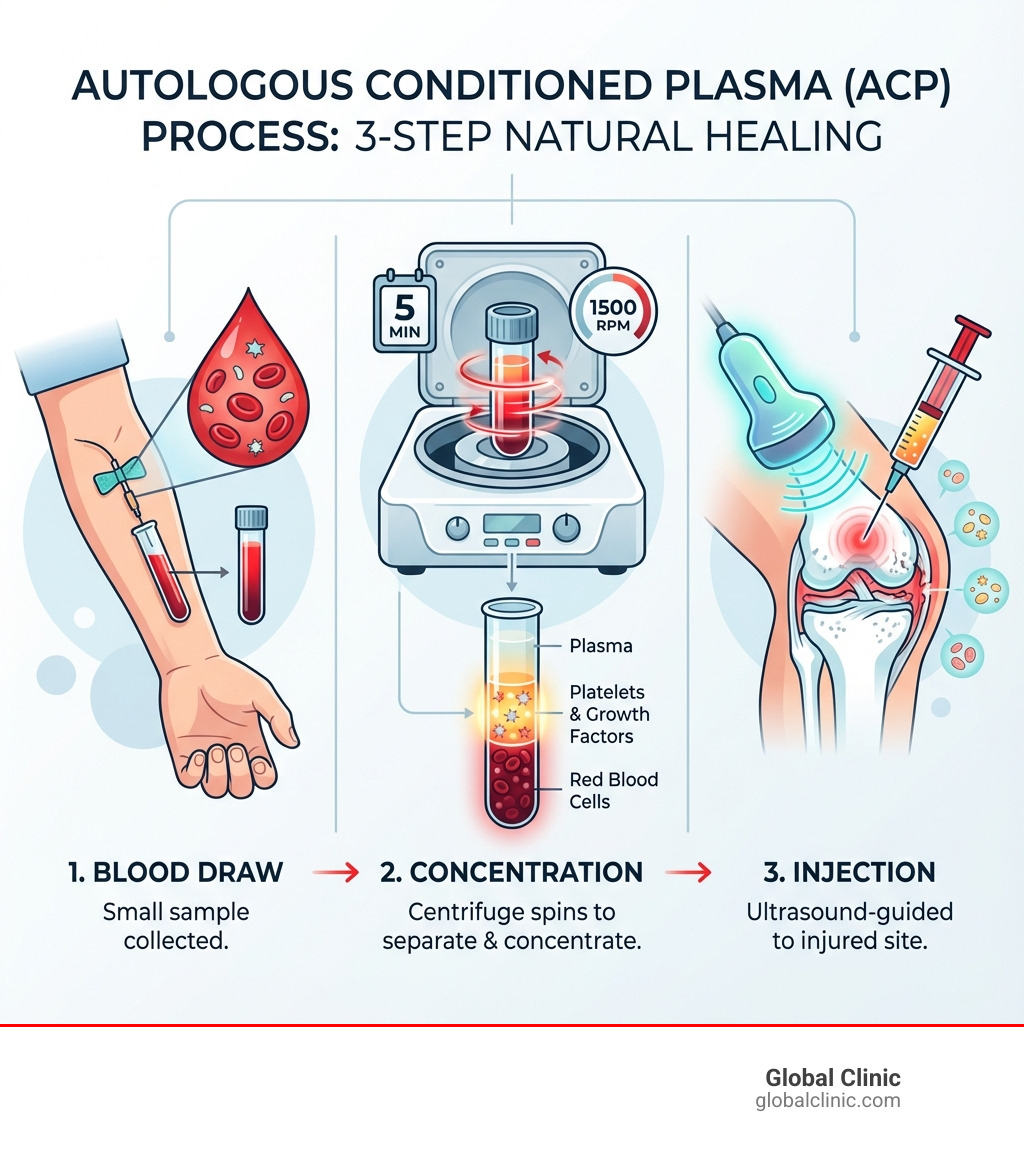
- Procedure: Blood draw, centrifuge separation, and injection into the affected area—typically completed in 30-40 minutes
- Results: Studies show up to 78% improvement in pain and function for knee osteoarthritis after 12 months
- Safety: Minimal risk since it uses your own blood; no adverse events reported in major clinical trials
If you’re living with chronic joint pain, stiff tendons, or degenerative conditions like osteoarthritis, you’ve likely tried the usual treatments—rest, anti-inflammatory medications, perhaps even cortisone shots. But what if there was a way to tap into your body’s own healing power instead of just masking symptoms?
Autologous conditioned plasma injection represents a shift in how we approach musculoskeletal injuries. Instead of relying on medications that temporarily reduce inflammation or surgeries that involve lengthy recovery times, this treatment harnesses the growth factors naturally present in your blood to actually repair damaged tissue. It’s not science fiction—it’s regenerative medicine, and it’s been used in the medical community for over 20 years.
The results speak for themselves. In a rigorous FDA-regulated study of patients with knee osteoarthritis, those who received autologous conditioned plasma injection improved their overall function and pain scores by 78% from baseline after one year, compared to just 7% for the placebo group. No adverse events were reported.
I’m Ana Vinikov, Practice Manager at Global Clinic, where we’ve helped countless Northern Chicago patients find lasting relief through autologous conditioned plasma injection and other regenerative therapies. With over 20 years of combined global medical experience on our team, we’ve seen how this treatment can transform lives for people who thought surgery was their only option.
Related content about autologous conditioned plasma injection:
What is Autologous Conditioned Plasma (ACP)?
At its core, autologous conditioned plasma (ACP) injection is a cutting-edge regenerative treatment that leverages your body’s own healing mechanisms. The term “autologous” simply means “from the same individual,” emphasizing that the treatment uses your own blood, eliminating the risk of allergic reactions or disease transmission.
So, what exactly is ACP? It is a concentrate of plasma protein derived from your whole blood. This concentration process, often involving centrifugation, removes red blood cells while retaining a high density of platelets. These concentrated platelets are suspended in plasma, which serves as a rich medium for delivering these crucial healing elements directly to an injured area.
While often used interchangeably with Platelet-Rich Plasma (PRP), ACP typically refers to a specific preparation method that results in a leukocyte-poor PRP (LP-PRP). This distinction can be important, as LP-PRP has been associated with liftd anti-inflammatory mediators (like IL-4 and IL-10), making it potentially more beneficial for conditions like osteoarthritis where inflammation plays a significant role. The primary goal of ACP is to stimulate and improve your body’s natural healing and regenerative processes, offering a biological solution to musculoskeletal pain.
The Power in Your Platelets: How Growth Factors Drive Healing
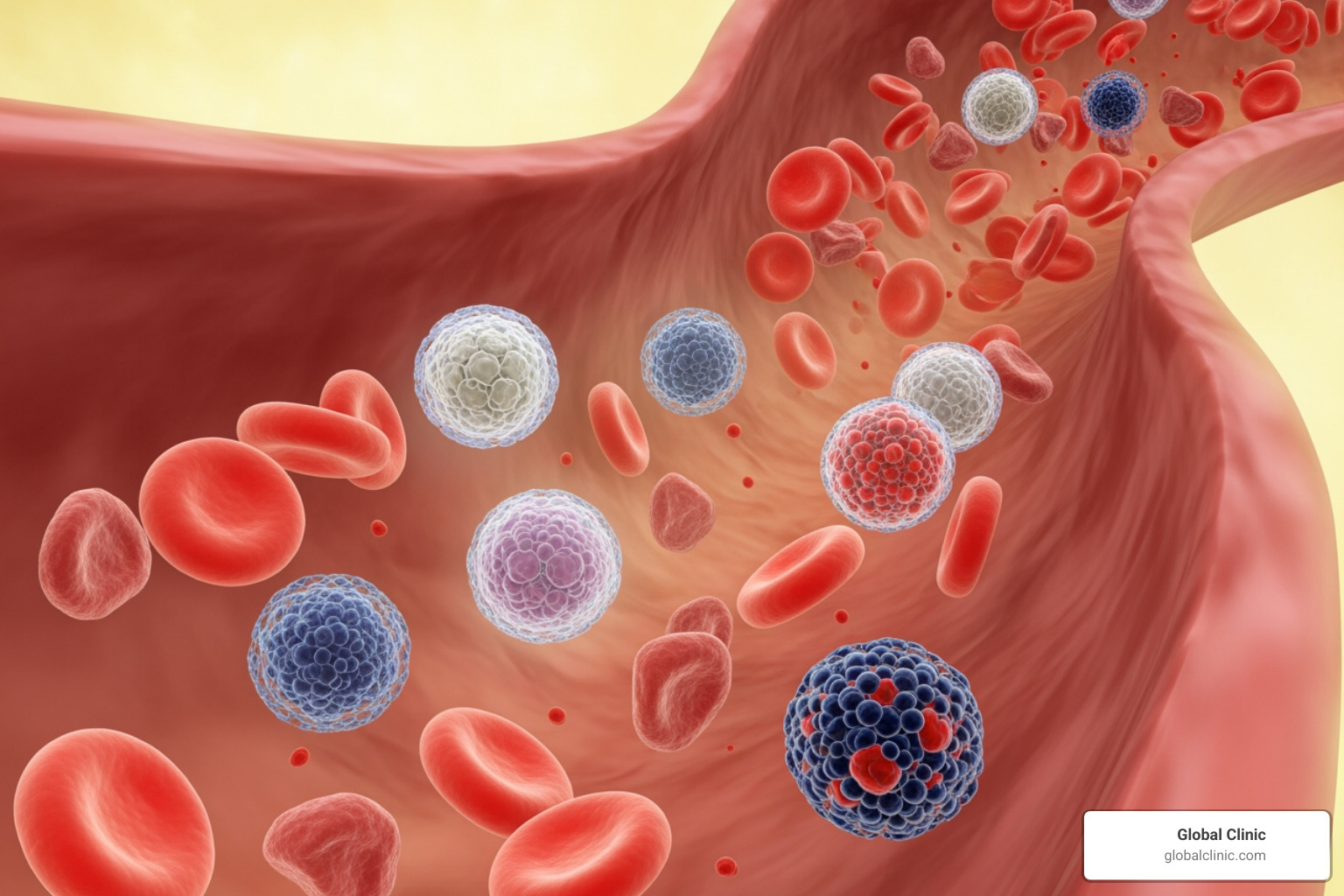
Imagine your body’s natural repair crew, always on standby, ready to fix any damage. Platelets are the tiny, mighty engineers of this crew. These specialized blood cells, also known as thrombocytes, are not just responsible for blood clotting; they are absolutely crucial for growth and healing functions throughout your body.
The real magic lies within their alpha granules, which are tiny storage units packed with over 1100 types of biologically active proteins. These proteins include a powerful cocktail of growth factors and cytokines. When platelets are activated—which happens naturally upon injection into an injured area—they begin to actively secrete these proteins, with over 95% released within just one hour.
These growth factors play a pivotal role in driving the healing process:
- Platelet-Derived Growth Factor (PDGF): Promotes cell replication, blood vessel formation, and collagen production.
- Changing Growth Factor-beta (TGF-β): Stimulates cell growth and differentiation, and plays a key role in tissue repair and immune regulation.
- Vascular Endothelial Growth Factor (VEGF): Essential for creating new blood vessels (angiogenesis), which is vital for delivering nutrients and oxygen to healing tissues.
- Insulin-like Growth Factor-1 (IGF-1): Supports cell proliferation and differentiation, particularly in cartilage and bone.
- Fibroblast Growth Factor (FGF): Encourages cell growth, tissue repair, and wound healing.
- Epidermal Growth Factor (EGF): Stimulates skin and tissue regeneration.
- Platelet-Derived Epidermal Growth Factor (PDEGF): Another factor contributing to tissue repair.
- Platelet Factor 4 (PF4) and CD40L: These are cytokines that influence immune responses and inflammation.
These potent biomolecules work in concert, initiating a cascade of events that recruit reparative cells, promote tissue regeneration, and stimulate the development of new collagen. This process helps create a fibrin scaffold, a temporary matrix that supports new cell growth and differentiation, ultimately assisting in the repair of injured tissue. For a deeper dive into the science, you can explore the biology of platelet-rich plasma.
The Autologous Conditioned Plasma Injection Procedure: A Step-by-Step Guide
At Global Clinic in Northern Chicago, we prioritize your comfort and understanding throughout the entire autologous conditioned plasma injection process. Our journey together begins with a thorough consultation. We’ll dig into your medical history, discuss your symptoms, and perform a comprehensive physical examination to accurately diagnose your condition. This allows us to craft a personalized treatment plan custom to your unique needs, ensuring ACP is the right solution for you.
Preparing the ACP Solution
The preparation of your ACP solution is a straightforward and efficient process, performed right here in our office. It starts with a simple blood draw, much like a standard lab test. We collect a small sample of your blood, typically around 10 ml.
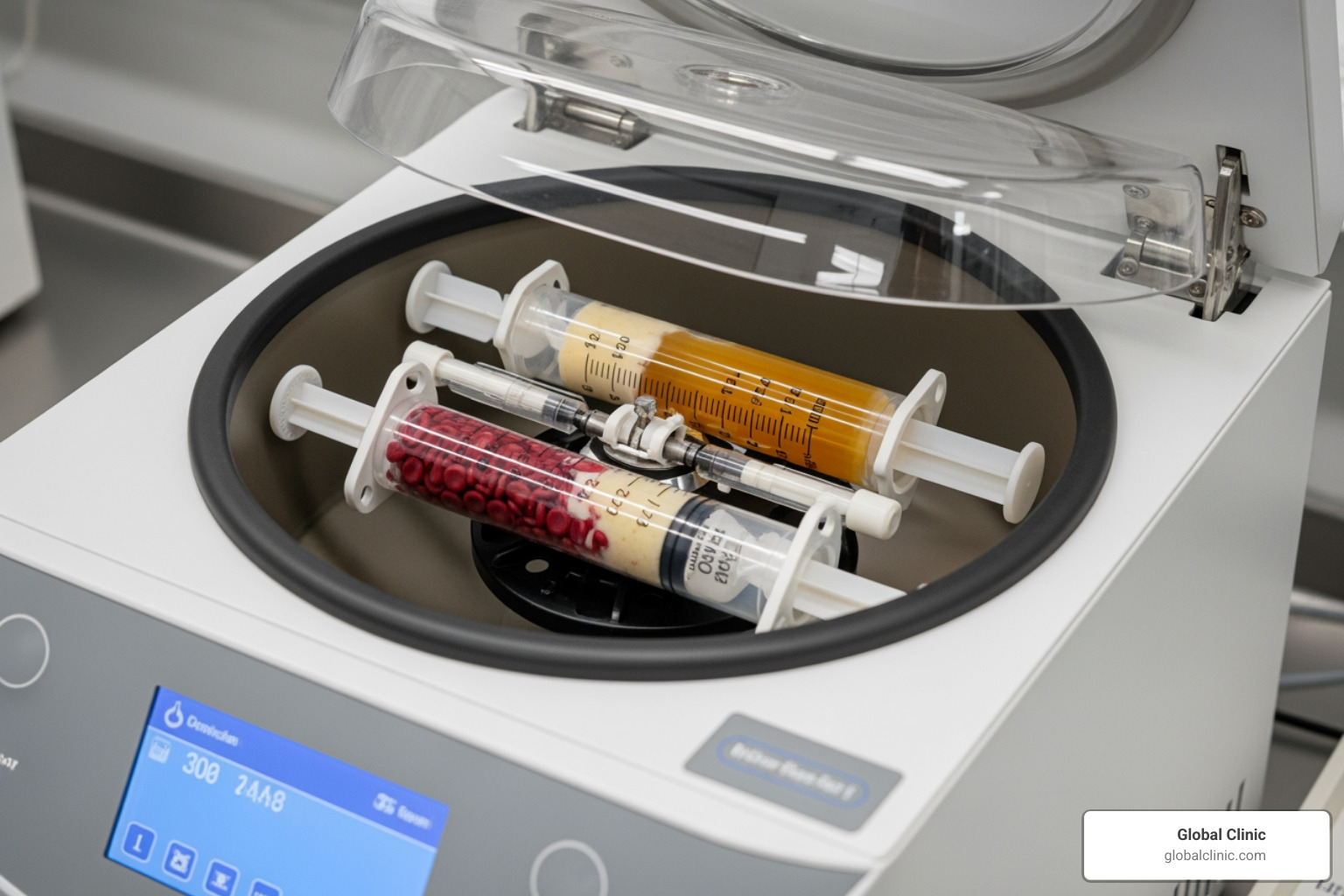
This blood sample is then transferred into a specialized, sterile double-syringe system. This innovative system is designed to isolate the components of your blood effectively. Once the blood is in the syringe system, it’s placed into a centrifuge. This device spins at a specific speed—usually 1500 revolutions per minute (rpms) for about 5 minutes. This controlled spinning separates the blood into its different layers: red blood cells, white blood cells, and the plasma layer containing your concentrated platelets. The goal is to achieve a platelet concentration anywhere from 2 to 8 times their normal number.
The “supernatant,” which is the plasma rich in these concentrated platelets and growth factors, is then carefully aspirated into the second sterile syringe. The entire preparation process, from blood draw to ready-to-inject solution, often takes less than 15 minutes, highlighting the efficiency of this autologous treatment.
What to Expect During Your Autologous Conditioned Plasma Injection
Once your personalized ACP solution is ready, we proceed with the injection. The target area will be thoroughly cleaned, and a local anesthetic will be applied to numb the injection site. Our aim is to minimize any discomfort, and most of our patients tolerate the injection very well, experiencing little to no pain during the procedure itself.
For optimal precision, especially when treating joints or deep tissues, we often use ultrasound guidance. This imaging technology allows us to visualize the exact injection site in real-time, ensuring that the autologous conditioned plasma injection is delivered precisely to the injured tendon, ligament, or joint capsule. This accuracy is crucial for maximizing the treatment’s effectiveness.
The injection itself is a minimally invasive, in-office procedure. The entire process, from blood draw to injection, typically takes around 30-40 minutes. After the injection, you’ll be able to return home shortly after a brief follow-up.
Recovery and Expected Results
Following your autologous conditioned plasma injection, it’s normal to experience some initial soreness or aching in the treated area for several days. This is actually a positive sign, indicating that the healing cascade has begun! We recommend using Tylenol and applying ice to help manage any discomfort.
However, it’s crucial to avoid over-the-counter anti-inflammatory medications (such as Advil, Aleve, Ibuprofen, and other NSAIDs) for at least the first 48 hours, and ideally for the first week. These medications can interfere with the natural inflammatory response that PRP initiates, which is vital for the healing process.
Most patients can return to work and other normal daily activities immediately after treatment, though we advise refraining from heavy lifting and strenuous activity for a few days to allow the initial healing to take hold. For some conditions, we may recommend a short period of immobilization, such as a cam walker or soft cast for 3-4 days, particularly for lower limb injections.
Physical therapy often plays a crucial role in maximizing the benefits of your ACP treatment. Our physical therapists in Northern Chicago will work with you to develop a personalized rehabilitation program, guiding your gradual return to activity and strengthening the treated area.
The timeline for improvement can vary, but effects typically become apparent within days. Most patients require one to three ACP injections to achieve the desired results, with follow-up appointments usually scheduled 6-8 weeks after the initial treatment to assess progress and determine if additional injections are needed. Many patients experience significant symptom improvement, potentially alleviating the need for more aggressive treatments like long-term medication or surgery, and achieving a remarkable return of function.
Efficacy and Applications: Where Does ACP Shine?
Autologous conditioned plasma injection has emerged as a promising treatment for a wide array of musculoskeletal conditions, particularly those involving chronic pain and tissue degeneration. By using the body’s natural healing elements, ACP offers a regenerative approach where traditional treatments may fall short.
Our Northern Chicago clinic frequently uses ACP for primary indications such as:
- Chronic tendon injuries, which often have poor blood supply and heal slowly.
- Degenerative joint conditions, including various forms of arthritis.
- Ligament sprains and muscle injuries.
- Pain in the facet or sacroiliac joints.
The versatility of ACP makes it particularly valuable in sports medicine, where athletes seek effective and rapid recovery from both acute injuries and chronic overuse conditions. High-profile athletes like Hines Ward, Rafael Nadal, and Tiger Woods have reportedly used PRP to accelerate healing and return to competition, underscoring its growing acceptance in the athletic community.
Evidence for Knee Osteoarthritis
Knee osteoarthritis (OA) is a degenerative joint disease characterized by the breakdown of cartilage, leading to pain, stiffness, and reduced mobility. For many patients with this condition, autologous conditioned plasma injection offers a guide of hope.
The evidence supporting ACP for knee OA is compelling. A landmark FDA-sanctioned, randomized, double-blind, placebo-controlled clinical trial demonstrated remarkable outcomes. At the conclusion of the study (12 months), subjects who received ACP injections experienced a 78% improvement in their overall WOMAC scores (Western Ontario and McMaster Universities Osteoarthritis Index) from their baseline score. In stark contrast, the placebo group showed only a 7% improvement. Importantly, the study reported no adverse events associated with ACP administration, highlighting its safety profile. This high-level evidence, which you can read more about in the FDA-sanctioned clinical trial results, strongly supports ACP as an efficacious and safe treatment for knee OA. Further meta-analyses have also suggested that PRP (including forms like ACP) might be more effective in reducing pain and improving function than hyaluronic acid in knee arthritis.
Treating Tendonitis and Other Musculoskeletal Conditions
Beyond knee osteoarthritis, autologous conditioned plasma injection has shown significant promise in addressing a variety of chronic tendinopathies and other musculoskeletal issues common in Northern Chicago patients.
- Lateral Epicondylitis (Tennis Elbow): This painful condition affecting the elbow tendons has shown excellent response to ACP. High-quality evidence supports the use of leukocyte-rich PRP (LR-PRP), a close relative of some ACP preparations, for lateral epicondylitis. One study indicated a significant improvement in pain, with 71.5% of LR-PRP patients showing improvement compared to 56.1% in control groups.
- Patellar Tendonitis (Jumper’s Knee): Affecting the tendon connecting the kneecap to the shinbone, patellar tendinopathy can be debilitating. LR-PRP has been found to be effective for chronic refractory patellar tendinopathy, helping to alleviate pain and restore function.
- Rotator Cuff Tendinopathy: Injuries to the tendons surrounding the shoulder joint are common. Recent reviews have shown improved patient-rated outcomes for partial rotator cuff tears after ACP/PRP injections, with positive results seen in a significant percentage of patients at 6 months and 1 year post-injection. While some studies suggest effects may not be evident at 1 year, the short-term relief and functional improvement can be substantial.
- Plantar Fasciitis: This common cause of heel pain, often due to inflammation of the plantar fascia, can be effectively treated with ACP. Studies suggest that PRP injections for plantar fasciitis can lead to significant improvements in pain and function, potentially outperforming corticosteroids.
- Ligament Sprains and Muscle Injuries: ACP/PRP injections are also used for various soft tissue injuries, including minor Achilles tendon tears, ligament injuries (such as those affecting the ACL), and muscle injuries (like calf muscle strains). The growth factors delivered by ACP can accelerate the healing process in these tissues, which often have poor blood supply and are slow to heal on their own.
These applications demonstrate the broad potential of ACP to address persistent musculoskeletal pain and promote healing where traditional methods might only offer temporary relief.
ACP vs. Traditional Treatments: A Comparative Look
When facing musculoskeletal pain, you have a range of treatment options, from conservative measures to surgical interventions. Understanding how autologous conditioned plasma injection compares to traditional treatments is key to making an informed decision about your care. Our goal at Global Clinic is always to help you achieve lasting relief and improved function, and ACP aligns with this by focusing on genuine healing rather than just masking symptoms.
Traditional approaches often include rest, physical therapy, anti-inflammatory medications (NSAIDs), and corticosteroid injections. While these can provide short-term relief, they frequently do not address the underlying tissue damage. For instance, NSAIDs can reduce pain and inflammation, but they can also inhibit the natural healing cascade that ACP aims to initiate. Corticosteroid injections, while powerful anti-inflammatories, can sometimes lead to tissue degradation with repeated use and typically offer temporary relief.
Hyaluronic acid injections are another common treatment for osteoarthritis, aiming to lubricate the joint. However, studies have suggested that PRP may be more effective in reducing pain and improving function for knee arthritis compared to hyaluronic acid.
Here’s a comparative look at ACP versus some traditional treatments:
| Feature | Autologous Conditioned Plasma (ACP) | Traditional Treatments (e.g., Corticosteroids, NSAIDs) |
|---|---|---|
| Mechanism | Stimulates natural healing and tissue regeneration via growth factors | Reduces inflammation, masks pain, lubricates (HA) |
| Onset of Relief | Days to weeks (healing process needs time) | Hours to days (often immediate for corticosteroids) |
| Duration of Effect | Potentially long-lasting (promotes tissue repair) | Short-term (weeks to months) |
| Healing Potential | High (actively promotes tissue repair and regeneration) | Low (primarily symptom management, can inhibit healing) |
| Source | Patient’s own blood (autologous) | Synthetic or chemical compounds |
| Side Effects | Minimal (injection site pain, rare infection) | Systemic side effects possible (NSAIDs), tissue damage (corticosteroids) |
This table highlights a fundamental difference: ACP works with your body to repair and regenerate tissue, aiming for long-term solutions. Traditional treatments, while valuable for immediate symptom management, often work on your symptoms, providing temporary relief without addressing the root cause of the problem. This focus on regenerative healing makes ACP a compelling option for those seeking a more sustainable path to recovery.
Is ACP Right for You? Safety, Candidacy, and Cost
Choosing the right treatment for your musculoskeletal condition is a highly personal decision. At Global Clinic, we believe in personalized medicine, ensuring that every patient receives a thorough evaluation and clear, realistic expectations for their treatment journey. Autologous conditioned plasma injection is a powerful tool in our regenerative medicine arsenal, but it’s not for everyone.
Safety Profile and Potential Side Effects of an Autologous Conditioned Plasma Injection
One of the most significant advantages of autologous conditioned plasma injection is its exceptional safety profile. Because the treatment uses your own blood, the risk of allergic reactions or disease transmission is virtually eliminated. This “autologous” nature is a cornerstone of its safety.
In fact, key studies, such as the FDA-sanctioned trial for knee osteoarthritis, reported “no adverse events for ACP administration.” This is a strong indicator of its safety.
However, as with any injection procedure, there are minimal, localized risks:
- Injection site pain: You may experience moderate pain, soreness, or stiffness for a few days after the injection. This is often a sign that the healing process has been initiated. We recommend Tylenol and ice for relief.
- Infection: While extremely rare due to sterile techniques, there is always a remote chance of infection with any break in the skin.
- Bleeding or nerve damage: These are also very rare complications associated with any injection.
Our medical professionals in Northern Chicago are highly skilled and experienced in performing ACP injections, employing precise techniques and, when necessary, ultrasound guidance to ensure the safest and most effective treatment possible.
Who is a Good Candidate (and Who Isn’t)?
Ideal candidates for autologous conditioned plasma injection are typically individuals suffering from chronic musculoskeletal pain or injuries that haven’t responded to more conservative treatments. This often includes:
- Patients with mild to moderate osteoarthritis, particularly in the knee or hip.
- Individuals with chronic tendinopathies, such as tennis elbow, Achilles tendinopathy, patellar tendinopathy, or plantar fasciitis.
- Active individuals or athletes looking for a non-surgical solution to accelerate healing and return to their activities.
- Patients with ligament sprains or muscle injuries.
However, ACP is not suitable for everyone. We carefully evaluate each patient to ensure the treatment is appropriate. Contraindications may include:
- Bleeding disorders: Conditions that affect blood clotting can make ACP injections risky.
- Active infections: Any active infection in the body, especially near the injection site, is a contraindication.
- Certain cancers: Patients with active cancer or a history of certain blood cancers may not be candidates.
- Severe anemia: As the treatment relies on concentrating your blood components, severe anemia could affect the quality of the ACP.
- Patients on anti-coagulant medication: These medications can interfere with the blood’s clotting ability and platelet function.
During your consultation at Global Clinic, we will thoroughly review your health status to determine if ACP is the best course of action for you.
Regulatory Status and Cost Considerations
It’s important to understand the regulatory landscape surrounding autologous conditioned plasma injection and its close relative, Platelet-Rich Plasma (PRP). In the United States, the medical devices used to prepare ACP/PRP, such as the double-syringe centrifuge systems we use at Global Clinic, are subject to FDA clearance. This means the equipment itself has been reviewed and approved for its intended use in preparing the plasma.
However, the ACP therapy itself, as a biological treatment for specific indications like knee osteoarthritis or tendinopathy, is generally considered an “off-label” use by the FDA. This means that while the components are safe and the preparation devices are cleared, the specific application of the plasma for certain conditions may not have gone through the full FDA approval process as a drug or therapeutic substance. Despite this, there is a growing body of robust clinical evidence, including FDA-sanctioned trials, supporting its efficacy and safety for various musculoskeletal conditions.
Regarding cost, autologous conditioned plasma injection is typically considered an elective procedure, and insurance coverage can vary widely. Many insurance providers may not cover the treatment, meaning it is often an out-of-pocket expense for patients. The cost per injection can fluctuate based on the specific condition being treated, the number of injections required, and the provider’s fees. A treatment series, often involving one to three injections, will naturally have a higher overall cost.
At Global Clinic, we believe in transparent and affordable pricing for our innovative care. While we cannot offer free services, we encourage you to discuss the value proposition of ACP with our team. For many patients, the potential to avoid costly and invasive surgeries, reduce reliance on long-term medications, and achieve lasting relief and improved quality of life makes ACP a worthwhile investment in their health. We are committed to helping our Northern Chicago patients explore all their effective pain management options.
Conclusion: Taking the Next Step in Your Joint Health Journey
Autologous conditioned plasma injection represents a significant advancement in the treatment of musculoskeletal pain and injuries. By using the potent healing capabilities of your own blood, this regenerative therapy offers a natural, safe, and effective alternative for many conditions that have historically been difficult to manage. From the impressive 78% improvement seen in knee osteoarthritis patients to its effectiveness in treating chronic tendonitis and other soft tissue injuries, ACP empowers your body to heal itself.
At Global Clinic, serving Northern Chicago for over 20 years, we are dedicated to providing personalized, innovative care. We understand the frustration of chronic pain and the desire for solutions that truly make a difference. If you’re struggling with joint pain, tendon issues, or other musculoskeletal conditions, we encourage you to explore whether autologous conditioned plasma injection could be the right path for you.
Our expert team is here to guide you through every step, from comprehensive evaluation to a custom treatment plan and supportive post-surgery rehabilitation. Let us help you take the next step towards a more active, pain-free life.
Learn more about our regenerative medicine options in Northern Chicago.