








Understanding the Power of Alpha Lipoic Acid IV Therapy
To understand why alpha lipoic acid iv therapy is such a cornerstone of cellular recovery, we have to look at its unique molecular structure. Known chemically as thioctic acid, ALA is a naturally occurring organosulfur compound that is synthesized in very small amounts by the human body.
What truly sets ALA apart from almost all other antioxidants is its amphipathic nature. Most antioxidants are highly specialized: vitamin C is water-soluble, meaning it operates strictly in the watery fluids inside and outside your cells. Vitamin E is fat-soluble, working exclusively within the fatty structures of cell membranes. Because ALA is both water-soluble and fat-soluble, it has the unique ability to cross any cellular barrier. It can penetrate the lipid-rich cell membrane, navigate the aqueous cytoplasm, and even cross the highly selective blood-brain barrier to offer direct neuroprotection to the central nervous system.
Inside the cell, ALA serves as an essential mitochondrial coenzyme. It acts as a rate-limiting cofactor for enzyme complexes like pyruvate dehydrogenase, which are absolutely critical for the Krebs cycle—the metabolic pathway that converts carbohydrates and fatty acids into adenosine triphosphate (ATP), your body’s primary energy currency. By optimizing this process, ALA directly boosts cellular energy production while minimizing the metabolic “exhaust” (free radicals) that leads to cellular damage.
When your cells are struggling with chronic inflammation or toxic overload, oral supplements often fail to deliver therapeutic concentrations. This is where the distinct benefits of IV therapy come into play, bypassing the digestive tract entirely to restore mitochondrial health.
How ALA Functions as a Universal Antioxidant
As a free radical scavenger, ALA works through a dual-action mechanism. Once it enters the cell, it is rapidly converted into its reduced form, dihydrolipoic acid (DHLA). Together, ALA and DHLA form a powerful redox couple. They don’t just neutralize free radicals directly; they also act as an “antioxidant recycler.”
When other antioxidants like vitamin C, vitamin E, and coenzyme Q10 neutralize free radicals, they become oxidized and temporarily inactive. DHLA donated electrons to these spent molecules, restoring them to their active states. Furthermore, the sulfur-containing structure of ALA directly promotes the intracellular generation of glutathione, the body’s master antioxidant and primary detoxifying agent.
Beyond its antioxidant recycling capabilities, ALA is an exceptional heavy metal chelator. Its chemical structure allows it to bind tightly to toxic heavy metals, including mercury, cadmium, and arsenic, facilitating their safe excretion from the body. This multi-layered defense system makes the clinical application of IV ALA highly valued in integrative medicine, as detailed in this clinical overview of ALA.
Why Alpha Lipoic Acid IV is Superior to Oral Supplements
While you can purchase oral ALA supplements over the counter, their clinical efficacy is heavily restricted by poor bioavailability. When you swallow an ALA capsule, it must survive the harsh, acidic environment of the stomach, absorb through the intestinal wall, and then pass directly through the liver via the portal vein—a process known as first-pass metabolism.
Furthermore, dietary factors heavily influence its absorption; taking oral ALA with food significantly reduces its bioavailability. The compound also exists in two enantiomers (mirror-image molecular structures): the R-enantiomer, which is endogenously synthesized and biologically active, and the S-enantiomer, which is a chemical byproduct of synthetic manufacturing. The R-enantiomer has a 40% to 50% higher maximum plasma concentration than the S-enantiomer, but oral supplements typically contain a 50/50 synthetic mix that is poorly utilized.
Because ALA has a remarkably short half-life of approximately 30 minutes in the human body, oral dosing fails to maintain the sustained, high plasma concentrations required to trigger systemic tissue regeneration. Intravenous administration bypasses these digestive barriers completely, delivering 100% of the active compound directly into the bloodstream to achieve rapid, therapeutic tissue saturation.
For a complete look at how intravenous protocols deliver nutrients directly to damaged tissues, explore our comprehensive guide to IV infusions.
| Feature | Oral ALA Supplementation | Intravenous ALA Therapy |
|---|---|---|
| Bioavailability | Low (typically 20% to 30%, highly reduced by food) | 100% (immediate systemic availability) |
| First-Pass Metabolism | High (heavily degraded by the liver before reaching tissues) | None (bypasses the liver and digestive tract entirely) |
| Peak Plasma Concentration | Low and slow (fails to reach therapeutic thresholds for neuropathy) | Extremely high and rapid (achieves therapeutic saturation) |
| Enantiomer Delivery | Typically a synthetic 50/50 R/S mix with poor absorption | Pure, highly active clinical-grade formulations |
| Target Indications | General wellness, mild antioxidant support | Diabetic neuropathy, liver regeneration, heavy metal detox |
Therapeutic Benefits of ALA Infusions for Chronic Conditions

Because alpha lipoic acid iv therapy targets the very foundation of cellular health—mitochondrial function and oxidative balance—its clinical applications are incredibly diverse. From soothing damaged peripheral nerves to assisting the liver in processing toxic compounds, this versatile infusion is a vital tool for patients dealing with complex, chronic health challenges.
It is also highly utilized in aesthetic and wellness protocols; because it neutralizes the oxidative damage that accelerates cellular aging, many patients incorporate it into an IV therapy for skin health regimen to promote a brighter, more youthful complexion from the inside out.
Managing Diabetic Neuropathy and Blood Sugar
One of the most thoroughly researched applications of IV ALA is the management of diabetic peripheral neuropathy. Chronic hyperglycemia (high blood sugar) damages the delicate microvascular blood vessels that supply oxygen and nutrients to peripheral nerves. This lack of oxygen, combined with intense oxidative stress, leads to nerve degeneration, causing symptoms like burning pain, paresthesia (pins-and-needles sensations), and numbness.
ALA combats this process on two fronts. First, it mimics insulin by activating the insulin receptor cascade and increasing the translocation of glucose transporter 4 (GLUT4) proteins to the cell membranes of skeletal muscle. This significantly enhances insulin sensitivity and improves glucose uptake, helping to stabilize blood sugar levels. Second, by neutralizing the free radicals generated by excess glucose, ALA restores microvascular blood flow to the nerves, promoting nerve fiber regeneration.
In clinical trials involving over 1,250 patients with diabetic neuropathy, a daily intravenous dose of 600 mg of ALA was shown to dramatically reduce neuropathic pain, numbness, and paresthesia in as little as three weeks.
Support for Liver Health and Detoxification
The liver is the body’s primary filtration plant, making it highly susceptible to oxidative damage. Hepatocytes (liver cells) contain exceptionally high numbers of mitochondria to meet the energy demands of metabolic detoxification. When toxic compounds overwhelm the liver, these mitochondria break down, leading to cellular death and hepatic necrosis.
ALA’s ability to generate non-protein thiols—specifically glutathione—makes it a premier therapy for liver regeneration. Its clinical efficacy was famously demonstrated when researchers utilized intravenous ALA to treat severe, acute hepatic necrosis resulting from hepatotoxic mushroom (Amanita phalloides) poisoning, saving 75 out of 79 patients.
Beyond emergency situations, IV ALA is utilized to support patients recovering from chronic hepatitis C, non-alcoholic fatty liver disease (NAFLD), and liver damage resulting from heavy metal toxicity or pharmaceutical use.
Integrative Cancer Support and Neuropathy Prevention
In integrative oncology, IV ALA is frequently utilized to manage chemotherapy-induced peripheral neuropathy (CIPN). Many highly effective chemotherapeutic agents, such as oxaliplatin, cisplatin, and docetaxel, cause severe, dose-limiting nerve damage as a side effect.
Clinical studies have shown that IV ALA can significantly mitigate this damage without interfering with the therapeutic efficacy of the chemotherapy. For instance, in an open trial of colorectal cancer patients experiencing oxaliplatin-induced neuropathy, 53% of patients showed a reduction in neuropathy severity by at least one grade when treated with weekly IV ALA. Similarly, 57% of patients suffering from docetaxel-cisplatin induced polyneuropathy experienced a marked improvement in their neurological symptoms.
Additionally, researchers are investigating ALA’s ability to target the metabolic pathways of cancer cells. Cancer cells primarily rely on aerobic glycolysis to generate energy—a phenomenon known as the Warburg effect. By activating the pyruvate dehydrogenase complex, ALA can help inhibit aerobic glycolysis in cancer cells, shifting them back toward mitochondrial respiration, which can trigger programmed cell death (apoptosis) in malignant cells.
To explore the clinical evidence surrounding these protocols, you can review the clinical guidelines for intravenous ALA.
Safety, Side Effects, and Clinical Considerations
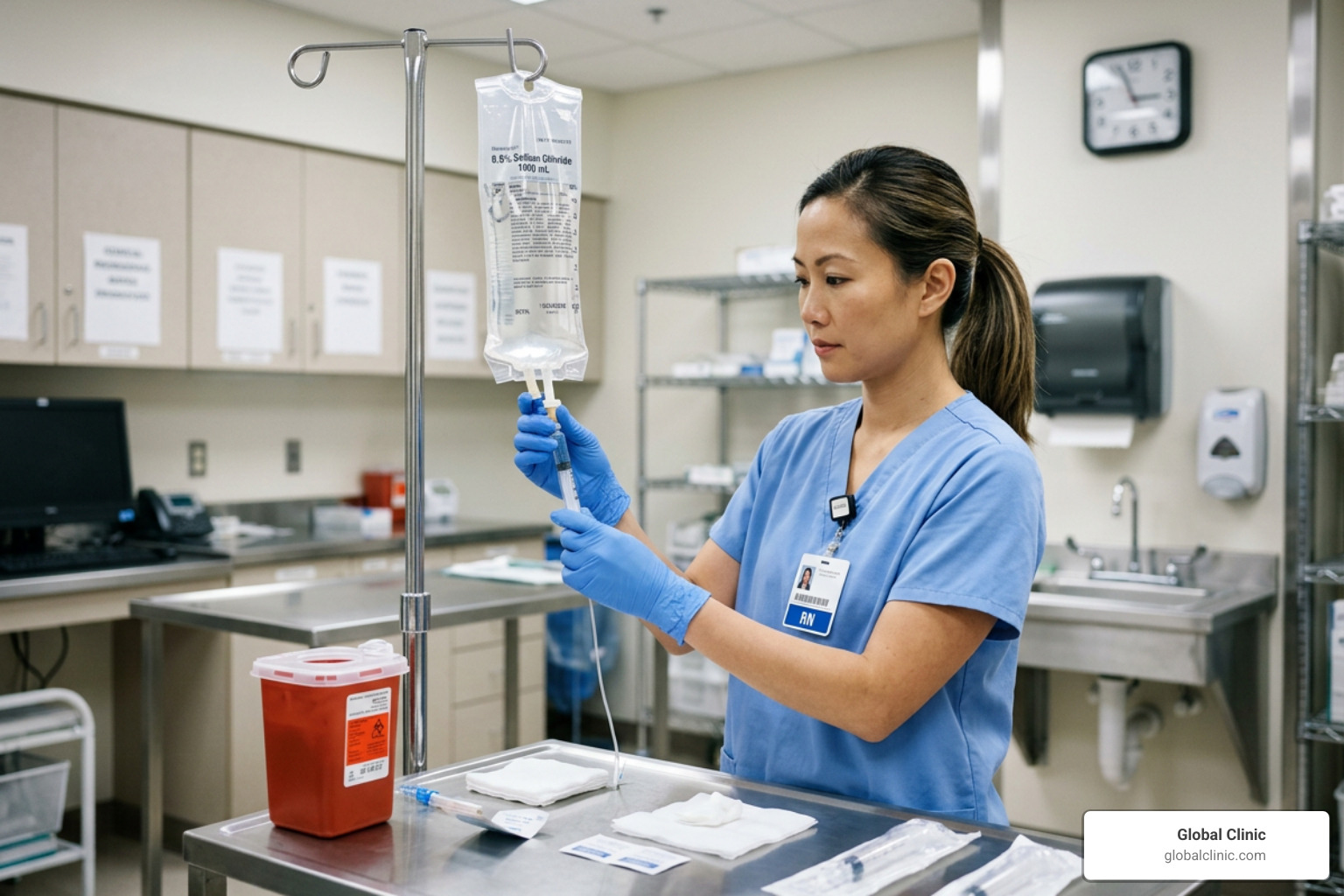
While alpha lipoic acid iv therapy is highly effective, it is a potent metabolic agent that must be handled with strict clinical oversight. It is not a generic vitamin drip that can be administered without a thorough medical evaluation. Ensuring patient safety requires a deep understanding of its chemical properties, potential drug interactions, and proper administration protocols.
Clinical Protocols and Dosing for Alpha Lipoic Acid IV
Because ALA is highly sensitive to heat and light, it must be stored in light-resistant packaging and administered promptly after preparation. Furthermore, ALA is highly reactive; it must be diluted only in 0.9% Normal Saline or D5W (5% Dextrose in Water). If mixed with any other intravenous nutrients or medications, the compound will rapidly crystallize in the IV line, rendering the treatment useless and creating a significant safety hazard.
A standard clinical protocol typically begins with a conservative test dose of 50 mg to assess patient tolerance, gradually increasing by 50 mg increments up to a therapeutic target of 300 mg to 600 mg per infusion. The solution must be administered as a slow IV drip over 30 to 60 minutes. It should never be given as an IV push, as rapid administration can trigger sudden drops in blood pressure, severe nausea, and intense flushing.
These safety standards are carefully outlined in the compounded ALA guidelines.
Potential Risks of High-Dose Infusions
The therapeutic window for IV ALA is precise. While normal therapeutic doses (typically up to 10 mg/kg of body weight) promote liver regeneration and mitochondrial health, excessively high doses can have the exact opposite effect.
In scientific studies evaluating the toxicological limits of the compound, the LD50 (lethal dose for 50% of subjects) in primates was found to be approximately 90 mg/kg to 100 mg/kg of intravenous ALA. At these toxic levels, excess reduced ALA reacts with oxygen to form superoxide anions, causing severe lipid peroxidation that destroys mitochondrial membranes and leads to acute hepatic necrosis.
Furthermore, because ALA dramatically enhances cellular glucose uptake, it carries a real risk of inducing hypoglycemia (low blood sugar), particularly in diabetic patients who are already taking insulin or oral hypoglycemic medications. Clinicians must monitor blood glucose levels closely before, during, and after the infusion, and always keep a sweet beverage or fast-acting glucose source on hand.
Additionally, ALA should never be administered to patients with an unaddressed thiamine (vitamin B1) deficiency, such as those with severe alcohol use disorder, as ALA requires thiamine to function; administering it in a deficient state can precipitate acute Wernicke-Korsakoff syndrome.
For a deeper look into the cellular mechanics of high-dose toxicity, you can read the scientific research on mitochondrial effects.
Frequently Asked Questions About ALA Infusions
How long does an ALA IV infusion take?
A standard therapeutic infusion of 300 mg to 600 mg of ALA typically takes between 30 and 45 minutes to complete. Because rapid administration can cause sudden flushing, nausea, or a drop in blood pressure, we always administer the drip slowly to ensure patient comfort and clinical safety.
Can ALA IV therapy help with metabolic health?
Yes. By enhancing insulin signaling and promoting the translocation of GLUT4 glucose transporters to cell membranes, IV ALA significantly improves insulin sensitivity and glucose utilization. This makes it a valuable supportive therapy for individuals managing metabolic syndrome, insulin resistance, and type 2 diabetes.
Is ALA IV therapy safe to combine with other IV vitamins?
ALA is highly reactive and will crystallize if mixed directly with other vitamins or minerals in the same IV bag. To ensure safety, we always administer ALA as a standalone infusion. If a patient’s protocol includes other nutrients, such as a Myers’ Cocktail or high-dose Vitamin C, we perform a thorough line flush with saline between infusions to prevent any physical incompatibility or crystallization.
To learn more about how we structure these protocols, explore our comprehensive wellness services.
Conclusion

Whether you are seeking relief from the burning pain of diabetic neuropathy, looking to protect your nerves during chemotherapy, or wanting to revitalize your cellular energy to combat chronic fatigue, alpha lipoic acid iv therapy offers a clinically proven pathway to recovery. By delivering this “universal antioxidant” directly to your cells, you can bypass the limitations of digestion and target oxidative stress where it matters most.
At Global Clinic, we have spent over 20 years providing personalized, multidisciplinary care to patients throughout the Northern Chicago area. Our experienced medical professionals combine state-of-the-art diagnostic tools with evidence-based treatments—including physical therapy, chiropractic care, regenerative medicine, and advanced IV protocols—to help you find lasting relief and regain your vitality.
We proudly serve patients across the northern suburbs, including Niles, Chicago, Skokie, Glenview, Park Ridge, Morton Grove, Des Plaines, and Mount Prospect, IL.
If you are ready to take control of your health and discover the benefits of a customized recovery plan, contact our clinic today to speak with our specialists and schedule an appointment for an IV infusion therapy evaluation.