








Why Ascorbic Acid IV Infusion Is More Than Just a Vitamin Drip
Ascorbic acid IV infusion delivers vitamin C directly into your bloodstream — bypassing the digestive system entirely and achieving plasma concentrations far beyond what any pill or supplement can produce.
Quick Answer: What Is an Ascorbic Acid IV Infusion?
| Feature | Key Facts |
|---|---|
| What it is | Vitamin C (ascorbic acid) delivered intravenously |
| Why IV vs. oral | IV reaches plasma levels up to 20 mM; oral peaks below 300 µM |
| FDA-approved use | Short-term treatment of scurvy when oral intake isn’t possible |
| Investigated uses | Immune defense, wound healing |
| Key precautions | Avoid in G6PD deficiency; monitor kidney function |
| Who administers it | Licensed medical professionals in a clinical setting |
Most people think of vitamin C as something you get from orange juice or a chewable tablet. But at high therapeutic doses delivered intravenously, ascorbic acid behaves quite differently in the body.
Here’s why that matters:
- Oral vitamin C is tightly regulated by the gut — your body absorbs only so much before excreting the rest
- IV administration completely bypasses this limit, flooding the bloodstream with concentrations that may have direct therapeutic effects on cells
- Research shows plasma levels up to 20 mM are achievable via IV, compared to a ceiling of roughly 300 µM with oral dosing
- Clinical trials have explored IV vitamin C for immune support and recovery
This gap between oral and intravenous delivery isn’t just a number on a lab report — it may change what the vitamin actually does inside the body.
I’m Anna Slavin, Practice Manager at Global Clinic, a multidisciplinary medical center serving the Northern Chicago area, whose practitioners bring over 20 years of experience in the US and Europe, and where ascorbic acid IV infusion is one of the treatments we offer. In this guide, I’ll walk you through the science, clinical applications, safety considerations, and what to expect if you’re exploring IV vitamin C as part of your care.
Understanding the Science Behind Ascorbic Acid IV Infusion
To understand why an ascorbic acid IV infusion can be a useful clinical tool, we first have to look at human evolutionary history. Unlike most mammals, humans cannot synthesize vitamin C endogenously. Somewhere along our evolutionary timeline, we lost the gene for L-gulonolactone oxidase, the final enzyme required to convert glucose into ascorbic acid. As a result, we are entirely dependent on external sources to meet our physiological needs.
When we consume vitamin C through food or oral supplements, it enters the gastrointestinal tract, where it relies on specific active transport proteins (primarily sodium-dependent vitamin C transporters, or SVCTs) to enter the bloodstream. However, these transporters have a limited capacity. Once they become saturated, any additional oral vitamin C we take is simply left unabsorbed and excreted.
Intravenous administration changes the playing field entirely. By introducing ascorbic acid directly into a vein, we completely bypass the gastrointestinal barrier. This means the full dose enters the bloodstream and is available for cellular absorption and metabolic use.
How an Ascorbic Acid IV Infusion Bypasses Oral Absorption Limits
The physiological differences between oral and intravenous vitamin C are stark. When you take vitamin C orally, your plasma concentrations are tightly controlled by the kidneys and the gut. Even if you were to consume massive doses of oral vitamin C, your body works hard to keep your plasma concentration below a strict ceiling of roughly 300 µM.
With an ascorbic acid IV infusion, this tight physiological control is completely bypassed. This clinical route allows plasma levels to climb as high as 20 mM (20,000 µM) — which is more than 60 times the maximum concentration achievable through oral supplementation.
| Metric | Oral Supplementation | Intravenous Infusion (IV) |
|---|---|---|
| Peak Plasma Concentration | Tightly controlled (always < 300 µM) | Pharmacological levels (up to 20 mM) |
| Absorption Rate | Dependent on SVCT transporters in the gut | Delivered directly into the bloodstream |
| Renal Excretion Threshold | Rapidly cleared once threshold is exceeded | Temporarily elevated to therapeutic levels |
| Primary Physiological Role | Antioxidant, cofactor for enzymes | Dual role: Antioxidant and pro-oxidant |
| Typical Clinical Duration | Continuous daily intake needed | Short-term or cyclical clinical protocols |
The renal threshold for ascorbic acid excretion is approximately 1.4 mg/100 mL. When plasma levels exceed this, the kidneys begin rapidly filtering it out. However, during a slow IV infusion, we can maintain highly elevated plasma concentrations for several hours. This extended window of high exposure is what makes the intravenous route so useful for targeted clinical therapies. For a deeper look at the official pharmacokinetic data, you can review the Scientific data on intravenous route pharmacokinetics.
Therapeutic Benefits and Clinical Applications of High-Dose Vitamin C
Beyond its biochemical cellular pathways, ascorbic acid is an absolute requirement for some of our body’s most basic structural functions. For instance, it serves as an essential cofactor for the enzymes prolyl hydroxylase and lysyl hydroxylase, which are responsible for stabilizing the molecular structure of collagen. Without adequate vitamin C, collagen synthesis grinds to a halt, leading to weakened blood vessels, poor skin elasticity, and impaired wound healing.
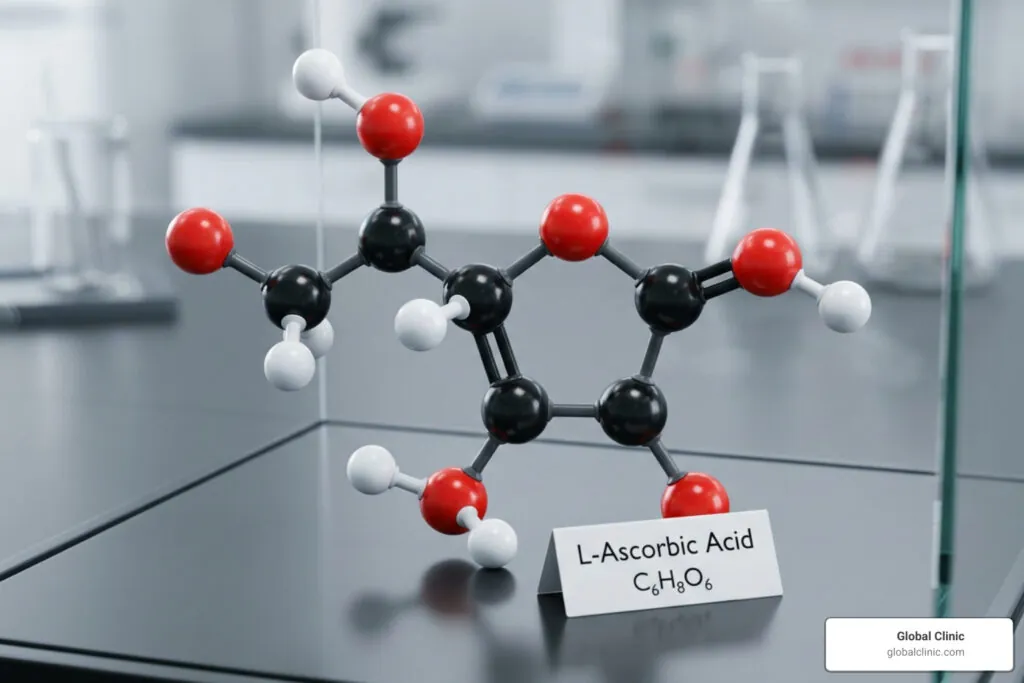
By ensuring optimal tissue levels, IV vitamin C supports the structural integrity of connective tissues throughout the body.
Immune Defense and Cellular Regeneration
Our immune cells are highly active metabolic units that require substantial amounts of vitamin C to function. In fact, white blood cells (such as neutrophils and lymphocytes) actively accumulate ascorbic acid at concentrations up to 80 times higher than those found in surrounding plasma.
During an active infection or a period of physical trauma, these vitamin C stores are rapidly depleted. An ascorbic acid IV infusion can quickly replenish these cellular stores, supporting:
- The proliferation and migration of white blood cells to sites of infection.
- Enhanced phagocytosis (the process by which immune cells engulf and destroy pathogens).
- Tissue repair and wound healing by supporting collagen synthesis at the site of injury.
This rapid cellular replenishment is also why many people utilize IV therapy to support skin health, promote a brighter complexion, and accelerate recovery from environmental stressors. You can read more about these aesthetic and structural benefits in our guide: Learn about IV therapy for skin health.
Safety, Side Effects, and Clinical Contraindications
While ascorbic acid IV infusion therapy is generally well tolerated, it is still a medical procedure that requires careful clinical oversight. Patient safety always begins with a comprehensive medical screening.
Before receiving an infusion, we must carefully evaluate your medical history, current kidney function, and specific genetic markers.
Clinical Protocols and Administration of an Ascorbic Acid IV Infusion
Administering intravenous ascorbic acid requires strict adherence to safe compounding and infusion protocols. Because undiluted ascorbic acid is highly hypertonic (with an osmolarity of approximately 5,900 mOsmol/L), it must never be injected directly or given undiluted. Doing so could cause severe vascular irritation, chemical phlebitis, or fluid shifts.
Instead, the solution must be diluted into a compatible carrier fluid, such as Sterile Water for Injection or 5% Dextrose (D5W), to create an isotonic final solution with a concentration typically ranging between 1 to 25 mg/mL.
Additionally, clinicians must follow these practical guidelines:
- Infusion Rate: The infusion must be administered slowly. For adults, the standard recommended infusion rate is approximately 33 mg/minute. Rapid administration (exceeding 250 mg/minute) can cause temporary lightheadedness, nausea, flushing, or headache.
- Light Sensitivity: Ascorbic acid is highly sensitive to light and air. Exposure to oxygen and light causes it to degrade into dehydroascorbic acid and eventually oxalic acid. Diluted solutions should be prepared in an ISO Class 5 clean air environment and protected from light during storage.
- Stability: While research demonstrates that properly prepared solutions can remain chemically stable at 4°C with light protection for up to 14 days, standard clinical guidelines recommend using the admixture promptly to ensure sterility.
For a detailed breakdown of these compounding and stability considerations, you can consult the Clinical guidelines on administering intravenous ascorbic acid.
Key Contraindications: G6PD Deficiency and Renal Health
There are two absolute contraindications that must be ruled out before any patient undergoes high-dose IV vitamin C therapy:
- Glucose-6-Phosphate Dehydrogenase (G6PD) Deficiency: G6PD is an essential enzyme that protects red blood cells from oxidative damage. Because high-dose IV vitamin C acts as a pro-oxidant and generates hydrogen peroxide, patients with a G6PD deficiency are at a very high risk of experiencing acute hemolysis (the premature destruction of red blood cells). A simple blood test must always be performed to confirm normal G6PD levels before initiating high-dose infusions.
- Renal Impairment and Oxalate History: When the body metabolizes large amounts of vitamin C, one of the primary breakdown products is oxalate. In patients with pre-existing renal impairment or a history of calcium oxalate kidney stones, high concentrations of urinary oxalate can precipitate in the kidneys, leading to acute oxalate nephropathy or kidney stones.
For these reasons, we always monitor kidney function closely and proceed with caution in any patient with a history of renal disease. You can review the official safety warnings and prescribing details in the FDA prescribing information for ascorbic acid injection.
Frequently Asked Questions About Intravenous Vitamin C
Navigating advanced clinical therapies can feel overwhelming. We believe in keeping our patients thoroughly informed so they can make confident decisions about their health. Below are some of the most common questions we hear at our clinic.
How long does an IV vitamin C session take?
The duration of your session depends entirely on the specific dose prescribed. A standard wellness or immune-support infusion typically takes between 30 to 60 minutes. Throughout your session, you can relax in a comfortable clinical chair, read, or catch up on work.
Can I receive IV vitamin C if I am pregnant?
During pregnancy and lactation, vitamin C is absolutely vital for both maternal health and fetal development. However, high-dose intravenous infusions are generally not recommended during pregnancy. Instead, pregnant and lactating women should focus on meeting their nutritional needs through diet and standard prenatal oral supplementation, keeping within the recommended dietary allowance (RDA) guidelines. Any use of intravenous therapies during pregnancy should only occur under the direct supervision and clearance of your obstetrician.
Are there any drug interactions with intravenous ascorbic acid?
Yes, high-dose ascorbic acid can interact with several medications and laboratory tests:
- Warfarin: High doses of vitamin C can interfere with the anticoagulant effects of warfarin, requiring close monitoring of your clotting times (INR).
- Urine Acidification: Large amounts of excreted vitamin C can acidify the urine, which may alter the clearance rates of certain pH-sensitive medications, such as amphetamines.
- Laboratory Test Interference: Because vitamin C is a powerful reducing agent, it can temporarily interfere with laboratory tests that rely on oxidation-reduction reactions. Most notably, high blood levels of ascorbate can cause falsely elevated or falsely decreased readings on hand-held blood glucose meters for up to 24 hours post-infusion. We always advise patients to delay these specific tests for at least 24 hours after their session.
Conclusion
At Global Clinic, we believe that true healing requires a personalized, multidisciplinary approach. Whether you are seeking to support your immune system or accelerate recovery, we are here to provide safe, evidence-based treatments tailored to your unique biology.
We proudly serve the Northern Chicago community — including our neighbors in Niles, Skokie, Glenview, Park Ridge, Morton Grove, Des Plaines, and Mount Prospect. Our Niles clinic is designed to deliver top-tier clinical care in a warm, welcoming environment.
If you are ready to explore how an ascorbic acid IV infusion can support your health and vitality, we invite you to take the next step. Call Global Clinic at (847) 299-7000 to schedule an IV therapy consultation at our Niles office.