







What PRF Under Eyes Before and After Results Actually Show
PRF under eyes before and after photos typically show gradual changes in dark circles, hollowness, and fine lines — without synthetic fillers or surgery.
Here’s a quick snapshot of what many patients experience:
| Timeframe | What You See |
|---|---|
| Week 1-2 | Swelling settles, minor bruising fades |
| Week 3-6 | Dark circles begin to lighten |
| Month 2-3 | Smoother texture, less hollowness |
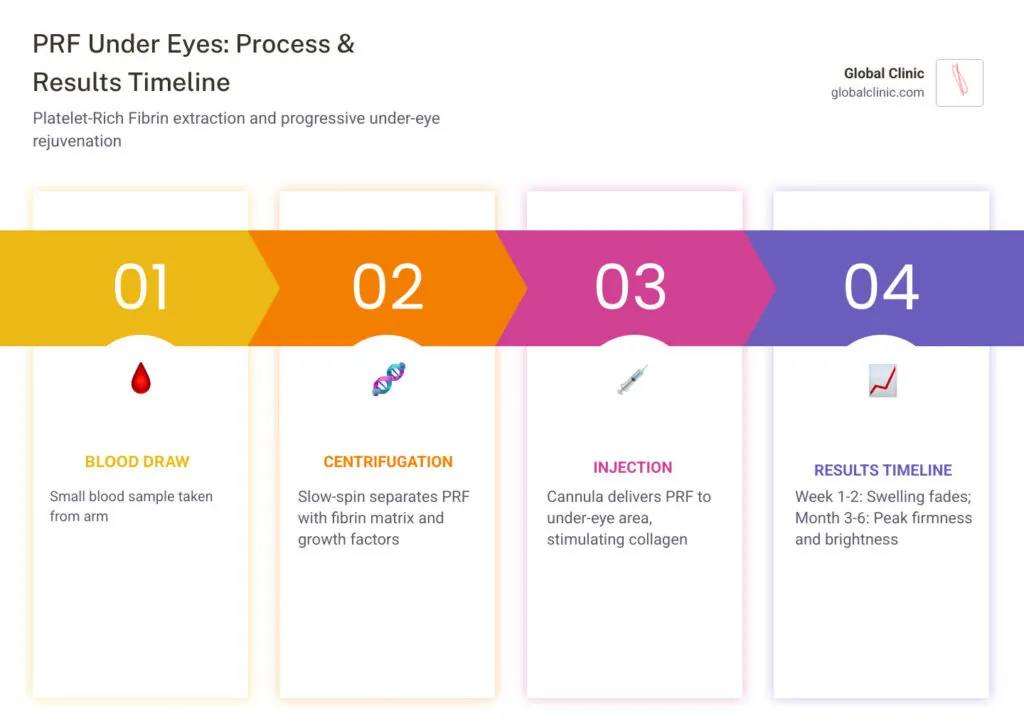
| Month 3-6 | Peak results — firmer, brighter under-eye skin |
Key facts at a glance:
- Results vary and usually require maintenance, depending on age, skin condition, and protocol
- Many patients need 3 sessions, spaced about a month apart
- Visible improvement starts within 2 to 4 weeks; full results peak around 3 to 6 months
- PRF uses your own blood — no synthetic substances and a low allergy risk
- One published study confirmed measurable improvements in under-eye skin texture and fine lines at a 3-month follow-up
PRF (Platelet-Rich Fibrin) works by triggering your body’s own collagen production. The results don’t appear overnight — they build gradually, and they vary from person to person.
I’m Anna Slavin, Practice Manager at Global Clinic, where our practitioners bring over 20 years of experience in the US and Europe and apply regenerative medicine techniques, including PRF, to help patients heal naturally and look their best. Working alongside our clinical team gives me a clear picture of what’s realistic and what patients should know before booking.
Understanding the Science: PRF vs. PRP
To understand why PRF results look different from traditional filler results, we have to look at the biology. PRF, or Platelet-Rich Fibrin, is often called the “second generation” of PRP (Platelet-Rich Plasma). While both use your own blood, the way they are processed makes a world of difference for your skin.
When we prepare PRF, we use a “slow-spin” centrifugation technique. Unlike PRP, which is spun at high speeds to strip away everything but the plasma, PRF is spun slowly to keep a delicate fibrin matrix intact. This matrix acts like a biological scaffold. It traps platelets and white blood cells, allowing them to stay in the treated area longer.
The “magic” of PRF lies in its slow-release mechanism. While PRP releases its growth factors in a quick burst (often within hours), the fibrin in PRF allows growth factors to be released gradually over 7 to 10 days. This sustained release is exactly what the delicate under-eye skin needs to rebuild its foundation.
Research supports this approach. A Scientific research on PRF for periorbital wrinkles study suggests that these autologous treatments can improve skin quality. Because it is an autologous treatment (meaning it comes from your own body), the risk of allergic reaction is very low, as is the risk of the “puffy” look sometimes associated with synthetic fillers.
Comparing PRF and PRP for Under-Eye Rejuvenation
| Feature | PRP (Platelet-Rich Plasma) | PRF (Platelet-Rich Fibrin) |
|---|---|---|
| Consistency | Liquid/Thin | Gel-like/Thick |
| Growth Factor Release | Immediate (hours) | Sustained (7-10 days) |
| Fibrin Matrix | No | Yes |
| Best For | Surface glow, hair loss | Volume, deep wrinkles, hollows |
By choosing PRF, you aren’t just “filling” a hole; you are stimulating your skin’s own repair processes.
The Transformation: PRF Under Eyes Before and After Results
When we look at before-and-after photos, we aren’t just looking for “more volume.” We are looking for healthier skin. Many of our patients in the Chicago area come to us frustrated by three main issues: dark circles, tear trough hollows, and “crepey” skin texture.
Dark Circles: PRF helps by thickening the skin. Often, dark circles are simply the result of thin skin allowing the underlying blood vessels to show through. As PRF stimulates collagen and elastin, that skin becomes denser and more opaque, naturally masking the darkness.
Tear Troughs and Hollows: While PRF isn’t an “instant” volumizer like a hyaluronic acid filler, its gel-like consistency provides a subtle, natural lift. Over several months, the new collagen helps “plump” the area from the inside out.
Texture and Fine Lines: This is where PRF truly shines. A Study on injectable PRF and skin texture showed measurable improvements in fine lines at the 3-month mark. Some patients report needing less concealer as their skin becomes smoother.
What to Expect: PRF Under Eyes Before and After Timelines
Managing expectations is key to loving your results. Unlike fillers, which give you a “wow” moment the second you leave the chair, PRF is a slow-burn treatment.
- The Immediate Phase (Days 1–3): You will actually look better immediately after the treatment because of the volume of the PRF itself. However, this is temporary “placeholder” volume. You may also experience some swelling (which we call the “Avatar” look) as the fibrin matrix begins its work.
- The “Nothing” Phase (Weeks 2–3): This is the hardest part! The initial swelling goes down, and the new collagen hasn’t grown yet. You might feel like the treatment “didn’t work.” Stay patient—the collagen-building process is just getting started.
- The Transformation Phase (Month 1–3): This is when changes usually start to show. You’ll notice you look more rested. The skin feels firmer to the touch.
- The Peak Phase (Month 3–6): This is when the multi-session protocol pays off. After your second or third session, the cumulative growth factors have built a significant new layer of collagen and elastin.
The Procedure and Recovery Process
At Global Clinic, we pride ourselves on making the procedure as comfortable and efficient as possible. The entire process usually takes less than an hour.
- Step 1: The Blood Draw. We draw a small amount of blood, similar to a standard lab test.
- Step 2: Centrifugation. We place your blood in a specialized centrifuge. We use a specific slow-spin protocol to ensure we capture a high concentration of platelets and white blood cells.
- Step 3: Preparation. While the blood spins, we apply a high-strength numbing cream to your under-eye area.
- Step 4: Injection. We typically use a blunt-tip cannula for the injections. This helps reduce the risk of bruising in the under-eye area and allows us to place the PRF precisely where it’s needed.
Common Side Effects and Downtime
While PRF is minimally invasive, it isn’t “no-downtime.” Because we are injecting a bio-active gel into a very delicate area, you should expect:
- Swelling: This is the most common side effect. It usually peaks at 24–48 hours and subsides by day three.
- Bruising: Even with a cannula, minor bruising can occur.
- Tenderness: The area may feel “full” or slightly sore for a few days.
Making Your PRF Results Last
To help your results last as long as possible, you need to be an active participant in your recovery.
- Hydration is Vital: Platelets thrive in a hydrated environment. Drink plenty of water before and after your appointment.
- Manage Swelling Correctly: Follow Guidelines on managing swelling by keeping your head elevated while sleeping for the first 48 hours.
- Avoid NSAIDs: Ask your provider whether to pause over-the-counter anti-inflammatory medications such as ibuprofen, since PRF relies on a controlled inflammatory response to trigger healing. Do not stop aspirin or other prescribed medications without talking to your doctor.
- Sun Protection: New collagen is delicate. Protect your investment with a high-quality SPF 50+ and sunglasses.
- Healthy Lifestyle: Smoking and high sugar intake can break down collagen faster. A diet rich in vitamin C and protein will provide the building blocks your skin needs to regenerate.
Frequently Asked Questions about PRF Under Eyes
Who is the ideal candidate for PRF?
PRF can be a good option for many people, especially:
- Patients who want a natural alternative to synthetic fillers.
- Those with “tear trough” hollowing who aren’t ready for surgery (lower blepharoplasty).
- People with dark circles caused by thin skin.
- Individuals with fine lines and “crepey” texture.
However, if you have severe skin laxity or very large “fat pads” under the eyes, surgery might be a more appropriate route. We also generally advise against PRF for patients with active infections, certain blood disorders, or those who are heavy smokers, as these factors can reduce the effectiveness of the platelets.
How many sessions are typically required?
While some patients see a lovely “glow” after one session, we follow a standard 3-session protocol. These are typically spaced 4 to 6 weeks apart. Think of the first session as “priming” the skin, the second as “building,” and the third as “refining.” This cumulative approach helps results last longer.
Conclusion
The world of aesthetics is shifting away from “frozen” or “overfilled” looks and toward regenerative medicine. PRF shows how your body’s own healing factors can be concentrated and placed where they matter most to support natural rejuvenation.
At Global Clinic, we serve the Northern Chicago community, from Arlington Heights to Skokie and everywhere in between. Our mission is to provide personalized, innovative care that helps you feel confident in your own skin. Whether you’re dealing with chronic pain or looking to refresh your appearance, our clinic and experienced team are here to guide you.
If you’re tired of looking tired, it might be time to see what your own growth factors can do for you. Call Global Clinic at (847) 299-7000 to schedule a consultation at our Niles clinic, and let’s start your journey toward brighter, smoother eyes.