





Understanding Shoulder Pain and the Promise of Regenerative Medicine
PRP for shoulder pain is a regenerative treatment that uses concentrated platelets from your own blood to promote healing in damaged shoulder tissues. Here’s what you need to know:
Quick Answer: Does PRP Work for Shoulder Pain?
- What it treats: Rotator cuff tears, frozen shoulder (adhesive capsulitis), tendinopathy, and bursitis
- How it works: Concentrated growth factors stimulate tissue repair and reduce inflammation
- Effectiveness: Studies show significant improvements in pain and function, particularly for adhesive capsulitis and partial rotator cuff tears
- Timeline: Most patients see improvement within 4-6 weeks, with full benefits by 2-3 months
- Duration: Results typically last 6-12 months or longer
- Safety: Minimal risks since it uses your own blood; main side effects are temporary soreness and injection site pain
Shoulder pain can disrupt daily life, from reaching overhead to getting dressed. Whether it’s a rotator cuff injury or frozen shoulder, finding lasting relief is a common challenge.
While traditional treatments like rest and physical therapy help, they don’t always provide lasting relief, and surgery is a major step. PRP for shoulder pain offers a middle ground, using your body’s own healing power to repair tissue.
Recent research shows PRP is particularly effective for specific conditions like frozen shoulder and partial rotator cuff tears. Understanding which conditions respond best is key to setting realistic expectations.
With over 20 years of experience in pain management, our team at Global Clinic has guided countless patients through their options for PRP for shoulder pain. We use a personalized, evidence-based approach, considering your unique condition and goals to recommend the most effective treatment path.
Understanding Platelet-Rich Plasma (PRP) Therapy
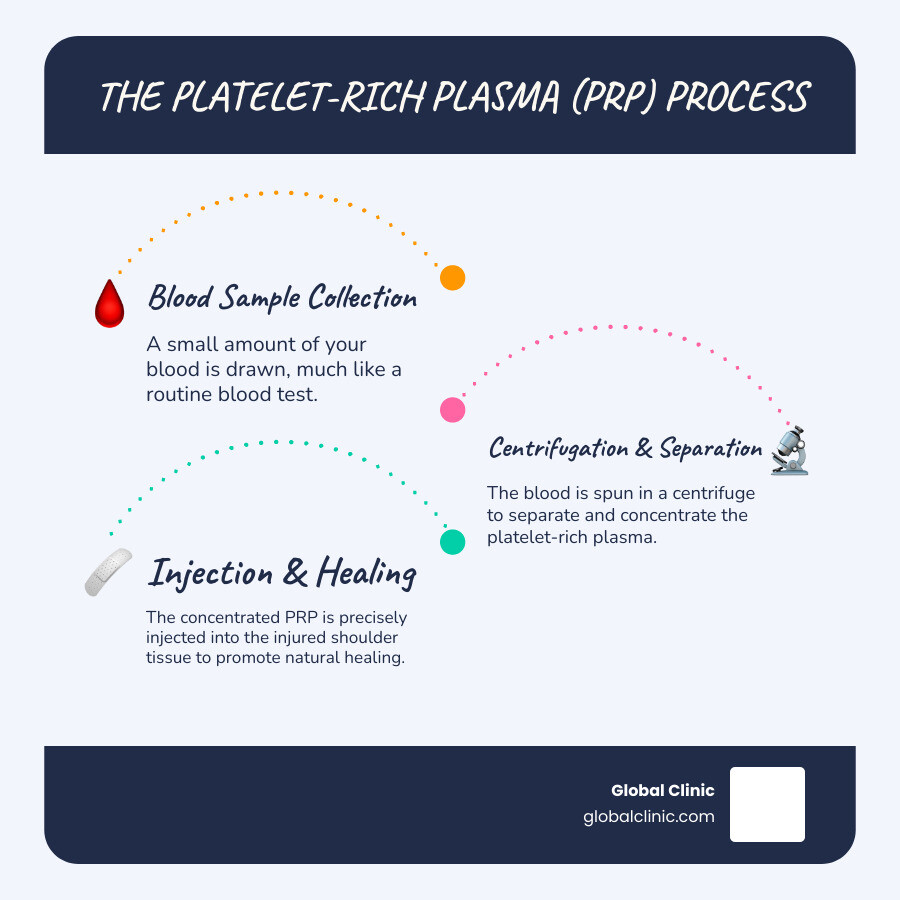
Let’s break down what Platelet-Rich Plasma (PRP) therapy is and how it works. PRP therapy uses your body’s own healing power. By using components from your blood, the risk of allergic reactions is virtually eliminated.
The process begins with a simple blood draw. This sample is placed in a centrifuge, a machine that spins the blood at high speed to separate it into layers. After spinning, the blood separates into red blood cells, plasma, and a thin layer rich in platelets. This platelet-rich layer is extracted and concentrated.
Platelets are packed with growth factors—proteins that signal your body to repair damaged tissue. When injected into an injured shoulder, these concentrated platelets trigger a “healing cascade,” stimulating tissue regeneration.
For more detailed information about how this natural healing process works, the American Academy of Orthopaedic Surgeons provides scientific research on PRP’s mechanism of action. You can also learn more about how we use PRP Injections at Global Clinic.

How PRP Promotes Healing
When concentrated platelets reach damaged tissue in your shoulder, they release a powerful cocktail of bioactive proteins. Growth factors stimulate your cells to multiply, while cytokines regulate inflammation. This process encourages tissue regeneration by rebuilding damaged tendons and ligaments.
PRP also recruits other healing cells to the site, promotes angiogenesis (the formation of new blood vessels) to improve nutrient delivery, and boosts collagen production to strengthen tissues. Crucially, PRP has anti-inflammatory effects that lead to sustained pain reduction without suppressing the body’s natural repair mechanisms.
The PRP Preparation Process
Not all PRP is created equal. The preparation method significantly influences treatment effectiveness. After your blood is drawn, it’s processed in a centrifuge with carefully calibrated settings to separate the layers. The physician then extracts the platelet-rich layer.
Different methods produce leukocyte-rich PRP (with more white blood cells) or leukocyte-poor PRP. The best type depends on the specific shoulder condition. Before injection, the PRP may be “activated” with calcium chloride to trigger the immediate release of key growth factors like Platelet-Derived Growth Factor (PDGF), Changing Growth Factor-beta (TGF-β), and Vascular Endothelial Growth Factor (VEGF), which all play specific roles in cell growth and tissue repair.
At Global Clinic, we use advanced preparation techniques to create a high-quality PRP solution optimized for our Northern Chicago patients, ensuring a potent concentration of healing factors for your specific condition.
Evaluating PRP for Shoulder Pain: Conditions and Evidence
Your shoulder’s complex structure, including the rotator cuff, joint capsule, and bursae, makes it susceptible to injury. The good news is that research on PRP for shoulder pain helps us understand which problems respond best to this treatment. For a deeper dive, here’s a critical review of PRP in shoulder pathologies.
Rotator Cuff Tears and Tendinopathy
Rotator cuff issues, from tendinopathy (tendon inflammation or degeneration) to partial tears, are a common source of shoulder pain. For partial rotator cuff tears and chronic tendinopathy, research on PRP for shoulder pain is encouraging. Studies show PRP can significantly reduce pain and improve function, especially for the commonly injured supraspinatus tendon.
However, PRP is not a cure for all tears. Outcomes depend on factors like tear size, and complete tears still require surgery. For patients with partial tears seeking to avoid surgery, PRP is a viable regenerative option. Scientific research on PRP for rotator cuff tears shows mixed but often promising results.
Adhesive Capsulitis (Frozen Shoulder)
Adhesive capsulitis, or frozen shoulder, causes progressive stiffness and pain, severely limiting range of motion. The condition involves both inflammation and fibrosis (thickening and scarring) of the joint capsule. Here, the research is exciting: PRP for shoulder pain shows strong results for this condition.
Multiple studies show that PRP injections provide significant pain relief and improved mobility by addressing the underlying inflammation and fibrosis. Current research on PRP for frozen shoulder suggests PRP performs as well as or better than corticosteroid injections, with the added benefit of promoting tissue healing.
Subacromial Impingement Syndrome
Subacromial impingement syndrome occurs when rotator cuff tendons or the bursa are pinched, causing impingement pain during overhead movements. For this condition, the evidence for PRP for shoulder pain is less compelling. Research suggests its effectiveness is often similar to or less than treatments like physical therapy or corticosteroid injections.
Therefore, exercise therapy remains the primary treatment for impingement. While PRP may be appropriate in some unique cases, we prioritize evidence-based care at Global Clinic and typically recommend physical therapy first for this issue.
PRP and Other Approaches to Shoulder Pain Management
At Global Clinic, we believe in a thoughtful progression of care, starting with conservative treatments and exploring regenerative options like PRP before considering surgery. PRP for shoulder pain bridges the gap for patients who haven’t found relief from physical therapy or medications but want to avoid surgery. For those in Northern Chicago seeking comprehensive joint injection therapy, you can find more information here: https://globalclinic.com/joint-injection-therapy/.

Comparing PRP for Shoulder Pain to Traditional Anti-Inflammatory Injections
A common question is how PRP compares to cortisone shots. While both are injections, their mechanisms are fundamentally different. Corticosteroid injections provide fast, short-term relief by suppressing inflammation. However, they don’t heal the underlying tissue and can weaken tendons over time.
PRP for shoulder pain works differently. It stimulates natural healing and tissue regeneration by delivering growth factors to the injury site. This promotes actual repair, but the results take longer to appear—typically a few weeks—as your body rebuilds tissue.
| Feature | PRP Injections | Corticosteroid Injections |
|---|---|---|
| Mechanism | Stimulates natural healing and tissue regeneration by delivering concentrated growth factors. | Provides fast, short-term pain relief by reducing inflammation. |
| Onset of Relief | Takes longer, sometimes a few weeks, as it focuses on healing the tissue itself. | Offers faster, short-term relief, often within days. |
| Duration of Effect | Can last 6-12 months or longer, with potential for sustained improvement. For chronic issues, repeat injections may be needed after 12-18 months. | Typically provides relief for a few weeks to months; effects are often transient. |
| Healing Potential | Actively promotes tissue repair, collagen production, and angiogenesis. | Primarily suppresses inflammation; does not promote tissue healing and may weaken tendons or cartilage with repeated use. |
Research supports this distinction. One study found that while corticosteroids offered faster initial relief, PRP provided superior and more sustained pain relief and functional improvement at the 12-month mark for rotator cuff tendinopathy. You can read more about this comparison here: https://pmc.ncbi.nlm.nih.gov/articles/PMC5861901/. In short, corticosteroids are for quick, temporary relief, while PRP offers a long-term, regenerative solution.
PRP in Conjunction with Physical Therapy
PRP for shoulder pain is most effective when combined with physical therapy. Think of PRP as providing the biological tools for healing, while physical therapy teaches your shoulder how to function correctly again. A comprehensive rehabilitation protocol, including strengthening exercises and stretching, is essential.
Physical therapy ensures that as tissues heal, they regain strength, stability, and normal movement patterns, preventing stiffness and re-injury. Adhering to your physical therapy plan is crucial for achieving the best long-term outcomes and helping our patients in Northern Chicago get back to the activities they love.
The PRP Injection Process: What to Expect
At Global Clinic, the PRP process begins with a thorough consultation. On procedure day, after preparing the PRP from your blood, we use ultrasound guidance for the injection. This real-time imaging allows us to precisely deliver the PRP to the injured tissue, maximizing the potential for healing. The injection itself is quick, and we provide clear post-procedure instructions to support your recovery.
Who is a Good Candidate for PRP for Shoulder Pain?
PRP for shoulder pain is often best for those who haven’t found relief with conservative treatments like physical therapy. It’s particularly effective for:
- Partial tendon tears, especially in the rotator cuff.
- Adhesive capsulitis (frozen shoulder).
- Active individuals wanting to avoid surgery.
PRP is not recommended for individuals with blood disorders, active infections, severe anemia, or certain types of cancer. It’s also not for those who are pregnant, breastfeeding, or taking blood-thinning medications. Our team will conduct a comprehensive evaluation to determine if this approach aligns with your health goals.
Potential Risks and Side Effects
PRP therapy has a strong safety profile because it uses your own blood (autologous treatment), minimizing the risk of allergic reactions. The most common side effects are temporary and mild:
- Injection site pain and soreness for 2-3 days, similar to post-workout muscle ache.
- Minor swelling that resolves within a few days.
Rarer risks include infection or temporary nerve irritation. These are minimized by using sterile techniques and ultrasound guidance, ensuring a safe experience for our Northern Chicago patients.
Recovery Timeline and Expected Results
Genuine healing takes time. Here’s a typical timeline after your PRP injection:
- First 24-72 hours: Expect initial soreness as the healing cascade begins. Rest your shoulder and avoid strenuous activity for about a week.
- 4-6 weeks: Most patients notice gradual pain improvement and better function.
- 2-3 months: The full benefits of the treatment are typically felt as tissue regeneration completes.
We will guide your gradual return to activity, often in coordination with physical therapy. Avoid anti-inflammatory drugs like ibuprofen, as they can hinder the healing process. Results typically last 6 to 12 months or longer, though chronic conditions may require repeat injections. You can learn more about the expected duration of benefits here: https://my.clevelandclinic.org/health/treatments/platelet-rich-plasma-prp-injection.
Outcomes can be variable, but for many, PRP offers a promising path toward reduced pain and improved shoulder function without surgery.
Frequently Asked Questions about PRP for Shoulder Injuries
How many PRP injections will I need for my shoulder?
The number of injections depends on your specific condition and its severity. Many patients achieve significant improvement after just a single PRP injection. For more severe or chronic issues, a series of one to three injections, spaced 6-8 weeks apart, may be recommended. We will create a personalized treatment protocol during your consultation at Global Clinic and discuss the anticipated number of treatments upfront.
Is the PRP injection for shoulder pain painful?
We work to make the procedure as comfortable as possible. The treatment area is numbed with a local anesthetic, so you’ll likely only feel some pressure during the brief injection. Afterward, post-procedure soreness is common and expected. This ache, similar to muscle soreness after a workout, indicates the healing process has started and typically lasts 2-3 days.
We recommend ice packs and acetaminophen (Tylenol) for discomfort. Avoid anti-inflammatory medications like ibuprofen, as they can interfere with PRP’s effectiveness. Our team at Global Clinic will provide detailed instructions for managing any discomfort.
Is PRP for shoulder pain covered by insurance?
Currently, PRP therapy is typically not covered by insurance for most orthopedic conditions, including shoulder pain. Insurers often classify it as an elective or investigational procedure, meaning patients usually pay out-of-pocket. The cost of a single PRP injection in the United States averages around $714, though this can vary.
At Global Clinic, we believe in transparent pricing. During your consultation, we’ll discuss the full cost of your treatment plan so you can make an informed financial decision. Many of our Northern Chicago patients find PRP to be a worthwhile investment to avoid more costly surgery and improve their quality of life.
Take the Next Step in Your Shoulder Pain Journey
Living with shoulder pain is challenging. If you’ve tried conservative treatments without success and want to avoid surgery, PRP for shoulder pain may be the right next step. At Global Clinic, we’ve helped patients in Northern Chicago find lasting relief for over 20 years.
Our focus is on personalized, comprehensive care that addresses the root cause of your pain. We combine proven methods with innovative regenerative options in our state-of-the-art facility. Our team takes the time to listen, evaluate your condition, and create a treatment plan custom to your goals. We believe in making innovative care accessible and affordable.
Let us help you get back to living life on your terms. To learn more about our approach, visit our page on effective pain management: https://globalclinic.com/effective-pain-management/.
You’ve dealt with shoulder pain long enough. Let’s work together to help you reclaim the active, pain-free life you deserve.