








Is an Intravenous Vitamin Drip Right for You?
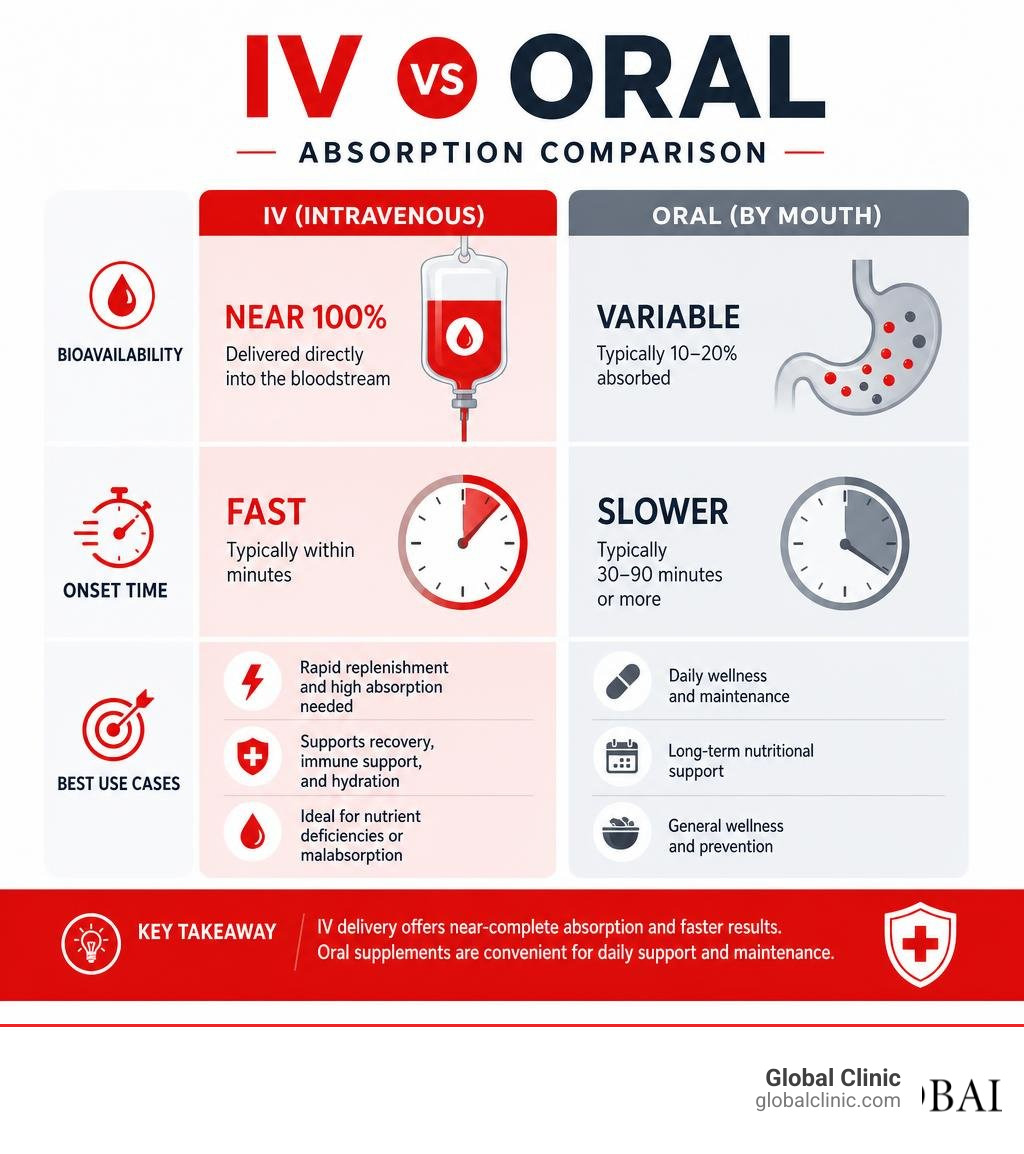
An intravenous vitamin drip delivers vitamins, minerals, and fluids directly into your bloodstream — bypassing your digestive system entirely for near-complete absorption.
Here’s what you need to know at a glance:
| Question | Quick Answer |
|---|---|
| What is it? | Nutrients delivered via IV directly into the bloodstream |
| Absorption rate | Nearly 100% vs. 10–20% from oral supplements |
| Session length | Typically 30–60 minutes |
| Who benefits most? | People with malabsorption, deficiencies, or high recovery needs |
| Is it safe for everyone? | No — kidney disease, heart conditions, and pregnancy are key contraindications |
| Is there strong evidence? | Limited for healthy individuals; stronger for clinical/medical use |
Whether you’re dealing with chronic fatigue, recovering from an injury, or simply curious about nutrient infusions, understanding what IV therapy actually does — and what it doesn’t — is the first step to making a smart decision.
The wellness industry has popularized IV drips as a quick fix for everything from hangovers to immune support. But the science tells a more nuanced story. A 2025 review published in Cureus found that evidence for IV vitamin therapy in healthy individuals remains largely anecdotal, with no large-scale randomized controlled trials confirming long-term benefits. That doesn’t mean IV therapy has no place in care — it means context matters.
This guide is designed to cut through the marketing noise and give you a clear, evidence-grounded picture of how IV therapy works, who it’s best suited for, and how to find qualified providers in Northern Chicago.
I’m Ana Vinikov, Practice Manager at Global Pain & Spine Clinic, where our multidisciplinary team has over 20 years of experience offering treatments — including intravenous vitamin drip therapy — as part of a comprehensive, patient-centered approach to healing and recovery. If you’re in the Chicago area and wondering whether IV therapy fits your health goals, you’re in the right place.
Simple guide to intravenous vitamin drip terms:
What is an Intravenous Vitamin Drip?
An intravenous vitamin drip is a medical method of delivering high concentrations of essential vitamins, minerals, and fluids directly into the venous circulation.
To understand why this is a preferred route for specific clinical needs, it helps to look at how our bodies process nutrients. When you swallow a vitamin tablet or eat nutrient-rich food, the substance must travel through your gastrointestinal (GI) tract. In the stomach and intestines, the nutrients are broken down, digested, and absorbed through the intestinal wall. From there, they enter the portal circulation and pass through the liver—a process known as hepatic first-pass metabolism—before finally entering the general bloodstream.
For many individuals, oral absorption is highly inefficient. Factors such as gut inflammation, food pairings, gut microbiota, and the natural limits of active transport proteins mean that only about 10% to 20% of oral nutrients actually reach systemic circulation. For example, oral vitamin C absorption decreases dramatically once a dose exceeds one gram because the transport proteins in the gut become completely saturated.
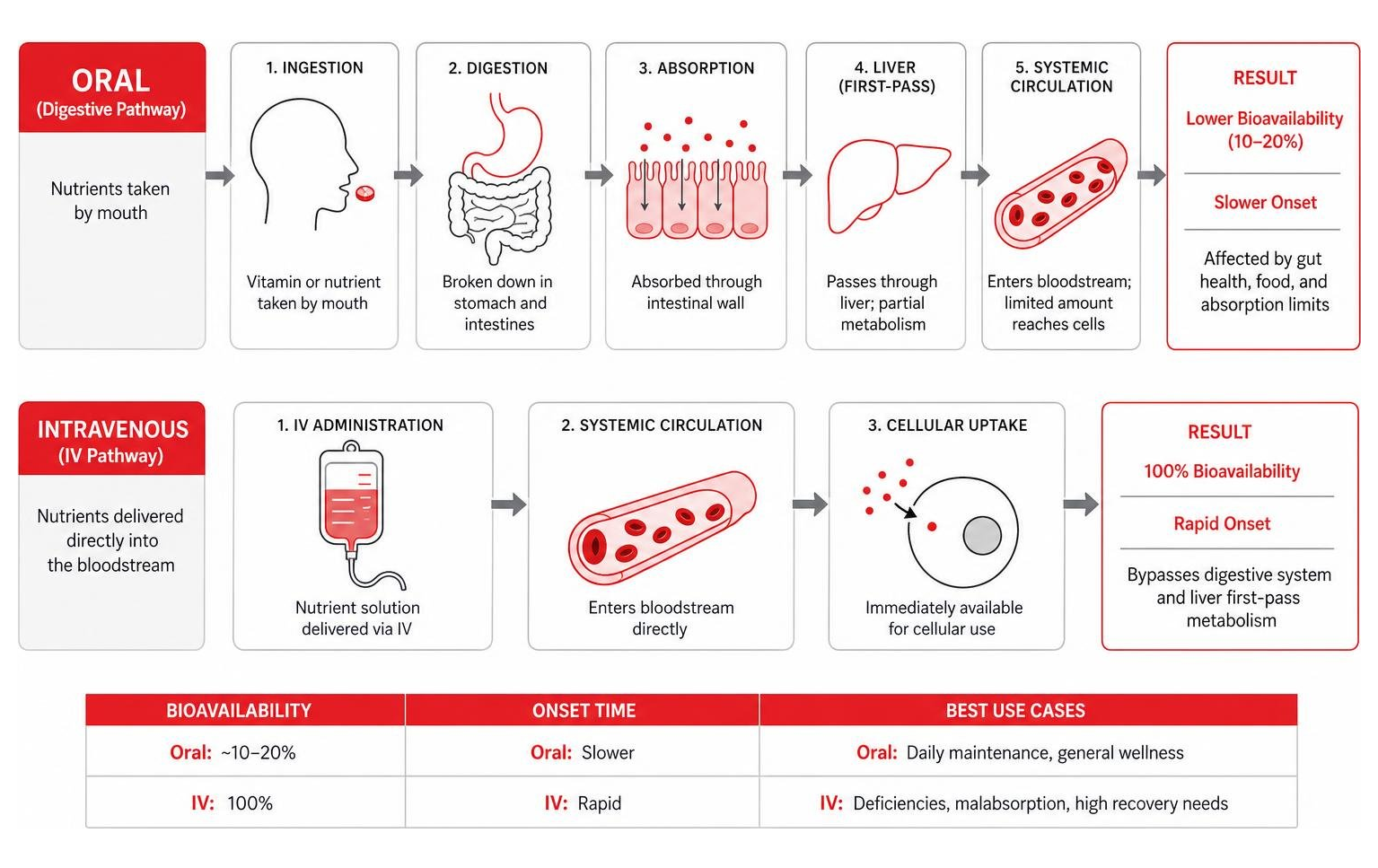
By contrast, an intravenous infusion completely bypasses the digestive system and hepatic first-pass metabolism. This allows for:
- 100% Bioavailability: The entire dose of the nutrient is immediately available for cellular uptake.
- Higher Therapeutic Concentrations: IV administration can achieve blood concentrations that are physically impossible to reach through oral intake. High-dose intravenous vitamin C, for instance, can reach plasma concentrations up to 100 times higher than the same dose taken orally.
- Rapid Hydration: Fluids are delivered directly into the vascular space, correcting dehydration and supporting cellular functions much faster than drinking water.
While some marketing materials present this as a daily necessity for everyone, reputable medical reviews, including an analysis by Harvard Health on IV therapy, emphasize that healthy individuals with a balanced diet generally absorb sufficient nutrients naturally. However, for those with specific health conditions, high recovery demands, or malabsorption issues, bypassing the gut via an IV Infusions Complete Guide protocol can be a highly effective clinical intervention.
Popular Formulations and Their Claimed Benefits
Not all IV drips are created equal. Depending on your clinical goals—whether you are looking to support your immune system, recover from intense physical exertion, or address a chronic fatigue issue—the specific mixture of vitamins, minerals, and antioxidants will be customized.
Tailoring these nutrients to your unique physiological profile is key to maximizing the 4 Amazing Benefits of IV Therapy. Below are some of the most common formulations used in clinical settings.
The Myers’ Cocktail and Wellness Infusions
The Myers’ Cocktail is the original and most famous IV nutrient formula. Developed in the 1970s by Dr. John Myers, a physician in Baltimore, this classic blend was designed to address a wide range of clinical issues, including chronic fatigue, muscle spasms, migraines, and upper respiratory tract infections.
According to the Merck Manual on Myers’ Cocktail, the standard formulation consists of:
- B-Complex Vitamins (B1, B2, B3, B5, B6, B12): Essential for neurological health, DNA synthesis, and cellular metabolism.
- Vitamin C (Ascorbic Acid): A powerful antioxidant that supports immune defense and collagen synthesis.
- Magnesium: Helps relax blood vessels and muscles, which is why it is often utilized for migraines and muscle spasms.
- Calcium: Supports bone health and nerve transmission.
In modern clinical practice, modified versions of the Myers’ Cocktail are frequently used to allow individualized dosing based on a patient’s specific health needs and blood lab results.
Customizing Your Intravenous Vitamin Drip for Energy
For individuals suffering from persistent exhaustion, fibromyalgia, or recovering from intense athletic training, energy-focused infusions are highly popular. These formulations typically place a heavy emphasis on B vitamins—particularly Vitamin B12.
Vitamin B12 is essential for converting carbohydrates into glucose, producing red blood cells, and protecting the nervous system. When delivered intravenously, B12 bypasses any absorption barriers in the stomach (such as a lack of intrinsic factor, which is common in older adults or those with autoimmune conditions). If you are looking to recover your stamina and support your cellular metabolic pathways, you can explore how to Get Your Energy Back with a B12 IV Drip Nearby to see if this targeted approach matches your symptoms.
Enhancing Skin Health with an Intravenous Vitamin Drip
Another growing application of nutrient infusions is dermatological support. These formulations are designed to combat oxidative stress, promote collagen production, and brighten the skin from the inside out.
The star ingredient in these drips is glutathione, a potent antioxidant produced naturally in our cells. Glutathione plays a critical role in neutralizing free radicals, metabolizing toxins, and supporting DNA repair. When paired with high-dose Vitamin C, which is a key cofactor in collagen synthesis, the combination helps protect skin cells from environmental damage and supports a healthier, brighter complexion. If you are interested in the cellular mechanisms behind these cosmetic and wellness benefits, reading about Finding the Best IV Drip for Glowing Skin Near Me provides a deeper look into how antioxidants influence skin tissue health.
Scientific Evidence and Safety Considerations
Because the popularity of the intravenous vitamin drip has grown rapidly, it is crucial to separate clinical evidence from marketing hype.
From a scientific standpoint, the benefits of IV therapy are well-established for treating acute medical emergencies—such as severe dehydration, nutrient malabsorption due to disease, or clinical deficiencies like pernicious anemia. However, using these drips as a routine “wellness boost” for healthy individuals is a topic of ongoing medical debate.

Reputable medical organizations point out that many of the immediate positive sensations reported by patients—such as increased alertness or a sudden burst of energy—can be attributed to the rapid rehydration of the saline solution itself, combined with a strong placebo effect.
Furthermore, because these treatments are highly concentrated, they are not without risks. Potential side effects and safety considerations include:
- Electrolyte Imbalances: Flooding the bloodstream with high doses of specific minerals (like magnesium or calcium) can disrupt the body’s delicate electrolyte balance, potentially affecting heart rhythms or muscle function.
- Vein Irritation and Infection: Any time the skin barrier is punctured to insert an IV catheter, there is a minor risk of phlebitis (vein inflammation), bruising, local bleeding, or infection if sterile techniques are not strictly followed.
- Fluid Overload: Introducing large volumes of fluid directly into the bloodstream can place a sudden strain on the cardiovascular system and kidneys.
- G6PD Deficiency Risks: Individuals with a genetic condition called glucose-6-phosphate dehydrogenase (G6PD) deficiency should never receive high-dose IV Vitamin C, as it can cause their red blood cells to rupture (hemolysis).
In 2018, the U.S. Federal Trade Commission (FTC) took action against companies making deceptive, unsupported health claims that IV vitamin therapy could treat serious chronic illnesses like cancer, multiple sclerosis, or heart failure. This highlights why it is so important to seek treatment only from licensed medical professionals who prioritize evidence-based protocols. For a complete understanding of how to balance these factors safely, refer to The Ultimate Guide to IV Therapy Benefits, Risks and What to Expect.
Who is a Good Candidate for IV Therapy?
Determining whether you are a suitable candidate for an intravenous vitamin drip requires a thorough medical evaluation. While healthy individuals may occasionally use hydration drips for recovery after extreme travel or intense athletic events, the primary clinical candidates are those with documented medical needs.
Ideal Candidates
- Individuals with Malabsorption Disorders: Patients diagnosed with Crohn’s disease, celiac disease, ulcerative colitis, irritable bowel syndrome (IBS), or short bowel syndrome often cannot absorb oral supplements effectively through their inflamed intestinal linings.
- Post-Bariatric Surgery Patients: Gastric bypass or sleeve gastrectomy surgeries alter the digestive tract, frequently leading to chronic deficiencies in B12, iron, and other essential nutrients that require direct intravenous replenishment.
- Those Recovering from Acute Dehydration: Individuals recovering from severe illness, intense physical endurance events, or medical procedures (such as bowel preparation for a colonoscopy) can benefit from rapid, direct rehydration.
To understand how clinical hydration bags differ from standard oral hydration, you can read more about Beyond Water: Exploring IV Hydration and Nutrition Bags.
Who Should Avoid IV Therapy?
For certain individuals, receiving an IV infusion can be highly dangerous. A professional clinic will always perform a comprehensive health screening to rule out these key contraindications:
- Kidney Disease: Damaged kidneys cannot effectively filter out excess fluids or high concentrations of minerals, which can lead to life-threatening electrolyte imbalances or fluid retention.
- Congestive Heart Failure (CHF): Introducing extra fluid into the bloodstream can overload an already weakened heart, potentially leading to fluid accumulation in the lungs (pulmonary edema).
- Uncontrolled High Blood Pressure: The sudden increase in blood volume from an IV infusion can cause a dangerous spike in blood pressure.
- Pregnancy and Breastfeeding: High-dose nutrient formulations have not been thoroughly tested for safety in pregnant or lactating women, and standard oral prenatal vitamins are generally preferred.
Frequently Asked Questions About IV Vitamin Therapy
How long does an IV vitamin session take?
A typical session takes between 30 and 60 minutes. The exact duration depends on the volume of the fluid bag and the size of your veins. During this time, you will rest comfortably in a treatment chair while a licensed medical professional monitors the infusion rate and checks on your comfort.
Are there any side effects of nutrient infusions?
Most patients tolerate the procedure very well. You may experience a cool sensation in your arm as the room-temperature fluid enters your warm bloodstream. Some people report a temporary metallic taste in their mouth, which is a harmless side effect of certain vitamins (especially B vitamins) entering the system rapidly. Minor bruising or soreness at the injection site is also normal and typically resolves within a day or two.
How often should I get an IV drip?
There is no one-size-fits-all schedule. For general wellness or athletic recovery, some individuals receive infusions once or twice a month. For patients addressing specific clinical deficiencies or malabsorption issues under medical supervision, a more structured, short-term protocol may be recommended based on regular blood work.
Conclusion: Finding Trusted IV Therapy in Northern Chicago
If you are considering an intravenous vitamin drip, the most important decision you can make is choosing where to receive your care. While “drip bars” and mobile services have popped up in retail spaces, your health and safety depend on receiving treatment in a clean, professional clinical environment supervised by licensed medical practitioners.
At Global Pain & Spine Clinic, we bring over 20 years of multidisciplinary medical expertise to the Northern Chicago community. We understand that IV therapy is not a magic cure-all, but rather a valuable supportive tool that works best when integrated into a personalized, comprehensive treatment plan.
Whether you are in Niles, Chicago, Skokie, Glenview, Park Ridge, Morton Grove, Des Plaines, or Mount Prospect, our experienced team is here to evaluate your health history, conduct necessary screenings, and design a safe, evidence-based infusion protocol tailored specifically to your body’s needs.
Do you want to find out if nutrient infusions can help you on your path to recovery and wellness? Schedule an appointment for IV infusions with our specialists today.