








About
Our compassionate care professionals use a gentle and effective approach to diagnosing the source of your pain and creating a treatment regimen that alleviates your pain and gets you back to normal as quickly as possible.

What Is Disc Herniation?
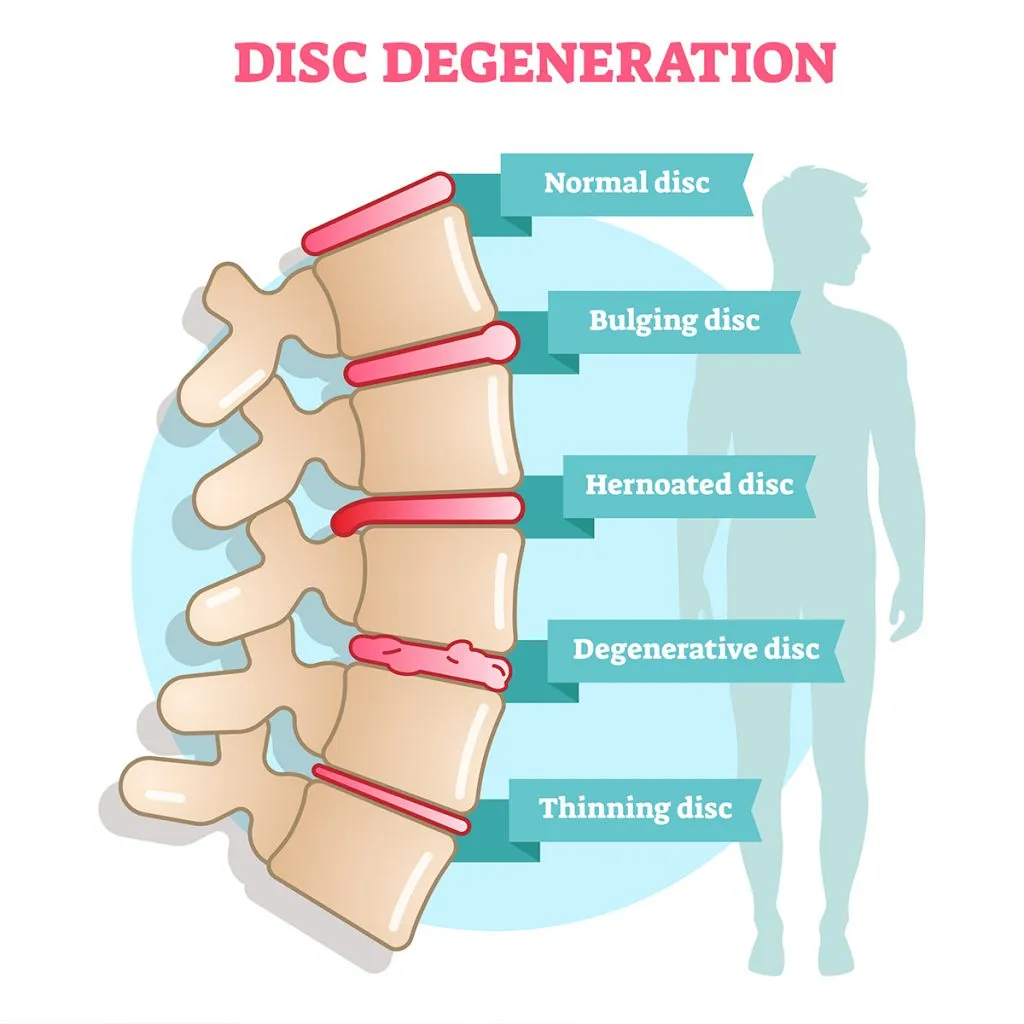
This can irritate nearby nerves and cause pain, numbness, or weakness in the arm or leg depending on which disc is affected. Disc herniation is one of the most common causes of back pain, neck pain, and sciatica. The condition is also referred to as a slipped disc, ruptured disc, or prolapsed disc. While it can occur anywhere along the spine, disc herniation most commonly affects the lumbar spine (lower back) and cervical spine (neck). For more information, visit the Mayo Clinic's guide to herniated discs.
What Causes Disc Herniation?
As people age, the disks become less flexible and more prone to tearing or rupturing with a minor strain or twist. Most people can’t pinpoint the cause of their herniated disk. Sometimes, using the back muscles instead of the leg and thigh muscles to lift heavy objects can lead to a herniated disk, as can twisting and turning while lifting. Sometimes a traumatic event such as a fall or a car accident is the cause.

How We Address Disc Herniation
Not getting the appropriate treatment can lead to disc degeneration and more significant problems. Our team will use their decades of experience to pinpoint the problem and offer targeted treatment and pain management solutions to get you back to living a pain-free life.
We partner with you to create a personalized care regimen built with your well-being in mind. Treatments may include, but are not limited to:
- Manual adjustments
- Physical therapy
- Physician-recommended exercise regimens
- Stretching regimens
- Regenerative treatments
- Pain management with traditional or alternative medicines
- Manual therapy (massage)
- Traction or Spinal Decompression
Disc Herniation Symptoms
- Lower back pain — sharp or dull pain that may radiate into the buttocks and legs
- Sciatica — burning or shooting pain running from the lower back down one leg
- Neck pain — pain that may radiate into the shoulder, arm, or hand
- Numbness or tingling — in the arms, hands, legs, or feet
- Muscle weakness — difficulty gripping objects or weakness when walking
- Pain that worsens with movement — bending, twisting, sitting, or sneezing can aggravate symptoms
Some patients have a herniated disc with no symptoms at all. When symptoms are present, disc herniation treatment at Global Clinic can significantly reduce pain and restore function.
What Results Can I Expect?
Chiropractic adjustments can be moderately helpful in alleviating much of your discomfort. Being careful in your movements is also essential to prevent further complications. Pain management medications and injections can improve your condition as well. Over time, your situation will improve through consistent therapy.
FAQ
Frequently Asked Questions
1. Can a herniated disc heal on its own?
In some cases, yes — mild disc herniations can improve over time as the body reabsorbs the disc material. However, this process can take months, and without proper disc herniation treatment, symptoms often worsen. Early intervention at Global Clinic reduces recovery time and prevents further nerve damage.
2. How long does disc herniation treatment take?
Most patients notice significant improvement within 6 to 12 weeks of consistent treatment. Mild cases may resolve faster. Chronic or severe herniations may require longer treatment programs including injections and regenerative medicine. Your clinician will outline a realistic timeline at your first visit.
3. Is surgery necessary for a herniated disc?
Surgery is rarely the first option. The vast majority of disc herniation cases respond well to non-surgical disc herniation treatment including physical therapy, chiropractic care, spinal decompression, and targeted injections. Surgery is only considered when conservative treatment has not provided adequate relief after several months.
4. What activities should I avoid with a herniated disc?
Avoid heavy lifting, prolonged sitting without support, high-impact activities like running, and any movement that involves bending and twisting simultaneously. Your physical therapist will provide specific activity modifications based on which disc is affected.
5. Does insurance cover disc herniation treatment?
Most major insurance plans cover physical therapy, chiropractic care, and pain management procedures for disc herniation. Call our Niles office at (847) 299-7000 to verify your coverage before your first appointment.