







Why Amino Acid IV Infusions Are Getting Attention in Wellness and Medical Care
An amino acid IV infusion delivers the building blocks of protein directly into your bloodstream — skipping digestion entirely for faster, more complete absorption.
Quick answer: What is an amino acid IV infusion?
- What it is: A sterile solution of amino acids (and sometimes dextrose or electrolytes) administered directly into a vein
- How it works: Bypasses the digestive tract so amino acids enter the bloodstream immediately
- Who uses it: Athletes, people with absorption issues, and those recovering from illness or injury (in hospitals, amino acids are also part of total parenteral nutrition)
- Key benefits: Supports protein synthesis, tissue repair, immune function, energy levels, and recovery
- Is it safe? It is generally well tolerated when administered by a licensed medical professional with proper monitoring
Your body uses amino acids for almost everything — building muscle, producing enzymes, supporting your immune system, and even regulating your mood. There are 20 different amino acids in total, and nine of them are essential, meaning your body cannot make them on its own. You have to get them from food, supplements, or — in certain cases — directly through an IV.
Most of the time, a balanced diet is enough. But when illness, surgery, poor absorption, or high physical demand pushes your body’s needs beyond what eating alone can meet, that’s where IV amino acid therapy steps in.
This guide breaks down exactly how it works, who it’s for, and what the research says.
My name is Anna Slavin, and as part of the team at Global Pain & Spine Clinic — a multidisciplinary medical center serving the Northern Chicago area whose practitioners bring over 20 years of experience in the US and Europe — I’ve seen how amino acid IV infusion therapy can support recovery and healing in patients dealing with chronic pain, injury, and post-surgical rehabilitation. From athletes in Niles and Chicago to patients managing complex medical conditions, this treatment has become an important part of our personalized, evidence-based care approach.
What Are Amino Acids and Why Does Your Body Need Them?
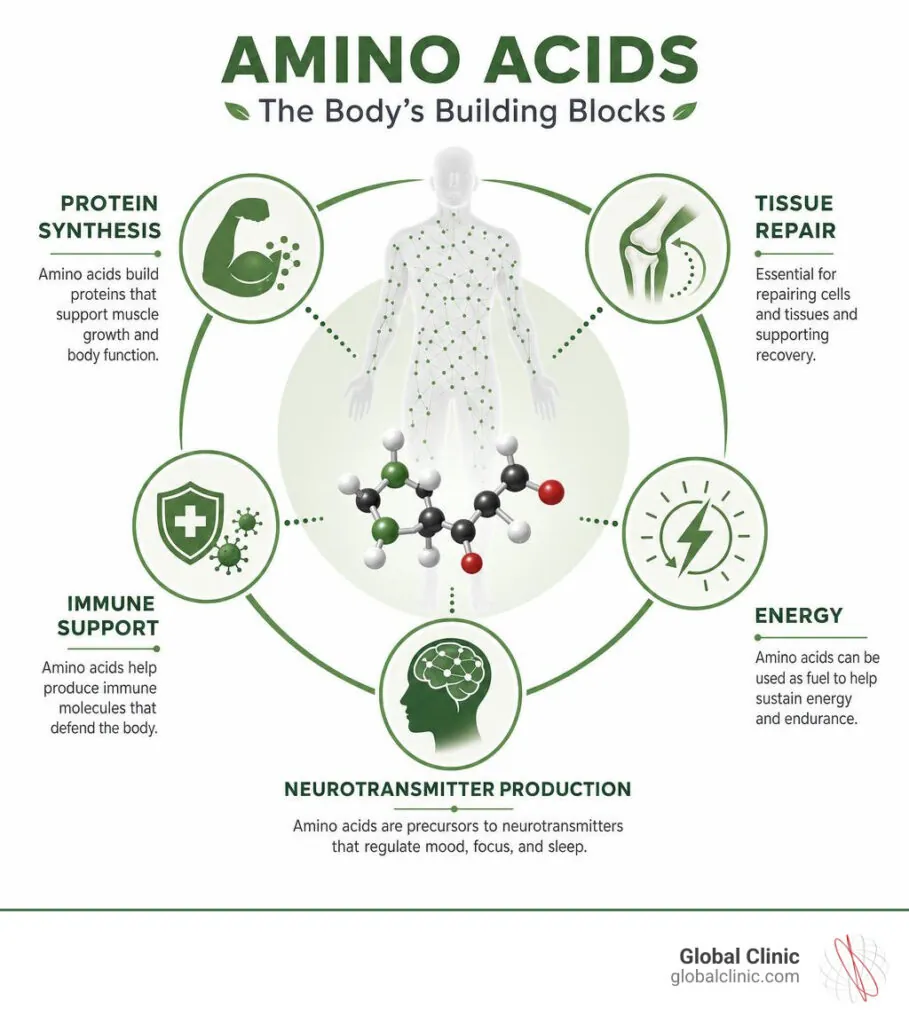
To understand how an amino acid IV infusion works, we first have to look at what amino acids actually do. Often called the “building blocks of life,” these organic compounds are made of nitrogen, carbon, hydrogen, and oxygen. Your body strings them together in various sequences to create proteins, which are essential for structural integrity, cellular communication, and overall survival.
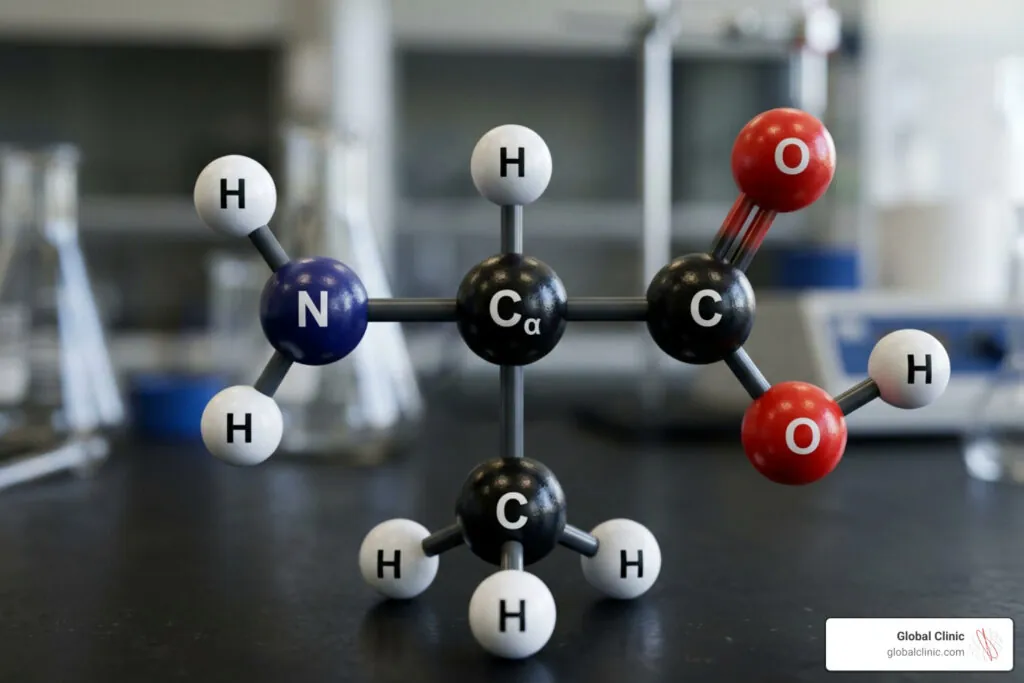
Biologists categorize the 20 amino acids your body needs into three primary groups:
- Essential Amino Acids: Your body cannot manufacture these. They must come from your diet or targeted supplementation. The nine essential amino acids are histidine, isoleucine, leucine, lysine, methionine, phenylalanine, threonine, tryptophan, and valine.
- Nonessential Amino Acids: Your body naturally produces these on its own, even if you don’t get them from food. Examples include alanine, asparagine, aspartic acid, and glutamic acid.
- Conditional Amino Acids: Usually, your body makes enough of these. However, during periods of severe stress, illness, or physical trauma, your body’s demand outpaces its supply. Under these conditions, amino acids like arginine, proline, and glutamine become essential, meaning you must obtain them from external sources.
Without a balanced availability of these compounds, your body cannot maintain a positive nitrogen balance—a state where nitrogen intake matches or exceeds nitrogen loss. A negative nitrogen balance indicates that your body is breaking down more muscle and tissue than it is rebuilding, which can lead to muscle wasting, chronic fatigue, and delayed healing.
From facilitating rapid tissue repair and enzyme production to regulating immune function, amino acids are the silent workforce behind your daily health.
Oral Supplements vs. Amino Acid IV Infusion
When you consume protein-rich foods or take oral amino acid supplements, they must first pass through your gastrointestinal tract. Your stomach acid and digestive enzymes break down the proteins into individual peptides and amino acids, which are then absorbed through the small intestine and sent to the liver via the portal vein.
This process, known as first-pass metabolism, significantly reduces the bioavailability and cellular uptake of the nutrients. If you suffer from underlying gut inflammation, low stomach acid, or stress, your absorption rates drop even lower.
An amino acid iv infusion completely bypasses digestion. By introducing a balanced sterile solution directly into your vein, the amino acids enter your bloodstream directly and are available for cellular uptake.
Additionally, clinical protocols often combine these infusions with dextrose (a simple sugar) to provide immediate cellular energy, which helps the body synthesize proteins more efficiently. For clinical insights, you can review the Scientific research on intravenous amino acids and dextrose published by the Mayo Clinic.
| Feature | Oral Amino Acid Supplements | Amino Acid IV Infusion |
|---|---|---|
| Absorption Route | Gastrointestinal tract & liver | Direct venous bloodstream entry |
| Bioavailability | Variable | Delivered directly into the bloodstream |
| Speed of Action | Slow (requires hours for digestion) | Immediate cellular uptake |
| Digestive Stress | Can cause bloating or nausea | Completely bypasses the gut |
| Customizability | Fixed retail formulations | Fully customizable clinical blends |
Key Health Benefits of Amino Acid Drips
Because intravenous therapy delivers nutrients directly to where they are needed most, the effects of an amino acid IV infusion may be felt sooner than with dietary changes alone. Here is how these infusions support key areas of your health:
- Accelerated Muscle Recovery: During intense workouts or physical therapy, microscopic tears form in your muscle fibers. Infusing branch-chain amino acids (BCAAs) like leucine, isoleucine, and valine may support protein synthesis, which can help with post-exercise soreness and tissue repair.
- Enhanced Athletic Performance: Amino acids help optimize cellular energy production. By supplying the muscles with readily available building blocks, they may help athletes recover between sessions.
- Robust Immune Support: Your immune system relies on proteins to create antibodies and signaling molecules. Amino acids like arginine and lysine are critical for white blood cell production and defending against pathogens.
- Sharper Cognitive Function: Several amino acids serve as the direct precursors to neurotransmitters. For example, tryptophan is converted into serotonin (the “happy” chemical), and phenylalanine becomes dopamine (the focus and motivation chemical).
- Restored Energy Levels: By supporting mitochondrial function and correcting systemic deficiencies, these drips may help with physical fatigue.
Who Benefits Most from Intravenous Amino Acids?
While anyone looking to optimize their cellular health can benefit from targeted nutrient support, certain groups may benefit most from an amino acid IV infusion.
- Athletes and Fitness Enthusiasts: High-performance individuals in Niles, Skokie, and Chicago use these infusions to minimize downtime, prevent muscle wasting, and support intense training regimens.
- Individuals with Malabsorption Issues: Patients dealing with Crohn’s disease, celiac disease, or ulcerative colitis often struggle to extract nutrients from food. IV delivery helps their bodies receive essential building blocks without irritating the gut.
- Chronic Fatigue Sufferers: When systemic exhaustion is linked to cellular nutrient depletion, bypassing the digestive system can help restore baseline energy production.
- Post-Surgical and Rehabilitating Patients: Healing from surgery or an injury requires an immense amount of cellular rebuilding.
- Elderly Patients: As we age, our natural production of digestive enzymes and stomach acid declines, making it harder to absorb dietary protein.
At Global Pain & Spine Clinic, we design these therapies to integrate seamlessly with physical therapy and regenerative medicine.
Frequently Asked Questions About Amino Acid Drips
Navigating clinical wellness therapies often brings up practical questions. Here are the answers to the most common inquiries we receive from our patients.
What specific nutrients are in an amino acid iv infusion?
A standard wellness or recovery drip features a customized blend of essential, nonessential, and conditional amino acids. Common ingredients include:
- Arginine & Citrulline: To boost nitric oxide production, improve blood flow, and support tissue healing.
- Lysine: To support collagen production, bone health, and antiviral immune defenses.
- Proline: Essential for joint, tendon, and skin health.
Depending on your specific health goals, these blends are often mixed with a sterile saline or dextrose solution and balanced with essential electrolytes to maximize cellular hydration and energy production.
Are there any side effects to an amino acid iv infusion?
When administered by a licensed, experienced medical professional, these infusions are generally well tolerated. However, minor side effects can occur, including temporary vein irritation or localized redness at the injection site.
In rare cases of rapid infusion, patients might experience mild nausea or dizziness. This is why medical supervision is essential.
How long does a typical IV therapy session take?
A standard session takes anywhere from 45 to 90 minutes. The exact duration depends on the volume of the infusion bag and the safe infusion rate determined for your comfort. During the session, you can relax, read, or catch up on work in a comfortable clinical setting.
Conclusion
Whether you are an athlete looking to speed up recovery times, an individual navigating chronic fatigue, or a patient recovering from a complex injury, an amino acid IV infusion may be a helpful part of your recovery plan. By bypassing the digestive system, these drips deliver building blocks your cells use to repair and rebuild.
At Global Pain & Spine Clinic, we believe that true recovery requires a multidisciplinary approach. Serving Northern Chicago, Skokie, and Glenview, our team of experienced medical professionals is dedicated to building personalized wellness plans tailored to your unique biology and lifestyle goals.
If you are ready to find out whether an amino acid IV infusion is right for you, call Global Clinic at (847) 299-7000 to schedule an appointment at our Niles office.