





When Joint Pain Won’t Quit: What You Should Know About PRP for Bursitis
PRP for bursitis is a regenerative injection treatment that uses concentrated platelets from your own blood to reduce inflammation and support tissue repair in irritated bursae — the small fluid-filled sacs that cushion your joints.
Quick Answer: Does PRP Work for Bursitis?
| Question | Answer |
|---|---|
| What is it? | Platelet-rich plasma injected into inflamed bursae |
| How well does it work? | 8 of 9 studies show sustained improvement; benefits last up to 2 years |
| How does it compare to cortisone? | Longer-lasting relief; cortisone typically fades within 6 weeks |
| How many sessions? | Usually 1–3 injections |
| When do results start? | Most patients notice improvement within 2–6 weeks |
| Is it safe? | Yes — uses your own blood, minimal serious side effects |
Bursitis is more common than most people realize. Each year, approximately 1 in 10,000 people develops bursitis in the elbow or knee alone — and the hip, shoulder, and heel are affected just as often. The pain can be sharp, persistent, and surprisingly limiting for everyday activities like walking, climbing stairs, or reaching overhead.
Standard treatments like corticosteroid injections can offer short-term relief, but research shows they often lose effectiveness within weeks — and do little to address the underlying tissue damage driving the problem. That’s exactly where PRP therapy is changing the conversation.
My name is Ana Vinikov, and as part of the multidisciplinary team at Global Pain & Spine Clinic, I’ve spent over 20 years helping patients across the Northern Chicago area find lasting relief from chronic pain conditions — including guiding patients through regenerative options like PRP for bursitis. In this guide, I’ll walk you through everything you need to make an informed decision about this treatment.
Easy PRP for bursitis glossary:
Understanding Bursitis: Causes, Symptoms, and Standard Treatments
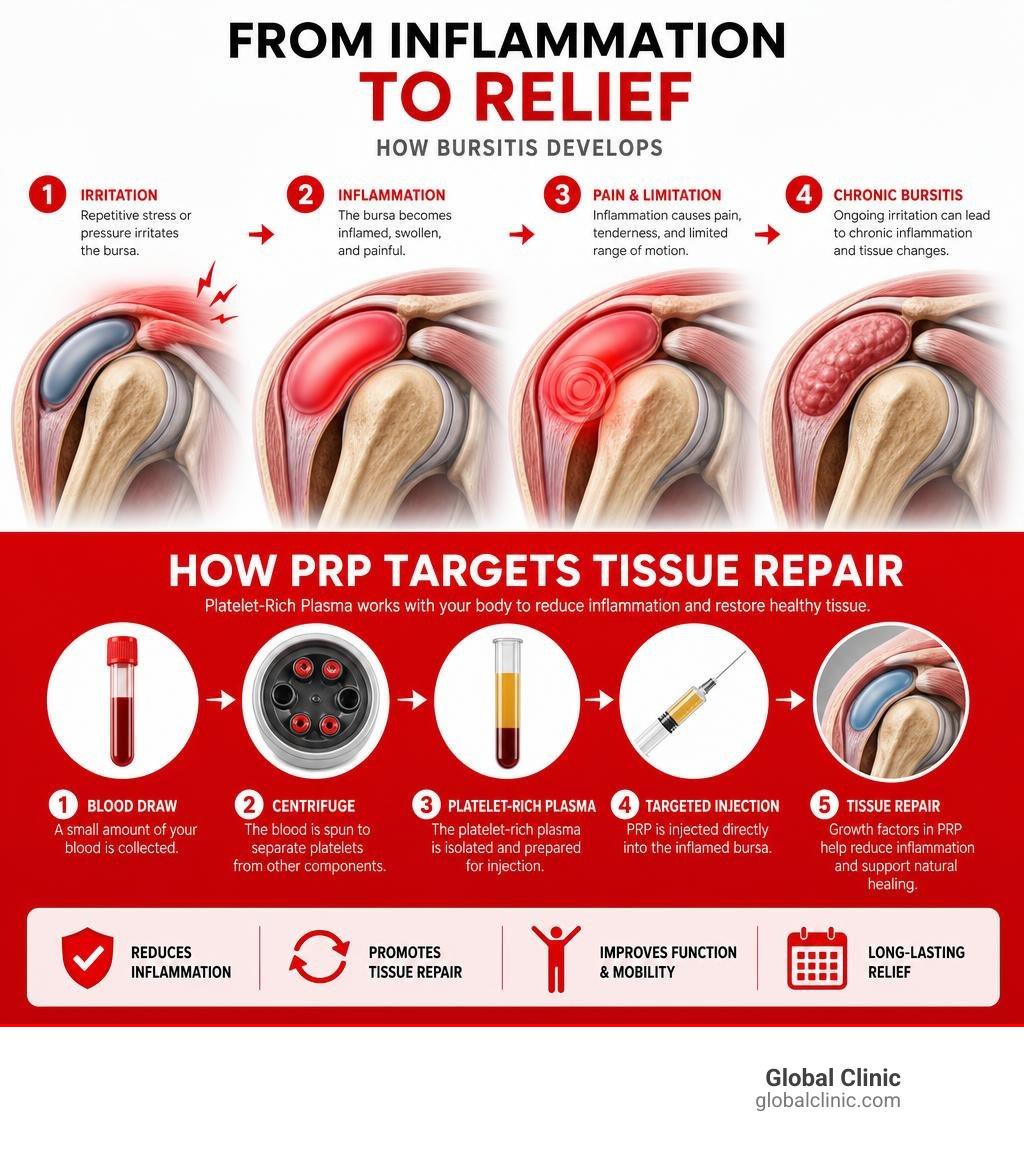
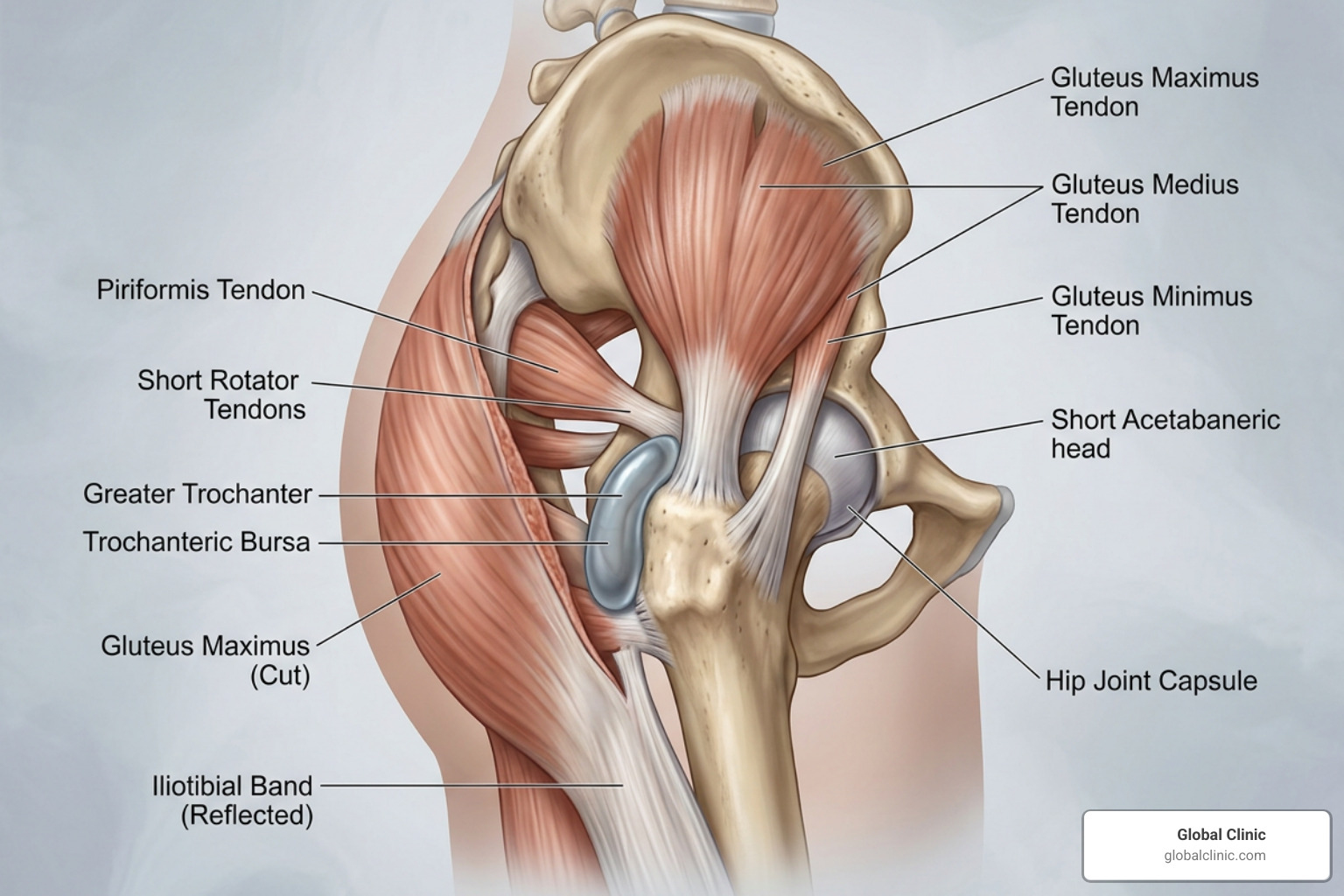
To understand how platelet-rich plasma helps, we first have to look at what is happening inside the joint. Throughout your body, you have more than 150 bursae. These are tiny, fluid-filled sacs that act as friction-reducing cushions between your bones, tendons, and muscles. When a bursa is healthy, it allows your joints to move smoothly and painlessly.
However, repetitive strain, sudden trauma, or structural imbalances can cause these sacs to become inflamed, swollen, and irritated. This condition is known as bursitis.
Commonly Affected Joints
While bursitis can develop near almost any joint, it most frequently occurs in high-stress areas of the body:
- The Hip (Greater Trochanteric Pain Syndrome – GTPS): This is one of the most common forms of lateral hip pain. It causes a deep, aching pain on the outside of the hip that often hurts when lying on that side or climbing stairs.
- The Shoulder (Subacromial Bursitis): Often occurring alongside rotator cuff issues, subacromial bursitis makes reaching overhead, getting dressed, or throwing a ball incredibly painful.
- The Knee (Prepatellar and Pes Anserine Bursitis): Prepatellar bursitis is common in people who spend a lot of time kneeling, while pes anserine bursitis affects the inner side of the knee, often causing discomfort when bending the leg.
- The Heel (Retrocalcaneal Bursitis): Located between the Achilles tendon and the heel bone, retrocalcaneal bursitis is common in runners and athletes, making every step feel like walking on a sharp pebble.
Main Causes and Risk Factors
Bursitis rarely happens without a reason. Some of the most common causes we see in our clinics include:
- Repetitive Motion: Activities like running, throwing, painting, or even prolonged kneeling put continuous pressure on the joint cushions.
- Muscle Imbalances and Poor Posture: Weakness in the gluteal muscles or core can alter your gait, putting excessive friction on the hip bursae.
- Direct Trauma: A sudden fall onto the hip or a hard blow to the elbow can cause the bursa to fill with blood and become acutely inflamed.
- Structural Variations: Leg length discrepancies or bone spurs can physically rub against the bursa, causing chronic irritation.
- Underlying Inflammatory Conditions: Diseases like rheumatoid arthritis or gout can increase your risk of joint and bursa inflammation.
Typical Symptoms and Diagnosis
The most common symptom of bursitis is localized pain that worsens with pressure or movement. You might experience joint stiffness, visible swelling, warmth, and redness over the affected area.
To diagnose bursitis, we perform a thorough physical examination, looking for specific signs such as the “jump sign” (exquisite tenderness when pressing directly over the bursa) or pain during a single-leg stance test. When needed, we use diagnostic imaging like ultrasound or MRI to confirm the diagnosis and rule out other issues like tendon tears. If you are struggling with persistent joint discomfort, exploring our guide on joint pain management can help you understand your diagnostic and therapeutic options.
Traditional Treatments and Their Limitations
When people first develop bursitis, they typically turn to standard conservative treatments. These usually include resting the joint, applying ice, taking over-the-counter nonsteroidal anti-inflammatory drugs (NSAIDs), and participating in physical therapy to correct movement patterns.
If these conservative measures fail, the next traditional step is often a corticosteroid injection. Cortisone is a powerful anti-inflammatory medication that can rapidly shut down pain and swelling. For some patients, this provides immediate relief.
However, corticosteroids have significant limitations:
- Short-Lived Relief: Cortisone shots typically provide maximum relief for only 3 to 6 weeks. The pain often returns once the medication wears off.
- Tissue Degeneration: Repeated steroid injections can weaken nearby tendons, degrade joint cartilage, and actually thin the skin and tissues surrounding the bursa.
- Masking the Problem: Steroids temporarily suppress inflammation but do nothing to heal the underlying tissue damage or tendon degeneration that caused the friction in the first place.
When chronic bursitis becomes completely unresponsive to injections, some patients are steered toward surgical options, such as a bursectomy (surgically removing the bursa) or tendon fenestration. Surgery, however, carries risks of infection, scar tissue formation, and long recovery times.
This is why many patients and providers are turning to regenerative options like PRP for bursitis. To compare these options further, read our overview of therapeutic injections to see how different injection therapies stack up against one another.
What is Platelet-Rich Plasma (PRP) Therapy?
Platelet-rich plasma (PRP) is an innovative orthobiologic treatment that harnesses your body’s own natural healing mechanisms to repair damaged tissues. Your blood is primarily made up of a liquid called plasma, which contains red blood cells, white blood cells, and platelets. While platelets are best known for their role in blood clotting, they also contain hundreds of specialized proteins called growth factors. These growth factors are critical for tissue regeneration, collagen production, and cell recruitment.
To create PRP, we draw a small sample of blood from your arm, much like a standard blood test. We then place this blood sample into a specialized machine called a centrifuge.
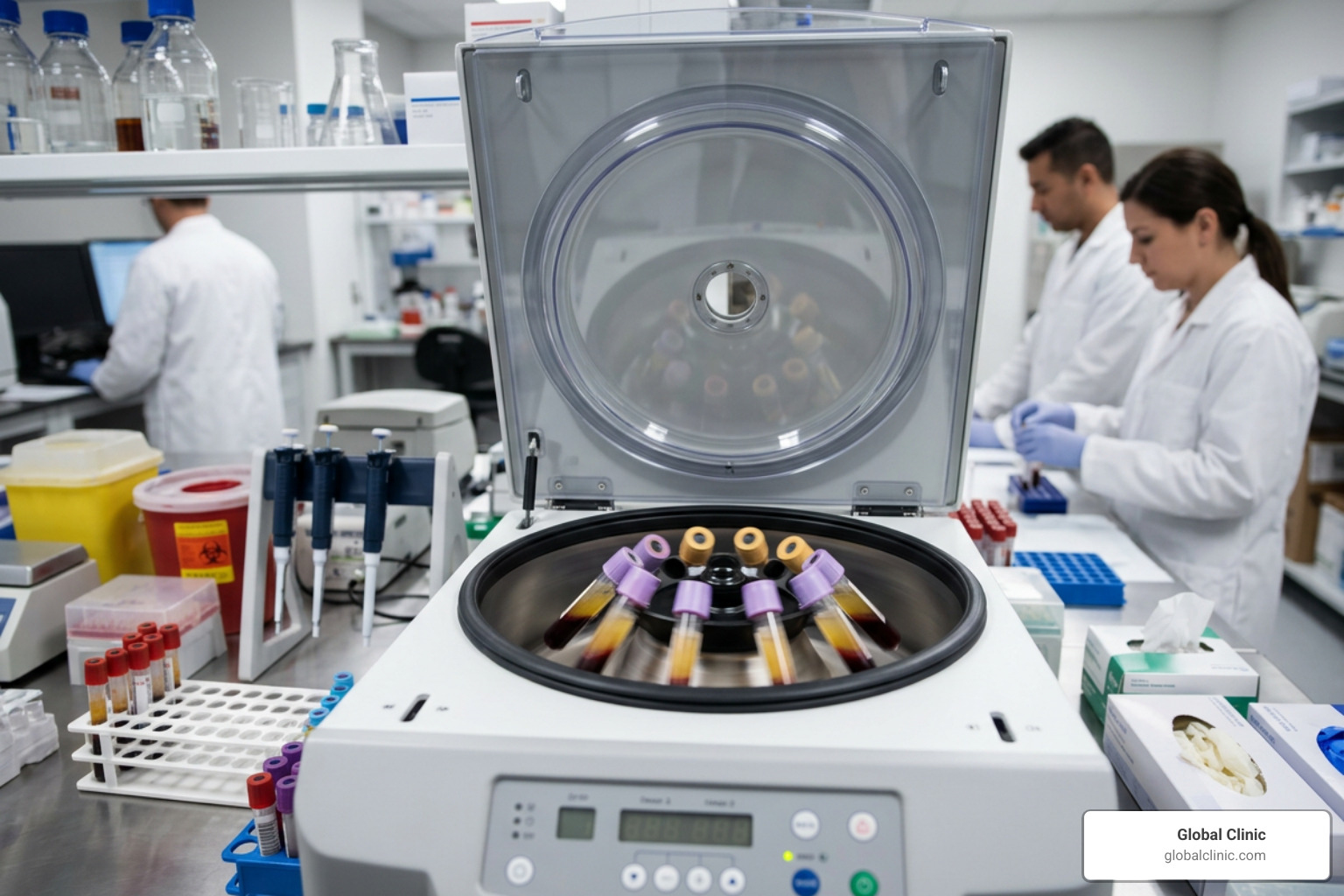
The centrifuge spins the blood at high speeds, separating it into distinct layers based on density. This process allows us to isolate and concentrate the platelets, creating a plasma mixture that contains a platelet concentration up to 5 to 10 times higher than normal blood. By injecting this highly concentrated formula directly into the injured area, we jump-start the body’s natural healing cascade. Learn more about this fascinating biological process in our deep-dive article on how PRP works.
What to Expect During Your Session of PRP for Bursitis
A typical PRP session is a straightforward, outpatient procedure that takes about 30 to 45 minutes from start to finish. Here is what you can expect during your visit:
- The Blood Draw: We draw about 20 cc of blood from your arm.
- The Centrifugation: Your blood is spun in the centrifuge for about 15 minutes to isolate the platelet-rich layer.
- The Preparation: We extract the concentrated PRP. In some cases, we add an activator like calcium chloride to trigger the immediate release of growth factors.
- The Injection: Using high-resolution ultrasound guidance, we precisely guide the needle directly into the inflamed bursa or the surrounding tendon-bone interface. This ensures the healing factors are delivered exactly where they are needed most.
- Recovery: You can walk out of the clinic immediately after the procedure.
Because PRP relies on triggering a temporary, localized inflammatory healing response, you should avoid taking anti-inflammatory medications (like ibuprofen, naproxen, or aspirin) for 72 hours before and at least 4 weeks after your injection. Some mild soreness, swelling, or bruising at the injection site is completely normal for the first few days and can be managed with ice packs and rest.
Most patients can return to light, daily activities immediately, though we recommend avoiding strenuous exercise or heavy lifting with the treated joint for about 4 weeks. To find out more about the advantages of this approach, check out our guide on PRP benefits.
The Clinical Evidence: Does PRP for Bursitis Work?
For years, the gold standard for chronic joint pain was the cortisone shot. However, recent clinical research shows that PRP for bursitis offers a much more durable, restorative solution.
Let’s look at the scientific data comparing these two treatments:
| Clinical Study & Year | Patient Group & Condition | PRP Outcomes | Corticosteroid (Cortisone) Outcomes |
|---|---|---|---|
| AAOS Study (2014) | Chronic Hip Bursitis | More effective and durable results; continued symptom improvement up to 12 months. | Temporary relief that faded quickly; higher recurrence rates within a few months. |
| Systematic Review (2024) | 508 patients with Greater Trochanteric Pain Syndrome (GTPS) | Sustained relief and functional improvement in 8 out of 9 reviewed studies. | Short-term relief that did not last beyond the 3-to-6-week mark. |
| Double-Blind RCT (2019) | Gluteal Tendinopathy & GTPS (2-year follow-up) | Significant, long-lasting clinical benefits maintained up to 2 years post-injection. | Maximum pain relief lasted only up to 6 weeks, with no long-term benefit. |
| Randomized Trial (2020) | 24 patients with GTPS | Superior clinical and functional outcomes at the 24-week follow-up. | Declining benefits and returning pain by 24 weeks. |
| Randomized Trial (2018) | 80 patients with Gluteal Tendinopathy | Single injection provided significantly greater clinical improvement at 12 weeks. | Limited improvement that peaked early and faded by 12 weeks. |
| Retrocalcaneal Study (2024) | 128 patients with Retrocalcaneal Bursitis | 89.05% of patients achieved good clinical and functional outcomes at 1 year. | N/A (Study focused on biological alternative to surgery). |
These studies highlight a clear trend: while cortisone is excellent for a quick, short-term fix, PRP is the superior choice for long-term tissue recovery and lasting pain relief.
For a deeper look into the medical literature, you can read the full scientific research on GTPS and PRP as well as the scientific research on retrocalcaneal bursitis.
Why Choose PRP for Bursitis Over Corticosteroids?
The primary reason to choose PRP over cortisone comes down to how they work biologically. Cortisone is a catabolic substance, meaning it breaks down tissues to suppress inflammation. PRP, on the other hand, is anabolic — it delivers active growth factors that recruit stem cells, stimulate fibroblasts, and encourage the formation of healthy new collagen.
Furthermore, researchers have discovered that the type of PRP formulation used can impact your results:
- Leukocyte-Rich PRP (LR-PRP): This formulation contains a higher concentration of white blood cells. It is highly effective for chronic tendon issues (like the gluteal tendinopathy that often causes hip bursitis) because the white blood cells help clear away damaged tissue and stimulate tenocyte proliferation.
- Leukocyte-Poor PRP (LP-PRP): This formulation has the white blood cells filtered out. It is often preferred for injections directly into highly sensitive joint spaces or the subacromial bursa of the shoulder to minimize post-injection flare-ups.
Indeed, a landmark study published in MDPI investigated the molecular impact of LP-PRP on subacromial bursa cells. The researchers found that PRP significantly downregulated the expression of inflammatory cytokines and matrix metalloproteinases (such as MMP3 and MMP13), which are responsible for breaking down joint tissues. By physically turning down these degenerative genes, PRP helps protect the joint from progressive wear and tear.
For more details on this molecular study, you can explore the scientific research on subacromial bursa gene expression. If you want to understand how this fits into a comprehensive pain management strategy, browse our PRP for pain management resources.
Frequently Asked Questions About PRP for Bursitis
How many PRP injections are typically needed for bursitis?
The number of sessions depends on the severity and chronicity of your bursitis. While some patients experience excellent, long-lasting relief after a single ultrasound-guided injection, a standard treatment regimen often consists of 1 to 3 injections spaced about 3 to 6 weeks apart. During your initial consultation, we will evaluate your joint and customize a plan that aligns with your body’s specific healing response.
Is PRP therapy safe and are there any side effects?
Yes, PRP has an outstanding safety profile. Because the injection is made entirely from your own autologous blood, there is virtually zero risk of an allergic reaction, rejection, or systemic side effects. The most common side effects are mild, localized soreness, stiffness, or slight swelling at the injection site for 2 to 3 days post-procedure. As with any injection, there is an extremely low risk of infection, which we minimize by using strict sterile techniques and ultrasound guidance.
How long does it take to see results from PRP for bursitis?
Because PRP works by stimulating natural tissue regeneration rather than just masking symptoms, the results are gradual. Most patients begin to notice a reduction in pain and an improvement in joint mobility within 2 to 6 weeks. The healing process continues to progress over the next 3 to 6 months, with many patients enjoying sustained relief for up to 1 to 2 years.
Conclusion
If you are tired of dealing with chronic joint pain that keeps you from sleeping, walking, or enjoying your favorite activities, it is time to look beyond temporary fixes. PRP for bursitis offers a scientifically backed, natural way to help your body repair damaged tissues and find lasting relief.
At Global Clinic, we have spent over 20 years providing personalized, multidisciplinary care to patients throughout the Northern Chicago area. Our experienced medical professionals combine regenerative medicine, physical therapy, and chiropractic care to help you achieve optimal recovery. Whether you live in Niles, IL, Skokie, IL, Chicago, IL, Glenview, IL, Park Ridge, IL, Morton Grove, IL, Des Plaines, IL, or Mount Prospect, IL, we are here to support your journey back to pain-free living.
Ready to take the first step toward lasting relief? Schedule an appointment for PRP injections with our specialists today.