








NAD Intravenous Therapy: What to Expect
NAD intravenous therapy delivers NAD+ directly into the bloodstream through an IV. NAD+ helps cells turn food into energy and supports processes involved in cell repair. The infusion is offered for wellness, but research has not shown that it treats chronic disease or reliably improves energy. During a session, some people experience nausea, cramping, or chest pressure, so tell your provider right away if you feel unwell.
At Global Clinic, a provider reviews your health and determines whether NAD+ therapy is appropriate for you. I’m Anna Slavin, Practice Manager at Global Clinic. In my role, I help patients navigate visits for wellness services, including NAD intravenous therapy; this guide explains what you can expect.
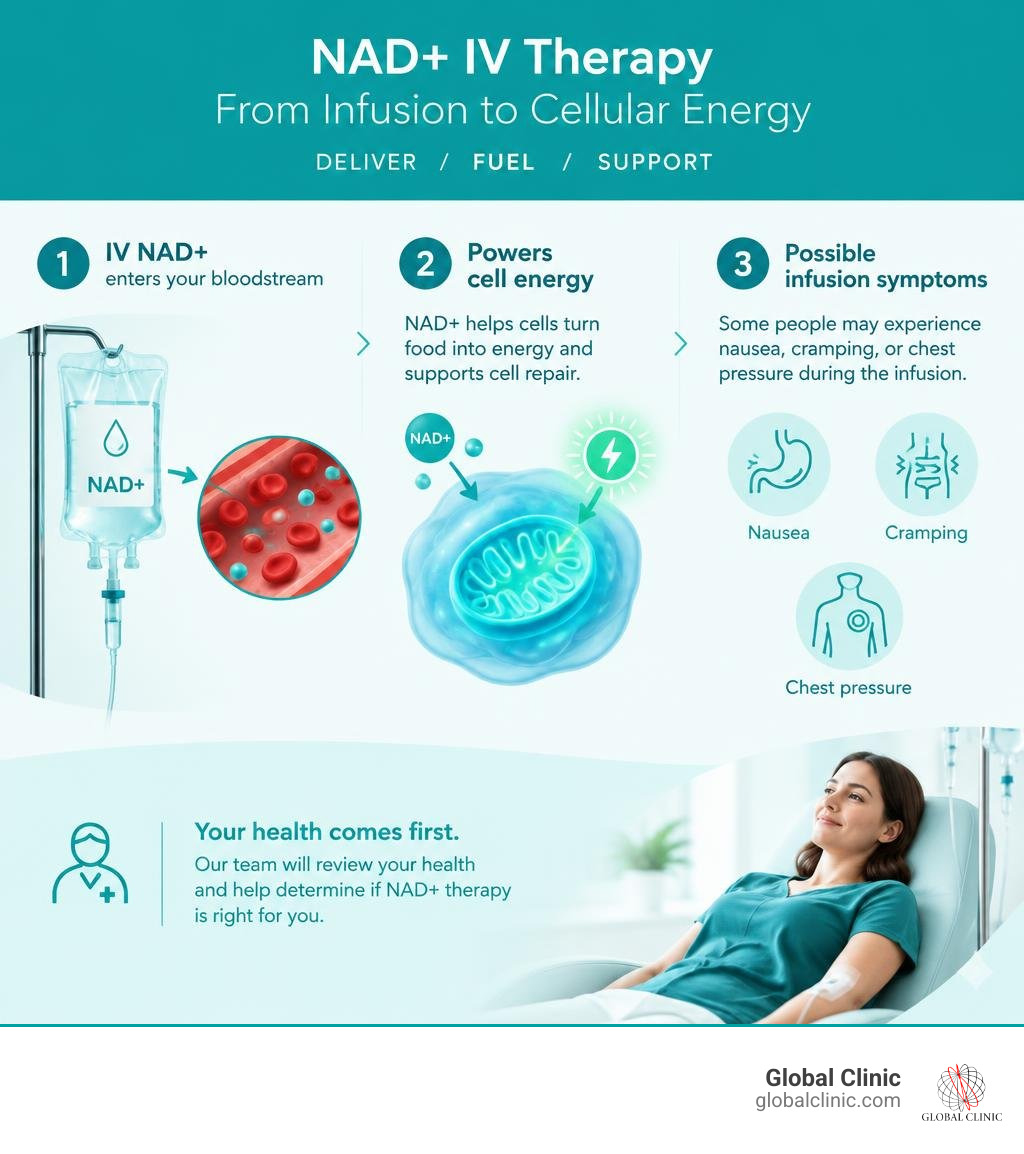
Quick nad intravenous therapy definitions:
Understanding NAD Intravenous Therapy and Cellular Biology
Nicotinamide adenine dinucleotide (NAD+) is a vital coenzyme present in every living cell. It exists in two primary forms: NAD+, the oxidized state, and NADH, the reduced state. This dynamic pair forms the backbone of cellular bioenergetics, driving the electron transport chain inside mitochondria to generate adenosine triphosphate (ATP)—the fundamental energy currency of the body. Beyond energy production, NAD+ acts as an essential substrate for key regulatory enzymes, including sirtuins (SIRT1–SIRT7) and poly(ADP-ribose) polymerases (PARPs).
Sirtuins regulate gene expression, mitochondrial biogenesis, and inflammatory signaling, while PARP enzymes detect and repair damaged DNA strands. Because PARP and sirtuin activity consumes NAD+ directly, cellular stores steadily deplete under physiological stress, chronic inflammation, or normal biological aging. To understand the fundamentals of this coenzyme, review our overview of NAD explained simply.
When administered via oral supplements, NAD+ precursors like nicotinamide or nicotinic acid undergo significant first-pass metabolism in the liver and digestive breakdown. By contrast, intravenous administration places nutrients directly into the bloodstream, bypassing gastrointestinal degradation and achieving rapid systemic availability.
Factors Affecting NAD+ Intravenous Therapy Tolerability
While intravenous delivery ensures rapid systemic circulation, infusion speed directly influences how a patient feels during the session. Intravenous NAD+ can trigger noticeable physical sensations if introduced too quickly into the circulatory system. In a retrospective real-world study published in 2026 (Reyna et al., 2026), researchers evaluated standard intravenous NAD+ across consecutive days of infusions.
The study demonstrated key relationships between infusion duration and patient-reported tolerability:
| Parameter | Rapid Infusion Rate | Controlled / Titrated Rate | Clinical Significance |
|---|---|---|---|
| Infusion Duration | Shortened session | Standard paced session | Pacing prevents rate-related discomfort |
| Common Symptoms | GI distress, chest heaviness, increased heart rate | Mild or absent sensations | Symptoms subside rapidly when the drip is slowed |
| Symptom Resolution | Immediate upon rate reduction | Maintained comfort throughout | No long-term adverse events recorded |
| Biomarker Monitoring | Metabolic shifts observed | Stable metabolic profile | Values remain within healthy reference ranges |
Understanding these dynamics helps patients evaluate the metabolic benefits of NAD infusion with realistic expectations regarding session length and comfort.
Dosing and Tolerability in NAD Intravenous Therapy
The physical sensations experienced during an infusion—such as temporary chest tightness, abdominal cramping, flushing, or lightheadedness—are largely driven by rate-dependent physiological responses. In clinical observations (Reyna et al., 2026), participants receiving intravenous NAD+ noted that transient gastrointestinal sensations and changes in heart rate subsided immediately once the drip was slowed or completed.
To manage comfort, clinicians dilute the coenzyme in standard sterile saline and carefully titrate the flow rate using a 22-gauge catheter. Allowing patients to communicate their comfort level ensures seamless rate adjustments throughout the visit. Providers monitor baseline and post-infusion vitals to maintain safety. For more details on protocol design and cellular impact, consult our comprehensive NAD infusion guide.
Preclinical Research on NAD+ Metabolism
Advanced research continues to explore how coenzyme pathways interact with immune and metabolic functions (Ghosh et al., 2026). Preclinical models show rapid, dose-dependent increases in intracellular NAD+ following intravenous coenzyme administration.
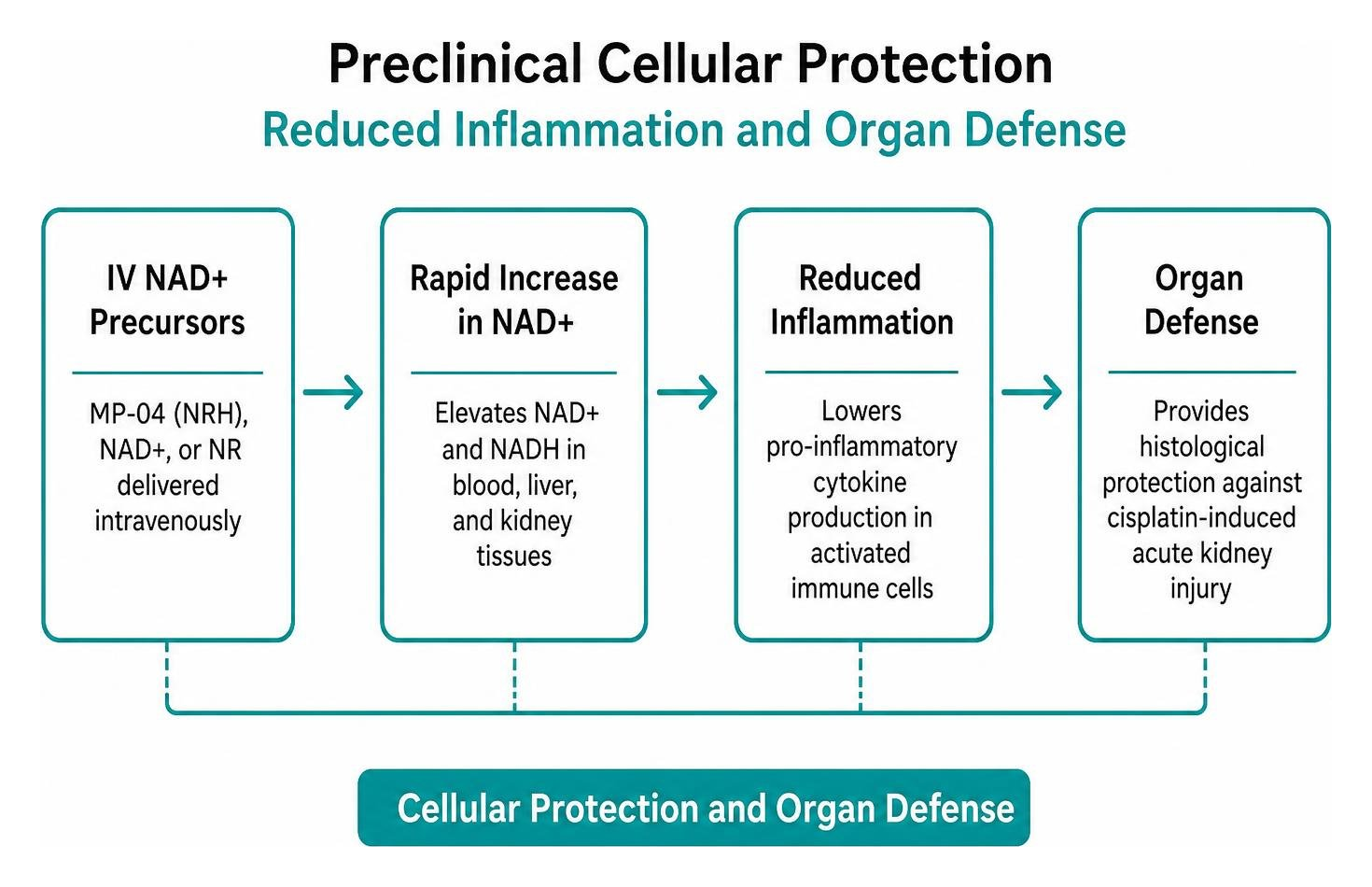
Furthermore, preclinical data indicates that intravenous administration elevates NAD+ and NADH levels across vital tissues. In animal models, coenzyme replenishment reduced pro-inflammatory cytokine production in activated immune cells and provided histological protection against acute kidney stress (Ghosh et al., 2026). For broader background on coenzyme pathways, see the scientific review on NAD+ metabolome disruption (Block & Kuo, 2022).
Clinical Applications and Therapeutic Potential
Scientific interest in NAD+ biology extends into complex post-viral and neurodegenerative conditions. During acute viral infections, hyperactivation of PARP enzymes can consume vast amounts of cellular NAD+, driving mitochondrial dysfunction and sustained oxidative stress (Block & Kuo, 2022). A scientific review highlights that post-acute COVID-19 syndrome (PACS) affects an estimated 31% to 69% of individuals following infection, with roughly 87% of hospitalized patients experiencing at least one lingering symptom at 60 days post-discharge (Block & Kuo, 2022). Researchers hypothesize that restoring the depleted NAD+ metabolome may support cellular recovery, though extensive controlled human trials are still ongoing. To read more about current scientific perspectives, visit our evidence evaluating if NAD therapy works.
Neurological and Metabolic Health with NAD Intravenous Therapy
In the realm of neurodegenerative research, maintaining dopaminergic neuronal health is a central focus. Preliminary scientific investigations examine how replenishing intracellular NAD+ pools supports mitochondrial respiration and attenuates oxidative stress in neuronal pathways associated with neurodegenerative conditions such as Parkinson’s disease. While early observations and preclinical studies show mechanistic insights into motor symptom pathways and cellular protection, large-scale controlled human trials remain necessary to evaluate clinical outcomes.
On the metabolic front, real-world data demonstrates that intravenous coenzyme administration can induce measurable shifts in blood biomarkers. In a 30-day observational study (Reyna et al., 2026), intravenous NAD+ administration was associated with shifts in metabolic markers, including alkaline phosphatase (ALP) and lipid parameters, without adverse changes to liver enzymes (ALT/AST) or kidney function markers (BUN/creatinine). For an in-depth perspective on overall health optimization, explore our complete NAD therapy guide.
What to Expect During Your Treatment Session
Receiving intravenous NAD+ at a clinical facility follows a structured, patient-centered process designed for safety and relaxation. Our practitioners bring over 20 years of experience from the US and Europe to ensure every protocol is tailored to your personal health history.
- Initial Medical Consultation: A comprehensive health review is conducted prior to therapy to evaluate your wellness goals and rule out contraindications.
- Vital Sign Monitoring: Clinical staff measures baseline blood pressure, pulse, and oxygen saturation before inserting a gentle intravenous catheter.
- Controlled Infusion Pacing: The coenzyme is administered in sterile saline. If you notice mild sensations such as chest heaviness or stomach churning, your provider simply slows the flow rate until you feel completely at ease.
- Post-Session Recovery: Once the drip finishes, the catheter is removed, vitals are rechecked, and you can resume standard daily activities immediately.
For patients interested in complementary hydration or micronutrient wellness, explore our customized IV therapy options.
Authorized NAD+ pricing tiers include:
- NAD+ IV Infusion: 150 mg – $200; 250 mg – $275; 500 mg – $350.
- NAD+ Intramuscular Injection: $55 per injection, or $200 for a pack of 4.
- New Patient Offer: Consultation with our doctor plus the first NAD+ injection – $99.
Anyone considering NAD+ therapy should first meet with our doctor for a consultation. Learn more or schedule your visit at our NAD consultation page.
Frequently Asked Questions About Intravenous NAD Therapy
How is NAD+ delivered during an IV infusion?
Intravenous delivery places nutrients directly into the bloodstream through a sterile catheter inserted into a vein. This method circumvents gastrointestinal breakdown, ensuring that the full concentration enters circulation immediately to support cellular uptake and metabolic pathways.
What side effects can occur during the infusion?
Common transient side effects include mild nausea, abdominal cramping, a sensation of chest pressure, flushing, or a temporary increase in pulse rate. These effects are directly linked to the infusion speed. Sparing a few extra minutes by lowering the drip rate resolves these sensations almost instantaneously.
How long does an infusion session typically take?
Depending on your dose (such as 150 mg, 250 mg, or 500 mg) and your individual comfort level, an infusion session generally lasts between 45 minutes and 2 hours. Your provider determines the right dose and adjusts the pace so you remain relaxed throughout your appointment.
Conclusion and Next Steps
Intravenous NAD+ therapy offers direct bloodstream delivery of an essential cellular coenzyme involved in cellular bioenergetics, DNA maintenance, and metabolic regulation. Understanding what to expect—from infusion pacing and potential transient sensations to clinical research trends—allows you to make informed decisions about your wellness routine.
At Global Clinic, our multidisciplinary team provides patient-focused care under one roof, integrating pain management, physical therapy, chiropractic care, and regenerative wellness. Our facility is located at 8565 W. Dempster St., Niles, IL 60714, with convenient on-site parking. We welcome patients visiting us from Chicago, Skokie, Glenview, Park Ridge, Morton Grove, Des Plaines, Mount Prospect, Norridge, and Rosemont. We accept Medicare; Aetna, AARP, BCBS, CIGNA, and United Healthcare PPO plans; personal injury; and workers’ compensation (coverage depends on your plan – our team can help you check; NAD+ is a self-pay wellness service).
Anyone considering NAD+ therapy should first meet with our doctor for a consultation. To explore your options, schedule a consultation with our doctor.
Contact our clinic in Niles to learn more about your treatment options.
References
Reyna K, Heinzen G, Patel N, Ritter M, Siojo A, Legere H, Pojednic R. “Intravenous infusion of nicotinamide adenine dinucleotide (NAD+) versus nicotinamide riboside (NR): a retrospective tolerability pilot study in a real-world setting..” Frontiers in aging, 2026. PMCID PMC12907335. Alip Ghosh, Gautham Pranesh, Nikhil Zachariah, Eisuke Murakami, Alonso Heredia, Poonam Mathur, Leigh Ann Burns-Naas, Steve Weng, Arvind Ramanathan, Shyam Kottilil, G. Mani Subramanian. “Pharmacological profiling of intravenous MP-04: sustained NAD+ augmentation, immune modulation, and renal protection in preclinical models.” Frontiers in Pharmacology, 2026. DOI 10.3389/fphar.2026.1832979. Block T, Kuo J. “Rationale for Nicotinamide Adenine Dinucleotide (NAD+) Metabolome Disruption as a Pathogenic Mechanism of Post-Acute COVID-19 Syndrome..” Clinical pathology (Thousand Oaks, Ventura County, Calif.), 2022. PMCID PMC9234841.