








Why Back Pain Demands a Better Solution
Physical therapy offers effective relief for many people suffering from lower back pain. If you’re dealing with back pain, here’s what you need to know:
Quick Answer: Physical Therapy for Back Pain
- Timeline: Most programs run 4-8 weeks with 1-3 sessions per week
- Approach: Combines targeted exercises, manual therapy, and education
- Types: Core strengthening, flexibility work, posture training, and aerobic conditioning
- Best For: Acute pain, chronic pain, sciatica, post-surgical recovery, and prevention
Back pain is incredibly common, with about 25% of Americans reporting recent lower back pain. Most people will experience it in their lifetime. The good news is that you don’t have to live with it, and relief often doesn’t require surgery or long-term medication.
Physical therapy is a first-line treatment for most back pain. Studies show it can improve symptoms, helping you avoid surgery and medication risks. Unlike bed rest, which slows recovery, physical therapy promotes healing through proper movement, preventing future episodes.
This approach works by addressing root causes like weak core muscles, poor movement patterns, and inflexibility. A physical therapist teaches you about your body and pain, empowering you with self-management tools to handle future issues independently.
I’m Anna Slavin, Practice Manager at Global Pain & Spine Clinic. Our team helps patients find lasting relief from chronic back pain using non-surgical approaches like physical therapy. Our team provides personalized care, not one-size-fits-all solutions.
Understanding Your Back Pain & How a Physical Therapist Can Help
When back pain strikes, it can feel like a mystery. A physical therapist’s primary goal is to solve that mystery. This means identifying if your pain is acute or chronic and finding its underlying cause to create the most effective treatment plan.
As movement experts, we look beyond your pain to how you move, sit, stand, and walk. We assess your posture, strength, and flexibility to pinpoint contributing factors. Imaging tests like X-rays or MRIs often aren’t helpful for most low back pain, as they can show “abnormalities” present even in people without pain.
Pain is a complex experience created by the brain when it perceives a threat. This doesn’t always mean there’s a serious injury. Factors like stress and fear can influence pain perception. A physical therapist helps you understand these pain mechanisms, empowering you to manage and prevent future episodes.
While most low back pain is benign, certain “red flag” symptoms warrant immediate medical attention. These include new or worsening bowel or bladder issues, sudden limb weakness, gait and balance problems, or changes in reflexes. If you experience any of these, see a doctor immediately. For other types of persistent back pain, a physical therapist is the best first line of defense.
The Initial Evaluation: What to Expect
Physical therapy for back pain starts with a thorough evaluation of your health history and pain experience. We’ll ask about your symptoms—when they started, what affects them, and how they impact your daily life. We’ll also ask you to rate your pain to track progress.
Next is a detailed physical assessment. We’ll observe your posture and movements, check your range of motion, and test muscle strength. A neurological screening may also be done to rule out nerve involvement.
This assessment helps us identify movement patterns contributing to your pain. Based on these findings, we’ll set realistic functional goals with you, creating a roadmap for your personalized physical therapy plan.
Differentiating Acute vs. Chronic Low Back Pain
Understanding if your back pain is acute or chronic is crucial as it dictates the treatment approach.
Acute low back pain is short-lived, lasting less than six weeks, and often comes on suddenly. Most cases are mild and resolve with gentle activity. We provide reassurance, advice to stay active, and self-management strategies. You can find more info about back spasm treatment for related muscle spasms.
Chronic low back pain is persistent, lasting more than three months. Sub-chronic back pain falls between six and twelve weeks. Chronic pain is more complex; the nervous system can become overly sensitive, causing discomfort even without ongoing damage.
For chronic pain, exercise therapy is a first-line treatment. Staying active is paramount. We use “pain neuroscience education” to help you understand that movement is safe and beneficial, even with some discomfort. This retrains your nervous system and builds confidence, reducing pain and improving function.
The Primary Goals of Physical Therapy for Back Relief
When you start physical therapy for back pain, our objectives are clear and patient-centered, designed to alleviate immediate discomfort and equip you for long-term well-being. We aim to:
- Decrease painful symptoms in your lower back and any radiating leg pain.
- Improve your low back function for daily activities.
- Increase the spine’s flexibility and range of motion for smoother movement.
- Develop core strength for spinal stability.
- Provide patient education on your condition and its management.
- Formulate a maintenance program to prevent recurrence.
Our overarching goal is to restore mobility and reduce pain, allowing you to return to an active lifestyle. This comprehensive approach is key to effective pain management.
Short-Term Goal: Pain and Symptom Reduction
In the initial phase of treatment, our immediate focus is relieving your acute pain and discomfort. We may use manual therapy techniques like joint mobilizations or soft tissue massage to reduce muscle tension and improve movement. For instance, if you’re experiencing mid-back pain, manual therapy can be very effective.
We also use modalities like heat to relax muscles and ice to decrease inflammation. Gentle movement is always encouraged, as prolonged bed rest is counterproductive. Our aim is to reduce inflammation and muscle spasms, allowing you to move more freely.
Long-Term Goal: Restoring Function and Preventing Recurrence
Once your acute pain is controlled, we shift to the long-term goal: restoring full function and preventing future back pain. This phase of treatment is where real change occurs.
We’ll work on strengthening weak muscles, particularly your core (abdominals, back extensors, and glutes), which acts as your body’s natural support for the spine. Correcting movement patterns and retraining posture are also key. We’ll teach you proper body mechanics for daily tasks like lifting, sitting, and standing.
A critical part of this strategy is your personalized home exercise program. Consistency with your home regimen is essential for maintaining spine strength and stability. We’ll also provide ergonomic advice for your workspace or home to reduce strain on your back, empowering you to proactively manage your back health.
What to Expect from Physical Therapy for Back Pain
Physical therapy for back pain is an active partnership. Unlike passive treatments, physical therapy is about “active therapy,” where you participate in your recovery. Your treatment plan is highly personalized to your specific diagnosis, symptoms, and goals.

A typical program lasts 4 to 8 weeks, with 1 to 3 sessions per week, though this varies. Your therapist will guide you through exercises, use hands-on techniques, and provide education. The work continues at home; your home exercise program is key to maintaining spine strength, building resilience, and preventing future issues.
Categories of Therapeutic Exercises
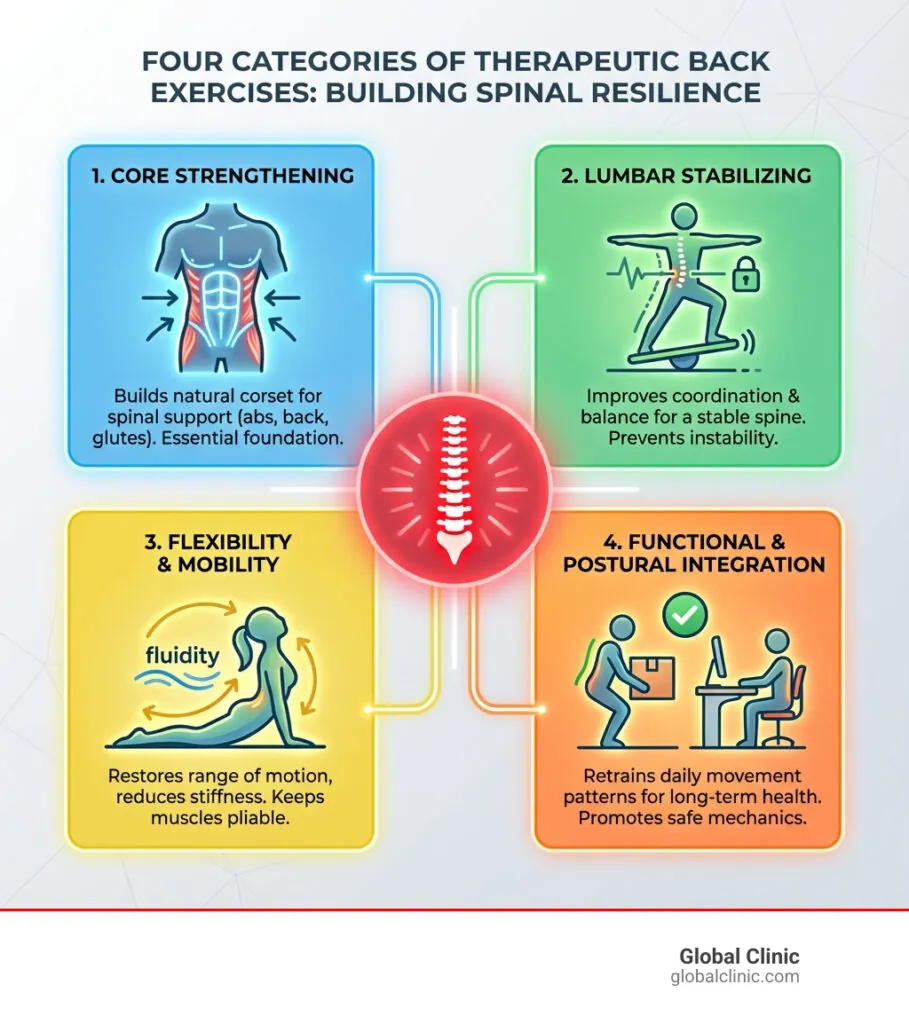
To effectively address back pain, our back pain programs incorporate several key exercise categories:
-
Core Strengthening Exercises: Your core muscles are the foundation of spinal support. These exercises strengthen your deep abdominal muscles, back extensors, and glutes to stabilize your spine. This includes the pelvic floor muscles, which are an integral part of core stability.
-
Lumbar Stabilizing Exercises: These exercises teach your body to coordinate movement between your hips, spine, and legs, preventing instability. They often challenge your balance and control to improve lumbar spine stability.
-
Flexibility and Mobility Exercises: These exercises focus on restoring range of motion in your spine, hips, and hamstrings. Stretching the muscles you strengthen is crucial for reducing soreness and allowing for easier movement.
-
Aerobic Conditioning: Low-impact activities like brisk walking or stationary biking increase circulation to your spinal muscles, bringing in oxygen and nutrients. This helps decrease stiffness and makes your spinal muscles more mobile without jarring your spine.
Common Exercises in a Back Pain Program
A well-rounded back pain program will include a variety of exercises tailored to your needs. Common ones include:
- Pelvic Tilts: Lying on your back, these gentle movements engage your core to flatten your lower back, improving pelvic control.
- Bird-Dog: On hands and knees, this exercise improves core stability and coordination by extending an opposite arm and leg.
- Planks: This classic exercise engages the entire core to improve endurance and stability. Modifications are available for all fitness levels.
- Knee-to-Chest Stretches: Lying on your back, this stretch targets the lower back and glutes to improve flexibility.
- Cat-Cow Stretch: On hands and knees, this movement between a rounded and arched spine promotes spinal mobility.
- Glute Bridges: Lying on your back, lifting your hips strengthens the glutes and hamstrings, which support the lower back.
- McKenzie Exercises (Extension-Based): These focus on spinal extension and are often helpful for pain from disc issues.
- Williams’ Flexion Exercises: These focus on spinal flexion and strengthening abs to reduce excessive lower back curve.
Research consistently shows the effectiveness of physical therapy exercises for back pain. A multivariate analysis of 4597 patients showed significant improvement in common low back pain diagnoses with physical therapy. The McKenzie method, in particular, has robust evidence supporting its use for low back pain.
Why PT is a Superior Choice for Many Back Pain Sufferers
For most individuals, physical therapy for back pain is a better first choice over more invasive or passive alternatives, offering significant benefits.
| Feature | Physical Therapy | Pain Medication (Opioids) | Surgery |
|---|---|---|---|
| Risk | Very low; non-invasive, minimal side effects | High; addiction, dependence, side effects, overdose | High; infection, nerve damage, failed surgery syndrome |
| Long-Term Efficacy | High; addresses root causes, empowers self-management | Low; symptomatic relief only, not for chronic pain | Moderate; can correct structural issues, but no guarantee of pain relief |
Physical therapy for back pain can improve symptoms and build long-term resilience. It can help people avoid surgery and medication side effects.
Unlike pain medications like opioids, which are not a first-line strategy for chronic pain due to addiction risks, physical therapy addresses the root cause. Surgery, a last resort, doesn’t guarantee pain relief and can sometimes worsen it. Our approach empowers you with self-management tools, reducing reliance on passive interventions.
Physical Therapy for Post-Surgical Recovery
For individuals who have undergone back surgery, physical therapy plays a critical role in recovery. A structured exercise conditioning program is essential to help you return to daily activities and a more active lifestyle.
Our post-surgical rehabilitation programs are designed to help you:
- Regain strength in your back and core muscles.
- Improve flexibility safely with gentle stretches and mobility exercises.
- Manage scar tissue to reduce stiffness and discomfort.
- Return to daily activities gradually and safely.
- Prevent re-injury through education on proper posture and continued exercise.
Your physical therapist works closely with your surgeon to align your rehabilitation with your recovery timeline. You can learn more about physical therapy’s role with spine surgery through resources from leading medical institutions.
PT and Complementary Approaches
We believe a holistic strategy yields the best results. We integrate physical therapy with other supportive therapies as recommended by your care team. Manual therapy and massage can complement your exercise program by reducing muscle tension. Modalities like therapeutic ultrasound or electrical stimulation may also be used for pain relief.
We also offer specialized treatments like dry needling for targeted muscle pain relief, which can be a powerful adjunct to your physical therapy sessions. The goal is a comprehensive, personalized plan to get you back to feeling your best.
Frequently Asked Questions about Physical Therapy for Back Pain
We often hear similar questions from our patients. Let’s address some of the most common ones to help you feel more confident about starting physical therapy for your back.
How long does a typical physical therapy program for back pain last?
A typical physical therapy program for back pain lasts 4 to 8 weeks, with 1 to 3 sessions per week, depending on your needs. The duration is influenced by the cause and severity of your pain, your adherence, and your response to treatment. However, this initial phase is just the beginning. Your home exercise program is crucial for long-term success and independent management of your back health.
Will physical therapy hurt?
It’s important to differentiate between “good pain” (muscle soreness from work) and “bad pain” (sharp, stabbing, or radiating pain). You should never feel “bad pain” during an exercise. Your physical therapist will modify exercises to your comfort level, using techniques like graded activity to retrain your body that movement is safe. Open communication is key to ensuring your program is both effective and comfortable.
Do I need a doctor’s referral for physical therapy?
In many cases, no. Illinois has “direct access” laws allowing you to see a physical therapist for an evaluation without a physician’s referral, which can speed up treatment. However, some insurance plans may still require a referral. Your physical therapist will screen for any serious conditions during your evaluation to ensure you receive appropriate care. We encourage you to check with your insurance provider to understand your specific requirements.
Take Control of Your Back Health for Good
Living with back pain is debilitating, but it doesn’t have to be permanent. Physical therapy offers a proven, empowering path to long-term spinal health. It’s about understanding your body, strengthening its foundations, and learning to move pain-free.
The benefits are clear: significant pain reduction, improved mobility, and restored function, allowing you to return to the activities you love. With guidance from our expert physical therapists at Global Clinic in Northern Chicago, you’ll gain self-management tools and become an active participant in your recovery.
Consistency is key. Your home exercise program is vital for maintaining progress and preventing future pain. A holistic approach also includes regular exercise, a healthy diet, good posture, and adequate sleep. Always remember to lift with your legs, not your back.
At Global Clinic, we provide personalized, innovative care in our state-of-the-art facility in Niles.
Don’t let back pain hold you back. Take the first step towards a pain-free, active life. Call Global Clinic in Niles at (847) 299-7000 to schedule a physical therapy evaluation and see how our team can help you reclaim your well-being.