






Understanding Foot Physical Therapy: Your First Steps to Relief
When pain strikes your feet, physical therapy can be a game-changer. If you’re wondering what foot physical therapy involves, here’s a quick overview:
- Reduces Pain: It tackles the root causes of discomfort without medication or surgery.
- Improves Mobility: It helps you regain your full range of motion, making daily tasks easier.
- Strengthens Muscles: Targeted exercises build strength and stability in your feet and ankles.
- Treats Many Conditions: Effective for issues like plantar fasciitis, Achilles tendonitis, sprains, and bunions.
- Personalized Care: Therapists create plans just for you, focusing on your specific pain and goals.
- Prevents Future Injuries: It teaches you how to keep your feet healthy and avoid problems down the road.
Your feet are complex structures that absorb the impact of every step. When pain makes everyday tasks tough, physical therapy offers a powerful, non-surgical way to find lasting relief and return to your favorite activities. To understand how bones, joints, and soft tissues work together, explore the anatomy of the human foot.
At Global Clinic, our physical therapy team, led by Valerie Shternberg, MSPT, builds an individualized foot and ankle treatment plan for every patient, guiding them back to a more active life.
Why Choose Physical Therapy for Foot and Ankle Pain?
Our feet and ankles carry us through life, but injuries and wear can cause pain that limits our activity. When foot or ankle pain strikes, physical therapy is often an effective first step toward recovery. At Global Clinic, we prioritize this approach to help you get back on your feet.
Choosing physical therapy means choosing a path that works with your body’s natural abilities. The benefits can make a huge difference in your daily comfort:
- Pain Reduction: Physical therapy uses natural, non-invasive techniques to address the root cause of your discomfort, offering lasting relief without medication or surgery.
- Improved Mobility: Foot and ankle pain often leads to stiffness. Our specialized therapy improves your range of motion and flexibility, helping you move with greater ease.
- Increased Strength: We create programs to strengthen the muscles, tendons, and ligaments in your feet and ankles. This provides better support, improves stability, and makes you more resilient against future injuries.
- Improved Balance: We use specific exercises to improve your body’s sense of position (proprioception). This leads to better coordination and renewed confidence in your stability.
- Non-Invasive Treatment: Our approach empowers your body’s natural healing capabilities through targeted movements and manual techniques, avoiding aggressive interventions whenever possible.
- Avoiding Surgery: By addressing underlying issues and strengthening support structures, physical therapy can often help you achieve excellent results without an operation.
- Reducing Medication Reliance: Our programs provide lasting pain relief and improved function, which can lessen your dependence on pain medications for a more sustainable path to wellness.
Physical therapy is an evidence-backed approach that restores normal function and helps prevent future issues, rather than just treating symptoms.
Common Conditions That Benefit from Physical Therapy
Each foot has 26 bones, 33 joints, and over 100 muscles, tendons, and ligaments. This complexity makes them vulnerable to many conditions, but a specialized foot physical therapy program can help with:
- Plantar Fasciitis: A common cause of heel pain from inflammation of the tissue on the bottom of your foot. Physical therapy uses specific stretches and strengthening exercises to soothe pain and promote healing.
- Achilles Tendonitis: Pain and inflammation in the tendon connecting your calf to your heel. We use gentle stretches and focused exercises to reduce discomfort and help the tendon heal.
- Ankle Sprains: A common injury involving stretched or torn ankle ligaments. Physical therapy is essential for a full recovery, preventing long-term instability through phased rehabilitation that includes pain management, strengthening, and balance training.
- Stress Fractures: Tiny cracks in bones from repetitive stress. Physical therapy helps manage pain and guides a gradual return to weight-bearing and strengthening to ensure proper healing.
- Bunions: A painful bony bump at the base of the big toe. Physical therapy may help reduce pain and improve foot mechanics, helping to manage the condition without surgery.
- Arthritis: Conditions like osteoarthritis cause pain and stiffness in foot joints. Physical therapy focuses on improving joint flexibility, strengthening surrounding muscles, and teaching pain management strategies.
- Post-Surgical Pain: Rehabilitation after surgery is critical. We create a progressive program to manage pain, restore motion, build strength, and help you safely return to your activities.
- Common Overuse Injuries: Issues like shin splints or tendinopathy arise from repetitive stress. Physical therapy identifies the underlying biomechanical causes and provides corrective exercises to prevent recurrence.
Whether you have a specific condition or general foot pain, consulting a physical therapist at Global Clinic is the best first step toward an accurate diagnosis and effective treatment plan.
What to Expect from Foot Physical Therapy
Starting physical therapy for your foot can feel unfamiliar, but at Global Clinic, we make the process clear and comfortable. As a partner in your recovery, your healing journey is built around you. Here in Northern Chicago, our team is invested in understanding your pain and its impact on your life. We listen to your frustrations about missed activities and the inability to move freely, ensuring your treatment addresses what matters most to you.
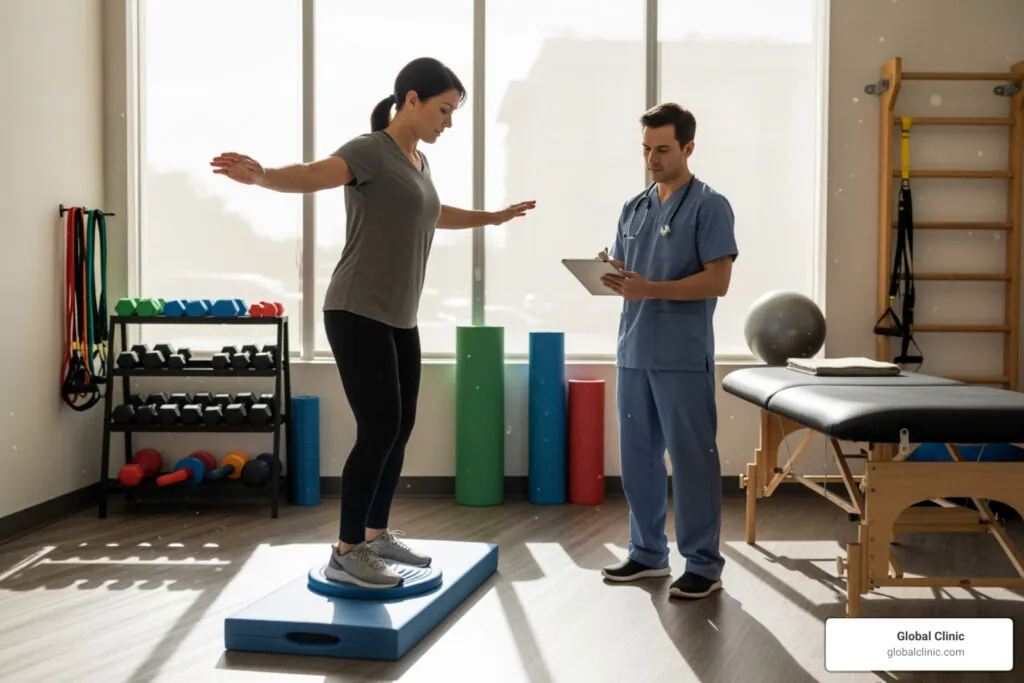
The Initial Assessment: Your First Step to Recovery
Your first visit is a comprehensive evaluation where we thoroughly investigate the source of your foot pain. This includes:
- Medical History Review: We’ll discuss your health background, past injuries, daily activities, and how the pain began. These details help us understand the ‘why’ behind your pain.
- Pain Assessment: You’ll describe your pain—its location, type (sharp or dull), and when it’s worse. This information guides our treatment approach.
- Physical Examination: Our therapists will perform a hands-on exam, testing your range of motion to identify limitations and pain triggers, and assessing your strength to find muscle weaknesses.
- Balance Testing: Simple tests will assess your stability, which is often affected by foot pain. This helps us understand your fall risk and target areas for improvement.
- Gait and Movement Assessment: We’ll observe how you walk and move to identify subtle compensations for pain. These clues reveal underlying biomechanical issues that need to be addressed.
- Setting Goals: We’ll set goals together based on your priorities, whether it’s walking pain-free or returning to sports. Your goals create the roadmap for your treatment.
Personalizing Your Foot Physical Therapy Plan
We create a customized treatment plan based on your unique assessment. We don’t use cookie-cutter solutions; your plan combines our team’s clinical experience with innovative techniques.
Your plan is built around your patient-specific goals. We design activity-specific rehabilitation, whether you’re a marathon runner or a weekend gardener, to prepare you for your real-world demands.
Your plan evolves with you. We adjust the plan over time, progressing your exercises as you get stronger and modifying our approach based on your body’s response.
This is collaboration with the patient in action. We explain the ‘why’ behind your treatment so you understand how each exercise and technique contributes to your recovery. This collaborative approach leads to better results.
We’re not just treating your pain—we’re teaching you how to care for your feet for the long haul, so you can stay active and pain-free.
Advanced Techniques and At-Home Exercises
At Global Clinic, we combine advanced in-clinic treatments with effective at-home exercises. This comprehensive approach maximizes your recovery and gives you the tools to maintain long-term foot health.
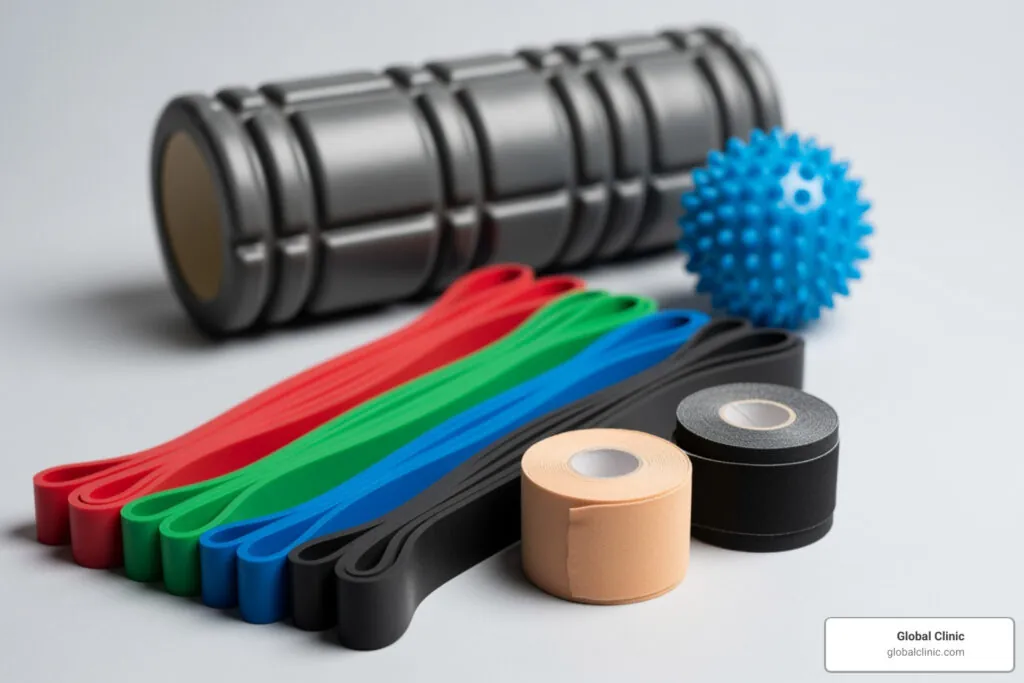
Therapeutic Techniques Used in the Clinic
Our foot physical therapy treatments blend proven methods and innovative technologies to address the root cause of your pain and restore function.
- Manual Therapy: Our therapists use hands-on techniques to work on your foot and ankle. This includes Soft Tissue Mobilization to relax muscles and restore movement, and Joint Mobilization to improve joint motion and reduce stiffness.
- Therapeutic Ultrasound: This technique uses sound waves to create deep warmth in your tissues, which increases blood flow, reduces inflammation, and accelerates healing.
- Electrical Stimulation (TENS): TENS uses gentle electrical currents to block pain signals and stimulate your body’s natural pain relievers, effectively managing foot pain.
- Dry Needling: Fine needles are inserted into muscular trigger points to release tension, reduce pain, and improve muscle function.
- Kinesiology Taping: We apply this elastic tape to support muscles, reduce swelling, and ease pain without restricting your movement.
By combining these techniques, we work to fix underlying problems and improve your foot’s natural function.
The Role of Foot Exercises at Home
In-clinic treatments are essential, but consistent at-home exercises are your secret weapon for recovery. We provide a personalized home exercise program to continue your healing between sessions. Here are some examples:
- Toe Curls (Towel Curls): Sit with a towel under your foot. Use your toes to scrunch the towel toward you. This strengthens the small muscles in your feet, helping with conditions like plantar fasciitis. Aim for 20 repetitions daily.
- Heel Raises (Calf Raises): Holding a chair for balance, slowly rise onto the balls of your feet, then lower your heels. This strengthens calf muscles for ankle stability. Aim for 2 sets of 10 repetitions, 6-7 days a week.
- Towel Stretch: Sit with your leg straight and loop a towel around the ball of your foot. Gently pull the towel toward you to stretch your calf. Hold for 30 seconds. This improves flexibility, especially for Achilles issues. Do 2 sets of 10 repetitions, 6-7 days a week.
- Marble Pickup: While seated, use your toes to pick up marbles from the floor and place them in a bowl. This strengthens intrinsic foot muscles and improves toe dexterity. Do 20 repetitions daily with each foot.
- Ankle Alphabet: While seated, trace the letters of the alphabet in the air with your big toe. This improves your ankle’s range of motion and flexibility. Aim for 2 sets daily.
Always warm up before and stretch after. If you feel pain, stop and consult your physical therapist for guidance.
Specialized Recovery and Injury Prevention
Beyond addressing immediate pain, foot physical therapy programs are critical for specialized recovery and long-term injury prevention. Whether you’re post-surgery or an athlete returning to sport, our goal is to help you move confidently and prevent future problems.

Recovering After Foot or Ankle Surgery
After foot or ankle surgery, a dedicated physical therapy program is crucial. Post-operative rehabilitation focuses on rebuilding strength, restoring movement, and regaining confidence.
Our phased post-operative rehabilitation begins with managing swelling and pain. We teach you techniques like elevation, ice, and compression to minimize discomfort and promote healing.
As you heal, we focus on restoring range of motion. Our therapists guide you through gentle exercises at a safe pace to combat stiffness and improve function.
Once mobility improves, progressive strengthening becomes the focus. We introduce exercises with gradually increasing difficulty to restore stability and confidence.
When appropriate, we guide you in scar tissue management techniques to improve the pliability of scar tissue, reducing restrictions and discomfort.
We collaborate with your surgeon to align your rehabilitation with your surgical outcomes, helping you return to an active lifestyle.
Returning to Sports and Preventing Future Injuries
For athletes, being pain-free isn’t enough. Our foot physical therapy programs are designed to help you return to peak performance and prevent future setbacks.
- Sport-Specific Drills: We incorporate drills that mimic the demands of your sport, such as gait retraining for runners or pivoting drills for basketball players, to ensure your body is ready for competition.
- Agility and Plyometrics: We use agility drills to improve your ability to change direction quickly, preventing injury. Plyometric exercises like jumping are introduced at the right time to build power and elasticity for athletic performance.
- Proprioception Training: This training improves your body’s spatial awareness, retraining your ankle to react to uneven surfaces. According to the American Physical Therapy Association, this significantly reduces the risk of re-injury and long-term instability.
- Biomechanical Correction: Through gait analysis, we identify subtle inefficiencies in your movement. We then prescribe corrective exercises to optimize your movement patterns and reduce stress on your feet and ankles.
- Footwear Recommendations: Proper shoes are critical for injury prevention. We help you select footwear with the right support and cushioning for your foot type and activity.
We also educate you on strategies for long-term foot health, including proper warm-ups, gradual strength building, and listening to your body. A proactive approach is an investment in your future of active, pain-free living.
When Is It Time to See a Professional?
Minor foot aches can resolve with rest, but persistent warning signs should not be ignored. Ignoring them can turn a manageable issue into a chronic problem. Knowing when to see a physical therapist is crucial. You should seek professional help for:
- Persistent pain: If pain lasts more than a week despite rest and home care, it’s time for a professional opinion. Lingering pain often signals an underlying issue.
- Pain that worsens over time: If your pain intensifies, spreads, or interferes with daily activities, seek help. This indicates the issue isn’t healing properly and needs intervention.
- Inability to bear weight: If you can’t put pressure on your foot or ankle without sharp pain, seek immediate attention. This could indicate a fracture or severe sprain.
- Swelling or bruising that doesn’t improve: If swelling, bruising, redness, or warmth persists or worsens, it could signal a more serious issue like an infection and requires professional evaluation.
- Numbness or tingling: Sensations like burning, pins-and-needles, or numbness can indicate nerve involvement. Conditions like tarsal tunnel syndrome require specialized treatment to prevent further damage.
- Visible deformity: A new bump, misplaced bone, or unusual foot angle requires immediate evaluation. These can indicate conditions like bunions or fractures that worsen if left untreated.
Your feet are complex. When something goes wrong, early intervention leads to quicker recovery. If you notice these symptoms, contact our team for an evaluation. Our practitioners, with more than 20 years of experience in the US and Europe, have seen the difference early treatment makes. Don’t let discomfort become your new normal.
Conclusion: Take Your First Step Towards a Pain-Free Life
Foot and ankle pain can be debilitating, but effective physical therapy can make a real difference.
At Global Clinic, our mission is to empower you to reclaim an active life. Our comprehensive approach combines advanced techniques with personalized exercise programs to build strength, improve mobility, and prevent future injuries. We focus on a natural, non-invasive path to recovery, often helping you avoid surgery and reduce medication reliance.
From our clinic in Niles, we serve Northern Chicago with innovative, personalized care. We partner with you, making your goals our goals. From assessment to a customized treatment plan, we support you and provide the tools for long-term foot health.
Don’t let foot or ankle pain hold you back. Take the first step toward a pain-free future. If you’re tired of discomfort, reach out to us. Let us help you move freely and confidently again. Call Global Clinic in Niles at (847) 299-7000 to schedule a physical therapy evaluation.