







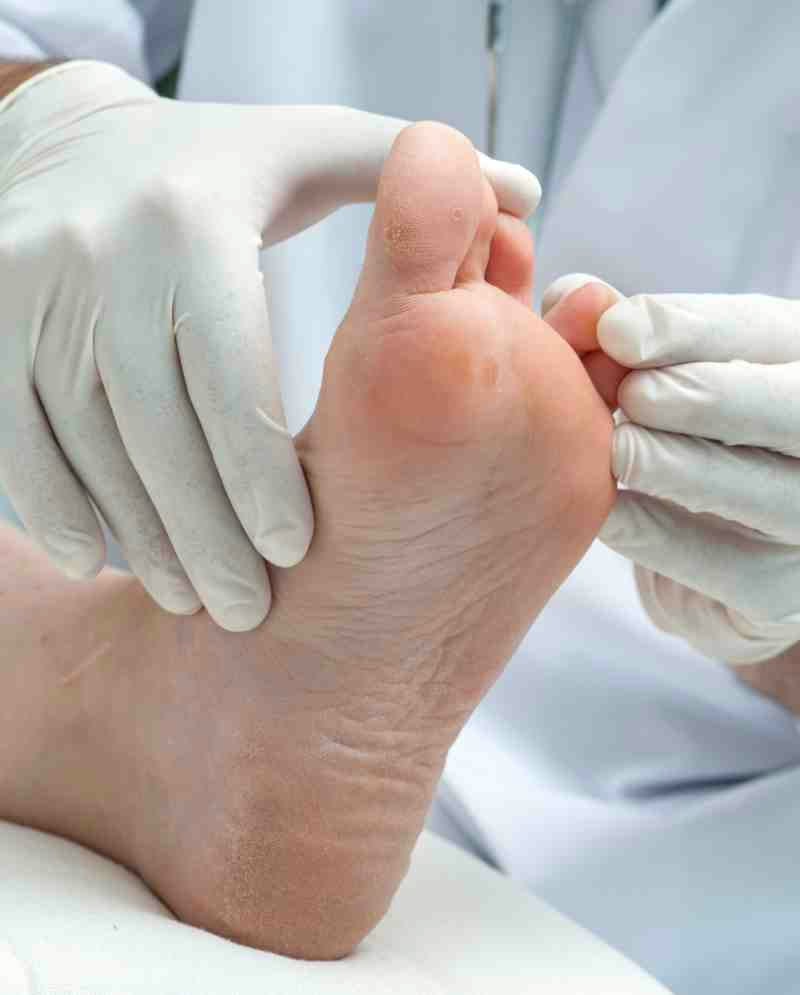
Why Finding the Right Podiatrist in Chicago Matters
Podiatrist Chicago IL searches reflect a common need: finding expert foot and ankle care in the Chicagoland area. Whether you’re dealing with heel pain, bunions, or diabetic foot complications, a qualified podiatrist can diagnose and treat your condition effectively.
Quick Guide to Finding a Podiatrist in Chicago:
- Top-rated options: Look for board-certified podiatrists with 4+ star ratings and verified patient reviews
- Insurance acceptance: Filter by your specific plan (Blue Cross Blue Shield, Aetna, UnitedHealthcare are commonly accepted)
- Specializations to consider: Sports medicine, diabetic foot care, bunion surgery, or pediatric podiatry
- Location convenience: Search by neighborhood (Loop, Lakefront, South Side, Beverly, Hyde Park)
- Services offered: Custom orthotics, minimally invasive surgery, virtual consultations, regenerative medicine
The average person takes about 10,000 steps daily, putting immense stress on your feet. When foot pain strikes, it doesn’t just affect your ability to walk; it can create a ripple effect, impacting your knees, hips, and lower back.
Chicago’s active lifestyle puts unique demands on your feet. Many people dismiss foot pain, but ignoring it can lead to worsening conditions that are more difficult and expensive to treat.
A podiatrist, a Doctor of Podiatric Medicine (DPM), specializes in the foot, ankle, and lower leg. They handle everything from routine care to complex surgery, providing personalized care that addresses the root cause of your pain.
This guide walks you through everything you need to know about finding a qualified podiatrist in Chicago. You’ll learn what conditions they treat, how to evaluate different practitioners, what questions to ask, and what services you should expect from a modern podiatry practice.
I’m Ana Vinikov, Practice Manager at Global Clinic. For over 20 years, we’ve provided comprehensive podiatry services to patients across Chicagoland. We know finding the right Podiatrist Chicago IL specialist can be overwhelming, so we created this guide to help you make an informed decision.
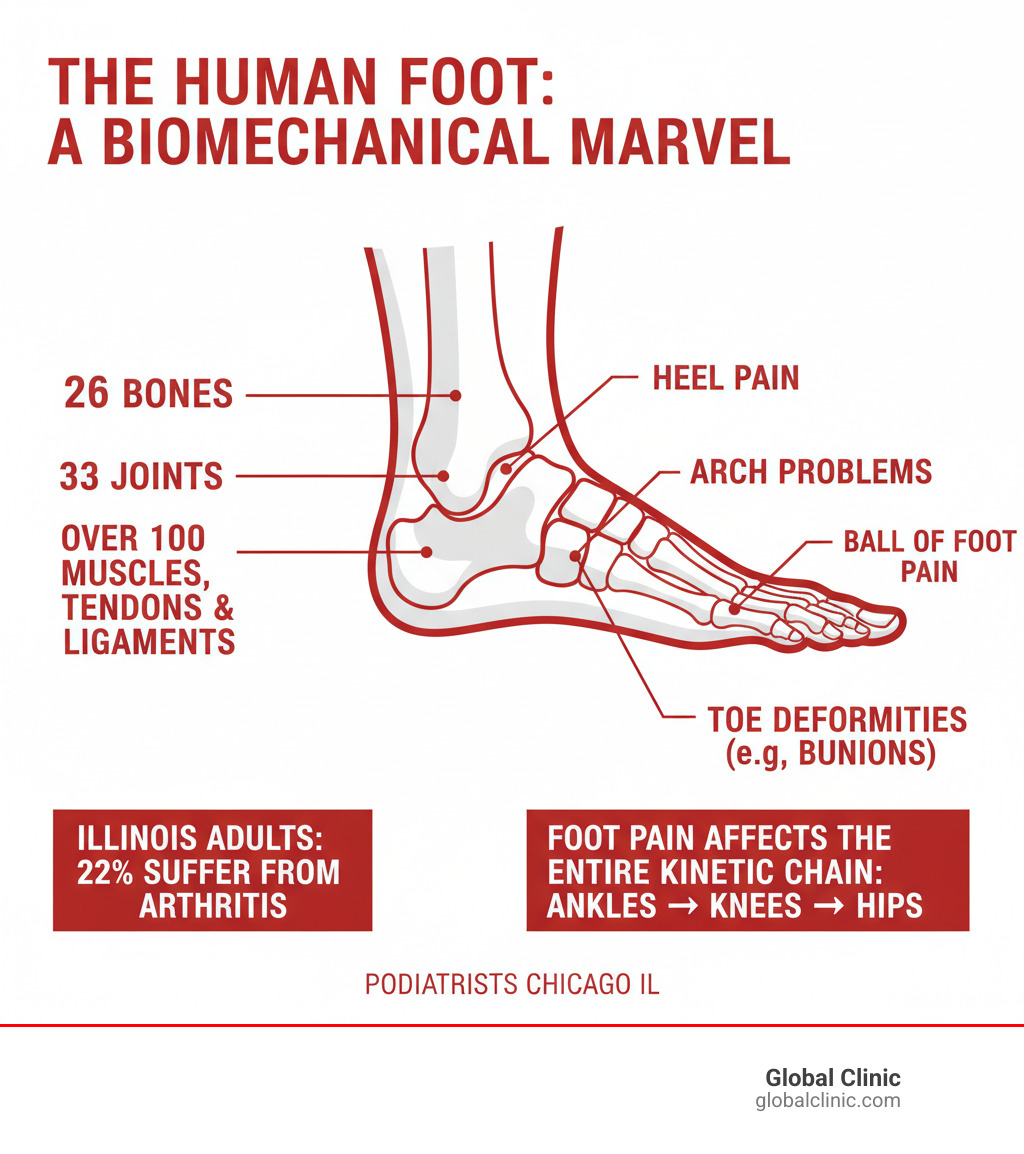
Simple guide to Podiatrist Chicago IL:
Why See a Podiatrist for Your Foot and Ankle Pain?
Your feet are complex structures, with each containing 26 bones, 33 joints, and over 100 muscles, tendons, and ligaments. They bear your full body weight with every step. When something goes wrong, the resulting pain is your body’s signal that it needs attention.
Yet so many people try to tough it out. They tell themselves the pain will go away on its own, or they try random remedies they found online. Here’s the truth: ignoring foot and ankle pain rarely makes it better. In fact, it usually makes things worse.
A podiatrist, or Doctor of Podiatric Medicine (DPM), is a medical specialist for your feet, ankles, and lower legs. They are experts who complete four years of specialized podiatry school and a three-year residency focused exclusively on foot and ankle care. If you’re curious about what exactly podiatrists do, WebMD has a helpful overview that breaks down their training and expertise.
A Podiatrist Chicago IL specialist can accurately diagnose the cause of your pain. Using specialized tools and experience, they differentiate between conditions with similar symptoms. For example, they can determine if heel pain is plantar fasciitis, Achilles tendonitis, or something else, ensuring correct treatment.
But here’s what many people don’t realize: foot pain doesn’t stay in your feet.
Your feet are the foundation of your entire body. When they’re not working properly, everything built on top of that foundation suffers. This is what medical professionals call the “kinetic chain” connection. When your feet hurt, you naturally change the way you walk. You might favor one side, roll your foot differently, or shorten your stride. These small adjustments seem harmless, but over time they create stress on your knees, throw your hips out of alignment, and can even lead to chronic lower back pain.
Think of it like a building with a cracked foundation. The crack doesn’t just affect the basement—it works its way up through every floor. The same thing happens in your body. An altered gait from untreated foot pain creates compensation injuries throughout your musculoskeletal system. You might come in complaining about knee pain, only to find the real problem started in your feet months ago. Our article on foot pain podiatry explores this connection in more depth.
This is why podiatrists take a holistic approach. They work to identify and correct the underlying issue so you can prevent future complications and get back to enjoying life without pain. Whether you’re dealing with routine foot care needs or complex surgical issues, a qualified podiatrist has the training and expertise to help you heal properly.
At Global Clinic, we’ve seen how transformative proper podiatric care can be. When you address foot problems early with the right specialist, you’re not just relieving immediate pain—you’re protecting your long-term mobility and quality of life.
Common Conditions Treated by a Podiatrist in Chicago IL
Your feet carry you everywhere—through Chicago’s Loop during your morning commute, across lakefront trails on weekends, and up countless stairs throughout your day. With all that work, it’s no surprise they occasionally need professional attention.

A Podiatrist Chicago IL specialist sees and treats a wide range of foot and ankle conditions every single day. At Global Clinic, we’ve been helping Chicago residents overcome these issues for over two decades. Let me walk you through some of the most common problems we treat—and chances are, you’ll recognize a few.
Plantar fasciitis tops the list as one of the most frequent causes of heel pain. If you’ve ever experienced that sharp, stabbing sensation when you take your first steps in the morning, you know exactly what I’m talking about. This happens when the plantar fascia—the thick band of tissue running across the bottom of your foot—becomes inflamed from overuse or strain.
Bunions are those bony bumps that form at the base of your big toe, causing it to lean inward toward your other toes. They’re not just unsightly; they can make finding comfortable shoes a real challenge. The good news? Surgery isn’t your only option. We offer several effective non-surgical bunion treatment options that can provide significant relief.
Hammertoes create a different kind of problem. Instead of pointing forward like they should, your toes bend or curl downward. This deformity often leads to painful corns and calluses where your toes rub against your shoes.
Ingrown toenails might sound minor, but they can cause serious discomfort. When the edge of your toenail grows into the surrounding skin, it creates pain, redness, and swelling—and sometimes infection if left untreated.
For active Chicagoans, Achilles tendonitis is a common complaint. This inflammation of the thick band connecting your calf muscles to your heel bone often shows up in runners and anyone involved in high-impact activities. It’s your body’s way of saying you’ve pushed a little too hard.
Ankle sprains happen when you twist or roll your ankle, stretching or tearing the supporting ligaments. They’re incredibly common, especially on uneven sidewalks or during sports activities.
Arthritis affects about 22% of Illinois adults, and your feet—with their many small joints—are prime targets. Whether it’s osteoarthritis from wear and tear, rheumatoid arthritis, or psoriatic arthritis, the result is often the same: pain, stiffness, and difficulty moving comfortably.
Heel spurs are bony protrusions that develop on the underside of your heel bone. They often go hand-in-hand with plantar fasciitis and can make every step uncomfortable.
Morton’s neuroma creates an odd sensation—like you’re standing on a pebble or there’s a fold in your sock. It happens when tissue around a nerve (usually between your third and fourth toes) thickens. Tight shoes and high heels are common culprits.
Diabetic foot care deserves special attention. If you have diabetes, your feet need extra vigilance. Nerve damage and poor circulation can lead to serious complications, including infections and ulcers that don’t heal properly. Regular podiatric care isn’t just helpful—it’s essential for preventing problems that could become severe.
At Global Clinic, we handle these conditions and many more. From routine foot care to advanced treatments, we create personalized plans designed specifically for your situation. Our goal is simple: get you back to walking, running, and living comfortably. After all, you’ve got places to go and things to do—and your feet should never hold you back.
A Step-by-Step Guide to Finding the Right Podiatrist
Finding a Podiatrist Chicago IL specialist who truly understands your needs doesn’t have to feel overwhelming. Think of it as a partnership—you’re looking for someone who will work with you to solve your foot problems.

Start with research. Use reputable online resources to create a shortlist of podiatrists in your area, from the Loop to Arlington Heights. Patient reviews offer a window into the real experience, covering the doctor’s listening skills, wait times, and staff conduct. Look for patterns in feedback, as consistent negative comments are a red flag. Once you have a shortlist, schedule a consultation to meet the podiatrist, ask questions, and see if their approach feels right. Trust your gut; it’s okay to keep looking if something feels off.
Key Qualities to Look for in a Chicago Podiatrist
Knowing what to look for saves time and frustration. Prioritize board certification, which ensures the podiatrist meets rigorous standards. Experience with complex cases, such as treating athletes, indicates a high level of expertise. Hospital affiliations with respected institutions like Advocate Illinois Masonic Medical Center are a form of peer validation. A good communication style is crucial; you want a doctor who explains things in plain English and welcomes questions. A patient-centric approach is evident in details like same-day appointments for pain, personal follow-up, and treatment plans custom to your lifestyle. Finally, look for consistent positive testimonials across platforms like Google, Yelp, and Facebook, describing the podiatrist as kind and thorough.
Finding a Podiatrist in Chicago IL That Fits Your Needs
Find a podiatrist who fits your specific needs. First, check insurance coverage. Most podiatrists accept major plans like Blue Cross Blue Shield, Aetna, UnitedHealthcare, and Medicare, but always verify with the clinic and your provider. Location convenience is key when you have foot pain. Global Clinic has locations throughout Northern Chicago, from Chicago to Arlington Heights and Schaumburg, making care accessible. Also, consider office hours. Look for clinics with early or late appointments and virtual consultations for flexibility. Finally, consider specializations. A runner might need a sports medicine expert, while someone considering surgery should seek a board-certified surgeon with expertise in advanced techniques. For children, find a podiatrist experienced in pediatric foot care who can handle childhood deformities and growing pains.
Understanding the Services Offered by a Podiatrist in Chicago IL
Modern podiatry offers a wide range of services. At Global Clinic, our diagnostic services include on-site X-rays to see bone structures and ultrasound to examine soft tissues like tendons and ligaments. We also arrange MRIs for complex cases. Many problems can be solved with conservative treatments. We create custom orthotics using 3D scanners for personalized support that corrects biomechanical issues. Physical therapy is key for recovery, building strength and flexibility. We also address related issues, like addressing back pain with physical therapy. Other options include bracing and injection-based therapies like cortisone and joint injection therapy. When necessary, surgical procedures are available, from minor ingrown toenail removal to complex reconstruction, often in our on-site surgical suite. We also offer virtual consultations for convenience. What sets Global Clinic apart are our advanced therapies like PRP Injections, which use your own plasma to speed healing, and radiofrequency ablation for chronic pain. Our regenerative medicine approach focuses on repairing tissue, not just masking symptoms. For over 20 years, we’ve combined cutting-edge technology with compassionate care for the best outcomes.
Frequently Asked Questions about Chicago Podiatrists
Looking for a Podiatrist Chicago IL specialist often brings up a lot of questions. We’ve been helping patients in Chicagoland for over 20 years, so we know what’s on your mind. Let me walk you through the most common concerns we hear.
How do I know if I need to see a podiatrist?
The signs you need a podiatrist can be subtle, but certain symptoms warrant a visit.
Persistent pain that lasts more than a few days, worsens, or interferes with your routine should be evaluated.
Numbness or tingling in your feet isn’t normal and can point to nerve issues, especially if you have diabetes.
Watch for swelling without an obvious cause or difficulty walking, such as limping or being unable to bear full weight.
Visible deformities like bunions and hammertoes, or recurring skin or nail issues like fungal infections or wounds that won’t heal, also require professional care.
As a rule of thumb, if something feels off and doesn’t resolve on its own, it’s worth getting checked out. For a more detailed breakdown, take a look at our guide: 4 Signs That It’s Time to See a Podiatrist.
Can foot problems cause pain in other parts of my body?
Yes. Your feet are your body’s foundation, and when they are compromised, everything above them can suffer.
From a biomechanics perspective, your feet absorb shock and distribute your body weight. When a problem like flat feet or heel pain exists, your body compensates by creating an altered gait. You might not even realize you’re walking differently to avoid pain.
This compensation creates uneven stress, and the impact on knees, hips, and lower back can be significant. An unstable ankle can lead to hip misalignment, and altered walking patterns can eventually manifest as chronic lower back pain. For example, untreated foot conditions can be the real cause of knee pain.
This interconnectedness is why we take a holistic approach at Global Clinic. We look at how your foot health affects your entire body. Fixing the problem in your feet can often resolve pain you’ve been experiencing elsewhere. If you’re dealing with back pain that might be connected to your foot mechanics, you might find our article on addressing back pain with physical therapy helpful.
What should I bring to my first podiatry appointment?
Being prepared for your first visit helps us provide better, more accurate care.
Bring a list of symptoms. Jot down details about your pain: its type (sharp, dull), timing, triggers, and any associated symptoms like numbness or swelling.
Your medical history is also important. Include past injuries, surgeries, chronic conditions like diabetes or arthritis, and any family history of foot problems.
Bring a list of medications, including prescriptions, over-the-counter drugs, and any supplements you take.
Don’t forget your insurance card so we can verify your coverage and help you understand any potential costs.
If you have previous imaging results like X-rays or MRIs of your feet or ankles, bring those reports with you to save time.
Finally, bring the shoes you wear most often. Your everyday, work, and athletic shoes reveal wear patterns that provide clues about your gait and potential causes of your foot problem.
Your Next Step Towards Pain-Free Living

Imagine strolling along Chicago’s lakefront without that nagging heel pain. Picture yourself exploring the city’s vibrant neighborhoods, enjoying every step instead of counting down until you can sit down. This isn’t just a dream—it’s entirely possible with the right care.
Throughout this guide, we’ve walked you through the essentials of finding a qualified Podiatrist Chicago IL specialist. We’ve explored how podiatrists diagnose and treat everything from plantar fasciitis to diabetic foot complications, why professional care matters for your overall health, and what qualities distinguish truly excellent practitioners from the rest.
Here’s what really matters: foot pain is not something you should live with. It’s not “just part of getting older” or something you need to accept. When your feet hurt, your whole body suffers. That discomfort in your heel can throw off your gait, leading to knee problems, hip pain, and even chronic lower back issues. Your feet are literally your foundation, and when that foundation is compromised, everything built on top of it struggles.
Finding a qualified specialist means looking for someone who sees the bigger picture. You want a board-certified podiatrist with years of experience, someone who takes time to listen and explain your condition in terms you can understand. You want a practice that offers comprehensive services—from advanced diagnostics like on-site X-rays and ultrasound to conservative treatments like custom orthotics and physical therapy, all the way to innovative therapies like PRP injections and joint injection therapy when you need them.
At Global Clinic, we’ve been part of the Chicagoland community for over 20 years. Our team understands that effective care isn’t just about treating symptoms—it’s about addressing root causes and connecting your foot health to your overall wellness. Our state-of-the-art facilities across Northern Chicago bring together podiatry, physical therapy, and chiropractic care under one roof, creating a truly integrated approach to pain management. We believe in personalized treatment plans that fit your life, your schedule, and your budget.
The path to comfortable, active living starts with one simple decision: to stop ignoring the pain and seek professional help. If you’re experiencing persistent discomfort, difficulty walking, or any of the warning signs we’ve discussed, now is the time to act. Learn the signs it’s time to see a specialist and take that first step toward relief.
Your feet carry you through life. They deserve expert care. Let us help you get back to enjoying everything Chicago has to offer—pain-free.