







Why Chest Pressure When Lying Down on Back Deserves Your Attention
Chest pressure when lying down on back is one of the most common — and most misunderstood — symptoms people experience at night. It can range from mildly uncomfortable to genuinely alarming, and for good reason: the causes span from something as simple as acid reflux to conditions that need immediate medical care.
Here are the most common reasons you may feel chest pressure when lying flat:
- Acid reflux (GERD) — Stomach acid flows back into the esophagus more easily without gravity’s help
- Heart conditions — Including angina, heart failure, or pericarditis, where lying flat increases pressure on the heart
- Musculoskeletal issues — Such as costochondritis or muscle strain, which can worsen with positional changes
- Respiratory conditions — Including pleurisy, pneumonia, or pulmonary embolism
- Anxiety or panic attacks — Stress hormones and heightened awareness at night can amplify chest sensations
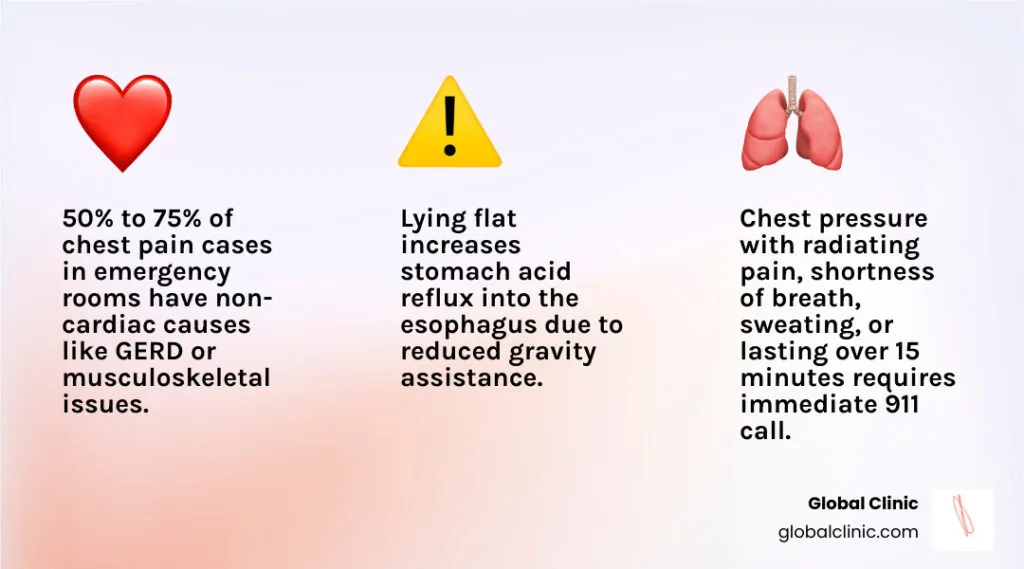
Between 50% and 75% of chest pain cases seen in emergency rooms turn out to have a non-cardiac cause — so while it’s important to take this symptom seriously, it doesn’t always mean something is wrong with your heart.
That said, some causes are emergencies. If your chest pressure comes with radiating pain, shortness of breath, sweating, or lasts more than 15 minutes, call 911 immediately.
I’m Anna Slavin, Practice Manager at Global Pain & Spine Clinic, where our multidisciplinary team draws on over 20 years of global medical experience to help patients across the Northern Chicago area find relief from musculoskeletal causes of chest and back discomfort once heart and lung causes have been ruled out by a physician. In this guide, I’ll walk you through everything you need to know — from what’s causing your symptoms to when it’s time to seek professional care.
Common Causes of Chest Pressure When Lying Down on Back
When we transition from standing or sitting to lying flat on our backs, our bodies undergo significant physiological shifts. Gravity, which normally helps keep stomach acid down and assists with venous drainage, suddenly works against us. For many, this change in position is the “stress test” that reveals underlying issues.
Understanding what causes chest pain when lying down requires looking at several systems. The “pressure” you feel might not be coming from your heart at all; it could be your digestive tract, your lungs, or even the cartilage in your rib cage.
Differentiating Cardiac vs. Non-Cardiac Symptoms
Distinguishing between a life-threatening myocardial infarction (heart attack) and a manageable case of indigestion is the first priority. While only a medical professional can give a definitive diagnosis, understanding the “personality” of the pain helps.
| Feature | GERD / Reflux | Angina / Heart Attack | Pericarditis |
|---|---|---|---|
| Sensation | Burning, “full” feeling | Squeezing, heavy weight | Sharp, stabbing |
| Position | Worse lying flat | Usually doesn’t change | Worse lying flat, better leaning forward |
| Triggers | Spicy food, late meals | Physical exertion | Recent viral infection |
| Associated Signs | Sour taste in mouth | Sweating, nausea, jaw pain | Fever, dry cough |
Respiratory and Musculoskeletal Triggers
Not all chest pressure originates in the “pump” or the “pipes.” Sometimes, it’s the “cage” itself. The human rib cage is a complex structure of bone, cartilage, and muscle that must expand and contract thousands of times a day.
Chest Wall Pain and Spinal Health
At Global Pain & Spine Clinic, we frequently see patients who think they have a heart problem when they actually have costochondritis — inflammation of the cartilage connecting the ribs to the sternum. This pain can be reproduced by pressing on the chest wall.
Furthermore, spinal health plays a massive role in chest sensations. Nerve compression in the thoracic spine (mid-back) can cause “referred pain” that travels along the ribs to the front of the chest. If you are experiencing an upper back spasm or chronic mid back pain, the tension can wrap around your torso, creating a feeling of constriction.
Our team focuses on addressing back pain with physical therapy to release these compressed nerves and tight muscles. Once heart and lung causes have been ruled out by a physician, improving spinal alignment and rib mobility may help reduce chest-wall discomfort of musculoskeletal origin. You can find more details in our complete guide to physical therapy for back pain.
Managing and Relieving Positional Discomfort
If your doctor has ruled out emergency cardiac issues, there are several lifestyle and home adjustments that can provide significant relief.
Practical Sleep and Lifestyle Adjustments
- Elevate the Head of the Bed: Use a wedge pillow to raise your upper body by 6 to 8 inches. This uses gravity to keep stomach acid down and reduces pressure on the heart and lungs.
- Dietary Timing: Avoid eating within 3 hours of bedtime. Limit triggers like caffeine, alcohol, and spicy foods which relax the esophageal sphincter.
- Sleep Position: Try sleeping on your left side. Studies show this position helps clear stomach acid faster than sleeping on your back or right side.
- Stress Management: Since the mind is less distracted at night, anxiety can manifest as physical tightness. Practice deep breathing or progressive muscle relaxation before sleep.
For those dealing with chronic musculoskeletal tension, our complete guide to pain management offers deeper insights into long-term recovery strategies.
Diagnostic Tests and Professional Evaluation
Chest pressure should first be evaluated by a physician or emergency department. Common tests include:
- ECG (Electrocardiogram): To check the heart’s electrical activity.
- Chest X-ray: To look for lung congestion or pneumonia.
- Echocardiogram: An ultrasound to see how well the heart valves and muscles are working.
- Blood Tests: Specifically checking troponin levels, which indicate heart muscle damage.
If the cause is determined to be musculoskeletal, we may recommend therapy for back issues or chiropractic adjustments. If you live in the Northern Chicago suburbs, our team in Niles can help.
Frequently Asked Questions about Positional Pressure
Why do I feel chest pressure when lying down on back?
Lying on your back increases the pressure of internal organs against the chest wall and allows stomach acid to travel upward. It also causes a shift in body fluids toward the heart and lungs, which can exacerbate underlying cardiac or respiratory issues. Additionally, musculoskeletal issues like costochondritis are often aggravated by the specific stretch placed on the rib cage when lying flat.
When is chest pressure when lying down on back an emergency?
Seek immediate emergency care if the pressure is accompanied by:
- Pain radiating to the jaw, neck, or left arm.
- Profuse sweating and nausea.
- Severe shortness of breath that doesn’t improve when sitting up.
- Fainting or extreme lightheadedness.
- A feeling of “impending doom” or pressure that lasts longer than 15 minutes without relief.
Can anxiety cause chest tightness at night?
Yes. Anxiety and panic attacks are frequent causes of nighttime chest pressure. When the body is at rest, the mind can become hyper-focused on bodily sensations. Cortisol surges and hyperventilation (even subtle over-breathing) can cause the chest muscles to tighten, creating a feedback loop of physical discomfort and mental stress.
Conclusion
Feeling chest pressure when lying down on back can be a frightening experience, but it is a symptom that your body is using to communicate an underlying need. Whether that need is a change in diet, a new sleep position, or specialized medical intervention, the key is not to ignore it.
At Global Pain & Spine Clinic, we believe in a multidisciplinary approach to health. Serving communities from Niles and Skokie to Glenview and Mount Prospect, our experienced medical professionals combine physical therapy, chiropractic care, and advanced pain management to help you find lasting relief. We help Northern Chicago residents reclaim their sleep and their health.
If you are struggling with persistent chest discomfort or related back issues, don’t wait for the symptoms to worsen. Once a physician has ruled out heart and lung causes, call Global Pain & Spine Clinic at (847) 299-7000 or visit us at 8565 W. Dempster St. in Niles to speak with our specialists.