








Why Chicago Medical Weight Loss Is Worth Taking Seriously
Chicago medical weight loss programs are changing how people approach obesity — moving beyond willpower and crash diets toward real, physician-guided care.
Quick answer: What is medical weight loss in Chicago?
| Feature | Medical Weight Loss | Traditional Dieting |
|---|---|---|
| Supervised by | Licensed physician | Self-directed |
| Uses FDA-approved medications | Yes (e.g., Wegovy, Zepbound) | No |
| Includes lab testing | Yes | No |
| Addresses root causes | Yes (hormones, metabolic health) | Rarely |
| Average results | 10–16% body weight loss in 1 year | Varies widely |
| Support services | Nutrition, behavioral therapy, follow-up | Minimal |
Here’s the reality: losing weight is hard, and keeping it off is harder. For many people, diet and exercise alone aren’t enough — especially when underlying factors like hormone imbalances, metabolic disorders, or chronic conditions are working against them.
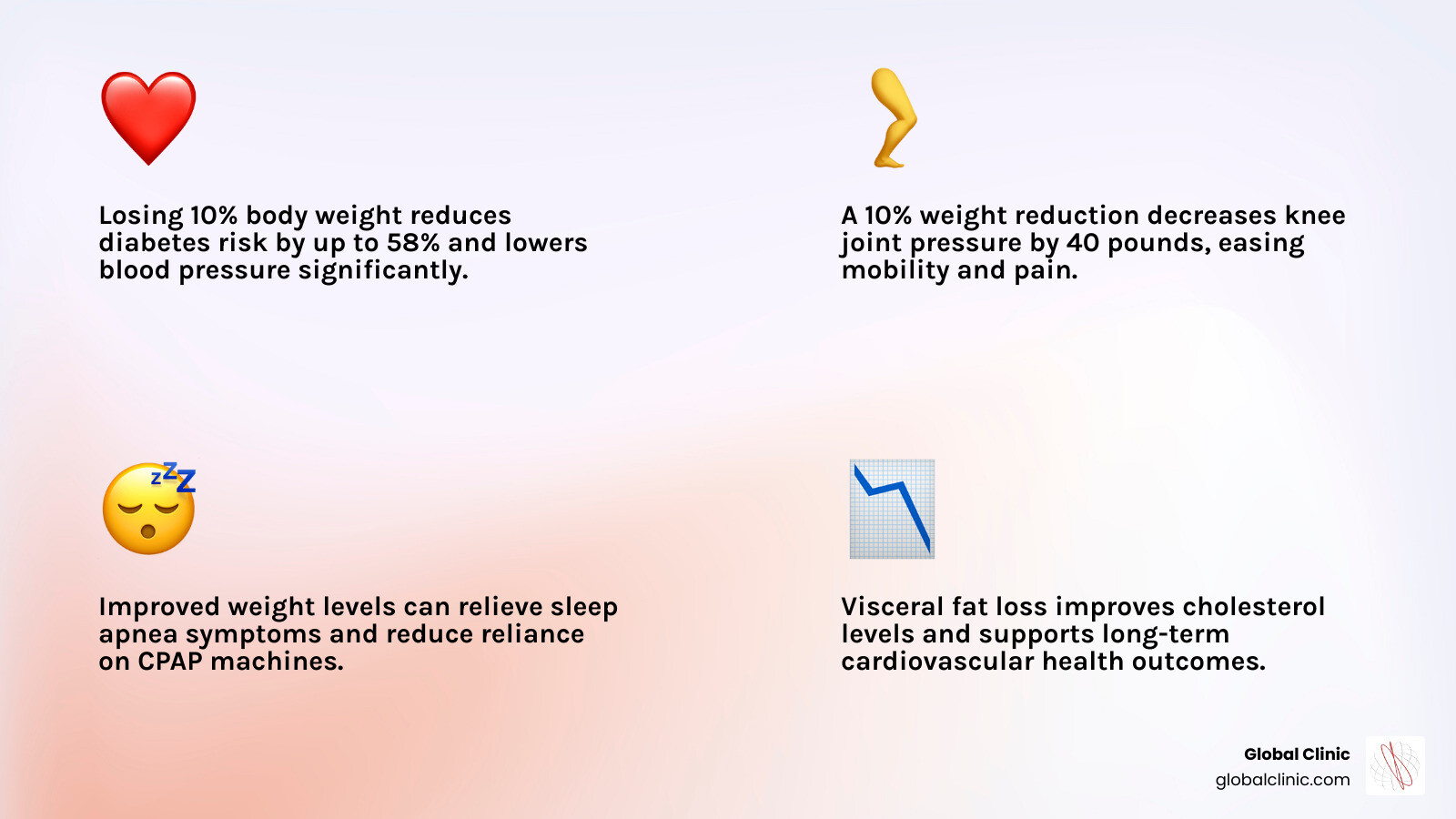
Research shows that losing just 10% of body weight can meaningfully improve blood pressure, blood sugar, and cholesterol levels. Chicago’s top medical programs are built around exactly that kind of measurable, health-first progress.
Whether you’re dealing with joint pain, type 2 diabetes, sleep apnea, or simply years of frustrating setbacks, medically supervised weight loss offers a structured path forward — one backed by science, not fads.
I’m Anna Slavin, practice manager at Global Clinic, where our multidisciplinary team draws on over 20 years of global medical experience to help patients across Northern Chicago achieve lasting health improvements through personalized, evidence-based care — including Chicago medical weight loss programs that address the whole person, not just the number on the scale. In the sections below, we’ll walk you through every key option available to you.
Understanding Chicago Medical Weight Loss vs. Traditional Methods

When we talk about Chicago medical weight loss, we are looking at a paradigm shift in how obesity is treated. For decades, the narrative was “eat less, move more.” While nutrition and activity are vital, they are often only part of a much larger puzzle. Medical weight loss treats obesity as a chronic disease rather than a lack of discipline.
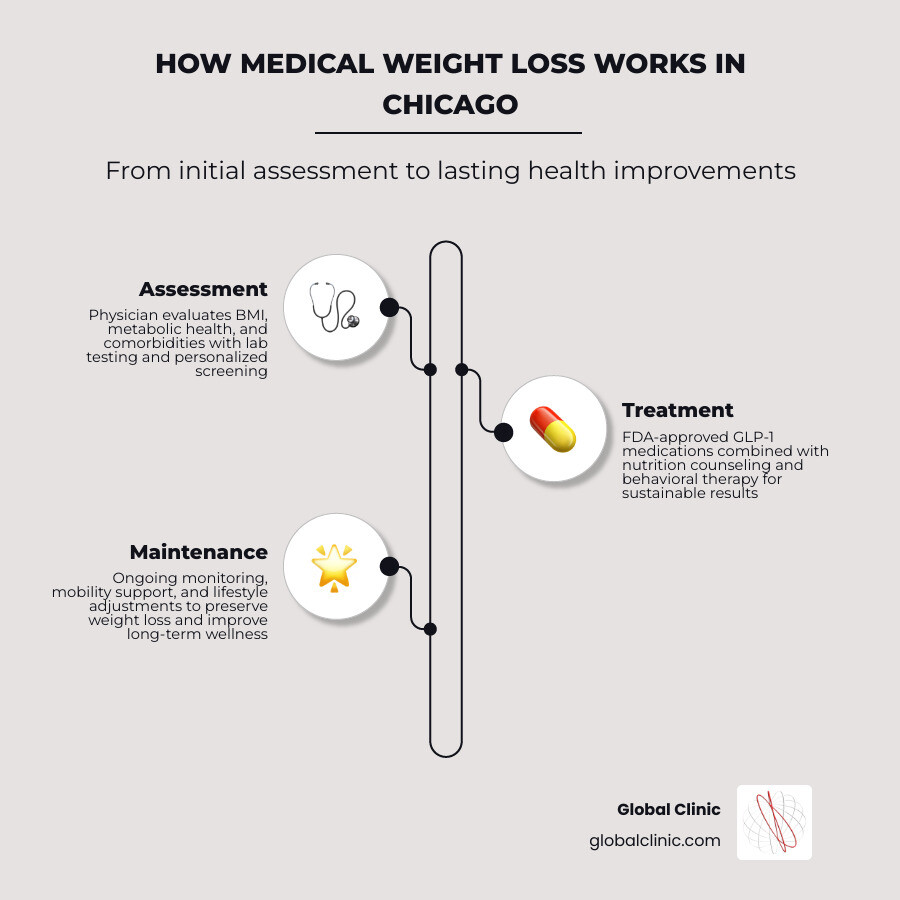
Unlike traditional commercial programs, a medically supervised approach in Chicago begins with a deep dive into your unique biology. This includes assessing your metabolic health—which encompasses blood pressure, blood sugar, and cholesterol levels—to ensure your body is functioning optimally.
At Global Clinic, we understand that medical obesity treatments are not one-size-fits-all. A physician-led program identifies secondary causes of weight gain that a standard gym routine might miss, such as:
- Hormonal imbalances (like thyroid issues or PCOS)
- Endocrine disorders
- Medication-induced weight gain
- Metabolic adaptation
By addressing these root causes, we help patients move past the “plateau” phase that often derails traditional dieting efforts.
The Role of GLP-1s in Chicago Medical Weight Loss
The most significant advancement in recent years has been the rise of GLP-1 (glucagon-like peptide-1) receptor agonists. These medications, including semaglutide (Wegovy) and tirzepatide (Zepbound), mimic naturally occurring hormones in your body.
These weight loss drugs work by:
- Appetite Suppression: They signal to the brain that you are full, reducing the “food noise” that leads to overeating.
- Slowing Gastric Emptying: By keeping food in the stomach longer, you feel satisfied for longer periods.
- Insulin Regulation: They help the body manage blood sugar more effectively, which is crucial for metabolic health.
In clinical studies, patients using these medications alongside lifestyle modifications have seen an average weight loss of 10% to 16% over a year, far outpacing the results of diet alone.
FDA-Approved Medications and Clinical Interventions

Medical weight loss isn’t just about the newest “blockbuster” drugs; it’s about finding the right tool for the right patient. Chicago providers utilize a range of FDA-approved medications, each with a specific mechanism of action.
According to research from the Chicago Institute of Advanced Surgery, the choice of medication depends on your medical history, current medications, and weight loss goals.
| Medication | Common Brand Names | Mechanism | Avg. Weight Loss (1 Year) |
|---|---|---|---|
| Semaglutide | Wegovy, Ozempic | GLP-1 Agonist | 10–16% |
| Tirzepatide | Zepbound, Mounjaro | GLP-1 & GIP Agonist | 15–20% |
| Phentermine/Topiramate | Qsymia | Appetite suppressant / Satiety | 10–15% |
| Naltrexone/Bupropion | Contrave | Reduces cravings | 5–10% |
| Liraglutide | Saxenda | GLP-1 Agonist (Daily) | 5–10% |
These interventions are most effective when integrated into a comprehensive medical program that includes regular monitoring by a healthcare professional.
Personalized Chicago Medical Weight Loss Programs and Eligibility
Who is a candidate for these programs? Generally, medical weight loss is recommended for:
- Individuals with a BMI (Body Mass Index) of 30 or higher.
- Individuals with a BMI of 27 or higher who also have weight-related comorbidities like high blood pressure, type 2 diabetes, or sleep apnea.
However, some Chicago clinics emphasize that there is no “minimum” weight to seek medical guidance if you are struggling with metabolic health. A personalized plan starts with comprehensive lab work—checking everything from vitamin deficiencies to hormone levels—to create a roadmap that is uniquely yours.
Comprehensive Support Services for Sustainable Results
Medication is a powerful tool, but it is not a “magic pill.” For weight loss to be sustainable, it must be supported by lifestyle changes. This is why top Chicago medical weight loss programs include an interdisciplinary team of experts.
Support services often include:
- Nutrition Counseling: Moving away from restrictive dieting toward heart-healthy meal plans that focus on protein intake and nutrient density.
Integrating Physical Therapy and Mobility Support
At Global Clinic, we specialize in the intersection of weight management and physical mobility. Many of our patients in areas like Niles, Skokie, and Glenview struggle with joint pain that makes exercise difficult.
Excess weight places a 4-to-1 pressure ratio on knees and hips. This can create a vicious cycle: you want to exercise to lose weight, but your joints hurt too much to move. By working with top weight loss doctors and physical therapists, we can create:
- Mobility Adaptations: Low-impact exercise routines that protect your joints while burning calories.
- Muscle Preservation: Ensuring that weight loss comes from fat, not lean muscle mass, which is a common risk with rapid weight loss.
- Regenerative Medicine: Using treatments like PRP or chiropractic care to manage the pain that might be holding you back from an active lifestyle.
Health Benefits and Safety of Clinical Weight Management
The benefits of Chicago medical weight loss extend far beyond the mirror. Clinical weight management is designed to improve your “healthspan”—the years you live in good health.
Key health improvements observed in medical programs include:
- Visceral Fat Reduction: Losing harmful fat that surrounds internal organs, which is a major risk factor for heart disease.
- Diabetes Management: Many patients see a significant reduction in A1C levels and may even reduce their dependence on diabetes medications.
- Sleep Apnea Relief: Weight loss is one of the most effective treatments for obstructive sleep apnea.
- Joint Pain Reduction: As the load on the musculoskeletal system decreases, many patients report a drastic reduction in chronic pain.
Safety is paramount. Physician supervision ensures that any side effects—such as nausea or digestive issues commonly associated with GLP-1s—are monitored and managed. It also ensures that weight loss happens at a healthy pace, typically about one to two pounds per week.
Frequently Asked Questions about Chicago Medical Weight Loss
How much weight can I expect to lose with a medical program?
While results vary, many patients in physician-supervised programs lose between 5% and 15% of their total body weight within the first six months.
What are the common side effects of GLP-1 medications?
The most common side effects are gastrointestinal, including nausea, diarrhea, or constipation. These are usually mild and tend to decrease as your body adjusts to the medication. Medical oversight is crucial to help manage these symptoms and adjust dosages as needed to ensure comfort and safety.
Who is a candidate for medically supervised weight loss?
Candidates typically include adults with a BMI over 30, or those with a BMI over 27 who also have health conditions like hypertension or high cholesterol. However, anyone who has struggled to maintain weight loss through traditional methods may benefit from a medical evaluation to identify underlying metabolic hurdles.
Conclusion
Weight management is a lifelong journey, but you don’t have to walk it alone. At Global Clinic, we serve the Northern Chicago community—from Des Plaines and Park Ridge to Glenview and beyond. We believe that Chicago medical weight loss should be compassionate, scientifically grounded, and tailored to your specific physical needs.
Our multidisciplinary approach combines the expertise of medical professionals, physical therapists, and pain management specialists to ensure that as you lose weight, you also gain mobility and vitality. If you are ready to move beyond the cycle of “yo-yo” dieting and address your health at a cellular level, we are here to help.
Schedule an appointment for a professional evaluation at our clinic in Niles today and take the first step toward a healthier, more active future.