








Why IV Nutrient Therapy Can Help When Oral Supplements Are Not Enough
A B complex IV infusion delivers water-soluble B vitamins directly into the bloodstream. It may be useful when a documented deficiency needs prompt treatment or when the digestive tract cannot absorb nutrients well, such as after bariatric surgery, with certain gastrointestinal disorders, or in alcohol-related malnutrition.
IV delivery bypasses the stomach and intestines, so the full administered dose reaches circulation. That does not mean everyone needs an IV: for most healthy people who can eat well and absorb nutrients normally, food and oral supplements remain the usual first choice. A medical evaluation should guide the formula, dose, and route.
In this guide, we cover five nutrients commonly used in medically supervised IV therapy, including B vitamins that support normal energy metabolism and nerve function. At Global Clinic in Niles, our practitioners bring more than 20 years of experience in the US and Europe, offering IV therapy into a broader, patient-centered approach to pain care, injury recovery, and rehabilitation.
I am Anna Slavin, Practice Manager at Global Clinic, where I help support compassionate, coordinated care for patients exploring services such as a B complex IV infusion. Our multidisciplinary team works to match treatment plans to each patient’s health history, recovery goals, and clinical needs.
1. B Complex IV Infusion for Cellular Energy and Neurological Health
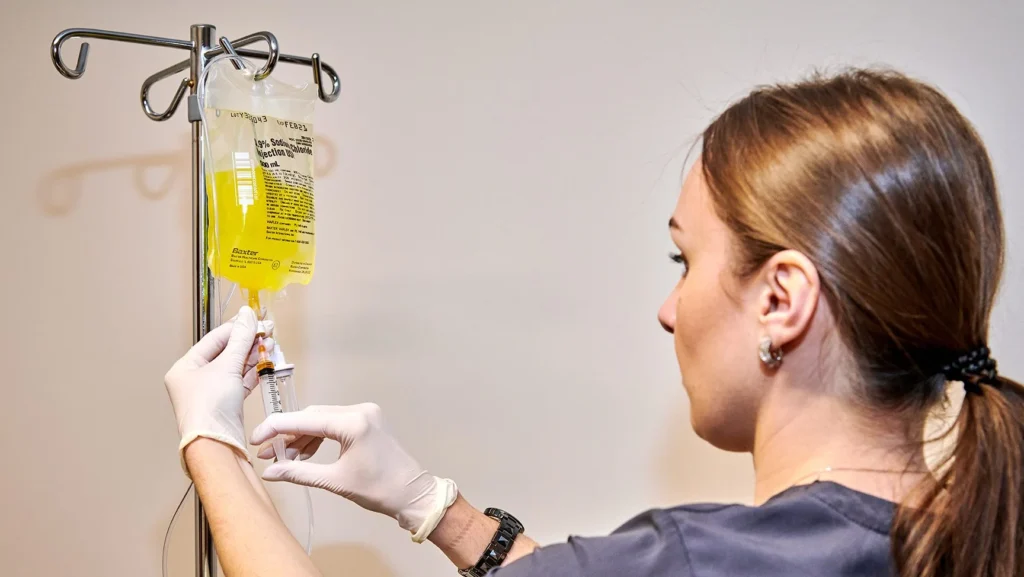
The B-vitamin family consists of vital, water-soluble micronutrients that act as essential coenzymes across hundreds of metabolic pathways. Within cellular mitochondria, these vitamins convert carbohydrates, dietary fats, and proteins into adenosine triphosphate (ATP)—the body’s universal energy currency. Because our bodies do not store water-soluble vitamins in high amounts, maintaining optimal cellular concentrations is critical for baseline cellular respiration, DNA repair, and central and peripheral neurovascular health.
When dietary intake is inadequate or digestive assimilation fails, intracellular biochemical pathways falter. Delivering these coenzymes parenterally bypasses digestion. Standardized clinical formulas, such as those established under DailyMed B-Complex formulation standards, provide balanced concentrations of active cofactors that support normal energy metabolism, which may help with fatigue in patients who are deficient.
Clinical Indications and Populations Benefiting from B Complex IV Infusion
Oral supplementation relies on active transport proteins, intrinsic factor secretion, gastric acid balance, and mucosal integrity along the small intestine. In healthy individuals, these digestive processes work seamlessly. However, for patients facing compromised intestinal architecture or heightened metabolic breakdown, enteral absorption drops significantly.
| Nutrient Factor | Oral Supplementation Route | Parenteral IV Repletion |
|---|---|---|
| Bioavailability | Variable (limited by active transporters, gut motility, and first-pass hepatic clearance) | Direct (immediate systemic delivery into circulation) |
| Absorption Rate | Slow (requires gastric digestion, breakdown, and small intestine uptake over several hours) | Immediate entry into circulation |
| Digestive Demand | Requires functional stomach acid, bile secretion, and intestinal brush-border integrity | Completely bypasses the gastrointestinal tract |
| Primary Clinical Role | Daily nutritional maintenance in healthy populations with normal absorption | Rapid repletion for malabsorption, clinical deficiencies, and acute metabolic stress |
Specific clinical populations gain substantial therapeutic value from targeted intravenous repletion:
- Gastrointestinal and Malabsorption Syndromes: Conditions like Crohn’s disease, ulcerative colitis, celiac disease, and short-bowel syndrome damage the mucosal brush border, preventing proper absorption of oral B vitamins.
- Post-Bariatric Surgery Patients: Procedures such as Roux-en-Y gastric bypass alter digestive anatomy and stomach acidity, reducing the functional area needed to absorb micronutrients.
- Chronic Alcohol Dependence: Alcohol interferes with intestinal thiamine absorption and impairs cellular utilization, putting individuals at risk for neurological issues like Wernicke encephalopathy.
- Renal Replacement Therapy: Patients on chronic intermittent hemodialysis lose water-soluble micronutrients through the dialysate membrane and benefit from scheduled parenteral replenishment.
- Neuromuscular and Peripheral Neuropathy Support: Some clinicians include B-vitamin repletion in IV therapy protocols for patients with neuropathy-related symptoms, particularly when a deficiency is present; evidence varies.
Dosage, Formulation, and Administration Routes for a B Complex IV Infusion
A medical-grade B-complex parenteral formulation delivers a balanced blend of essential cofactors. Each 1 mL of standard multi-dose formulation typically provides:
- Thiamine Hydrochloride (B₁): 100 mg (essential for carbohydrate decarboxylation and neural transmission)
- Riboflavin-5′-Phosphate Sodium (B₂): 2 mg (active cofactor for flavoproteins in the mitochondrial electron transport chain)
- Niacinamide (B₃): 100 mg (precursor for NAD+/NADH, avoiding the cutaneous flushing often seen with nicotinic acid)
- Dexpanthenol (B₅): 2 mg (precursor to Coenzyme A, vital for fatty acid oxidation and steroid hormone synthesis)
- Pyridoxine Hydrochloride (B₆): 2 mg (essential coenzyme for amino acid metabolism, neurotransmitter synthesis, and heme production)
The dose is determined by your provider based on clinical need. While intramuscular (IM) administration is useful for routine maintenance, slow IV infusion is preferred when delivering larger volumes, providing immediate hydration, or combining nutrients. For IV use, the solution is diluted in normal saline or dextrose and infused slowly, following the product’s prescribing information. Diluting the solution and using controlled infusion rates protects delicate peripheral veins, prevents phlebitis, and minimizes transient vasodilation.
(Fun fact: If you notice your urine turning a bright yellow hue shortly after your drip, don’t worry—that is simply your body filtering out excess, water-soluble riboflavin!)
Pharmacological Safety, Drug Interactions, and Monitoring
Safe clinical administration requires thorough screening of medical history and active medications. Key interactions and safety precautions include:
- Levodopa Antagonism: Pyridoxine (B₆) accelerates the peripheral decarboxylation of levodopa, reducing its uptake across the blood-brain barrier unless co-administered with a dopa-decarboxylase inhibitor such as carbidopa.
- Antihypertensive Agents: Rapid administration of niacinamide can cause mild peripheral vasodilation, which may enhance the blood-pressure-lowering effects of antihypertensive medications.
- Loop Diuretics: Long-term use of loop diuretics (such as furosemide) increases urinary thiamine excretion, raising the baseline requirement for thiamine repletion.
- Preservative Precautions: Multi-dose vials often contain 2% benzyl alcohol as an antimicrobial preservative. These preparations are contraindicated in neonates due to the risk of metabolic toxicity.
- Allergy and Sensitivity Screening: Anaphylactic reactions to parenteral thiamine are rare but documented. High-risk patients should receive an intradermal test dose, and infusions should always be administered under professional medical oversight.
2. High-Dose Ascorbic Acid (Vitamin C) for Immune Resilience
Ascorbic acid is a potent water-soluble antioxidant, a primary cofactor for procollagen hydroxylation, and a vital supporter of both innate and adaptive immune function. In healthy white blood cells—particularly neutrophils and macrophages—vitamin C accumulates at high levels to fuel phagocytosis, generate reactive oxygen species to neutralize pathogens, and protect surrounding tissues from oxidative collateral damage.
Enteral absorption of vitamin C is strictly controlled by sodium-dependent vitamin C transporters (SVCT1) in the intestinal lining. Oral doses exceeding roughly 1 gram saturate these transport proteins, resulting in sharply diminished absorption and common gastrointestinal side effects. By contrast, direct intravenous administration bypasses intestinal saturation entirely (Alangari, 2025).
Clinical research demonstrates that parenteral delivery can generate plasma ascorbic acid levels up to 100 times higher than those achievable through oral intake. This pharmacokinetic difference is explained further in why ascorbic acid IV infusion is more than just a vitamin C boost. High-dose infusions, used mainly in hospital or specialized settings, are being studied for immune support, wound recovery, and inflammation, although evidence is still developing.
3. Glutathione and Alpha Lipoic Acid for Cellular Protection
Metabolic activity, environmental exposures, and chronic inflammation continuously generate reactive oxygen and nitrogen species within our tissues. To neutralize these compounds and prevent cellular damage, the body relies on endogenous antioxidant networks led by glutathione and alpha-lipoic acid (ALA).
Glutathione, an intracellular tripeptide (composed of glutamate, cysteine, and glycine), acts as the master antioxidant in human physiology. It neutralizes lipid peroxides, facilitates Phase II liver detoxification pathways, and maintains normal immune defenses. When taken orally, digestive enzymes break down glutathione into its constituent amino acids before it reaches systemic circulation. Parenteral administration delivers intact, bioavailable tripeptides directly to cells. In aesthetic applications, glutathione is promoted for skin lightening because it can inhibit tyrosinase (see an IV drip for skin whitening and the power of glutathione); note that the FDA has not approved IV glutathione for skin lightening.
Alpha-lipoic acid complements glutathione by working across both water-soluble and lipid-soluble cellular environments. ALA neutralizes free radicals inside mitochondria and regenerates other depleted antioxidants, including vitamins C, E, and endogenous glutathione. Exploring the bright side of alpha lipoic acid IV therapy for oxidative stress reveals its clinical utility in neurovascular care, where it may help reduce lipid peroxidation and support healthy peripheral nerve function and insulin sensitivity.
4. Amino Acid Blends and Essential Minerals for Physical Recovery
Rebuilding musculoskeletal tissue, clearing metabolic waste, and recovering from chronic pain or intense training requires bioavailable amino acids and electrolytes. When delivered directly into circulation, balanced amino acid blends supply essential building blocks—including branched-chain amino acids (leucine, isoleucine, and valine), glutamine, arginine, and lysine—directly to working muscle tissues and connective collagen networks. Reviewing everything you need to know about the amino acid drip explains how intravenous amino acids may support protein synthesis and recovery.
To support this structural repair, clinical IV formulations often integrate essential macrominerals:
- Magnesium Sulfate: Serves as a vital cofactor in over 300 enzymatic reactions. In intravenous solutions, magnesium may help relax muscles and ease muscle tension and spasms.
- Calcium Gluconate: Works closely with magnesium to regulate muscle contraction, support normal cardiac rhythm conduction, and maintain cellular membrane stability across excitable tissues.
- Balanced Hydration Solutions: Formulated in isotonic normal saline or lactated Ringer’s, these infusions replenish extracellular volume, restore electrolyte equilibrium, and support tissue perfusion.
Frequently Asked Questions About IV Nutrient Delivery
How quickly does a patient feel the effects of an intravenous nutrient infusion?
Because intravenous delivery bypasses the digestive tract, nutrients enter the bloodstream immediately. Some patients notice improved hydration and a mild sense of revitalization during or shortly after their 30- to 60-minute session. However, the timeline for metabolic and neurological improvements—such as replenished cellular vitamin stores or reduced oxidative stress—depends on the individual’s baseline nutritional status, overall health, and treatment consistency over several weeks.
Can IV vitamin therapy replace daily oral supplementation and dietary intake?
No. Intravenous nutrient therapy is designed as a focused, adjunctive medical intervention for acute repletion, malabsorption, or increased physiological demand—not as a permanent substitute for a balanced diet. Whole foods provide dietary fiber, essential macronutrients, complex phytonutrients, and natural enzymes that an IV bag cannot replace. Once clinical deficiencies are corrected, maintaining long-term wellness relies on wholesome nutrition and appropriate oral supplementation.
What safety precautions should be taken before receiving an IV nutrient drip?
Patient safety begins with a thorough medical evaluation overseen by licensed clinical specialists. Key clinical precautions include:
- Reviewing health history for cardiovascular, renal, or hepatic conditions (such as congestive heart failure or chronic kidney disease) that affect fluid tolerance.
- Reviewing current medications to prevent drug-nutrient interactions (e.g., pyridoxine interactions with levodopa).
- Inspecting sterile compounding, verifying batch clarity, and confirming proper dilution protocols.
- Using sterile venous cannulation and continuous clinical monitoring to prevent thrombophlebitis, fluid extravasation, or rare hypersensitivity reactions.
Conclusion
Intravenous nutrient therapy delivers essential micronutrients directly into the bloodstream, providing valuable support when digestive disorders, surgical changes, or severe metabolic stress limit normal oral absorption. From replenishing cellular coenzymes with a specialized B complex IV infusion to supporting immune resilience, tissue repair, and antioxidant defenses with ascorbic acid, glutathione, ALA, amino acids, and minerals, parenteral therapy offers precise nutritional support.
At Global Pain & Spine Clinic in Niles, IL, our practitioners, with more than 20 years of experience in the US and Europe, provide evidence-based, multidisciplinary care to Northern Chicago communities. Serving patients from Niles, Chicago, Skokie, Glenview, Park Ridge, Morton Grove, Des Plaines, and Mount Prospect, we combine physical therapy, chiropractic care, regenerative medicine, pain management, and medically supervised IV repletion into personalized recovery plans.
If you are experiencing chronic fatigue, recovering from an injury, or managing a condition that affects nutrient absorption, call our Niles clinic at (847) 299-7000 to speak with our specialists. Learn more about customized IV infusions and schedule an appointment for a comprehensive evaluation today.
References
Alangari A. “To IV or Not to IV: The Science Behind Intravenous Vitamin Therapy..” Cureus, 2025. PMCID PMC12182718.