








NAD Injection Benefits: What to Know Before You Start
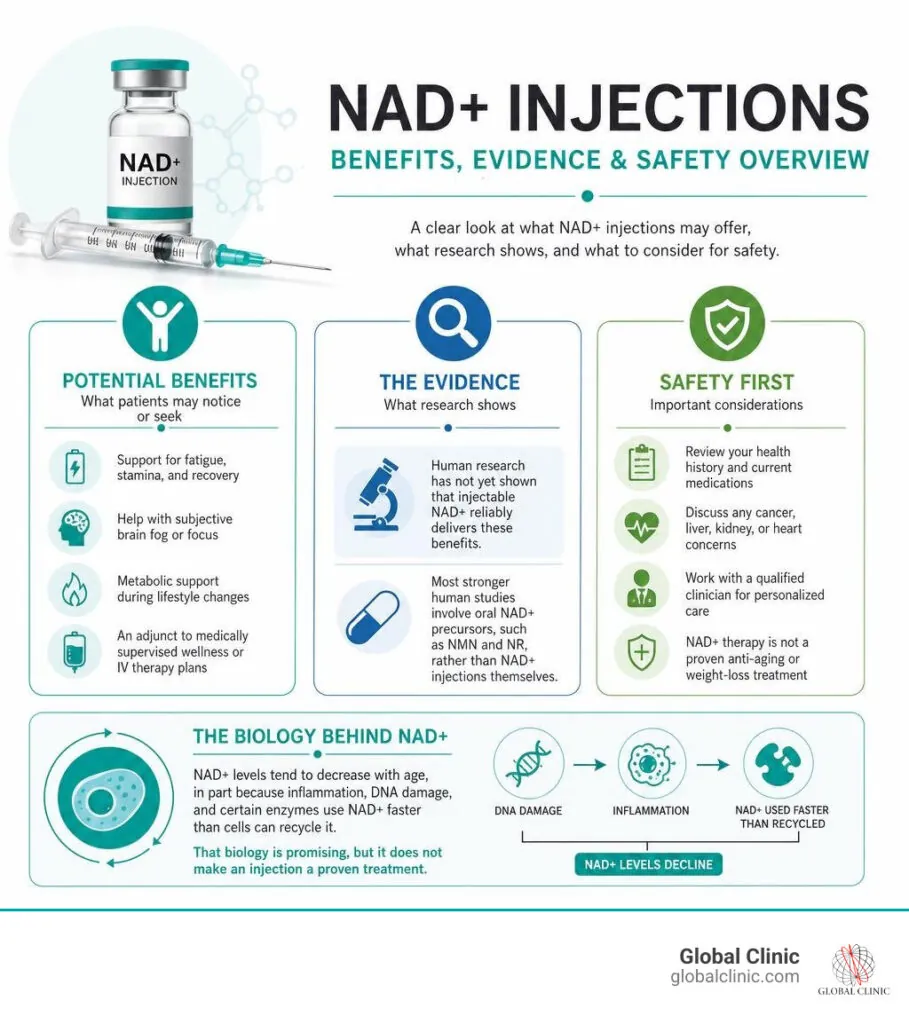
NAD+ injections are promoted for energy, mental clarity, metabolism, and healthy aging. NAD+ is a coenzyme that cells use to make energy and support DNA-repair processes. However, the key fact is simple: human research has not yet shown that injectable NAD+ reliably delivers these benefits. Most stronger human studies involve oral NAD+ precursors, such as NMN and NR, rather than NAD+ injections themselves.
What patients may notice or seek from NAD+ therapy includes:
- Support for fatigue, stamina, and recovery
- Help with subjective brain fog or focus
- Metabolic support during lifestyle changes
- An adjunct to medically supervised wellness or IV therapy plans
NAD+ levels tend to decrease with age, in part because inflammation, DNA damage, and certain enzymes use NAD+ faster than cells can recycle it. That biology is promising, but it does not make an injection a proven anti-aging or weight-loss treatment. A qualified clinician should review your health history, current medications, and any cancer, liver, kidney, or heart concerns before treatment.
At Global Clinic, patients in the Northern Chicago area can discuss NAD+ therapy as part of a broader plan that may include pain management, physical therapy, chiropractic care, regenerative medicine, and IV therapy. Global Clinic serves the area with a patient-focused approach to recovery and wellness.
I am Anna Slavin, Practice Manager at Global Pain & Spine Clinic, where I help support compassionate, coordinated care for patients exploring recovery and wellness options. Our multidisciplinary team uses its experience in IV therapy, regenerative medicine, pain care, and rehabilitation to help patients understand potential NAD injection benefits in the context of their individual health needs.
Understanding Cellular NAD+ and Why Levels Decline
Nicotinamide adenine dinucleotide (NAD+) is a vital coenzyme present in every single living cell. It serves as a necessary partner for metabolic reactions that convert nutrients into adenosine triphosphate (ATP)—the fundamental cellular fuel powering your muscles, brain, and organs. Beyond energy creation, NAD+ acts as an obligatory co-substrate for enzymes regulating cell survival, genomic stability, and systemic inflammation.
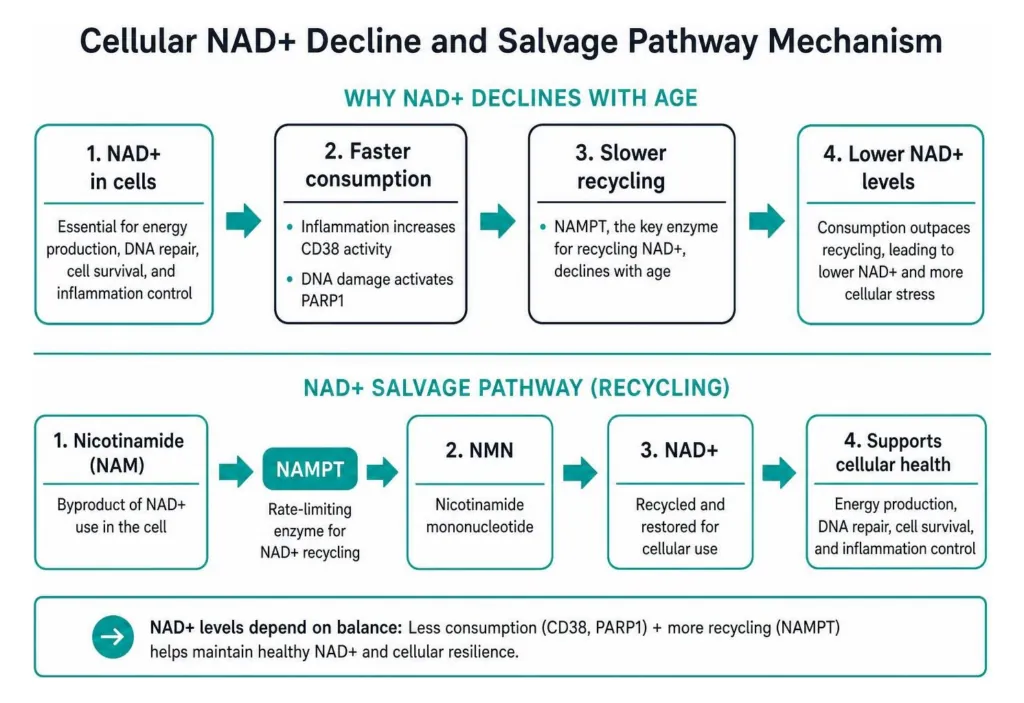
As we age, our cellular pool of NAD+ tends to drop. Research suggests that tissue NAD+ levels decline with age. This decline is not merely a decrease in production; it is largely driven by accelerated cellular consumption. Chronic low-grade inflammation (often termed “inflammaging”) and persistent micro-trauma lead to the overexpression of CD38, an enzyme found on immune cells that degrades NAD+ at an elevated rate. Concurrently, DNA damage over time hyperactivates Poly(ADP-ribose) polymerase 1 (PARP1), which expends massive amounts of cellular NAD+ to perform repairs.
Understanding the cellular mechanisms of NAD+ reveals why internal recycling struggles to keep up. The primary salvage pathway relies on the rate-limiting enzyme nicotinamide phosphoribosyltransferase (NAMPT), which itself declines with age. When consumption by CD38 and PARPs outpaces NAMPT recycling, cellular levels drop, leaving mitochondria stressed and cellular repair compromised. Recent academic discussions on The Role of NAD+ in Regenerative Medicine emphasize how restoring this balance can optimize the cellular stress responses essential for tissue healing and vitality.
Key Evidence-Based NAD Injection Benefits for Vitality and Longevity
The core interest surrounding NAD+ therapy stems from its ability to fuel sirtuins (SIRT1–SIRT7), a class of NAD+-dependent deacetylase enzymes. Sirtuins regulate cellular health, mitigate oxidative stress, modulate mitochondrial biogenesis, and maintain gene expression patterns.
When evaluating these pathways, patients and clinicians look closely at exploring the benefits and risks of NAD injections to distinguish between validated cellular biology and marketing hype. While rodent studies consistently show that restoring NAD+ improves tissue oxygenation, mitochondrial density, and physical resilience, clinical human trials are ongoing to determine the exact degree of systemic rejuvenation achieved via subcutaneous administration.
Cellular Energy and Mitochondrial NAD Injection Benefits
Within the mitochondria, NAD+ toggles between its oxidized state (NAD+) and reduced state (NADH) to drive the electron transport chain. Without adequate coenzyme levels, the biochemical machinery responsible for synthesizing ATP falters, leading to persistent physical lethargy and prolonged post-exertional recovery times.
Many patients experiencing persistent fatigue explore boosting your cells from the inside out as a targeted approach to supporting basic metabolic efficiency. In athletic and active populations, supporting cellular NAD+ pools aims to improve muscle recovery and overall stamina by ensuring muscle fibers possess the biochemical substrates necessary to clear metabolic waste, manage exercise-induced oxidative stress, and rebuild cellular structures.
Cognitive Clarity and Neuroprotection
The brain accounts for roughly 20% of the body’s total basal energy expenditure despite representing only 2% of its mass. Neurons rely heavily on continuous ATP delivery to maintain electrical gradients, synthesize neurotransmitters, and manage cellular cleanup via autophagy.
By activating sirtuins within neural tissue and promoting brain-derived neurotrophic factor (BDNF) signaling pathways, elevated NAD+ availability supports synaptic plasticity and cellular resilience against oxidative damage. Some patients seeking cellular health benefits report subjective improvements in focus, reduced midday “brain fog,” and more stable mental processing speed, aligning with preclinical models demonstrating neuroprotective responses.
Metabolic and DNA Repair NAD Injection Benefits
Beyond energy and focus, NAD+ is central to metabolic regulation and genomic integrity:
- Insulin Sensitivity and Glucose Disposal: In a landmark 2021 randomized, double-blind, placebo-controlled trial published in Science, elevating NAD+ pools via oral precursors (250mg daily for 10 weeks) significantly enhanced skeletal muscle insulin sensitivity in prediabetic women, illustrating the coenzyme’s direct role in metabolic signaling.
- Genomic Maintenance via PARP1: Every day, cellular DNA experiences thousands of discrete molecular lesions from ultraviolet radiation, metabolic byproducts, and environmental toxins. PARP enzymes consume NAD+ to flag and repair these strand breaks, preventing cellular senescence and mutational accumulation.
- Metabolic Synergy During Weight Management: Patients undergoing medical weight loss protocols—such as those utilizing GLP-1 receptor agonist medications—frequently experience caloric-deficit fatigue. NAD+ is sometimes used as an adjunct during these transitions, although human evidence for this use is limited.
Subcutaneous Injections vs. IV Drips and Oral Precursors
Patients considering cellular therapy often wonder whether subcutaneous injections, intravenous (IV) infusions, or oral dietary supplements represent the best delivery method. Each modality presents distinct pharmacokinetic characteristics, convenience factors, and clinical considerations.
To understand how these options work in practice, reviewing understanding NAD injection options alongside established IV infusion protocols provides valuable clinical context:
| Feature | Subcutaneous Injection (SubQ) | Intravenous Infusion (IV) | Oral Precursors (NMN / NR) |
|---|---|---|---|
| Administration Route | Quick subcutaneous injection into fatty tissue | Slow clinical IV drip (1 to 4 hours) | Daily oral capsules |
| Systemic Bioavailability | Bypasses gut degradation | Direct bloodstream delivery | Lower (subject to first-pass gut/liver breakdown) |
| Typical Clinical Dosage | Determined by your provider | Determined by your provider after an evaluation | Varies by product; ask your provider |
| Human RCT Evidence Base | Limited direct injection RCTs; extrapolated from biology | Limited direct RCTs | Strongest published human data |
| Common Side Effects | Transient localized stinging/burning at injection site | Flushing, chest tightness, abdominal cramping, nausea | Rare; occasional mild gastrointestinal upset |
| Administration Setting | In-clinic administration by licensed staff | In-clinic under direct medical supervision | Independent home supplementation |
Subcutaneous delivery is absorbed more gradually and is less likely to cause the flushing and chest tightness sometimes seen with rapid IV drips.
Clinical Protocols, Safety Considerations, and Contraindications
Injectable NAD+ is not an FDA-approved finished drug; rather, it is prepared by licensed 503A or 503B compounding pharmacies under physician prescription. Because quality varies across the compounding landscape, formulations must strictly adhere to USP <797> sterile compounding standards to prevent endotoxin contamination. In clinical practice, reviewing what to realistically expect ensures patients understand both the therapeutic timeline and necessary safety checks.
Before initiating therapy, a provider review always comes first; lab work may be ordered when appropriate.

Important clinical safety factors include:
- Oncological Considerations: NAD+ supports cellular energy and repair non-selectively. While it protects healthy DNA, theoretical concerns exist that elevated NAD+ could support the rapid proliferation of active malignancies. Patients with active cancer or a history of recent malignancy should avoid NAD+ supplementation unless cleared by an oncologist.
- Pregnancy and Nursing: Due to an absence of comprehensive safety data, NAD+ injections should be avoided during pregnancy or breastfeeding.
- Infusion Speed: When administered intravenously, drip rates must be carefully regulated by the medical team to prevent vasodilation-induced chest tightness, nausea, and intestinal cramping.
Frequently Asked Questions About NAD+ Injections
How quickly do you feel the effects of a NAD+ injection?
Following a subcutaneous injection, plasma levels of the coenzyme and its metabolites peak within 1 to 2 hours. Some patients report a subtle lift in wakefulness and physical stamina on the day of administration. Any longer-term effects, such as steadier energy or focus, tend to be gradual and vary from person to person; human evidence is still limited.
What is the difference between NAD+ injections and GLP-1 medications?
GLP-1 medications (such as semaglutide or tirzepatide) are FDA-approved receptor agonists designed to regulate appetite, delay gastric emptying, and improve glycemic control for chronic weight management and type 2 diabetes. In contrast, NAD+ is an endogenous metabolic coenzyme that does not act on GLP-1 receptors. Instead, it supports cellular ATP production and is sometimes used as a supportive adjunct during weight management, although evidence for this use is limited.
Who should avoid NAD+ injection therapy?
Individuals with active cancer, untreated tumors, severe kidney dysfunction, end-stage liver disease, or those who are pregnant or nursing should not receive NAD+ injections. A comprehensive medical history review is necessary to ensure that cellular therapies are administered safely and appropriately.
Conclusion: Optimizing Your Cellular Health With Expert Care
Sustaining cellular vitality requires a comprehensive, medically guided approach. While NAD+ injections may support energy production, cellular resilience, and healthy aging pathways (evidence in humans is still limited), they are best used when integrated into a structured, multidisciplinary care plan tailored to your body’s specific physiological needs.
Global Pain & Spine Clinic proudly serves patients across Northern Chicago, helping individuals throughout Niles, IL, Chicago, IL, Skokie, IL, Glenview, IL, Park Ridge, IL, Morton Grove, IL, Des Plaines, IL, and Mount Prospect, IL work toward their health goals. Our experienced team combines advanced IV therapy, medical pain management, chiropractic care, physical therapy, acupuncture, and regenerative medicine to address the causes of pain and fatigue.
NAD+ Pricing at Global Clinic
- NAD+ IV infusion: 150 mg – $200, 250 mg – $275, 500 mg – $350
- NAD+ intramuscular injection: $55 per injection, or $200 for a pack of 4
- New patient offer: consultation with our doctor plus your first NAD+ injection – $99
Anyone considering NAD+ therapy should first meet with our doctor for a consultation. We review your health history and medications and recommend whether NAD+ is right for you and which option fits your goals. NAD+ is a self-pay wellness service and is not FDA-approved to diagnose, treat or prevent any disease; prices are subject to change. See our NAD+ therapy page for details.
If you are interested in exploring how cellular restoration can support your overall energy, recovery, and longevity, schedule a consultation with our medical team today. Call our Niles clinic at (847) 299-7000 to speak with our specialists and schedule an NAD+ therapy evaluation tailored to your wellness goals.