








Understanding Back Waist Pain: A Common Problem with Many Solutions
Back waist pain affects the majority of adults at some point in their lives—with 8 out of 10 people experiencing this discomfort. If you’re dealing with an ache around your middle back or lower spine area, you’re not alone.
Quick Answer: What Causes Back Waist Pain?
The most common causes include:
- Muscle strains and ligament sprains (97% of cases are mechanical)
- Herniated or degenerative discs pressing on nerves
- Arthritis and inflammatory conditions like osteoarthritis or ankylosing spondylitis
- Structural issues including spinal stenosis or spondylolisthesis
- Referred pain from kidney problems, endometriosis, or other organ issues
When to See a Doctor:
- Pain lasting more than 3 weeks
- Numbness, tingling, or weakness in legs
- Loss of bowel or bladder control (emergency)
- Fever or unexplained weight loss
- Pain after an injury or accident
The good news? For 9 out of 10 patients, acute back waist pain is short-term and responds well to treatment. The key is understanding what’s causing your specific pain so you can get the right treatment.
This guide will walk you through the common causes of back waist pain, help you recognize warning signs that need immediate attention, and explain both conservative and advanced treatment options available today. You’ll learn when home care is enough and when it’s time to seek professional help.
I’m Anna Slavin, Practice Manager at Global Clinic in Niles, where our team helps patients in Northern Chicago find relief from back waist pain through a comprehensive, patient-centered approach. Our team combines traditional treatments with innovative therapies like regenerative medicine to address the root cause of your discomfort, not just mask the symptoms.
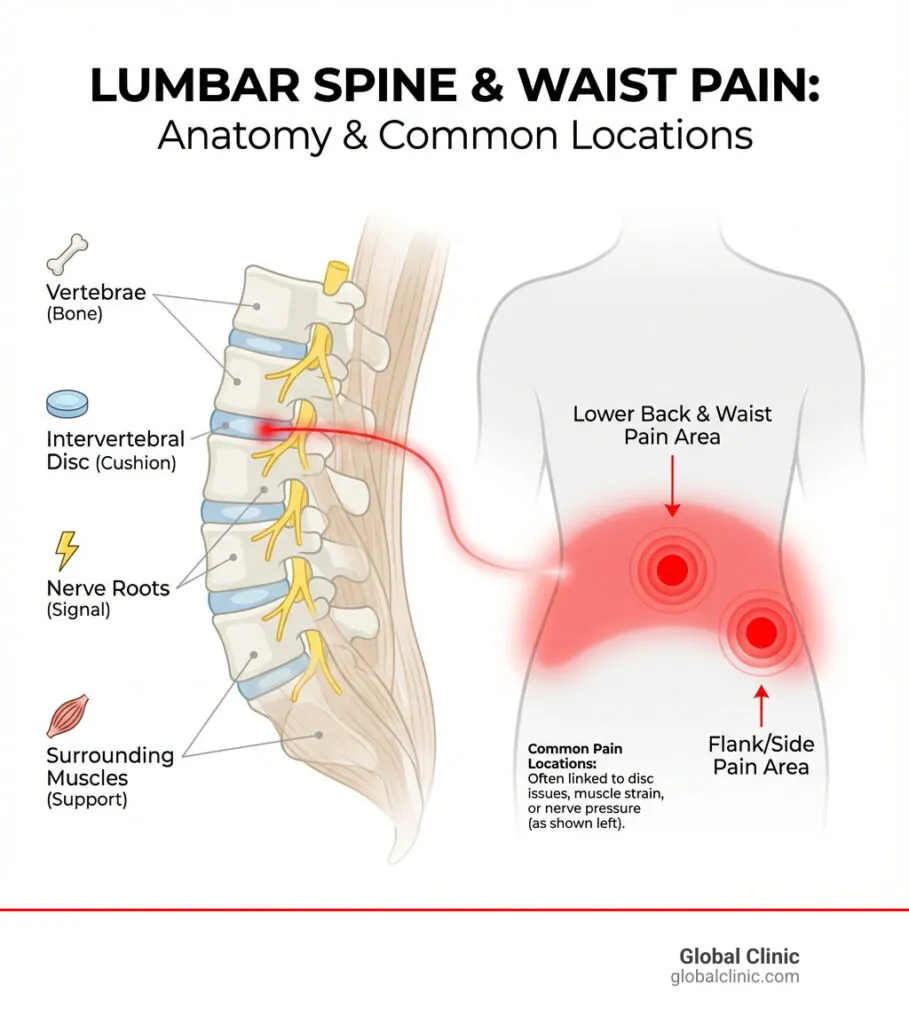
Decoding the Ache: Common Causes of Back Waist Pain
When you experience back waist pain, the causes can be diverse, ranging from simple muscle fatigue to more complex conditions. Understanding these potential culprits is the first step toward finding relief.
About 97% of back waist pain cases are mechanical, involving issues with the spine, muscles, ligaments, and discs. However, we also need to consider inflammatory conditions, other diseases, and referred pain from elsewhere in the body.
Mechanical and Structural Problems
These are the most frequent reasons for back waist pain, involving the components of your spinal column and its supporting structures.
- Muscle Strain: The most common cause, a strain occurs when muscle fibers are overstretched or torn from improper lifting, sudden twists, or repetitive motions. The pain can be a dull ache or sharp, worsening with movement.
- Ligament Sprain: A sprain affects ligaments, the tough tissue connecting bones. A sudden fall or twist can overstretch them, causing pain and instability.
- Herniated Disc: The soft discs cushioning your vertebrae can rupture or bulge, pressing on nerves and causing sharp, shooting pain. This can lead to sciatica (pain radiating down the leg) and often worsens with sitting.
- Degenerative Disc Disease: With age, spinal discs can wear down, losing hydration and elasticity. This causes pain and reduced flexibility, which may extend into your arms, legs, or buttocks.
- Spinal Stenosis: This condition is a narrowing of the spinal canal, which can pressure the spinal cord and nerves. Pain may worsen when hyperextending the back.
- Spondylolisthesis: This occurs when one vertebra slips forward over another, caused by degeneration or a stress fracture, leading to instability and nerve compression.
Sometimes, issues in nearby areas, like your hips, can contribute to or mimic back waist pain. For more information on this, you can explore More info about hip pain which can be related.
Inflammatory Conditions and Other Diseases
Less common than mechanical issues, some inflammatory conditions and diseases also cause persistent or severe back waist pain.
- Arthritis: Osteoarthritis (the “wear-and-tear” type) can affect the spine’s facet joints, leading to stiffness and pain.
- Ankylosing Spondylitis: This chronic inflammatory disease affects the spine, often starting at a young age. It causes significant morning stiffness that improves with exercise.
- Sacroiliitis: Inflammation of the sacroiliac joints (where your spine meets your pelvis) can cause pain in your buttocks or lower back.
- Osteoporosis: This condition weakens bones, making them brittle. Severe cases can lead to spinal compression fractures from minor stress, causing sudden, severe back waist pain. It’s more common in women and often has no early warning.
- Fibromyalgia: This chronic disorder causes widespread musculoskeletal pain, fatigue, and tenderness. It affects women more than men and can manifest as back waist pain.
- Infections: Rarely, infections like a spinal epidural abscess or vertebral osteomyelitis (bone infection) can cause severe back waist pain, often with a fever.
- Cancer: Spinal tumors, like multiple myeloma, can cause a deep, aching back waist pain that slowly worsens, especially at night. Unexplained weight loss is a major red flag.
Referred Pain: When the Problem Isn’t Your Back
Referred pain is when a problem in another part of your body, often an internal organ, causes pain in your back.
- Kidney Stones or Kidney Infection: Can cause severe pain in the lower back or side, often with fever or urinary symptoms.
- Pancreatitis: Pancreas inflammation can cause upper abdominal pain that radiates to the back.
- Endometriosis and Uterine Fibroids: These gynecological conditions can cause lower back waist pain in women, especially during menstruation.
- Abdominal Aortic Aneurysm (AAA): A bulge in the body’s main artery can cause deep, persistent back waist pain. This is a medical emergency.
- Gallbladder Inflammation: Pain can start in the upper right belly and spread to your back.
- Urinary Tract Infection (UTI): A severe UTI can sometimes cause lower back waist pain with other urinary symptoms.
Understanding Your Symptoms: When to See a Doctor
Understanding your back waist pain is key to knowing whether to manage it at home or see a doctor.
Acute vs. Chronic Pain: What’s the Difference?
To understand your back waist pain, it’s helpful to distinguish between acute and chronic types.
| Feature | Acute Pain | Chronic Pain |
|---|---|---|
| Duration | Short-term, typically less than 6 weeks | Long-term, lasts for more than 3 months |
| Onset | Sudden, often related to a specific injury or event | Gradual, or persistent beyond expected healing time |
| Resolution | Usually resolves as the body heals or with basic care | Persistent, often requires ongoing management and can be debilitating |
| Commonality | 9 out of 10 cases of low back pain are acute | Less common, but a leading cause of disability worldwide |
Most back waist pain is acute, resolving in weeks with conservative care. Pain lasting over three months is chronic and requires a more comprehensive approach. Chronic pain can decrease mobility and lead to anxiety or depression.
Common Symptoms Associated with Lower Back Pain
Back waist pain can manifest in various ways. Here are some of the common symptoms we see:
- Dull, Aching Pain: A persistent, low-level discomfort that can make it hard to focus or get comfortable.
- Sharp, Shooting Sensations: Intense, sudden pain, often indicating nerve involvement and triggered by specific movements.
- Pain Radiating Down the Leg (Sciatica): Pain travels from your lower back, through your buttocks, and down one or both legs, often feeling like a burn, tingle, or shock. It’s important to distinguish it from similar conditions like piriformis syndrome. You can Learn more about Piriformis Syndrome vs. Sciatica.
- Stiffness: Limited flexibility, especially in the morning or after periods of inactivity.
- Reduced Range of Motion: Difficulty bending, twisting, or standing upright due to pain and stiffness.
- Muscle Spasms: Painful, involuntary contractions of back muscles that further restrict movement.
Red Flag Warnings That Require Medical Attention
While most back waist pain improves, some “red flag” symptoms signal a serious condition and require immediate medical attention.
- Numbness or Weakness in Legs: New or worsening numbness, tingling, or weakness in one or both legs, especially if it affects your ability to walk, can indicate nerve irritation or damage. Untreated nerve pain can result in permanent damage or disability.
- Loss of Bowel or Bladder Control: This is a medical emergency. Paired with back waist pain, it could be a sign of cauda equina syndrome, where spinal nerves are compressed. This requires immediate intervention to prevent permanent nerve damage.
- Fever with Back Pain: A fever with back waist pain that is unresponsive to OTC medications could indicate a serious infection.
- Unexplained Weight Loss: Unintentional weight loss with back waist pain is a significant concern that should be evaluated by a doctor to rule out infection or tumors.
- Pain After an Accident or Injury: If your pain began after an accident or fall, see a professional to rule out a serious problem like a fracture.
- Pain Worse at Night or in Certain Positions: Pain that wakes you at night or occurs when lying down can be a sign of a more serious problem like an infection, fracture, severe nerve compression, or even cancer.
- Severe Pain Without Obvious Reason: If your pain is debilitating and you can’t pinpoint a cause, it’s best to get it checked out.
- Pain Lasting Over a Week: If you’ve been in pain for over a week, it’s a good time to consult a doctor.
For guidance on where to seek care—primary care, urgent care, or the emergency room—depending on the severity of your symptoms, refer to When to go to primary care, urgent care or the emergency room.
The Path to Relief: Diagnosis and Treatment
When your back waist pain needs professional attention, an accurate diagnosis is the next step. At Global Clinic, we believe early, careful diagnosis maximizes treatment success.
How Lower Back Pain is Diagnosed
Diagnosing back waist pain is a comprehensive process to pinpoint the cause:
- Medical History Review: Our specialists will ask detailed questions about your symptoms, lifestyle, work, and medical background.
- Physical Examination: This involves observing your posture, range of motion, and physical condition, checking for tenderness, muscle spasms, or structural abnormalities.
- Neurological Tests: We check reflexes, muscle strength, and sensation in your legs and feet to assess nerve function and identify compression or irritation.
- Imaging Tests:
- X-rays: Can reveal bone issues like fractures, arthritis, or alignment problems. Often delayed for acute back waist pain unless red flags are present.
- MRI or CT Scans: These provide detailed images of soft tissues like discs and nerves. They are useful for chronic pain or neurological symptoms, but we use them judiciously for acute pain as they can reveal asymptomatic issues.
- Blood Tests: Can identify markers for suspected infection, inflammatory conditions, or tumors.
An accurate diagnosis is paramount because many causes of back waist pain require very specific nonsurgical or surgical treatment.
Treatment Options for Acute Back Waist Pain
Most acute back waist pain is due to muscle strain and spasm and will resolve quickly with conservative care. Our approach promotes natural healing and restores function.
- Limited Rest: Avoid prolonged bed rest (more than 1-2 days), as it can delay recovery. Gentle movement is key.
- Ice and Heat Therapy: Applying ice packs to reduce inflammation in the first 24-48 hours, followed by heat pads to relax muscles, can provide significant relief.
- Gentle Movement and Activity Modification: Stay active with light activities, avoid movements that aggravate the pain, and gradually resume normal activities.
- Over-the-Counter (OTC) Pain Relievers: Medications like acetaminophen or NSAIDs can help manage pain and inflammation. For more information, you can read about over-the-counter (OTC) pain relievers.
- Chiropractic Adjustments: Many people find relief through chiropractic care, which focuses on spinal manipulation to restore proper alignment. Learn more about our approach to Chiropractic adjustments.
Treatment Options for Chronic Back Waist Pain
Chronic back waist pain (lasting over three months) requires a comprehensive, multidisciplinary treatment strategy. At Global Clinic, we offer a range of advanced, customized treatments.
- Physical Therapy: Often the cornerstone of chronic pain treatment, our physical therapists design personalized programs focusing on core strengthening, stretching, and posture to improve spine stability. Home exercise programs are critical for long-term success.
- Pain Management Clinics: For persistent pain, specialized clinics like ours offer a holistic, team-based approach. Our pain management services provide comprehensive care to reduce pain and improve your quality of life.
- Medications: Beyond OTC options, our pain management specialist will review medication options with you and your primary care physician. Opioids are generally not a first-line strategy for chronic back waist pain due to risks of dependence and habit formation and are reserved for short-term acute pain.
- Injections: Targeted injections can provide significant pain relief by reducing inflammation or blocking nerve signals, which helps maximize participation in physical therapy. These include:
- Epidural Steroid Injections: Deliver powerful anti-inflammatory medication directly to the area around spinal nerves.
- Nerve Blocks: Injections that numb specific nerves to alleviate pain.
- Trigger Point Injections: Target painful muscle knots.
- Regenerative Medicine: Innovative therapies like PRP Injections use your body’s own healing mechanisms to repair damaged tissues and can be a promising option for certain types of chronic back waist pain.
- Spinal Decompression: This non-surgical treatment gently stretches the spine, relieving pressure on discs and nerves.
- Alternative Treatments: We may also recommend complementary therapies such as acupuncture or massage to help manage chronic pain.
Proactive Prevention: Lifestyle’s Role in a Healthy Back
While we can’t always prevent back waist pain, many factors are within our control. By adopting healthy lifestyle habits and being mindful of our body mechanics, we can significantly reduce our risk of developing pain and manage existing conditions more effectively.
The Power of Physical Therapy and Exercise
Exercise is the foundation of both treatment and prevention for back waist pain. A consistent, custom exercise routine can transform your back health.
- Core Strengthening: A strong core acts like a natural corset for your spine, providing stability and support. Exercises like planks, bird-dogs, and pelvic tilts are excellent for building core strength.
- Flexibility and Stretching: Regular stretching helps maintain the mobility of your spine and surrounding muscles, preventing stiffness.
- Posture Correction: Learning and maintaining proper posture, whether sitting, standing, or lifting, reduces strain on your back. Our physical therapists can guide you through exercises and techniques to improve your posture.
- Aerobic Conditioning: Activities like walking, swimming, or cycling at a comfortable pace improve circulation, reduce inflammation, and help maintain a healthy weight, all beneficial for your back.
For more in-depth information on how physical therapy can help, visit Learn about physical therapy for your back.
How Diet and Weight Impact Your Back
What you eat and how much you weigh play a significant role in your overall health, including the health of your spine.
- Anti-inflammatory Diet: Diets high in trans fats, refined sugars, and processed foods can promote inflammation throughout the body, potentially exacerbating back waist pain. Focusing on whole foods, fruits, vegetables, lean proteins, and healthy fats can help reduce inflammation.
- Maintaining a Healthy Weight: Excess body weight, especially around the middle, puts additional pressure on your spine and discs. Losing even a small amount of weight can significantly alleviate this strain. If you’re struggling with weight management, exploring options like Information on medical weight loss can be a supportive step toward better back health.
- Hydration’s Role: Staying well-hydrated is important for the health of your spinal discs, which are largely made of water and need it to maintain their cushioning properties.
Ergonomics and Daily Habits for Prevention
Your daily routines and environment can either protect or harm your back. Small changes can make a big difference.
- Proper Lifting Techniques: Always lift with your legs, not your back. Bend at your knees, keep the object close to your body, and avoid twisting while lifting.
- Ergonomic Workspace Setup: If you spend many hours sitting, ensure your chair provides good lumbar support, your feet are flat on the floor, and your computer screen is at eye level. Take regular breaks to stand and stretch.
- Supportive Footwear: Wearing comfortable, supportive shoes can help maintain proper spinal alignment.
- Best Sleeping Positions: Sleeping on your side with a pillow between your knees or on your back with a pillow under your knees can help maintain the natural curve of your spine.
- Minimize Harmful Habits: Smoking can impair blood flow to the spinal discs, delaying healing and increasing pain. Reducing or quitting smoking is a powerful step for back health. Avoid the routine use of lumbar corsets, as they can weaken your core muscles over time.
Frequently Asked Questions about Lower Back Pain
Here are answers to some of the most common questions we hear at Global Clinic about back waist pain.
What are the potential complications of untreated back pain?
Ignoring back waist pain can lead to several negative consequences:
- Chronic Pain: Acute pain that isn’t properly addressed can become chronic, impacting every aspect of your life.
- Permanent Nerve Damage: Untreated conditions like cauda equina syndrome can cause irreversible nerve damage, leading to permanent weakness or numbness. Nerve irritation that persists despite OTC pain relievers is a serious sign.
- Reduced Mobility: Persistent pain and stiffness can severely limit your ability to perform daily activities and hobbies.
- Decreased Quality of Life: Chronic pain often leads to social isolation, difficulty working, and a general decline in well-being.
- Depression and Anxiety: The constant struggle with pain can take a significant toll on mental health, often leading to depression and anxiety.
Can stress and anxiety make back pain worse?
Absolutely. There’s a strong mind-body connection with pain.
- Muscle Tension: Stress and anxiety often cause involuntary muscle tension, especially in the back, which can initiate or worsen back waist pain.
- Increased Pain Perception: When you’re stressed, your nervous system can become more sensitive, amplifying your perception of pain.
- Stress Hormones: Chronic stress raises levels of hormones like cortisol, which can contribute to inflammation and pain.
- Vicious Cycle: Pain can cause stress, which in turn makes the pain worse. Incorporating mindfulness, meditation, or working with a pain psychologist can help break this cycle by boosting conscious control over your nervous system’s response.
How does age affect the risk of developing lower back pain?
Age is a significant factor in the development of back waist pain.
- Degenerative Changes: As we age, our spinal discs and joints naturally wear down. Degenerative disc disease and osteoarthritis become more common. While first episodes of acute low back pain often occur between ages 20 and 40, the prevalence increases with age.
- Loss of Bone Density (Osteoporosis): More common in older adults, especially women, this condition makes bones brittle and susceptible to spinal compression fractures that cause severe back waist pain.
- Decreased Muscle Mass: With age, we tend to lose muscle mass (sarcopenia), which can reduce support for the spine and increase the risk of injury.
- Increased Prevalence: Back waist pain becomes increasingly common in middle age and beyond.
Take Control of Your Back Health
Understanding the many facets of back waist pain can feel overwhelming, but remember, you don’t have to navigate this journey alone. We’ve explored the common mechanical issues, inflammatory conditions, and surprising sources of referred pain that can cause discomfort around your middle. We’ve also highlighted the crucial differences between acute and chronic pain and, most importantly, the red flag symptoms that demand immediate medical attention.
The path to relief and prevention is often multifaceted, combining accurate diagnosis with personalized treatment plans. Whether it’s through physical therapy, advanced pain management techniques like injections or regenerative medicine, or lifestyle adjustments in diet and exercise, a proactive approach is key.
At Global Clinic, serving Northern Chicago, we pride ourselves on providing comprehensive and innovative care custom to your unique needs. Our team in Niles is dedicated to helping you find lasting relief with personalized solutions. Don’t let back waist pain dictate your life.
Take the first step toward a pain-free future: call Global Clinic in Niles at (847) 299-7000 to schedule an evaluation. Start addressing your back pain with physical therapy today.