






Post-Surgical Knee Discomfort: Normal Recovery vs. Complication Warning Signs
Achieving effective knee replacement pain relief starts with recognizing what your body is telling you. The most reliable early strategies combine scheduled non-opioid medications, targeted cold therapy and elevation, early structured mobility, and regional nerve blocks performed during surgery. These methods work together to reduce inflammation, prevent stiffness, and keep discomfort manageable without relying solely on prescription opioids.
Undergoing a total knee arthroplasty (TKA) involves significant surgical manipulation of bone, cartilage, and surrounding soft tissues. Understanding what constitutes a normal healing response versus a potential medical emergency helps prevent unnecessary anxiety while keeping you safe during recovery. Approximately 60% of patients experience severe postoperative discomfort initially, while 30% experience moderate pain (Li et al., 2019). Because uncontrolled discomfort is the single most common reason for early emergency department visits after joint replacement (accounting for roughly 15% of readmissions), recognizing your body’s signals is paramount.
Normal healing involves a localized inflammatory cascade. You can reasonably expect:
- Diffuse aching and joint stiffness, especially in the morning or after sitting for prolonged periods.
- Moderate swelling and bruising extending from the knee down toward the ankle, which typically peaks during the first week and subsides over several weeks.
- Nighttime discomfort or sleep disruption, often triggered when the joint settles into one position.
- Mild warmth around the incision, reflecting active blood flow and tissue repair.
However, certain red-flag symptoms require immediate clinical evaluation. Deep vein thrombosis (DVT), pulmonary embolism (PE), prosthetic joint infection, and early mechanical failure require swift medical intervention.
| Symptom Category | Expected Recovery Signs | Complication Red Flags (Seek Immediate Medical Care) |
|---|---|---|
| Pain Level | Aching or soreness that eases with rest, ice, and elevation | Sudden, sharp, unbearable pain or uncontrolled escalation |
| Swelling & Bruising | Mild-to-moderate fluid buildup, bruising down the calf | Severe, tense, rapidly increasing swelling; tight, shiny skin |
| Calf Symptoms | Mild muscle tightness from walking or therapy | Severe tenderness, localized redness, or hard cords in the calf (DVT signs) |
| Temperature & Systemic | Low-grade post-op warmth (<100.4°F) in early days | Persistent fever (>101.5°F), shaking chills, nausea |
| Incision Site | Clear or slightly pink fluid during initial dressing changes | Thick, yellow/green foul-smelling drainage, spreading redness |
| Chest & Respiration | Normal breathing without discomfort | Sudden shortness of breath, chest pain, coughing up blood (PE emergency) |
| Joint Stability | Mild stiffness or tight band feeling around the knee | Sensation of giving way, inability to bear weight, visible deformity |
If you notice symptoms crossing into red-flag territory, contact your surgical team immediately or proceed to the nearest emergency room. For ongoing, non-emergency joint challenges, specialized knee pain evaluation can help identify the underlying mechanics.
Multimodal Approaches to Knee Replacement Pain Relief
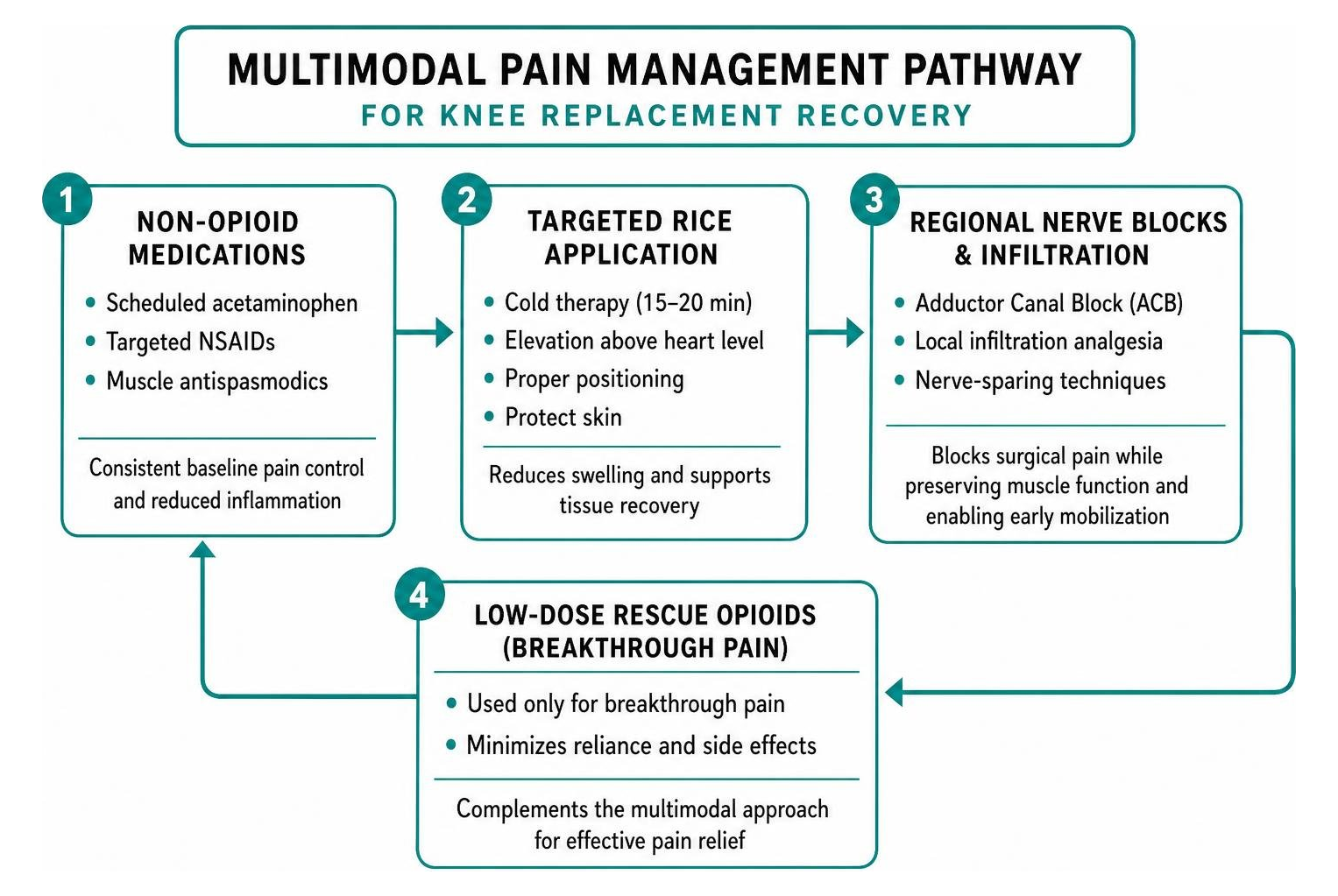
Modern orthopedic medicine has moved away from relying solely on heavy opioid prescriptions. Contemporary protocols use multimodal analgesia—an approach that targets pain pathways at multiple cellular and anatomical sites simultaneously (Li et al., 2019). By combining diverse non-opioid medications, regional nerve blocks, and localized physical therapies, we achieve superior discomfort reduction while minimizing medication side effects.
A systematic review on pharmacologic pain strategies for knee arthroplasty shows that preemptive non-opioid therapies dramatically reduce central sensitization—the process where the central nervous system becomes hyper-reactive to surgical pain signals. Establishing a structured baseline of effective pain management allows joint replacement patients to mobilize sooner, experience fewer gastrointestinal complications, and transition smoothly through recovery.
Non-Opioid Medications and Targeted RICE Application
The foundation of daily symptom management relies on combining scheduled non-opioid medications with mechanical tissue relief:
- Scheduled Acetaminophen: Acetaminophen acts centrally to reduce pain signaling. Taking it on a consistent schedule provides an effective baseline. Crucial safety rule: Never exceed 4,000 mg of acetaminophen in a 24-hour period. Always check combination prescription medications (such as Norco or Percocet), which contain acetaminophen, to avoid accidental liver toxicity.
- Targeted NSAIDs: Anti-inflammatory medications (such as celecoxib, meloxicam, or ibuprofen) target peripheral inflammatory prostaglandins. Because they reduce surgical swelling directly at the joint capsule, they are potent tools. However, only take NSAIDs approved by your surgeon, especially if you are currently taking prescribed blood thinners for clot prevention.
- Muscle Antispasmodics: Involuntary hamstring and quadriceps spasms are frequent after surgical bone cuts and soft-tissue balancing. Short-term muscle relaxers taken at bedtime can relieve nighttime spasms and support restorative sleep.
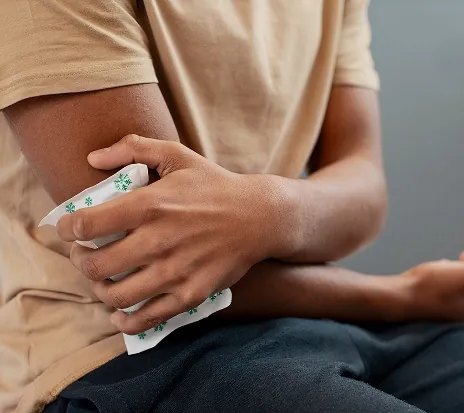
- Targeted Cold Therapy: Incorporating the RICE method provides non-pharmacological relief. Apply cold packs for 15 to 20 minutes at a time, allowing 90 minutes to 2 hours between applications. Always place a clean cloth or towel between the ice pack and your skin to prevent cold-induced skin injury.
- Mechanically Sound Elevation: When elevating the leg, place pillows lengthwise beneath the calf and ankle—never directly under the bent knee. Keeping the knee straight while elevating above heart level optimizes venous return without creating flexion contractures.
Nerve Blocks, Infiltration Analgesia, and Regional Anesthesia
Modern surgical pain management begins in the operating suite. Advanced nerve-sparing techniques allow patients to stand and walk safely on the day of surgery without severe discomfort:
- Adductor Canal Block (ACB): Unlike older femoral nerve blocks that paralyzed the quadriceps muscles, the adductor canal block targets sensory nerve fibers while preserving motor function. This allows early walking while blocking anterior knee pain.
- Local Infiltration Analgesia (LIA): Surgeons inject a cocktail of local anesthetics, anti-inflammatories, and epinephrine directly into the posterior capsule and periarticular tissues.
- Liposomal Bupivacaine: This extended-release anesthetic slowly disperses over 48 to 72 hours, significantly reducing early opioid requirements (lowering average consumption from 84.9 mg down to 18.7 mg in clinical trials).
A comprehensive Bayesian meta-analysis on postoperative pain management confirmed that combining regional peripheral blocks with periarticular infiltration produces the lowest resting pain scores across the first three postoperative days. Integrating these regional methods into broader clinical joint pain management sets the stage for an active, confident recovery.
Active Rehabilitation and Managing Nerve Hypersensitivity
Rest is important, but prolonged bed rest works against your new joint. For every day spent completely immobile in bed, it takes nearly three days to regain lost muscle strength and endurance. Early ambulation stimulates healthy synovial fluid circulation, minimizes swelling, and prevents the formation of restrictive scar tissue (arthrofibrosis). Starting structured post-surgery rehabilitation ensures that your new prosthesis achieves its full functional potential.
Structured Physical Therapy for Knee Replacement Pain Relief
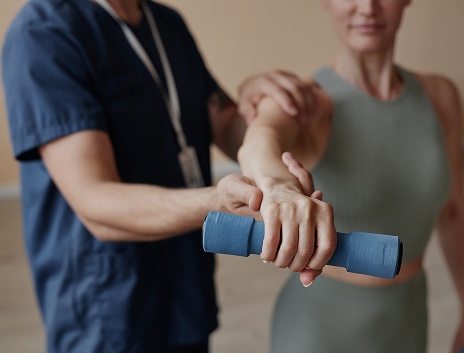
Working with a licensed physical therapist begins within 24 hours of surgery and continues for several months. Guided physical therapy targets three key recovery phases:
- Phase 1 (Weeks 1–2): Range of Motion & Quadriceps Activation: Gentle heel slides, ankle pumps, and seated knee flexion restore joint mobility. Isometric quad sets and assisted straight-leg raises re-engage the quadriceps mechanism.
- Phase 2 (Weeks 3–6): Gait Retraining & Functional Strength: As surgical swelling subsides, focus shifts toward eliminating walking compensations. Patients transition away from walkers or crutches to normal heel-to-toe gait mechanics while incorporating step-ups and light resistance exercises.
- Phase 3 (Weeks 7–12+): Endurance & Long-Term Stability: Advanced balancing drills, stationary cycling, and functional movement training restore full independence for climbing stairs, gardening, and recreational pursuits.
Engaging with tailored, evidence-based physical therapy reduces muscle guarding and alleviates soft-tissue tension surrounding the joint capsule.
Resolving Post-Surgical Neuropathic Discomfort and Spasms
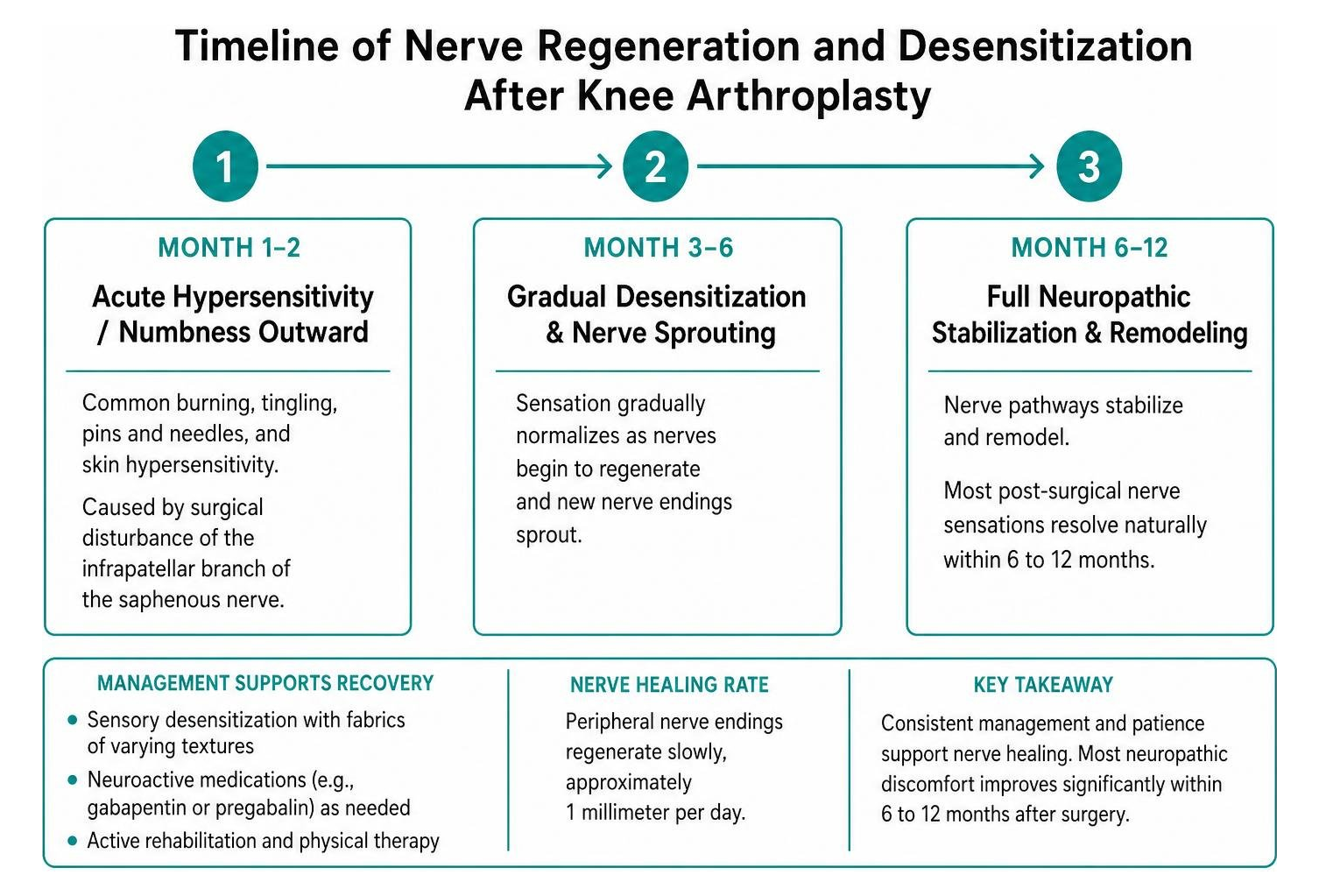
Many joint replacement patients report sensations of burning, skin tingling, “pins and needles,” or intense skin hypersensitivity (where even a bedsheet feels like a mild electric shock). This discomfort is completely normal and stems from surgical disturbance of the infrapatellar branch of the saphenous nerve.
To manage neuropathic symptoms:
- Sensory Desensitization: Gently massage the skin around the incision (once fully closed and cleared of scabs) using fabrics of varying textures (silk, cotton, light terrycloth). This re-trains sensory pathways and dampens hypersensitivity.
- Neuroactive Medications: For persistent burning discomfort, short-term use of medications like gabapentin or pregabalin can stabilize irritated nerve membranes.
- Realistic Timelines: Peripheral nerve endings regenerate slowly (roughly 1 millimeter per day). Most post-surgical nerve sensations resolve naturally within 6 to 12 months.
Safe At-Home Recovery, Opioid Tapering, and Milestone Timelines
A smooth recovery requires a well-prepared home environment, safe medication routines, and clear milestone expectations.
At-Home Strategies for Knee Replacement Pain Relief
Setting up your home environment prior to surgery reduces physical strain and fall risks:
- Fall Prevention & Clear Walkways: Remove throw rugs, secure loose electrical cords, and clear wide pathways for walkers or crutches.
- Bathroom Safety: Install secure grab bars, utilize an elevated toilet seat, and use a stable shower chair during the initial weeks.
- Incision Care: Keep the incision clean and dry according to your surgeon’s specific instructions. Avoid applying over-the-counter creams, ointments, or soaking in tubs until the incision has fully sealed.
- Metabolic Support: Joint healing demands cellular energy. Maintain adequate hydration, consume high-protein meals to support tissue repair, and keep blood glucose stable (diabetic patients should aim to keep blood glucose below 140 mg/dL to minimize infection risks).
- Driving Guidelines: You should not operate a vehicle while taking prescription opioid medications. Most patients can safely resume driving between 2 to 4 weeks post-op, provided they demonstrate rapid, painless brake reaction times.
- Return to Work: Desk-based professionals often return within 3 to 6 weeks, whereas those in physically demanding careers may require 8 to 12 weeks or longer.
Opioid Safety, Tapering Protocols, and Safe Disposal
Opioids are short-term rescue tools, not the long-term solution for post-surgical discomfort. The REPAIRS clinical trial on reduced opioid regimens after joint replacement demonstrated that patients prescribed smaller opioid quantities achieved equivalent pain relief and functional outcomes to those given large prescriptions, without increased complication rates. In fact, many patients require only a handful of rescue doses during their entire recovery.
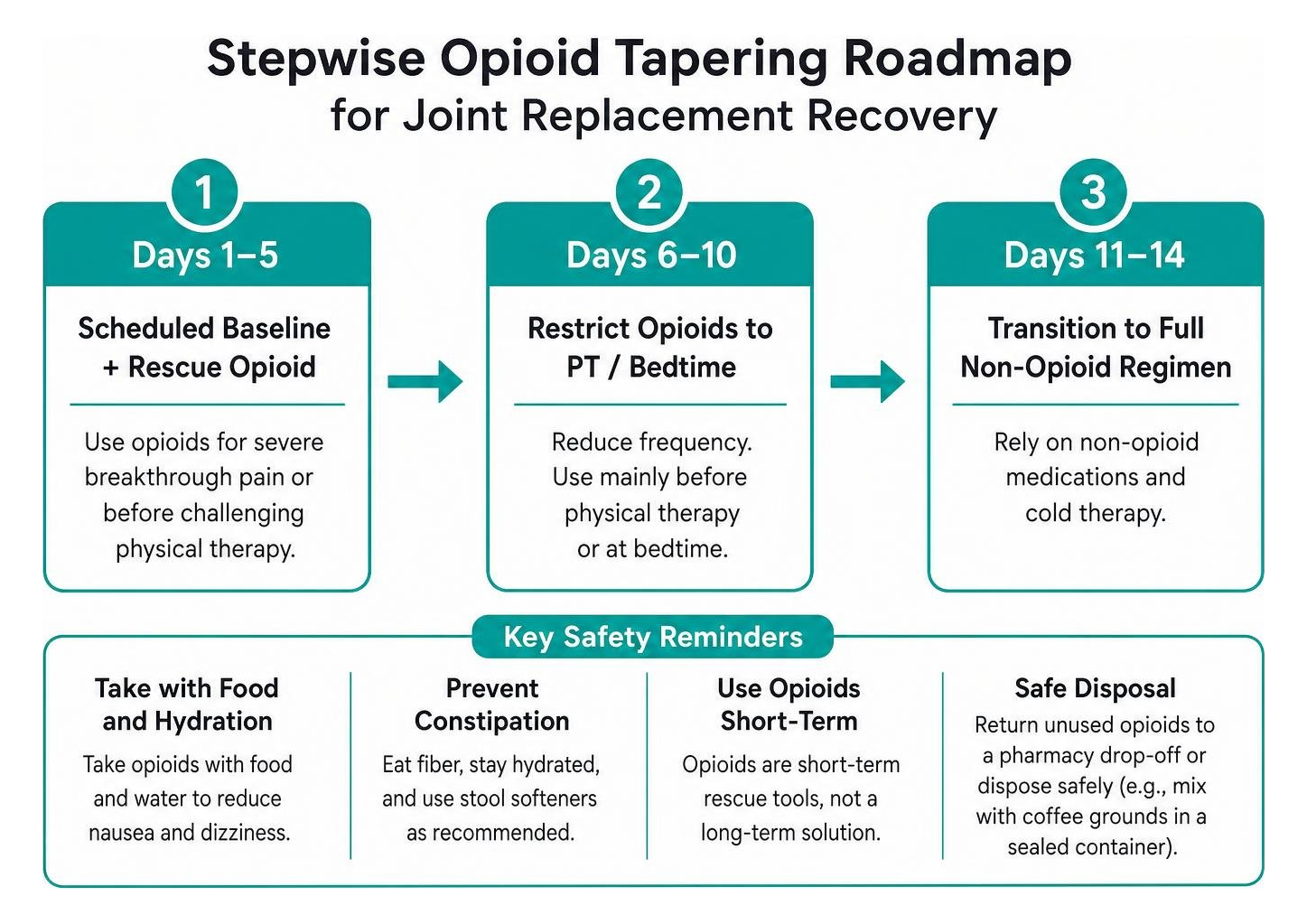
- Take with Food and Hydration: Opioids should always be taken with food and water to prevent nausea and dizziness.
- Prevent Constipation: Proactively consume dietary fiber, stay well hydrated, and use gentle stool softeners as recommended by your physician.
- Structured Tapering: As your non-opioid medications and cold therapy begin managing symptoms, systematically reduce the opioid frequency. Reserve doses strictly for severe breakthrough pain or immediately prior to challenging physical therapy sessions during the first two weeks.
- Safe Disposal: Never leave leftover narcotics in household medicine cabinets. Return unused medications to an authorized pharmacy drop-off location or mix them with unpalatable substances (such as coffee grounds) in a sealed container before household disposal.
Frequently Asked Questions About Knee Replacement Recovery
How long does peak pain typically last after knee replacement surgery?
Acute discomfort typically peaks during the first 7 to 14 days following surgery, when inflammatory swelling is highest and physical therapy begins. Most individuals notice significant, steady improvement by weeks 3 to 6, regaining comfortable mobility for daily tasks. Residual aches during heavy weather changes or intense exercise can persist intermittently for 6 to 12 months as internal tissues remodel.
What are the primary warning signs that require emergency medical evaluation?
Contact emergency medical services or your orthopedic surgical team immediately if you experience:
- Sudden, progressive pain and tenderness in the calf muscle, accompanied by localized warmth or redness (signs of a blood clot).
- Sudden chest tightness, shortness of breath, or coughing up blood (potential pulmonary embolism).
- Spreading redness around the knee, foul-smelling purulent drainage, or a persistent body temperature above 101.5°F (indicators of deep surgical site infection).
- Sudden inability to bear weight or acute mechanical buckling of the knee joint.
When is it safe to resume driving and everyday physical activities?
Resuming driving typically occurs between 2 and 4 weeks post-surgery for left-knee procedures (with automatic transmissions) and 4 to 6 weeks for right-knee replacements. Prior to driving, you must be entirely off all opioid medications and possess the physical strength and reflex speed to perform an emergency stop without hesitation. Low-impact activities such as stationary cycling, swimming (once the incision is healed), and level-ground walking can generally resume between weeks 4 and 8 under physical therapy guidance.
Conclusion
Recovering from a knee replacement is a progressive journey that combines disciplined daily habits, smart medication use, and targeted physical rehabilitation. By using multimodal pain control—pairing scheduled non-opioids with ice, elevation, and gentle mobility—you can keep discomfort manageable while protecting your overall health and well-being.
At Global Pain & Spine Clinic in Niles, IL, our multidisciplinary team provides comprehensive care for individuals seeking lasting joint health and functional restoration. Serving Northern Chicago communities—including Skokie, Glenview, Park Ridge, Morton Grove, Des Plaines, and Mount Prospect—our licensed specialists draw on over 20 years of clinical experience across physical therapy, chiropractic care, acupuncture, and advanced interventional pain strategies.
To learn more about our comprehensive approach to recovery, explore our comprehensive pain management ultimate guide or contact our clinic today to speak with our specialists.
References
Li JW, Ma YS, Xiao LK. “Postoperative Pain Management in Total Knee Arthroplasty..” Orthopaedic surgery, 2019. PMCID PMC6819170.