






Understanding Integrative Pain Management vs. Traditional Care
Integrative pain and wellness is a whole-person approach to treating chronic pain that combines conventional medical care with complementary therapies — addressing not just your symptoms, but the physical, emotional, and lifestyle factors driving them.
Quick answer: What is integrative pain and wellness?
- What it is: A multidisciplinary model that combines treatments like physical therapy, chiropractic care, regenerative medicine, and nutrition to treat pain at its root cause
- Who it helps: People with chronic conditions like back pain, sciatica, neuropathy, arthritis, fibromyalgia, and sports or auto accident injuries
- How it differs from traditional care: Instead of relying primarily on medication or surgery, integrative care builds a personalized plan using multiple evidence-based therapies
- What to expect: A thorough evaluation, a customized treatment plan, and ongoing monitoring — with all your providers working together
Nearly 50 million American adults live with significant chronic pain. For many, the standard approach — a prescription, maybe a referral — doesn’t solve the problem. It just delays it.
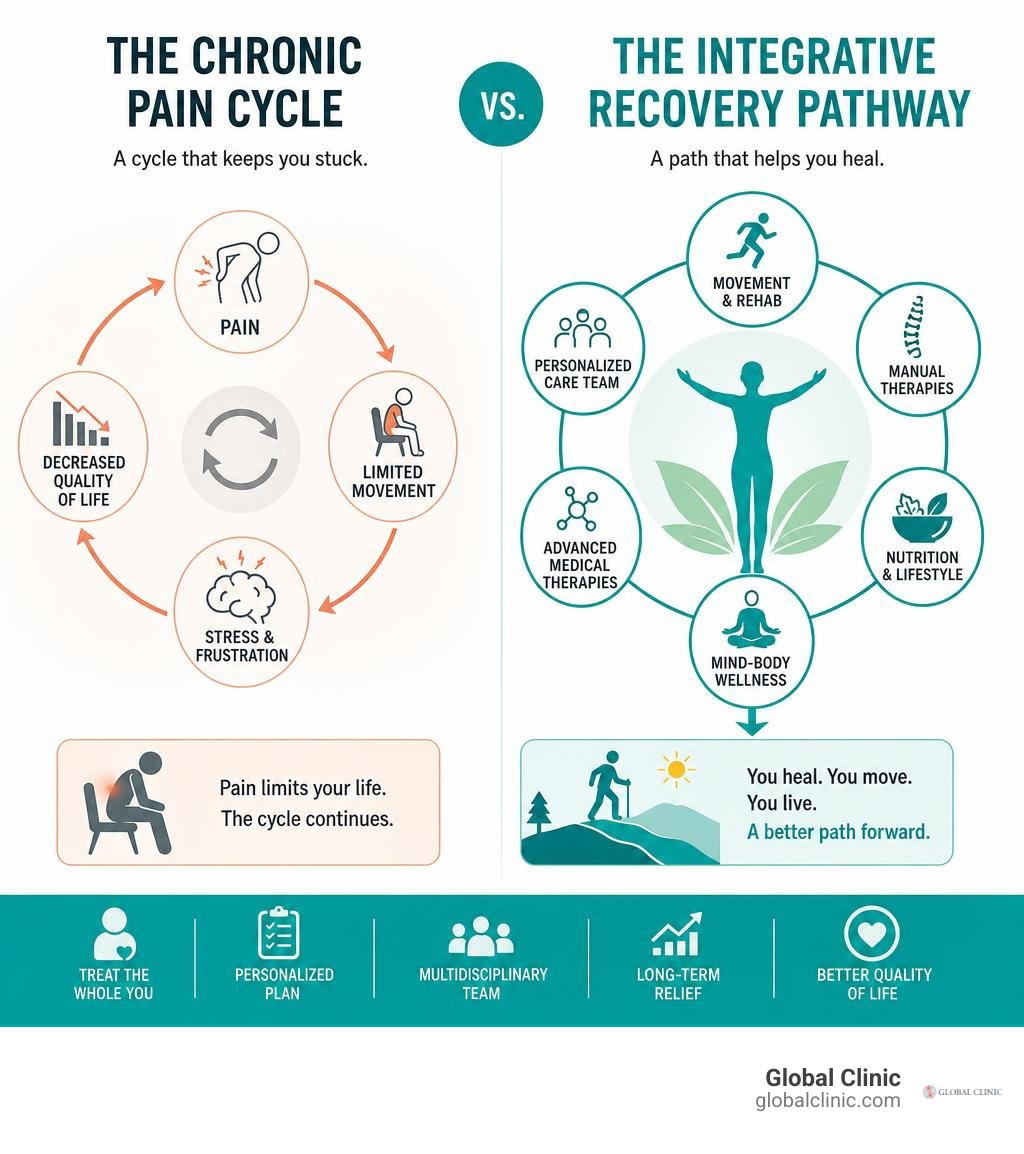
That cycle is frustrating. Pain limits movement. Limited movement worsens pain. And over time, what started as a manageable problem can shrink your entire world.
There’s a better path. And it starts with treating you — not just your diagnosis.
I’m Anna Slavin, Practice Manager at Global Pain & Spine Clinic, where our multidisciplinary team has spent over 20 years helping patients across the Northern Chicago area — including Niles, Skokie, Park Ridge, and beyond — find lasting relief through integrative pain and wellness care. In this guide, I’ll walk you through exactly how this approach works and what it can mean for your recovery.
Integrative pain and wellness vocab to learn:
Traditional pain management often operates on a simplified, direct model: you point to where it hurts, and a provider attempts to silence that signal. This typically translates to oral medications, temporary steroid injections, or, in more severe cases, surgical interventions. While these methods have a valuable place in acute care—such as immediately following a traumatic injury—they frequently fall short when applied to long-term pain. Attempting to manage a complex, multi-layered condition with symptom suppression alone is like putting tape over a flashing “engine check” light on your dashboard. The noise stops temporarily, but the underlying engine issue remains.
In contrast, integrative pain and wellness focuses on root-cause resolution. Rather than viewing pain as an isolated physical sensation, we see it as an intricate alarm system triggered by a combination of physical structural issues, systemic inflammation, lifestyle habits, and nervous system sensitivity.

By practicing patient-first pacing, we take the time to understand your unique physiological landscape. We combine conventional medical diagnostics with complementary therapies to address the structural, metabolic, and emotional aspects of your condition simultaneously. This approach ensures we are not merely masking your discomfort but helping your body heal from the inside out. For a comprehensive look at how we build these pathways to recovery, you can explore our detailed guide on Chronic Pain Treatment.
The Core Philosophy: Treating the Whole Person
At the heart of integrative care is the biopsychosocial model of medicine. This model recognizes that pain does not exist in a vacuum. It is shaped by three main intersecting dimensions:
- Physical Dimensions: The structural and biological factors, such as disc herniations, joint wear-and-tear, muscle imbalances, and nerve compression.
- Emotional Dimensions: How stress, anxiety, fear of re-injury, and depression alter your brain’s perception of pain. The brain uses the exact same neural pathways to process emotional distress as it does physical pain, meaning high stress levels can literally turn up the “volume” of your physical discomfort.
- Social Functioning: How pain restricts your ability to work, enjoy hobbies, and connect with loved ones, which can create a secondary layer of isolation and strain.
By shifting away from a one-size-fits-all protocol, we design highly individualized care plans. We look at your sleep patterns, nutritional habits, occupational stressors, and movement history. This ensures that every therapy we introduce works in harmony to restore balance to your nervous system and structural alignment to your body.
Conditions Treated Through Integrative Pain and Wellness
Because chronic pain often stems from multiple contributing factors, a multidisciplinary approach is highly effective for a wide range of persistent issues.

Our clinical team regularly supports patients dealing with complex, long-term conditions that have not responded fully to standard medical protocols. These include:
- Persistent Back and Neck Pain: Chronic spinal issues, whether caused by herniated discs, spinal stenosis, or postural strain, benefit enormously from combining physical alignment with inflammation control.
- Degenerative Joint and Arthritis Pain: Wear-and-tear in the knees, hips, and shoulders can limit mobility and drive systemic inflammation.
- Neuropathy and Nerve Pain: Conditions like diabetic neuropathy, sciatica, and pinched nerves require therapies that calm hyperactive nerve endings while improving local blood flow.
- Fibromyalgia and Myofascial Pain: Widespread muscle pain and tender points require a delicate balance of physical therapy, stress reduction, and metabolic support to calm a highly sensitive central nervous system.
If you are struggling with persistent stiffness, joint degeneration, or spinal issues, we encourage you to read our specialized guides on Joint Pain Management and Back Pain to understand the specific therapeutic pathways available.
Core Modalities in Integrative Pain and Wellness
To address these diverse conditions, we bring multiple clinical disciplines together under one roof. This allows us to build highly cohesive treatment plans that target your pain from several angles at once:
- Physical Therapy: Focused on restoring strength, correcting movement imbalances, and rebuilding functional mobility. Our physical therapists use specialized exercises to stabilize weak joints and take the mechanical pressure off painful areas.
- Chiropractic Care: Gentle spinal adjustments and joint mobilizations correct structural misalignments. This reduces mechanical stress on your nervous system and improves overall spinal biomechanics.
- Acupuncture Dry Needling: This time-tested modality stimulates the body’s natural pain-relieving chemicals (endorphins), improves localized circulation, and helps reset hyperactive nerve pathways.
- Massage Therapy: Far more than a relaxing spa service, clinical massage therapy targets deep muscle spasms, breaks up painful scar tissue, and promotes lymphatic drainage to reduce localized swelling.
- Podiatric Care: Because your feet are the foundation of your entire skeletal structure, poor foot mechanics can cause a chain reaction of pain up into your knees, hips, and lower back. Specialized podiatric interventions ensure proper gait and alignment.
- Medical Weight Loss: Carrying excess body weight places continuous mechanical stress on your weight-bearing joints and acts as a primary driver of systemic, low-grade inflammation. Our tailored wellness programs help reduce this physical load naturally.
Combining Conventional Medicine with Complementary Therapies
The true power of integrative pain and wellness lies in the seamless coordination of conventional medical science and complementary therapies. Rather than choosing between “Western” medicine and “alternative” options, we select the most effective, evidence-based tools from both worlds.
| Approach Type | Primary Focus | Common Methods | Expected Outcome |
|---|---|---|---|
| Conventional | Rapid symptom relief and structural stabilization | Nerve blocks, diagnostic imaging, orthopedic evaluations | Reduced acute pain, clear structural diagnosis |
| Complementary | Restoring natural movement, alignment, and tissue health | Chiropractic care, physical therapy, acupuncture, massage | Improved mobility, decreased muscular tension |
| Integrative | Combining both models to resolve the root cause | Coordinated care plans, regenerative medicine, lifestyle coaching | Sustainable recovery, long-term wellness, prevention |
By combining these approaches, we create a clinical dynamic where the whole is far greater than the sum of its parts. For example, a patient with severe knee osteoarthritis might receive a targeted joint injection to quiet down intense localized pain. While that injection provides a window of comfort, the patient immediately begins targeted physical therapy to strengthen the surrounding muscles, alongside acupuncture to reduce muscle guarding and nutritional adjustments to lower systemic inflammation.

This combined approach is highly effective. In fact, clinical studies suggest that combining multiple therapeutic modalities consistently yields much higher success rates than relying on a single, isolated treatment method. To learn more about how hands-on physical techniques can be combined with medical care, read our guide on Integrative Manual Therapy for Chronic Pain Relief.
Advanced Interventions and Regenerative Medicine
When conservative therapies like physical therapy or chiropractic adjustments need an extra boost, we utilize advanced medical interventions that support your body’s natural healing cascade.
At the forefront of these modern interventions is Regenerative Medicine. Rather than simply masking pain, regenerative therapies are designed to help repair damaged tissues, stabilize weak joints, and quiet down chronic, localized inflammation.
- Platelet-Rich Plasma (PRP) Therapy: This innovative treatment utilizes a concentrated sample of your own blood, which is rich in natural growth factors. When carefully injected into damaged ligaments, tendons, or arthritic joints under precise imaging guidance, PRP helps kickstart the body’s natural tissue-repair processes. To understand how this works, read our article on PRP Therapy Benefits Key Advantages for Pain Relief.
- Platelet-Rich Fibrin (PRF) Injections: Building on the science of PRP, PRF provides a slow-releasing fibrin matrix that delivers growth factors to the injured area over an extended period. This makes it an exceptional option for complex joint and soft-tissue recovery. Discover more in our PRF Injections Complete Guide.
- IV Therapy: Chronic pain and inflammation place a heavy metabolic demand on your body. Intravenous nutrient therapy delivers high doses of essential vitamins, minerals, and antioxidants directly into your bloodstream, bypassing the digestive tract for maximum absorption and cellular support.
- NAD+ Therapy: Nicotinamide Adenine Dinucleotide (NAD+) is a vital coenzyme found in every cell of your body, playing a crucial role in cellular energy production, DNA repair, and reducing systemic inflammation. Our NAD Therapy Complete Guide explains how this advanced cellular therapy supports systemic recovery and nerve health.
Addressing Emotional, Lifestyle, and Systemic Factors
If you have ever noticed that your pain feels significantly worse after a poor night’s sleep or during a highly stressful week at work, you have experienced how systemic factors influence your physical body.
Chronic pain is not just a structural issue; it is heavily influenced by your nervous system’s overall state of balance. When you are under constant stress, your body remains trapped in a sympathetic “fight-or-flight” state. This state releases stress hormones like cortisol and adrenaline, which actually increase your nervous system’s sensitivity to pain signals and drive systemic inflammation.
By prioritizing comprehensive Wellness, we help you address these critical lifestyle pillars:
- Stress Management: Simple, daily practices like mindfulness, meditation, and targeted breathing exercises help shift your nervous system back into a parasympathetic “rest-and-recover” state. This lowers your body’s overall pain sensitivity.
- Sleep Optimization: Deep, restorative sleep is the only time your body can perform essential cellular repair and clear metabolic waste from your brain and tissues. We work with you to establish healthy sleep habits that naturally reduce pain intensity.
- Anti-Inflammatory Nutrition: The foods you eat directly influence the level of inflammation in your body. By identifying and reducing pro-inflammatory foods, we can help cool down systemic inflammation and support joint health from the inside out.
The Benefits of a Multidisciplinary, Physician-Led Approach
Navigating chronic pain can be exhausting, especially when you are forced to run from one independent specialist to another, repeating your medical history and trying to coordinate your own care.
Our clinic operates on a highly collaborative, multidisciplinary model. Our team of medical doctors, physical therapists, chiropractors, acupuncturists, and massage therapists work together under one roof.
This brings several key advantages to your recovery journey:
- Aligned Treatment Plans: Instead of receiving conflicting advice from different providers, your care team communicates directly with one another. This ensures that your physical therapy, chiropractic adjustments, and medical treatments are perfectly synchronized.
- Comprehensive Diagnostic Perspectives: By combining different clinical viewpoints, we can identify subtle root causes—such as a foot mechanics issue causing lower back pain—that might be missed in a single-discipline practice.
- Over 20 Years of Clinical Experience: Since 2001, we have been serving the Northern Chicago community, refining our integrated protocols to deliver the safest and most effective care possible.
Long-Term Effectiveness and Patient Outcomes
When it comes to managing chronic pain, the ultimate goal is not just temporary comfort; it is a return to a vibrant, active life.
While medication-only approaches can provide rapid, short-term relief, they do not address the underlying structural or metabolic imbalances that caused the pain in the first place. Over time, relying solely on medication can lead to unwanted side effects, increased tolerance, and a frustrating cycle of returning symptoms.
By focusing on restoring proper movement mechanics, cooling down systemic inflammation, and supporting cellular repair, integrative pain and wellness delivers sustainable, long-term relief. This approach empowers you to move with confidence, rebuild your physical strength, and actively participate in the activities you love. To explore these sustainable pathways in greater depth, review our guide on Effective Pain Management Strategies for Chronic Conditions.
What to Expect: Your Integrative Pain and Wellness Journey
When you begin your recovery journey with us, you can expect a thoughtful, step-by-step process designed entirely around your unique needs:
- Initial Evaluation: We start with an unhurried, comprehensive medical evaluation. We listen closely to your history, map out your symptoms, and discuss how pain is impacting your daily life.
- Diagnostic Imaging and Testing: If needed, we utilize state-of-the-art diagnostic tools—such as digital X-rays or ultrasound—to get a clear, precise look at your muscles, joints, and ligaments.
- Personalized Treatment Plan: We bring our specialists together to design a customized plan combining the exact therapies your body needs to heal.
- Ongoing Monitoring and Adjustments: Your body is constantly changing as it heals. We monitor your progress closely and adjust your treatment plan dynamically to ensure you continue moving forward.
- Care Coordination: We manage all the details of your care internally, keeping your primary care physician informed so that your entire medical team remains perfectly aligned.
Frequently Asked Questions about Integrative Pain Care
What is the difference between acute and chronic pain?
Acute pain is your body’s natural, immediate alarm system following an injury, surgery, or illness. It has a clear, identifiable cause and typically resolves as the underlying tissue heals.
Chronic pain, on the other hand, is pain that persists past the normal healing window, generally defined as the three-month threshold. In chronic pain, the nervous system’s alarm system remains active even after the initial physical injury has healed, requiring a comprehensive approach to calm the nervous system and restore normal function. For a broader medical overview, the National Center for Complementary and Integrative Health provides patient education on chronic pain and evidence-informed care options.
Can I still see my primary care physician during integrative treatment?
Absolutely. We do not replace your primary care provider or your existing medical specialists. Instead, we act as a highly collaborative extension of your healthcare team. We coordinate closely with your primary physician, sharing diagnostic findings and treatment updates to ensure your care is seamless and safe.
How does nutrition impact chronic pain and inflammation?
Your diet plays a direct role in regulating your body’s inflammatory response. Highly processed foods, refined sugars, and trans fats can trigger the release of pro-inflammatory chemicals throughout your body, intensifying joint and nerve pain.
Conversely, an anti-inflammatory diet rich in leafy greens, healthy fats, and antioxidants helps cool down this systemic response, supports gut health, and provides the essential building blocks your body needs for cellular repair.
Conclusion
Living with chronic pain can make your world feel incredibly small, but you do not have to navigate this path alone. You deserve a care plan that looks beyond the surface to treat the real root causes of your discomfort.
At Global Pain & Spine Clinic, our dedicated team has spent more than two decades helping patients throughout Niles, IL, Chicago, IL, Skokie, IL, Glenview, IL, Park Ridge, IL, Morton Grove, IL, Des Plaines, IL, and Mount Prospect, IL, reclaim their vitality and live without limitations. By combining advanced medical interventions with time-tested physical and complementary therapies, we help you build a solid foundation for lasting health.
If you are ready to move past temporary quick fixes and experience the benefits of true, whole-body healing, we invite you to take the first step. Explore our Pain Management Ultimate Guide to learn more about how we can help you.
Contact our clinic today to speak with our specialists and begin your personalized journey back to a pain-free life.