






How Platelet-Rich Plasma (PRP) Actually Works — and Why It Matters
Platelet-rich plasma (PRP) therapy is one of the fastest-growing regenerative treatments available today — and for good reason.
Here’s a quick overview of what it is:
| What is PRP? | A concentrated extract of your own blood, rich in platelets and healing growth factors |
| How is it made? | A small blood sample is spun in a centrifuge to separate and concentrate the platelets |
| What does it treat? | Joint pain, tendon injuries, osteoarthritis, hair loss, and more |
| How does it work? | Concentrated growth factors are injected into damaged tissue to support natural repair |
| Is it safe? | It is generally well tolerated; because it comes from your own blood, the risk of rejection or reaction is very low |
| How long do results last? | Varies by condition and patient; often several months or longer |
Your body already knows how to heal itself. Platelets are a key part of that process — they rush to the site of an injury and release proteins that trigger repair. PRP simply takes that natural response and amplifies it.
By concentrating platelets to 5–10 times their normal level in whole blood and injecting them precisely where healing is needed, PRP aims to support recovery when standard treatments have not been enough.
This matters especially for people dealing with chronic conditions — like arthritis, tendonitis, or persistent joint pain — where the body’s healing response has stalled.
I’m Anna Slavin, Practice Manager at Global Clinic, where our multidisciplinary team draws on over 20 years of global medical experience to help patients across the Northern Chicago area explore regenerative options like platelet-rich plasma (PRP) therapy. In this guide, we’ll walk you through everything you need to make an informed decision — from how PRP is prepared to what the latest research actually says about its effectiveness.
What Is Platelet-Rich Plasma and How Is It Prepared?
To understand platelet-rich plasma, we first have to look at the composition of normal human blood. In its native state, your blood consists of a liquid called plasma (about 55%) and cells — mostly red blood cells, with white blood cells and platelets making up a small fraction. Platelets are famous for their role in blood clotting, but they are also packed with thousands of proteins called growth factors, which are essential for healing injuries.
Platelet-rich plasma is exactly what it sounds like: plasma that contains a much higher concentration of platelets than what is normally found in your blood. While a normal blood sample has a baseline platelet count, therapeutic PRP typically achieves a platelet concentration of 3 to 5 times (and sometimes up to 10 times) that of native plasma.
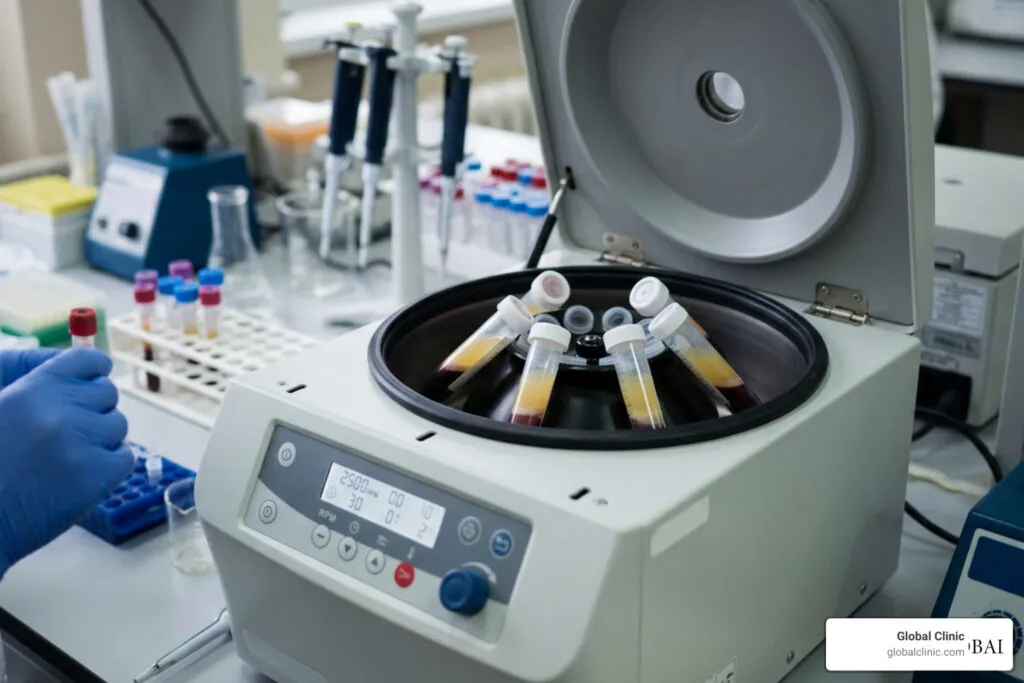
The preparation of PRP is a precise, multi-step process that takes about 12 minutes to an hour depending on the exact system used. Here is how we obtain it:
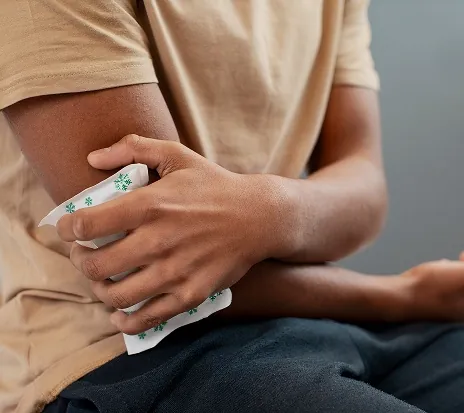
- The Blood Draw: A small amount of blood (typically 20 to 50 mL) is drawn from your arm, much like a routine lab test.
- Anticoagulation: The blood is collected in a tube containing an anticoagulant.
- The First Centrifugation (The “Soft” Spin): The blood is placed in a specialized centrifuge and spun at a lower speed. This separates the red blood cells (which settle at the bottom) from the plasma and the “buffy coat” (which contains platelets and white blood cells).
- The Second Centrifugation (The “Hard” Spin): The platelet-containing plasma is spun again at a higher speed. This separates the platelet-poor plasma (PPP) from the highly concentrated platelet-rich plasma (PRP).
- Collection and Activation: The concentrated platelets are re-suspended in a small fraction of the remaining plasma. Immediately before injection, the PRP may be chemically activated using calcium chloride, thrombin, or collagen to trigger the immediate release of healing proteins, though some protocols rely on natural activation by the collagen present in the target tissue.
The Biological Mechanism of Platelet-Rich Plasma
Once injected into the target tissue, the therapeutic effect of platelet-rich plasma begins with the degranulation of platelet α-granules (alpha-granules). These tiny storage sacs inside platelets hold a massive reservoir of bioactive molecules, cytokines, and essential growth factors.
When platelets are activated, they release approximately 70% of these stored growth factors within the first 10 minutes, and nearly 100% within the first hour. These signaling molecules bind to the surface receptors of target cells at the injury site, triggering a cascade of healing events.
The primary growth factors and bioactive molecules contained in PRP include:
- Platelet-Derived Growth Factor (PDGF): Promotes cell replication, blood vessel growth (angiogenesis), and collagen synthesis.
- Transforming Growth Factor-Beta (TGF-β): Stimulates the synthesis of the extracellular matrix and encourages connective tissue regeneration.
- Vascular Endothelial Growth Factor (VEGF): A powerful driver of angiogenesis, bringing vital oxygen and nutrients to damaged, oxygen-deprived tissues.
- Epidermal Growth Factor (EGF): Accelerates epithelialization and soft-tissue wound maturity.
- Insulin-like Growth Factor-1 (IGF-1): Crucial for cellular bioactivity and tissue homeostasis.
- Cell Adhesion Molecules: Proteins like fibronectin and vitronectin that act as a physical scaffolding, forming a temporary fibrin matrix to support cell migration.
A laboratory study, Action of Platelet-Rich Plasma on In Vitro Cellular Bioactivity: More than Platelets, found that cell proliferation was significantly higher in cells incubated with lysates derived from PRP compared to those cultured with platelet-poor plasma. Interestingly, the study revealed that IGF-1 levels are independent of platelet concentration, suggesting that the overall plasma content plays a crucial, synergistic role alongside concentrated platelets.
For a comprehensive academic review of these molecular actions, you can explore Review The role of platelet-rich plasma in biomedicine: A comprehensive overview.
Key Variables Influencing PRP Treatment Outcomes
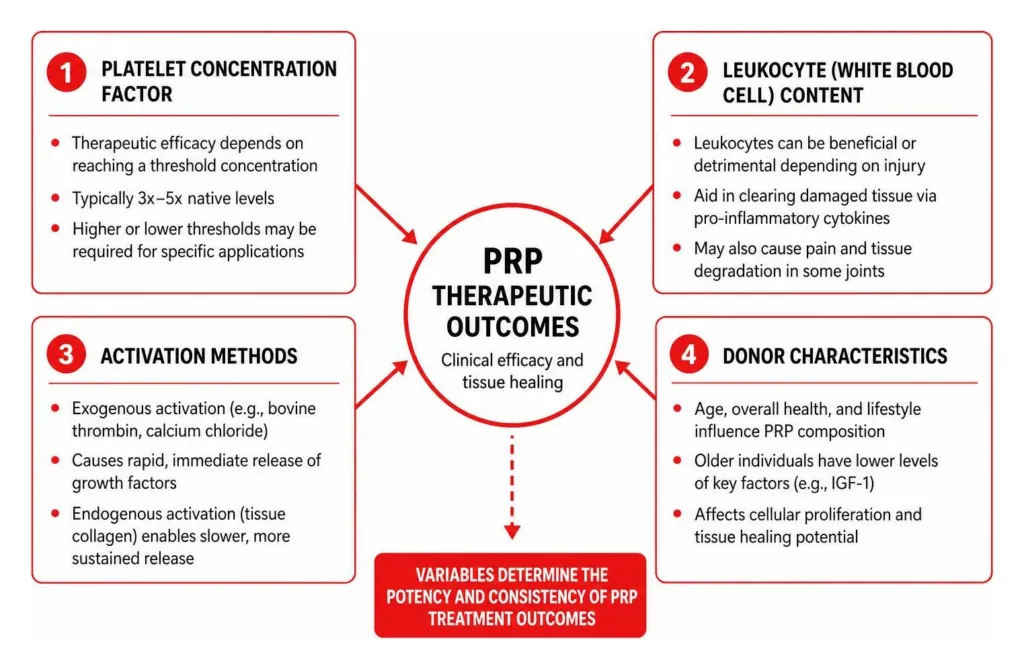
One of the greatest challenges in regenerative medicine is that PRP is not a single, uniform drug. Because it is autologous—meaning it is harvested from your own body—its composition varies from person to person. Several critical variables influence the therapeutic potency of the final PRP product:
- Platelet Concentration Factor: Efficacy often depends on reaching a threshold concentration. While a 3x to 5x concentration of native levels is generally considered therapeutic, some applications require higher or lower thresholds.
- Leukocyte (White Blood Cell) Content: White blood cells can be either beneficial or detrimental depending on the injury. Leukocytes can release pro-inflammatory cytokines that help clear out damaged tissue, but they can also cause localized pain and tissue degradation in certain joints.
- Activation Methods: Activating platelets artificially before injection (using substances like bovine thrombin or calcium chloride) causes a rapid, immediate dump of growth factors. Allowing the platelets to activate naturally upon contact with tissue collagen leads to a slower, more sustained release.
- Donor Characteristics: The health, lifestyle, and age of the patient play a major role. For example, clinical research shows that PRP derived from older individuals contains lower levels of IGF-1 compared to younger subjects, which can influence the rate of cellular proliferation and tissue healing.
Classification Systems and Standardization Guidelines
Because of these variables, medical researchers use classification systems to standardize PRP formulations so that studies can be compared accurately. The most common classification divides PRP into four main categories based on leukocyte content and the architecture of the fibrin network:
- Pure Platelet-Rich Plasma (P-PRP): Low leukocyte content; ideal for applications where minimizing post-injection inflammation is crucial, such as joint osteoarthritis.
- Leukocyte-Rich Platelet-Rich Plasma (L-PRP): High leukocyte content; often used for chronic tendon injuries where a strong inflammatory response is needed to restart a stalled healing process.
- Pure Platelet-Rich Fibrin (P-PRF): A gel-like substance with a dense fibrin matrix, often used in surgical wound healing and dentistry.
- Leukocyte- and Platelet-Rich Fibrin (L-PRF): A leukocyte-rich gel scaffold used to support bone and soft tissue regeneration.
To establish clinical consistency and improve patient outcomes, international medical bodies have published guidelines such as an expert consensus on the use of autologous platelet-rich plasma in regenerative medicine. This consensus emphasizes the importance of reporting exact platelet yields, leukocyte counts, and preparation protocols to ensure that patients receive highly targeted, predictable treatments.
Clinical Applications of Platelet-Rich Plasma Therapy
The clinical reach of PRP therapy has expanded dramatically. Today, it is utilized across multiple medical disciplines to accelerate tissue repair, reduce chronic inflammation, and restore functional mobility.
In dermatology and plastic surgery, PRP is widely celebrated for its aesthetic benefits. It is commonly used in:
- Hair Restoration: PRP injections may help in treating male and female pattern baldness (androgenic alopecia). By promoting stem cell differentiation and prolonging the active growth (anagen) phase of hair follicles, PRP may help slow hair loss and support new hair growth.
- Skin Rejuvenation: Often paired with microneedling, PRP stimulates collagen production to reduce the appearance of fine lines, wrinkles, and acne scarring.
To explore the detailed scientific principles behind these aesthetic and reconstructive uses, read the comprehensive review on Platelet-Rich Plasma: Principles and Applications in Plastic Surgery – PMC.
Clinical Efficacy of PRP in Orthopedics
Orthopedics and sports medicine represent some of the most successful applications of PRP therapy. For athletes and individuals dealing with wear-and-tear joint pain, PRP offers a non-surgical path to recovery.
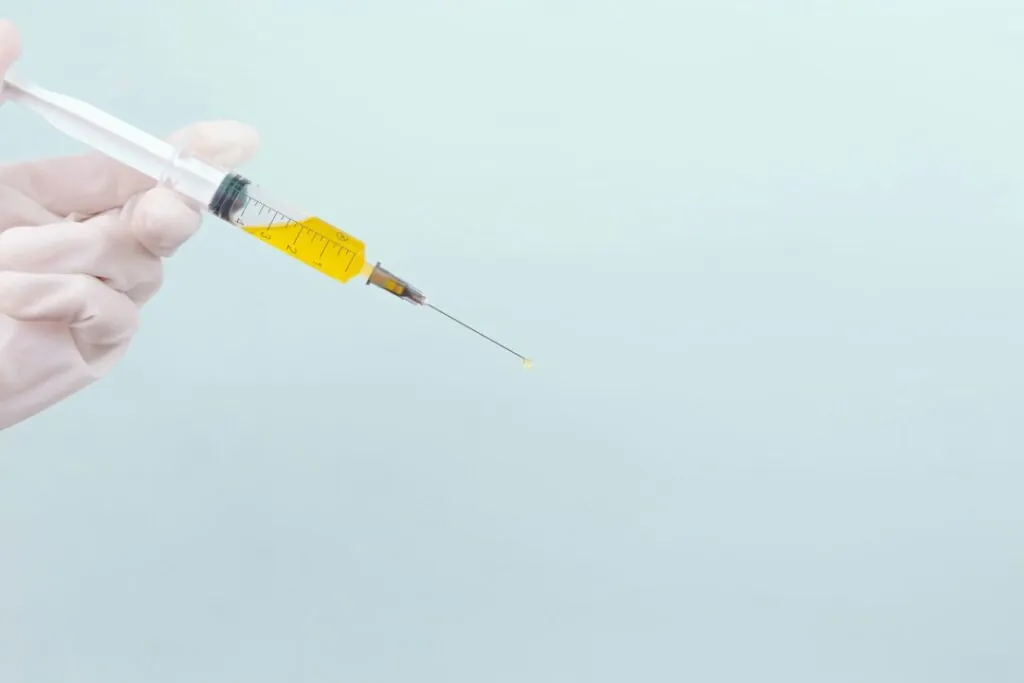
- Osteoarthritis: PRP may help in managing mild-to-moderate knee osteoarthritis. It may work by reducing chronic joint inflammation, protecting remaining cartilage, and stimulating the joint’s natural lubricating fluids.
- Tendinopathies: Tendons have a notoriously poor blood supply, which makes them slow to heal. PRP injections are used to treat chronic tendon conditions like tennis elbow (lateral epicondylitis), Achilles tendonitis, and patellar tendonitis (jumper’s knee). By delivering a high concentration of growth factors directly to the damaged tendon fibers, PRP jump-starts the repair of micro-tears.
- Ligament and Muscle Injuries: Partial tears of the rotator cuff, hamstring strains, and ligament sprains may respond well to image-guided PRP injections, helping some patients return to active lifestyles.
If you are struggling with chronic tendon issues or joint stiffness, you can learn more about targeted treatments in our specialized guides on PRP for Tendinopathy and the PRP for Shoulder Pain Guide.
Comparing PRP with Other Regenerative Treatments
When exploring regenerative medicine, patients often compare PRP to other popular injection-based treatments, such as hyaluronic acid (HA) and corticosteroids.
| Treatment Type | Primary Mechanism | Source | Duration of Effect | Best Suited For |
|---|---|---|---|---|
| Corticosteroids | Powerful anti-inflammatory | Synthetic drug | Short-term (weeks to months); can degrade tissue over time | Acute pain flare-ups; temporary relief |
| Hyaluronic Acid | Joint lubrication & cushioning | Synthetic / Bio-engineered | 6 to 12 months | Mild-to-moderate joint osteoarthritis |
| Platelet-Rich Plasma | Biological tissue repair & cellular regeneration | Autologous (your own blood) | 6 to 12+ months (varies by patient) | Tendinopathy, joint arthritis, mild ligament tears |
While corticosteroids are excellent for immediate, short-term pain relief, they do not repair tissue and can actually weaken tendons and cartilage with repeated use. Hyaluronic acid is highly effective for lubricating arthritic joints, but some clinical studies suggest that the benefits of PRP may last longer than those of hyaluronic acid.
Furthermore, recent research suggests that combining PRP with hyaluronic acid can be more effective for knee osteoarthritis than using either treatment alone. To learn more, check out our article on platelet-rich plasma injections for knee pain.
Safety, Potential Risks, and Regulatory Status
Because PRP is autologous—harvested entirely from your own blood—it is generally well tolerated. The risk of allergic reaction, foreign-body rejection, or disease transmission is very low compared with donor-derived biologics or synthetic drugs.
The side effects associated with PRP are minimal and typically resolve within a few days. They include:
- Mild soreness or localized pressure at the injection site
- Temporary swelling or bruising (which is actually a sign of the healing inflammatory response)
- A very remote risk of localized infection (minimized by maintaining strict sterile protocols during preparation and injection)
From a regulatory standpoint, the U.S. Food and Drug Administration (FDA) has cleared the centrifugation devices used to prepare PRP, though the clinical procedure itself is often categorized as an investigational, autologous therapy. In Europe, PRP is regulated under strict standards for Substances of Human Origin (SoHO), ensuring high safety and quality controls across clinical practices.
For a deeper dive into what you can expect during and after your treatment, you can read our comprehensive patient resource: Understanding PRP Injections: Benefits, Risks and What to Expect.
Frequently Asked Questions about PRP Therapy
How long do the effects of a PRP injection last?
The therapeutic effects of a PRP injection can last several months or longer for some patients. Unlike temporary pain-masking treatments, PRP aims to support the repair of damaged tissue. This means that once the tissue heals, the functional improvements can be long-lasting. The exact duration depends on the severity of the condition, the joint involved, and your body’s overall healing capacity. You can read more about these long-term advantages in our guide on PRP Therapy Benefits: Key Advantages for Pain Relief.
Is the PRP injection process painful?
Most patients describe the sensation as a feeling of localized pressure rather than sharp pain. To maximize your comfort, we often use local anesthetics to numb the area prior to the injection. It is completely normal to experience mild swelling and soreness for 1 to 3 days after the procedure. This temporary discomfort is actually a positive sign that the concentrated platelets have successfully triggered the inflammatory healing cascade. For tips on managing post-treatment recovery, read The Ouch Factor: What to Expect Pain-Wise from PRP Injections.
How many PRP sessions are typically needed?
While some patients experience significant relief after a single treatment, a standard protocol often consists of a series of 2 to 3 sessions spaced several weeks apart. The exact number of sessions is highly personalized and depends on the specific injury, its chronicity, and how your body responds to the initial injection. To help you plan your recovery journey, explore our PRP Injections Near Me Guide.
Conclusion
Platelet-rich plasma therapy represents a major leap forward in modern medicine, allowing us to harness and accelerate the body’s natural capacity to heal itself. By concentrating growth factors and delivering them precisely where they are needed, PRP offers a minimally invasive option for managing chronic pain, joint stiffness, and soft-tissue injuries.
At Global Clinic, we proudly serve the Northern Chicago community—including Niles, Skokie, Glenview, Park Ridge, Morton Grove, Des Plaines, Mount Prospect, and Chicago. Our multidisciplinary team combines advanced medical technology with personalized, evidence-based care to help you find lasting relief and regain your mobility.
If you are ready to explore how regenerative medicine can support your recovery, call our Niles clinic at (847) 299-7000 to schedule an appointment.