





Does a prp injection hurt is one of the most common questions we hear from patients considering Platelet-Rich Plasma therapy. The short answer: most patients describe the pain as minimal and manageable, similar to a quick pinch or pressure. However, the experience varies based on several factors.
Quick Answer: What to Expect Pain-Wise
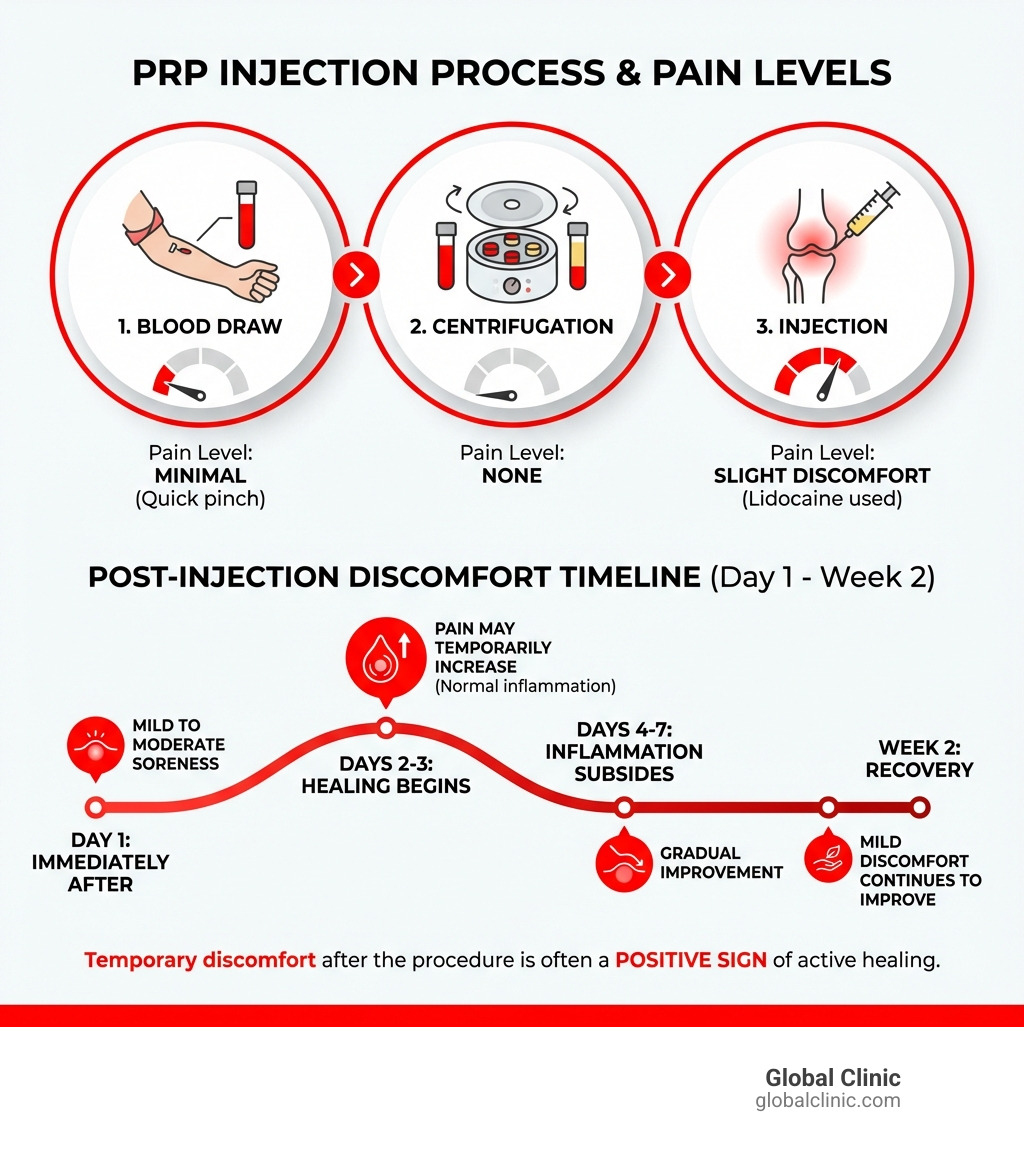
- During the injection: Slight discomfort, often compared to a blood draw or quick pinch
- Immediately after: Mild to moderate soreness at the injection site
- First 2-3 days: Pain may temporarily increase as healing begins (this is normal)
- Days 3-7: Gradual improvement as inflammation subsides
- Weeks 1-2: Mild discomfort may persist but continues to improve
The reality is that PRP injections are generally well-tolerated. Because the injured area is typically numbed with lidocaine before the injection, the actual procedure causes only slight discomfort. The lidocaine wears off within a few hours, and you may experience mild to moderate pain for the next few days as your body restarts its natural healing process.
What makes PRP different from other injections is that some temporary discomfort after the procedure is actually a good sign. The increased cellular activity and inflammation you feel means the treatment is working—your body is actively repairing damaged tissue.
I’m Ana Vinikov, Practice Manager at Global Clinic, and over the past 20 years, I’ve helped countless patients in Northern Chicago steer their concerns about does a prp injection hurt and guided them through successful PRP treatments for chronic pain conditions. My compassionate, patient-centered approach ensures you know exactly what to expect at every step.
Understanding Platelet-Rich Plasma (PRP) Therapy
Platelet-Rich Plasma (PRP) therapy is a cutting-edge regenerative medicine treatment that harnesses your body’s natural healing capabilities. At its core, PRP uses a concentration of your own blood platelets to create a powerful healing solution. Platelets contain hundreds of proteins called growth factors, which are crucial for initiating tissue repair. The process involves drawing a small blood sample and spinning it in a centrifuge to create a solution with up to 500% more growth factors than normal blood.
When this concentrated PRP is injected into an injured area, it kickstarts a “healing cascade,” signaling your body to repair cells, reduce chronic inflammation, and promote new, healthy tissue. This natural response is why PRP is considered a healing treatment for various conditions. At Global Clinic, we use PRP therapy to treat a range of issues, including chronic ligament and tendon damage like tendinopathy, osteoarthritis, joint pain, and muscle injuries.
For more detailed information on this innovative treatment, explore our guide on Platelet-Rich Plasma.
How is a PRP Injection Performed?
The PRP injection process at Global Clinic is straightforward and designed for your comfort, helping to ease any concerns about whether does a prp injection hurt.
- Blood Draw: The procedure starts with a simple blood draw from your arm, similar in volume to a routine lab test.
- Centrifugation: Your blood is placed in a centrifuge, which spins for about 15-20 minutes to separate and concentrate the platelets, creating the PRP solution.
- Plasma Separation: Our medical professional carefully extracts the concentrated PRP, discarding the other blood components.
- Numbing the Area: To ensure comfort, we anesthetize the injection site with a local anesthetic like lidocaine. This numbs the area and significantly reduces discomfort during the injection.
- Targeted Injection: Using ultrasound guidance for precision, the PRP is injected directly into the injured tissue. This imaging ensures the PRP is delivered exactly where it’s needed, maximizing efficacy and minimizing trauma.
- Post-Injection Care: We apply ice for 10-15 minutes post-injection to reduce immediate swelling. The entire in-office procedure takes about 30-40 minutes, and most patients can resume daily activities shortly after.
This minimally invasive procedure is performed right in our office in Northern Chicago. For more insights, visit our PRP Injections page.
So, Does a PRP Injection Hurt? A Breakdown of the Pain Experience
Now for the million-dollar question: does a prp injection hurt? While some discomfort is normal, most patients at Global Clinic find PRP injections quite manageable.
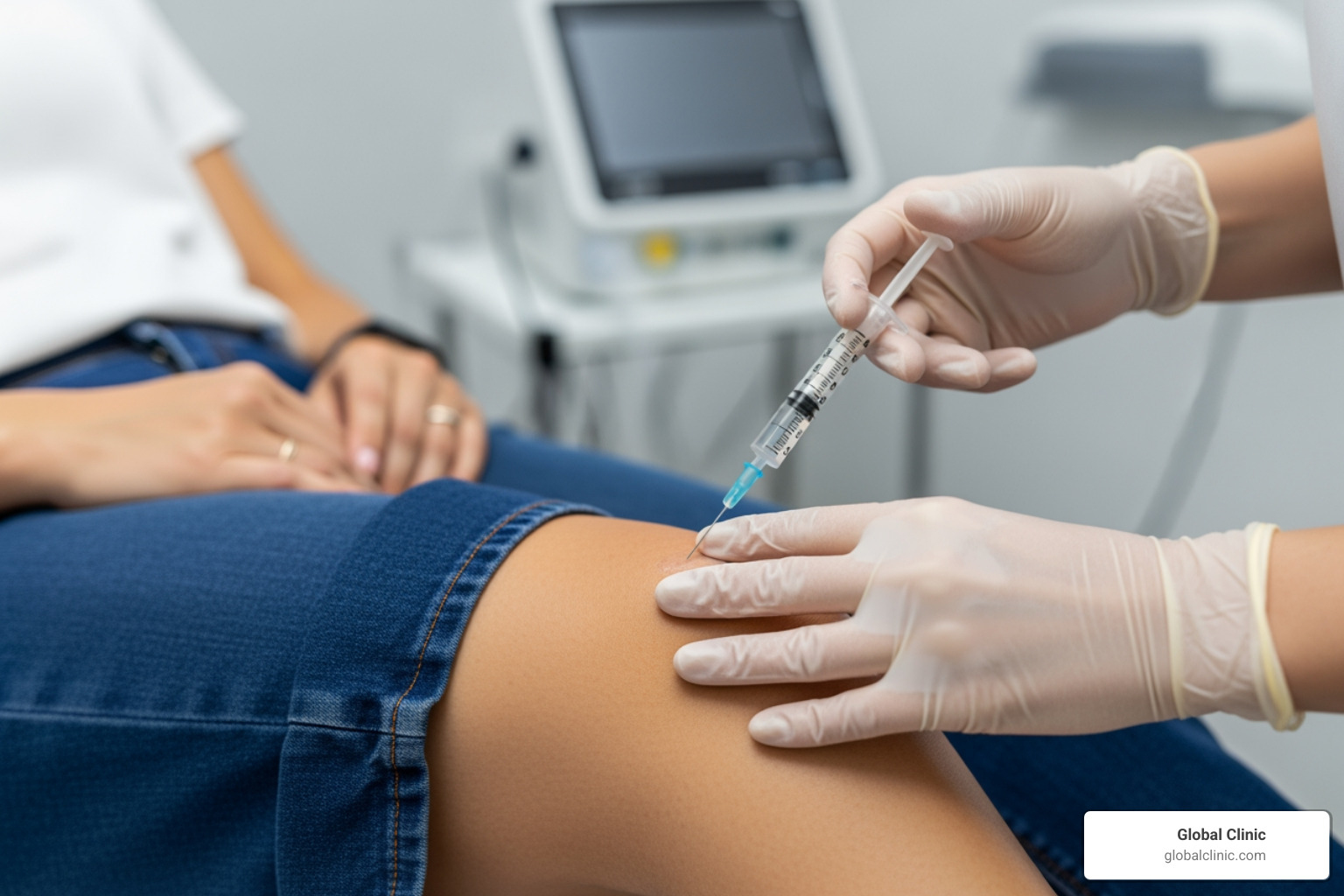
Pain perception is subjective, but patients often compare the sensation to a quick pinch or pressure, especially since we use a local anesthetic like lidocaine to numb the area. The numbing wears off after a few hours, which is when you can expect mild to moderate soreness at the injection site. This post-injection discomfort is a normal and expected part of the PRP healing process.
What Factors Determine if a PRP Injection Will Hurt?
The “ouch factor” of a PRP injection depends on several variables:
- Individual Pain Tolerance: Everyone’s pain threshold is different. We encourage open communication so we can tailor our approach to your needs.
- Treatment Area Sensitivity: Different body parts have varying sensitivity.
- Scalp: Injections for hair loss can be more sensitive due to the density of nerve endings.
- Joints (e.g., knee, shoulder): These injections often feel more like deep pressure. For conditions like shoulder pain, the procedure is generally well-tolerated. Learn more in our PRP for Shoulder Pain Guide.
- Tendons/Ligaments: These areas can be more sensitive, especially if already inflamed.
- Injection Depth: Deeper injections for joints or muscles may feel different than superficial ones.
- Practitioner’s Technique: The skill of the person administering the injection is key. Our experienced team uses ultrasound guidance for precise, comfortable placement.
- Patient Anxiety: Fear can heighten pain perception. We create a calm environment and are here to answer all your questions to help you relax.
Why Pain Can Temporarily Increase After the Injection
It may seem odd, but increased pain after a PRP injection is often a positive sign that the treatment is working. PRP therapy works by jump-starting your body’s healing cascade. The injected growth factors trigger a temporary, localized inflammatory response. This inflammation is the first stage of healing, bringing increased blood flow and repair cells to the site.
This intentional, controlled inflammation is why you may feel more soreness for a few days. The increased cellular activity and swelling mean your body is actively repairing the damaged tissue. This initial discomfort, which typically peaks within 48-72 hours, indicates that the regenerative process has begun. Understanding this is a key part of our PRP Pain Management Ultimate Guide.
Managing Pain and Ensuring a Smooth Recovery
Your healing journey involves more than just the injection. The steps you take before and after are crucial for minimizing discomfort and ensuring the best results. At Global Clinic, we provide comprehensive guidance for a smooth recovery.
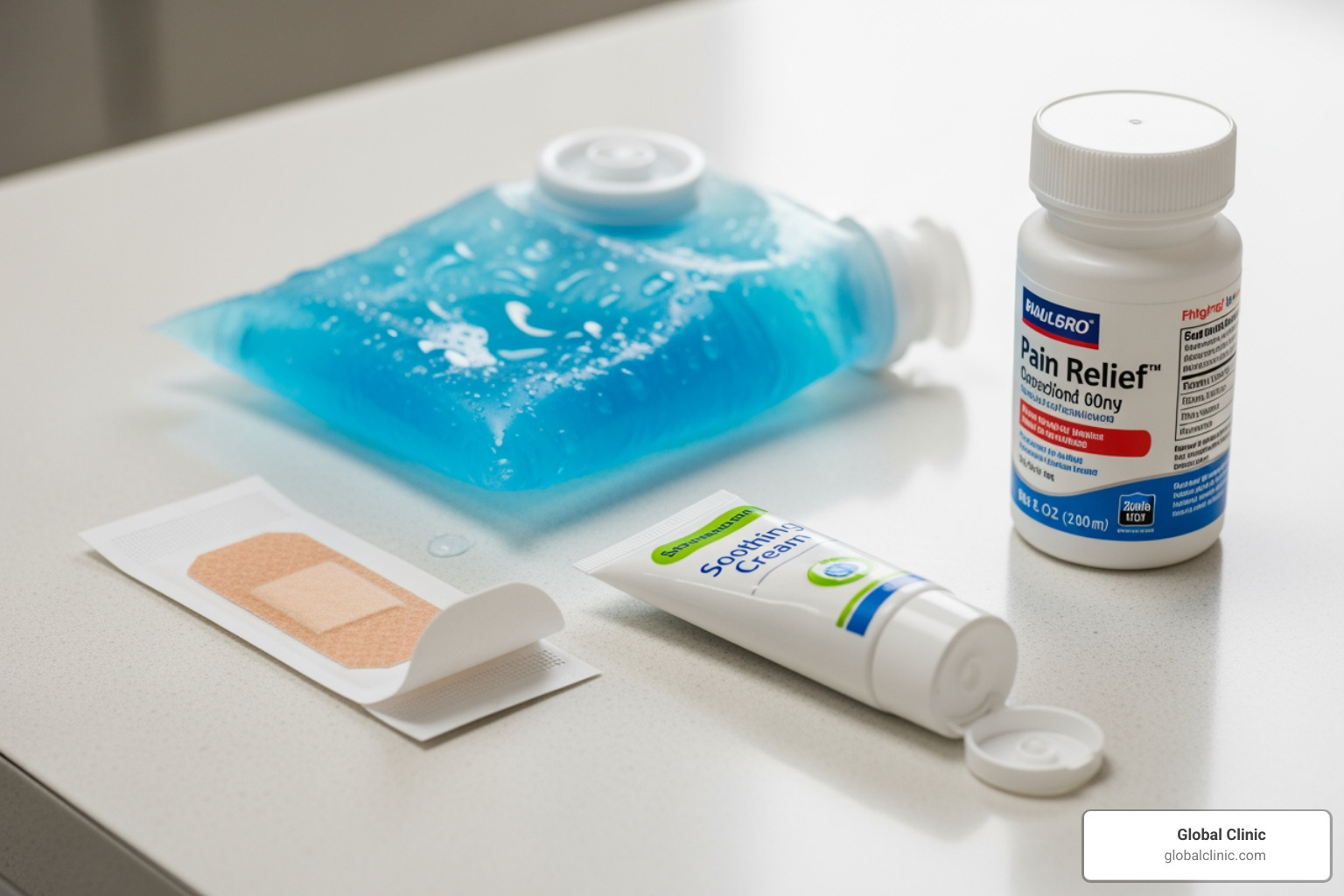
Before the Shot: How to Prepare and Minimize Discomfort
A few simple steps before your appointment can significantly reduce anxiety and pain.
- Communicate with Your Doctor: Discuss your pain concerns, tolerance, and any medications you’re taking.
- Hydrate: Drink plenty of water in the days leading up to your appointment to make the blood draw easier.
- Eat a Light Meal: Having a light meal or snack beforehand helps prevent lightheadedness.
- Avoid Certain Medications: Stop taking blood-thinning medications like NSAIDs (non-steroidal anti-inflammatory drugs) (e.g., ibuprofen, naproxen) and aspirin for at least 7 days prior, as they can interfere with healing. Always confirm with your doctor first.
- Wear Comfortable Clothing: Choose loose clothing that allows easy access to the treatment area.
- Relax: Practice deep breathing or listen to music if you feel anxious. Our team is here to help you feel at ease.
After the Shot: Effective Post-Procedure Care
Proper care after your injection is vital for managing pain and supporting healing.
- Rest and Modify Activity: Rest the treated area for the first few days and limit strenuous activity as advised by your doctor.
- Pain Management: Use acetaminophen (Tylenol) for discomfort. Crucially, avoid NSAIDs (like Advil, Motrin) and ice packs for the first 6 weeks, as they can hinder the inflammatory healing response that makes PRP effective.
- Bruising and Swelling: Some mild bruising and swelling are normal and usually subside within a few days.
- Hydration and Nutrition: Continue to drink water and eat a nutrient-rich diet to support healing.
- Gentle Movement: Your doctor may recommend gentle exercises or physical therapy after a couple of weeks to aid rehabilitation. Learn more in our Post Surgery Rehabilitation guide.
- Follow-Up: Attend all follow-up appointments to monitor your progress.
When to Be Concerned About Post-Injection Pain
While mild to moderate pain is expected for a few days, it’s important to know which symptoms are red flags.
Call Your Doctor If You Experience:
- Severe or Worsening Pain: Pain that is excruciating or worsens significantly after the first week.
- Signs of Infection: Fever, chills, increasing redness or warmth, or discharge from the injection site.
- Nerve Irritation: New or worsening numbness, tingling, weakness, or radiating pain.
- Unusual Swelling: Excessive or rapidly expanding swelling or bruising.
If you have any doubts, contact us at Global Clinic. Our Consultants in Pain Management are ready to assist you.
Frequently Asked Questions about PRP Injection Pain
We understand you have questions about the pain associated with PRP. Here, we address the most common inquiries.
How does PRP injection pain compare to other common injections?
The experience varies between the injection itself and the recovery period.
| Injection Type | During Injection | Immediately After | Long-term Effect |
|---|---|---|---|
| PRP Injection | Slight pinch/pressure (with anesthetic) | Mild to moderate soreness, pressure | Gradual healing, long-term pain relief |
| Corticosteroid Injection | Often similar to PRP (with anesthetic) | Mild soreness, sometimes immediate pain relief | Short-term pain relief, anti-inflammatory, no healing |
| Flu Shot/Vaccine | Quick, sharp prick | Mild arm soreness, muscle ache | Immunity, no direct pain relief for existing conditions |
| Joint Injection (General) | Pressure, sometimes sharp if nerve is hit (rare) | Tenderness, swelling | Diagnostic or therapeutic relief, depending on substance |
- PRP vs. Corticosteroid Injections: While the injection pain is similar, the after-effects differ. Corticosteroids suppress inflammation for quick relief but don’t heal tissue. PRP induces inflammation to start the healing process, causing temporary soreness that our patients see as an investment in long-term recovery.
- PRP vs. Flu Shot: A flu shot is a quick prick with brief muscle soreness. A PRP injection involves a deeper pressure sensation, and the post-injection soreness is more intense and lasts longer because it’s part of an active healing process.
- PRP vs. Other Joint Injections: The key difference is the post-injection response. PRP’s goal is to create an inflammatory healing reaction, which causes temporary pain. Other injections, like hyaluronic acid, aim for lubrication with less of an inflammatory response.
How long does soreness typically last after a PRP injection?
Post-injection soreness follows a general pattern. It typically peaks in the first 2 to 3 days as the healing inflammation is most active. After this peak, the pain gradually subsides over the next week. Mild discomfort may linger for 1 to 2 weeks as your body continues to repair tissue.
This timeline can be influenced by the treatment area, the severity of the injury, and your individual healing response. Significant pain relief from the underlying condition builds over several weeks or even months. Following post-care instructions is critical for an optimal recovery, which may be complemented by our Physical Therapist Complete Guide.
Are there risks with PRP that could cause pain?
PRP injections are very safe because they use your own blood (autologous), which eliminates the risk of allergic reactions. However, as with any needle procedure, there are minimal risks:
- Injection Site Pain: This is the most common side effect and is an expected, temporary part of the healing process.
- Bruising/Bleeding: Minor bruising or bleeding at the injection site is common and resolves quickly.
- Infection: Though very rare, any injection carries a risk of infection. We follow strict sterile protocols to minimize this.
- Nerve or Tissue Injury: In rare cases, a nerve or surrounding tissue could be irritated. Our use of ultrasound guidance to precisely place the needle significantly reduces this risk.
At Global Clinic, we discuss all potential risks during your consultation to ensure you are fully informed. For more on the safety of similar treatments, see our guide on Are PRF Injections Safe?.
Take Control of Your Healing Journey with PRP
We hope this guide has clarified the question, does a prp injection hurt, and given you a clear understanding of Platelet-Rich Plasma therapy. The journey to pain relief is personal, and we believe in empowering our patients with knowledge.
To recap, while temporary discomfort is part of the PRP process, it is typically manageable. The initial soreness is a positive sign that your body’s natural healing mechanisms are at work. By preparing properly and following post-procedure care, you can minimize discomfort and optimize your results. PRP therapy offers a powerful regenerative approach to managing chronic pain, potentially helping you avoid more invasive treatments.
At Global Clinic, we are dedicated to providing personalized, innovative care. Our state-of-the-art facility in Northern Chicago is equipped with the latest technology, and our compassionate experts are committed to helping you achieve a pain-free life with affordable treatment options. We are proud to serve communities across the region, including Arlington Heights, Chicago, Crystal Lake, Des Plaines, Elk Grove Village, and Glenview.
If you’re considering PRP injections and want to learn how this treatment can benefit you, we invite you to reach out. We’re here to answer your questions and develop a treatment plan customized to your unique needs.
Learn more about our advanced PRP Injections and find how we can help you take control of your healing journey.