






Main Types of IV Solutions and Fluid Classifications
Understanding the IV Drip Infusion Process
When you swallow a vitamin tablet or drink a glass of electrolyte fluid, your gastrointestinal tract must break down and absorb those substances. During this process, stomach acids and first-pass liver metabolism reduce the actual amount of nutrients that reach your bloodstream. An iv drip infusion, by contrast, provides 100% bioavailability. Every milligram of fluid, mineral, or compound enters the circulatory system immediately.
This direct absorption offers distinct pharmacokinetic advantages. In clinical scenarios where rapid restoration is vital, direct venous access delivers predictable fluid volume and rapid cellular distribution. If you want to dive deeper into the basics of direct fluid administration, you can learn more about IV Therapy.
Evolution and History of Intravenous Care
Intravenous administration has come a long way. Early recorded attempts at blood transfusion date back centuries—including an infamous, unsuccessful 1492 attempt involving Pope Innocent VIII. However, modern intravenous fluid administration truly began in the 1830s when Dr. Thomas Latta used saline injections to treat patients suffering from dehydration during the European cholera epidemic.
By the mid-20th century, single-use, sterile plastic catheters replaced rigid glass tubes and reusable metal needles, transforming standard patient care. Modern medical facilities now use specialized polymers that allow catheters to sit comfortably in a vein for days without causing severe irritation. For more background, you can read about the historical context of intravenous therapy.
Oral Rehydration vs. Direct Venous Delivery
Oral hydration works well for daily maintenance, but it has physiological limits. The human digestive tract can only process and absorb liquid at a restricted rate. Severe gastroenteritis, intense physical exertion in hot climates, or gastrointestinal disorders can impair gut absorption, making oral rehydration insufficient or too slow.
Direct venous delivery eliminates the barrier of gut capacity. By supplying sterile water and essential electrolytes straight into your veins, fluid balances normalize rapidly. Check out our complete guide to IV infusions to learn more about how fluid delivery methods differ.
Crystalloids vs. Colloids
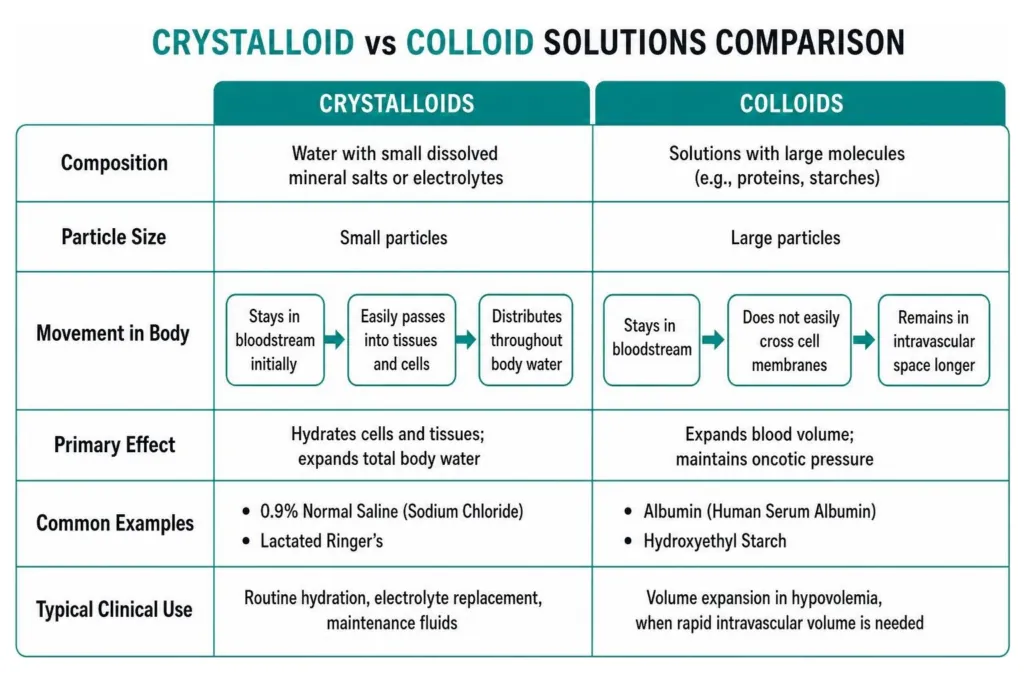
Healthcare providers categorize intravenous fluids into two primary chemical groups: crystalloids and colloids.
- Crystalloids: These are aqueous solutions containing small mineral salts or water-soluble molecules. Because their particles are tiny, crystalloid fluids easily pass from the bloodstream into surrounding tissues and cells. The most common crystalloid is 0.9% normal saline (sodium chloride), which is isotonic with human blood. Another standard formulation is Lactated Ringer’s, which contains sodium, chloride, potassium, calcium, and lactate to mimic plasma.
- Colloids: These contain high-molecular-weight substances—such as proteins (like albumin) or large starches—that do not easily cross cell membranes. Colloids stay within the intravascular space longer, pulling liquid into the blood vessels to expand blood volume.
To review the exact clinical management strategies involved, refer to these clinical standards for IV fluid management.
Isotonic, Hypertonic, and Hypotonic Solutions
Within crystalloid solutions, fluid selection depends on osmotic balance and cellular hydration needs:
- Isotonic Solutions (e.g., 0.9% Normal Saline, Lactated Ringer’s): These have a solute concentration equal to human blood. They increase fluid volume without causing cells to shrink or swell.
- Hypertonic Solutions (e.g., 3% Sodium Chloride, D5NS): These feature a higher solute concentration than blood, drawing excess water out of swollen cells and into the bloodstream.
- Hypotonic Solutions (e.g., 0.45% Sodium Chloride): These contain a lower solute concentration than blood, allowing fluid to shift out of the bloodstream and directly into dehydrated cells.
To explore tailored nutrient fluid blends, read our guide on exploring hydration and nutrient bag formulations.
Clinical Indications for Hydration Therapy
Direct fluid restoration is essential in many clinical situations, including:
- Severe dehydration caused by acute viral gastroenteritis, vomiting, or severe diarrhea
- Intraoperative and postoperative fluid management during surgical procedures
- Emergency care for burn injuries or acute physical trauma
- Malabsorption syndromes, Crohn’s disease, or chronic gut inflammation
- Severe electrolyte imbalances, such as symptomatic hyponatremia
If you are scheduled for a drip or want to prepare for your session, read everything you need to know about receiving an IV.
Methods, Equipment, and Venous Access Types

Methods of IV Administration: Bolus, Infusion, and Piggyback
Intravenous therapy uses several primary delivery techniques based on how quickly a patient needs fluids or medication:
- IV Push / Bolus: A concentrated fluid or medication is administered directly into the line over a short period using a syringe. This provides an immediate therapeutic dose.
- Continuous Volumetric Infusion: A steady flow of fluid is administered over an extended period. This is often controlled by an electronic volumetric pump or a calibrated gravity drip set.
- Secondary Piggyback Infusion: A smaller fluid bag containing medication is hung higher than the primary hydration bag and connected to the main line’s Y-site. The secondary solution infuses first before the primary line automatically resumes.
To see how medical facilities maintain consistent administration protocols, review these national standards for continuous infusion safety.
Peripheral vs. Central Venous Access
The choice between peripheral and central venous access depends on the duration of therapy and the type of fluids required.
- Peripheral Access: A short catheter is inserted into small veins in the hand, forearm, or inner elbow. Peripheral lines are designed for short-term use. When maintained with sterile technique, a peripheral line can safely remain in place for up to 72–96 hours before needing rotation.
- Central Access: For long-term treatments or specialized medications, central venous access devices (such as PICC lines, Hickman catheters, or implanted ports) are used. These lines terminate directly near the heart in the superior vena cava, accommodating larger fluid volumes and higher infusion speeds without irritating vessel walls.
To understand what happens during treatment, explore our guide to IV therapy benefits and expectations.
Catheter Placement and Insertion Equipment
Placing a peripheral line requires clinical skill and strict adherence to aseptic technique:
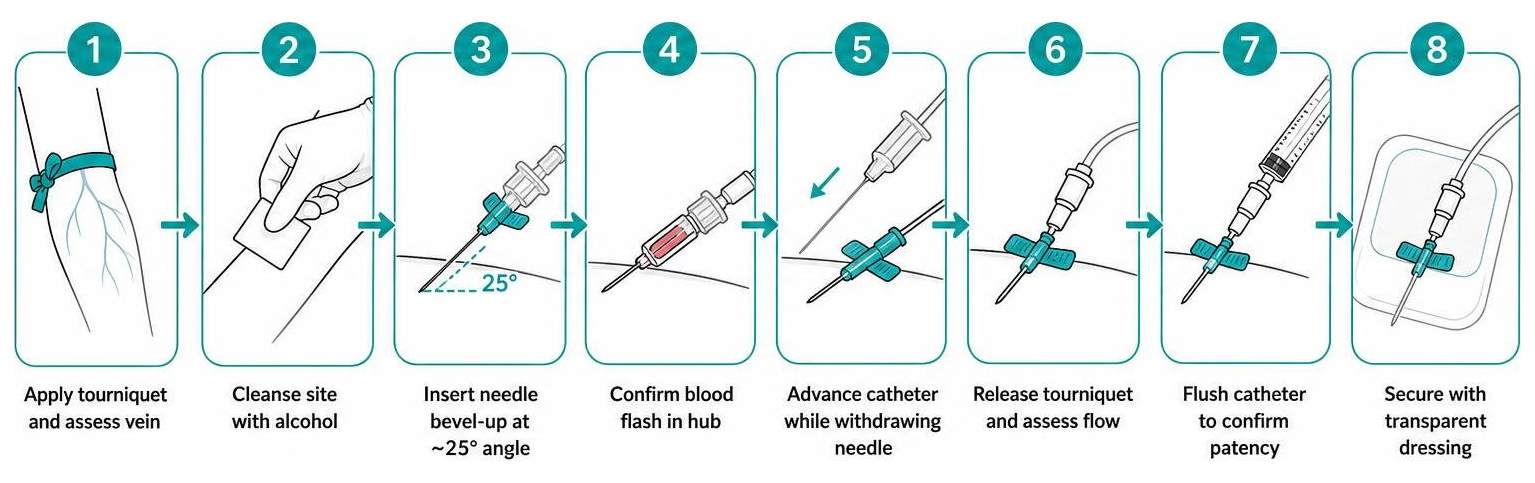
- Equipment: A single-use cannula (ranging from 14-gauge for acute trauma to 22-24 gauge for smaller veins), alcohol preparation wipes, a tourniquet, sterile transparent dressing, extension tubing, and a flush syringe.
- Technique: The clinician cleanses the skin site thoroughly. A tourniquet is applied to engorge the vein. The needle is inserted bevel-up at an angle of roughly 25 degrees. Once a clear blood flash shows in the hub, the soft flexible catheter advances into the vein as the internal needle pulls back. The tourniquet is released, the catheter is flushed to ensure flow, and a transparent sterile dressing secures the device.
For step-by-step nursing guidelines, consult these practical nursing protocols for IV therapy.
Safety, Complications, and Wellness Uses
Non-Medical Applications of IV Drip Infusion
Beyond emergency medicine, wellness therapies use targeted IV infusions to deliver vitamins, antioxidants, and minerals directly to cells.
- Athletic Recovery & Rehydration: Intense exercise depletes water and electrolyte stores. Targeted drips replenish key minerals, aiding muscle recovery after heavy endurance exertion. (Note: anti-doping bodies like WADA regulate athletic IV volumes to under 100 mL per 12 hours unless an explicit medical exemption exists).
- Myers’ Cocktail & Micronutrient Blends: Formulations combining vitamin C, B-complex vitamins, magnesium, and calcium help combat fatigue, promote immune function, and boost metabolic energy.
- Targeted Antioxidant Support: Drips containing high-dose vitamin C, glutathione, or alpha-lipoic acid promote cellular repair and combat oxidative stress.
- Cellular Support Drips: Nicotinamide Adenine Dinucleotide (NAD+) infusions support cellular energy production, mitochondrial health, and metabolic function.
Interested in cellular hydration and recovery? Explore cellular benefits of NAD infusion or discover B12 infusion benefits.
Potential Risks and Infusion Complications
While an iv drip infusion is safe when performed by trained professionals, potential complications can include:
- Infiltration: Fluid leaks out of the vein into surrounding tissue due to catheter displacement, causing local swelling and cool skin.
- Extravasation: A specialized form of infiltration where vesicant medications leak into tissue, requiring immediate discontinuation to prevent local irritation.
- Phlebitis: Inflammation of the vein wall that causes warmth, redness, or tenderness along the vein pathway.
- Catheter-Site Infection: Microorganisms can enter the body if skin decontamination or dressing maintenance is insufficient.
- Fluid Overload: Rapid infusion of large fluid volumes can cause swelling, breathlessness, or elevated blood pressure.
Our medical staff monitors every session closely to ensure maximum comfort and safety.
Frequently Asked Questions About IV Hydration
How long does a standard IV drip session take?
A typical wellness or hydration infusion session takes 30 to 60 minutes. The exact duration depends on the total volume, your customized formula, and the safe drip rate set by your specialist.
Does getting an IV catheter inserted hurt?
Insertion feels like a brief pinch or sting as the needle pierces the skin. Once the flexible catheter sits inside the vein, the sharp needle is removed completely, leaving only a soft, flexible tube. Most patients remain comfortable throughout their session.
How often can you get an IV drip infusion?
Infusion frequency depends on your health goals, medical needs, and initial hydration levels. Some patients benefit from a single recovery session after intense travel or physical exertion, while others receive scheduled weekly or monthly therapies as part of a ongoing wellness plan.
Conclusion: Restoring Hydration and Wellness
Intravenous therapy provides direct, reliable hydration and nutrient support. By delivering fluids, vitamins, and minerals directly into your circulatory system, an iv drip infusion bypasses digestive limitations to support cellular repair and daily wellness.
At Global Clinic, our experienced medical staff brings over two decades of healthcare expertise to patient care across Northern Chicago, including communities like Niles, Skokie, Glenview, Des Plaines, Morton Grove, Mount Prospect, and Park Ridge. We combine clinical experience with modern facilities to provide safe, comfortable, and personalized care.
If you are recovering from illness, managing chronic fatigue, or seeking optimal metabolic support, speak with our specialists to explore expert IV therapy options.