








What Is Intravenous IV Therapy — and Do You Need It?
Intravenous IV therapy is a medical treatment that delivers fluids, medications, vitamins, or nutrients directly into your bloodstream through a vein.
Here’s a quick look at the essentials:
- What it does: Bypasses your digestive system for immediate, 100% absorption
- Who uses it: Patients with dehydration, chronic illness, nutrient deficiencies, or those recovering from surgery or injury
- How it’s given: A small catheter is inserted into a vein, connected to a drip bag or infusion pump
- Common uses: Rehydration, antibiotic delivery, pain management, biologics for autoimmune conditions, and vitamin infusions
- Session length: Typically 30 minutes to several hours, depending on the treatment
Your body is roughly 60% water, and every system depends on a careful balance of fluids, electrolytes, and nutrients. When that balance is disrupted — by illness, surgery, chronic disease, or even intense exercise — oral intake alone sometimes isn’t enough. That’s where IV therapy comes in.
It’s one of the most common medical procedures in healthcare, used in hospitals, outpatient clinics, and specialized infusion centers every day. But it’s also become increasingly popular in wellness settings, from IV vitamin bars to boutique drip lounges — which raises important questions about when it’s genuinely helpful and when it’s not.
This guide covers everything you need to know: how IV therapy works, what types exist, what conditions it treats, and how to make a safe, informed choice.
I’m Ana Vinikov, practice manager at Global Clinic, a multidisciplinary medical center in Northern Chicago with over 20 years of experience offering evidence-based treatments including intravenous IV therapy for pain management, recovery, and chronic disease support. Our goal here is simple — give you clear, honest information so you can make the best decision for your health.
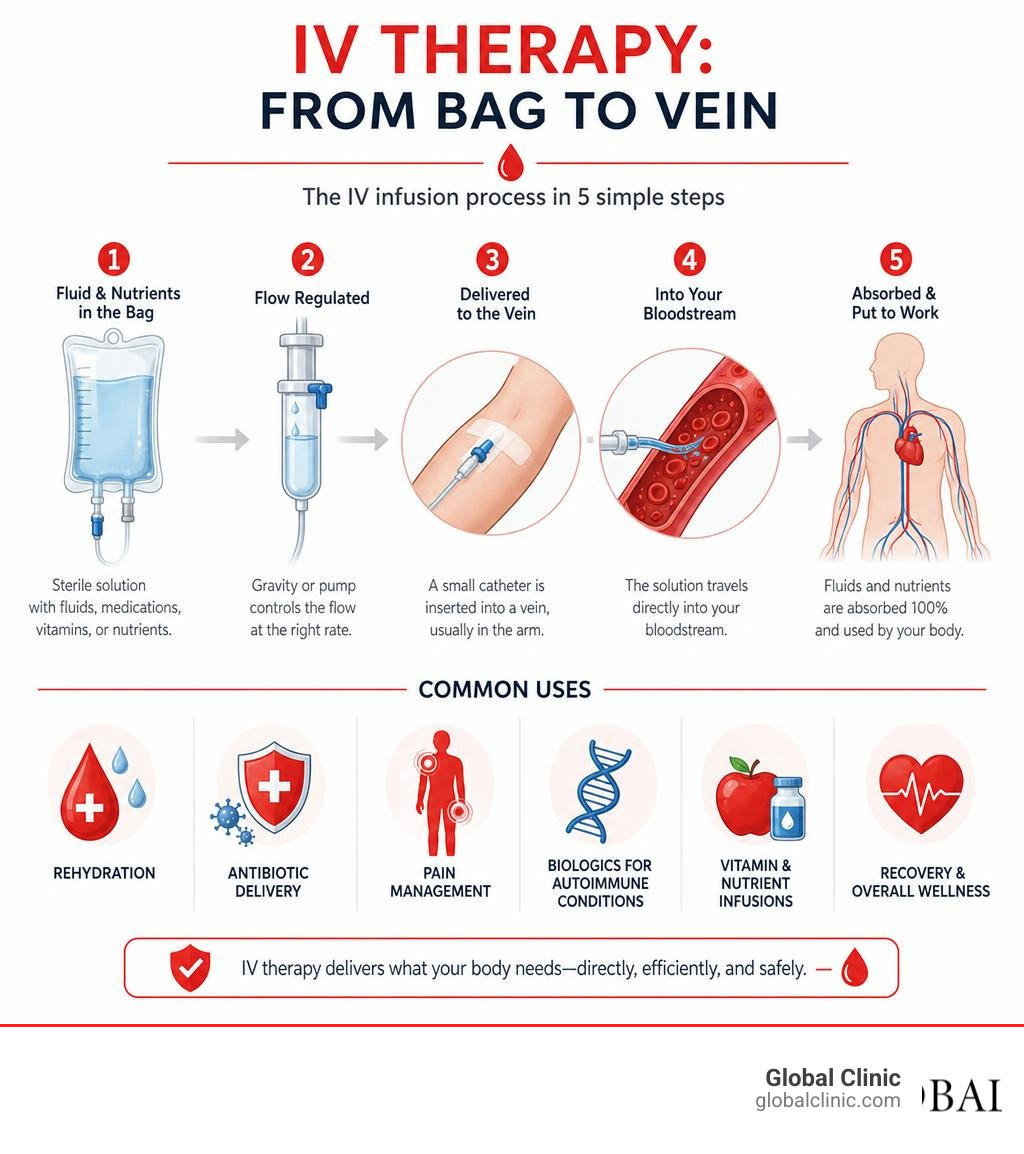
Quick look at intravenous iv therapy:
Understanding Intravenous IV Therapy: How It Works
To truly understand how intravenous IV therapy works, we have to look at the circulatory system. When you swallow a pill, drink water, or eat food, everything must pass through your digestive tract first. Your stomach and intestines break down the substances, which are then processed by the liver before entering the general circulation. This journey is known as “first-pass metabolism,” and it significantly reduces the concentration of the active ingredients that actually reach your organs and tissues.
By contrast, the intravenous route bypasses the digestive system entirely. Medications and fluids are introduced directly into a vein, meaning they enter the circulatory system immediately. This gives them a bioavailability of exactly 100%. For a patient requiring rapid rehydration, immediate pain management, or precise dosing of critical medications, this direct path can make a profound difference. You can read more about the medical applications of this technique in the Medical News Today guide on IV therapy uses or explore our overview of IV Therapy.

The Science of Direct Vein Access
How do we safely access this direct highway to your cells? It begins with selecting the right type of access point.
For short-term treatments, a peripheral IV line is the standard choice. A clinical professional uses a temporary needle to guide a tiny, flexible plastic tube called a cannula into a small vein, usually in your hand or forearm. Once the cannula is securely in place, the guiding needle is immediately removed, leaving only the soft plastic tube in your vein.
For long-term treatments, a central line or a Peripherally Inserted Central Catheter (PICC line) may be used. These terminate in a much larger vein close to the heart, allowing for the administration of highly concentrated medications or long-term nutrition that might otherwise irritate smaller peripheral veins.
What to Expect During Your Intravenous IV Therapy Session
If you are new to the process, it is completely normal to feel a little nervous about the needle. Knowing what to expect can help ease your mind.
Your session begins with a clinician assessing your veins to find the most suitable spot. They will look for a healthy, bouncy vein with good blood flow. Once the site is chosen, the skin is thoroughly cleaned with an antiseptic solution to keep the process sterile.
Next, a tourniquet is applied to your arm to make the vein easier to locate. The clinician inserts the needle and cannula. You will feel a quick pinch, which lasts only a second. Once the cannula is threaded in, the needle is discarded, and the tubing is taped securely to your skin.
The tubing connects to an IV bag, where the flow of fluids is controlled. Sometimes, we use gravity and a manual dial to regulate the drip rate; other times, we use an electronic infusion pump to deliver a highly precise dosage. Throughout the session, the clinical staff will monitor you to ensure the fluid is flowing smoothly and that you are comfortable. For a deeper dive into the step-by-step process, check out What to expect during IV therapy.
Common Types of IV Fluids and Medications
Not all IV bags contain the same contents. Depending on your medical needs, the solution inside the bag is tailored to restore balance, deliver nutrition, or administer powerful targeted therapies.
Crystalloids vs. Colloids
The fluids used in IV therapy are broadly categorized into two main types: crystalloids and colloids. They behave differently once they enter your bloodstream.
| Fluid Type | Description | Common Examples | Primary Medical Uses |
|---|---|---|---|
| Crystalloids | Aqueous solutions of mineral salts or other water-soluble molecules. They have small molecules that flow easily out of the blood vessels and into surrounding tissues. | Normal Saline (0.9% Sodium Chloride), Lactated Ringer’s, Dextrose 5% in Water (D5W) | Rapid rehydration, correcting electrolyte imbalances, fluid replacement during surgery. |
| Colloids | Solutions containing larger, insoluble molecules that cannot easily pass through blood vessel walls. They stay in the blood vessels longer. | Albumin, Hetastarch, Dextran | Expanding blood volume quickly, treating severe blood loss or shock. |
Normal saline, which is a 0.9% concentration of sodium chloride, is isotonic with human blood, making it the most common and versatile choice for basic rehydration. Lactated Ringer’s is another highly popular crystalloid that closely mimics the body’s natural electrolyte balance and is frequently used during surgeries or for burn patients. You can learn more about how these solutions are formulated by exploring IV hydration and nutrition bags.
Specialized Additives and Medications
Beyond simple hydration, IV lines are the preferred delivery method for a wide range of active medical compounds:
- Antibiotics and Antivirals: For severe infections, delivering these medications intravenously ensures they reach therapeutic levels in the blood immediately.
- Biologics and DMARDs: Used to manage autoimmune diseases by targeting specific inflammatory pathways.
- Electrolytes: Rapidly corrects dangerous imbalances in potassium, magnesium, or calcium.
- Parenteral Nutrition: When a patient’s gastrointestinal tract cannot absorb nutrients, Total Parenteral Nutrition (TPN) bags deliver a complete mix of proteins, fats, carbohydrates, and essential vitamins directly into the bloodstream.
One classic example of a multivitamin infusion used in clinical settings to treat undernutrition is the “banana bag” (so named because the B-vitamins turn the fluid a bright yellow). Learn more about these clinical formulations in our guide to IV banana bags.
Medical Conditions and Situations Requiring IV Therapy
Because of its speed and efficiency, intravenous IV therapy is a cornerstone of modern clinical medicine. It is used across a broad spectrum of acute and chronic health situations.
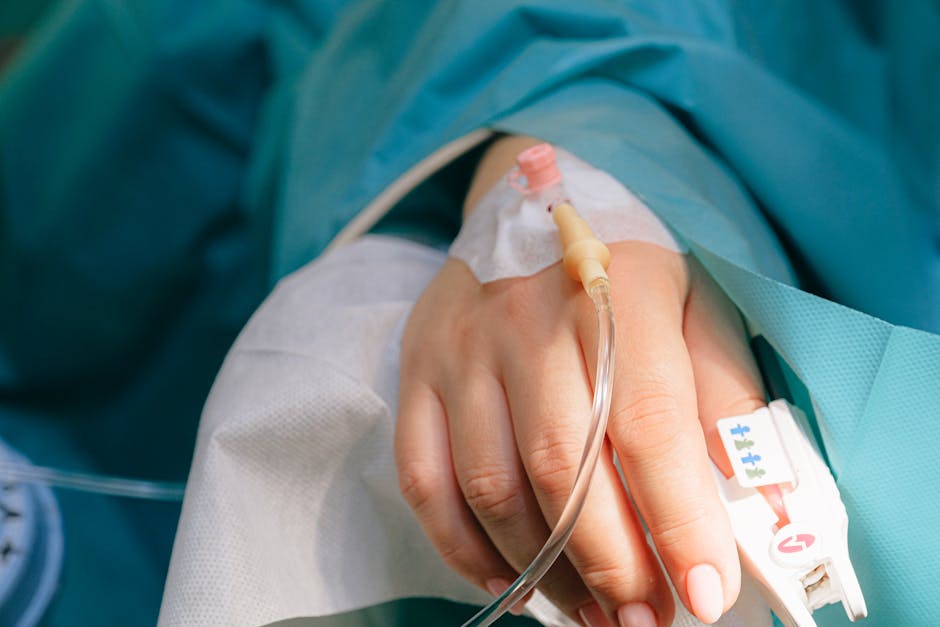
Acute Rehydration and Emergency Care
In emergency medicine, IV access is established almost immediately. Severe dehydration caused by relentless vomiting, diarrhea, heat stroke, or extreme physical exertion can quickly become life-threatening. When your body is severely depleted of fluids, drinking water isn’t fast enough — and if you are actively vomiting, it may be impossible.
In cases of trauma or major surgery, IV therapy is vital for replacing lost blood volume and maintaining stable blood pressure. While historically popular for rapid recovery in competitive sports, the World Anti-Doping Agency now strictly prohibits intravenous injections of more than 100 mL per 12 hours for athletes, except under specific medical exemptions. For a comprehensive overview of how these life-saving infusions work, see our complete guide to IV infusions.
Chronic Disease Management and Biologics
For patients living with chronic, painful, or autoimmune conditions, IV therapy is an essential part of ongoing care. In diseases like rheumatoid arthritis, Crohn’s disease, and multiple sclerosis, biologic medications (such as Remicade or Ocrevus) are administered via regular infusions.
These therapies help manage severe inflammation, reduce pain, and prevent joint or tissue damage. Delivering these complex medications in a controlled clinical environment allows medical professionals to monitor for any adverse reactions while ensuring the patient receives their exact therapeutic dose.
IV Vitamin Therapy vs. Standard IV Therapy
If you have driven through Northern Chicago lately — whether around Skokie, Glenview, or Des Plaines — you have likely noticed the rise of “IV bars” and “drip lounges” offering elective vitamin infusions. It is important to understand how these wellness trends differ from standard, clinically indicated IV therapy.
Standard Medical Infusions vs. Intravenous IV Therapy for Wellness
The primary difference lies in medical necessity. Standard IV therapy is prescribed by a physician to treat a diagnosed medical condition, such as severe dehydration, a bacterial infection, or nutrient malabsorption due to a disease like Celiac or Crohn’s.
Elective wellness infusions, on the other hand, are typically sought out by healthy individuals looking for an energy boost, hangover relief, or skin health support. The most famous wellness blend is the Myers’ cocktail, developed in the 1960s by Dr. John Myers. It typically contains high doses of B vitamins, vitamin C, calcium, and magnesium mixed with sterile water.
While many people report feeling refreshed after these sessions, major medical institutions advise caution. For instance, the Harvard Health evaluation of IV vitamin replenishment points out that scientific evidence supporting these wellness claims in healthy individuals is limited. For most people, a balanced diet and oral hydration are more than sufficient. You can read more about the medical perspective on these elective treatments in the Merck Manual analysis of Myers’ Cocktail. If you are curious about why people choose these options, you can explore the trend further in our article on why you should try IV bar drips.
Popular Wellness Blends and Their Claims
Many wellness clinics offer proprietary blends designed for specific health goals. Some of the most frequently requested additives include:
- Vitamin B12: Often sought out to combat fatigue and support nervous system health. Read about its benefits in our post on B12 IV drip benefits.
- Glutathione: A powerful antioxidant marketed for its skin-brightening properties. You can learn about the clinical reality of this treatment in our guide on glutathione for skin health.
- NAD+ (Nicotinamide Adenine Dinucleotide): Coenzyme infusions aimed at supporting cellular repair, mental clarity, and healthy aging.
Benefits, Risks, and Potential Complications
Like any medical procedure, intravenous IV therapy comes with a balance of benefits and risks. Understanding both sides of the coin is essential for your safety.
Key Benefits of Intravenous Administration
The primary advantage of IV therapy is its unmatched speed and efficiency. Because the fluid goes directly into circulation, patients often experience rapid relief from symptoms like pain, nausea, or severe dehydration.
For individuals with compromised digestive systems — such as those recovering from stomach surgery or managing severe malabsorption syndromes — IV therapy ensures their bodies actually receive the vital nutrients they need to heal. Discover the full range of physiological advantages in our article on the benefits of IV therapy or explore more about how it works under the skin of IV benefits.
Potential Risks and Side Effects
While generally safe when performed by trained professionals, IV therapy is an invasive procedure that carries potential complications:
- Infiltration: Occurs when the IV fluid accidentally leaks into the surrounding tissue instead of entering the vein, causing swelling, redness, and localized pain.
- Phlebitis: Inflammation of the vein, which can be caused by mechanical irritation from the catheter or chemical irritation from certain medications.
- Infection: If sterile techniques are not strictly followed, bacteria can enter the puncture site, potentially leading to localized skin infections or even systemic bloodstream infections.
- Fluid Overload: Receiving too much fluid too quickly can strain your heart and kidneys, leading to swelling, high blood pressure, or difficulty breathing.
- Air Embolism: A rare but serious complication where an air bubble enters the vein and blocks blood flow.
Choosing a Safe Clinic and Questions to Ask Your Provider
Because of the risks associated with invasive procedures, where you receive your intravenous IV therapy matters. Whether you live in Niles, Glenview, Park Ridge, or Morton Grove, you should always prioritize safety and medical oversight.
What to Look For in a Reputable Facility
When choosing a facility for an IV infusion, look for the following safety standards:
- Qualified Medical Supervision: The clinic should be overseen by board-certified medical professionals, and infusions should always be administered by licensed, experienced registered nurses.
- A Sterile Environment: The facility must follow strict aseptic protocols, using single-use, sterile equipment.
- Thorough Medical Screening: A reputable clinic will never administer an IV without first reviewing your medical history, current medications, and vital signs.
- Emergency Preparedness: The staff must be trained and equipped to handle rare but serious complications, such as allergic reactions or fluid overload.
Essential Questions for Your Healthcare Provider
Before any fluid enters your vein, protect your health by asking your provider these questions:
- What exactly is in this IV bag, and why is this specific formulation recommended for me?
- Who will be inserting the IV and monitoring me throughout the entire session?
- What are the potential side effects of these specific ingredients, and how do they interact with my current medications?
- How do you screen patients to ensure they don’t have underlying heart or kidney conditions that make fluid infusions risky?
Frequently Asked Questions About IV Therapy
We believe that informed patients make the best health decisions. Here are answers to some of the most common questions we hear at our Northern Chicago locations.
How long does an IV therapy session take?
Most standard IV therapy sessions take between 30 and 60 minutes. However, the exact duration depends on the total volume of fluid being delivered and the specific medications involved. Some complex biologic infusions or specialized therapies must be administered slowly over several hours to ensure patient safety and comfort.
Can I receive IV therapy at home?
While some mobile services offer at-home IV infusions, undergoing the procedure in a dedicated clinical setting is generally the safest choice. A clinic provides a controlled, highly sterile environment and immediate access to emergency medical equipment and professional oversight should any complications arise. If you want to learn more about home-based options for specialized cellular therapies, read our guide on NAD drip at home.
Is IV therapy safe for everyone?
No, IV therapy is not suitable for everyone. Individuals with certain medical conditions — particularly congestive heart failure, chronic kidney disease, or severe hypertension — are at a much higher risk of fluid overload, which can cause dangerous fluid buildup in the lungs. Pregnant or breastfeeding women should also avoid elective wellness IVs, as the safety of high-dose vitamin infusions has not been thoroughly studied in these populations. Always undergo a medical screening before starting any treatment.
Conclusion
Intravenous IV therapy is a powerful medical tool that offers rapid rehydration, immediate drug delivery, and targeted support for chronic conditions. Whether you are recovering from an acute illness, managing a complex autoimmune flare-up, or seeking specialized clinical care, understanding how IV therapy works is the first step toward making safe, effective choices for your body.
At Global Clinic, we have spent over 20 years serving the Northern Chicago community — including our neighbors in Niles, Skokie, Glenview, Park Ridge, and Des Plaines. Our multidisciplinary team is dedicated to providing personalized, evidence-based pain management, physical therapy, chiropractic care, regenerative medicine, and supportive clinical therapies. We focus on treating the whole person in a state-of-the-art facility designed for your safety and comfort.
If you have questions about whether IV therapy is appropriate for your unique health goals, we encourage you to consult with a medical professional. Schedule an appointment for IV infusions with our specialists today to discuss your personalized recovery path.