





Regenerative Medicine Solutions for Joint Pain: What to Know
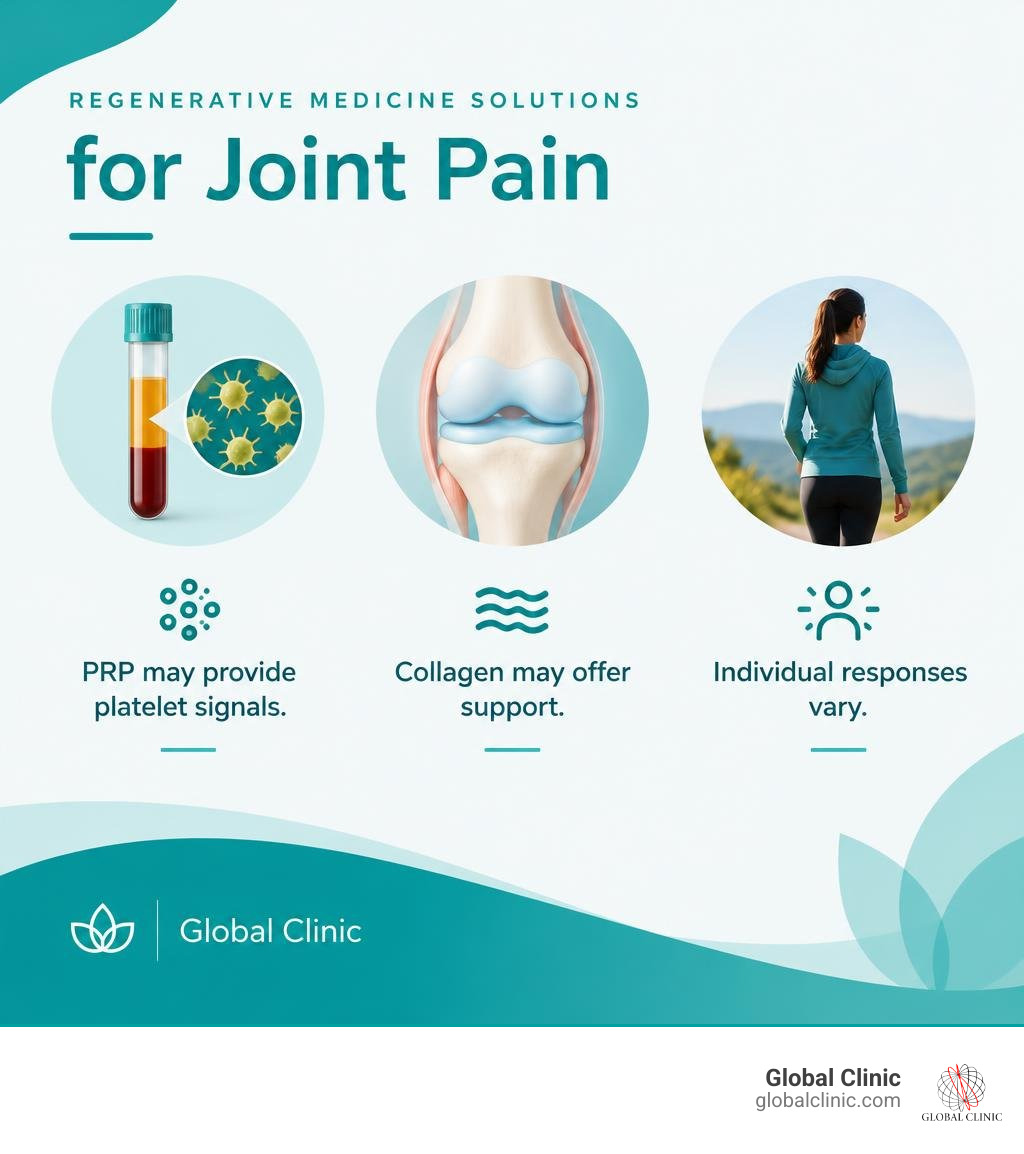
Regenerative medicine solutions for joint pain include platelet-rich plasma (PRP) and collagen therapy. PRP uses platelets from your own blood, while collagen therapy is intended to support joint and soft tissue structures. These options may help some people manage pain and move more comfortably, but results vary. Neither is a proven way to regrow damaged cartilage.
The right starting point is a joint evaluation. A provider can look at what is causing your pain and whether regenerative care, physical therapy, or a combination makes sense for you.
I’m Anna Slavin, Practice Manager at Global Clinic in Niles, where I help patients connect with our team to discuss Regenerative medicine solutions. Next, we’ll look at how these options may work and what questions to ask before choosing one.
Basic Regenerative medicine solutions glossary:
Mechanisms of Action in Cellular and Biologic Joint Therapies
When joints experience chronic wear, the issue goes beyond simple structural friction. Degenerative joint conditions involve ongoing cellular signaling changes, localized metabolic shifts, and sustained tissue inflammation that break down joint structures over time. Articular cartilage possesses limited intrinsic healing capacity due to its avascular nature, making persistent microtrauma particularly difficult for the body to repair without clinical intervention. Over time, recurring mechanical stress triggers an imbalance between tissue breakdown and natural cellular repair, accelerating degenerative changes in the synovial joint capsule.
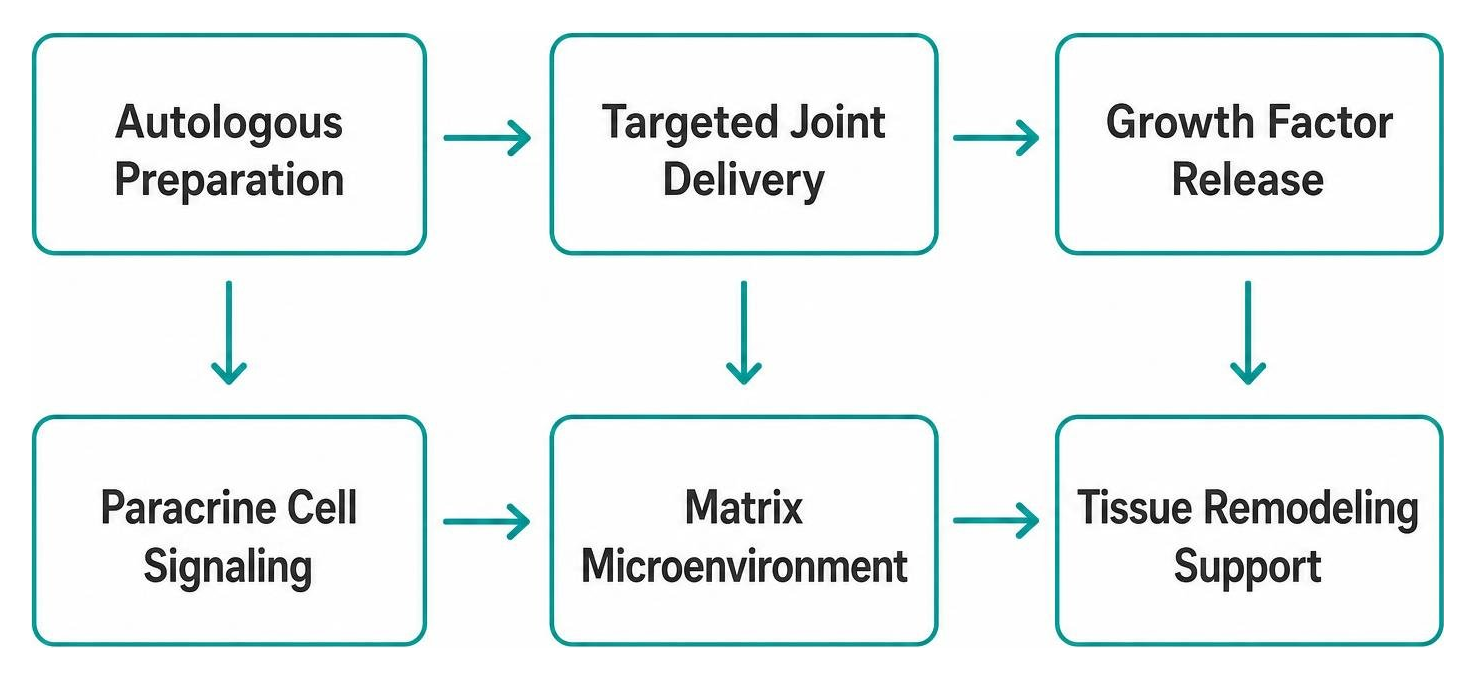
Biological approaches to joint care aim to alter this local environment. Rather than simply numbing discomfort, cellular therapies deliver bioactive signaling molecules directly to affected tissues. These molecules support extracellular matrix remodeling, encourage local cellular communication, and help modulate inflammatory processes within the synovial capsule. By introducing these biological components, clinicians seek to interrupt the chronic inflammatory cycle and foster an internal environment favorable to tissue stability.
Our practitioners bring over 20 years of experience from the US and Europe to evaluate how non-surgical modalities interact with joint mechanics. By utilizing targeted Regenerative Joint Therapy, clinical care focuses on restoring functional movement patterns while supporting the body’s natural cellular maintenance pathways.
How Autologous Biologics Provide Regenerative Medicine Solutions
Autologous biologics rely on components derived from your own biological fluids. The most established of these is Platelet Rich Plasma (PRP). When whole blood is processed in a specialized centrifuge, platelets are separated and concentrated above baseline physiological levels.
Upon delivery into an injured tendon or joint capsule, activated platelets degranulate, releasing a concentrated pool of cytokines and growth factors, including:
- Transforming Growth Factor-Beta (TGF-β)
- Platelet-Derived Growth Factor (PDGF)
- Vascular Endothelial Growth Factor (VEGF)
- Fibroblast Growth Factor (FGF)
These proteins act as chemical messengers that recruit local repair cells and facilitate natural tissue maintenance. Research also explores matrix structures that form a three-dimensional scaffold network, allowing for a sustained, gradual release of growth factors over time.
Cellular Signaling, Microenvironment, and Secretome Profiling
In modern biological research, scientists increasingly recognize that therapeutic effects are driven largely by paracrine activity—the way cells communicate with their neighbors—rather than cell replacement alone. When biological signaling cascades are initiated, local cells respond by modulating their gene expression, producing protective cytokines, and downregulating catabolic enzymes that degrade cartilage.
Cells release specialized extracellular signaling packages that carry regulatory proteins and messenger lipids. Research into cell-free secretome dynamics shows that these complex messenger packages help regulate cellular senescence (aging cells that drive inflammation) and deliver protective signals to stressed chondrocytes. Understanding these microenvironmental shifts helps clinicians design targeted, multimodal recovery plans for joint distress, combining biologic signaling with manual therapy and active rehabilitation to preserve long-term joint function.
Clinical Applications of Regenerative Medicine Solutions for Joint Health
Chronic joint discomfort often involves multiple interconnected tissues: articular cartilage, subchondral bone, synovial fluid, ligaments, and stabilizing tendons. When one element breaks down, secondary strain rapidly impacts adjacent tissues. For instance, ligament laxity or mild joint instability can lead to asymmetric cartilage wear, which in turn causes surrounding tendons to become chronically irritated and inflamed.

When addressing conditions like persistent patellar or Achilles tendinopathy, biological signaling may support tissue integrity where low vascularity slows natural healing. Clinicians frequently integrate biological approaches for conditions like chronic rotator cuff irritation or PRP for Tendinopathy to assist patients struggling with persistent tendon irritation.
Comparing Autologous Injections and Advanced Biologics
Different clinical presentations require different therapeutic tools. Centrifugation parameters determine leukocyte concentrations and release kinetics, shaping how an injection interacts with joint tissues.
| Modality | Source Material | Primary Mechanism | Clinical Objective |
|---|---|---|---|
| Platelet-Rich Plasma (PRP) | Autologous whole blood | Concentrated growth factor release and cytokine signaling | Modulating inflammation and supporting soft tissue recovery |
| Collagen Matrix Therapy | Purified structural proteins | Biomimetic scaffolding and extracellular matrix support | Mechanical cushioning and structural tissue support |
Selecting the appropriate biological strategy or Joint Injection Therapy depends on an in-depth clinical evaluation of joint stability, pain sources, and functional limitations.
Multi-Targeted Joint Relief and Structural Support
Joints function as complete organ systems. A breakdown in cartilage increases stress on subchondral bone, while chronic synovial inflammation weakens surrounding soft tissue stabilizers. To address these interconnected problems, biological protocols are combined with targeted rehabilitation. Patients navigating chronic discomfort often consult our PRP Pain Management Ultimate Guide to understand how non-operative care integrates with physical therapy and chiropractic adjustments to restore mechanical stability and joint biomechanics. By addressing muscle imbalances, joint alignment, and localized tissue distress simultaneously, comprehensive care plans aim to optimize long-term joint function and daily mobility.
Integrating Emerging Technologies into Orthobiologic Practice
The broader field of regenerative medicine is evolving rapidly. Researchers are developing biofabrication scaffolds, conductive hydrogels, and micro-physiological modeling platforms that simulate human joint environments in laboratory settings.
Technological advancements highlighted in our overview of regenerative medicine breakthroughs showcase how biomimetic scaffolds guide cell behavior. Academic literature, including reviews on innovative regenerative platforms from Brieflands, illustrates how combining biological signaling with structured matrices enhances tissue engineering models.
Evaluating Emerging Regenerative Medicine Solutions and Future Therapies
Beyond autologous blood concentrates, academic institutions and biotech labs are investigating laboratory-engineered biological constructs and phenotypic screening platforms. By evaluating cellular behavior in simulated joint environments, researchers can study disease mechanisms, test potential therapies on organ-on-a-chip models, and establish translational safety standards for future clinical applications. These emerging approaches remain investigational, and patients should discuss any new therapy with a qualified provider before considering it as part of a care plan.
Frequently Asked Questions About Regenerative Joint Treatments
What distinguishes autologous biologic therapies from traditional cortisone injections?
Corticosteroid injections work primarily by suppressing acute inflammation, which can provide valuable short-term symptom relief but does not support long-term tissue quality. In contrast, autologous biologics use your body’s own platelets and growth factors to deliver biological signals that support tissue recovery without the soft-tissue weakening associated with repeated steroid use. While cortisone masks discomfort temporarily, biologics focus on fostering an environment that aids ongoing tissue maintenance.
How long does it take to notice functional improvements following therapy?
Biological therapies do not provide instantaneous changes. While local responses begin at the cellular level immediately, observable functional improvements typically develop gradually over several weeks as local tissue signaling and physical rehabilitation progress. Most patients observe incremental changes in mobility and comfort as the body moves through the initial inflammatory modulation and tissue remodeling stages. Monitored functional milestones help track your mobility and strength throughout this recovery window.
What factors determine candidacy for biologic joint solutions?
Candidacy depends on the degree of joint space narrowing, soft tissue integrity, joint stability, overall health, and individual activity goals. A comprehensive clinical consultation and functional movement assessment determine whether biologic therapy, structured physical therapy, chiropractic care, or other interventional options are best suited for your condition. Your clinical team reviews your medical history to ensure an evidence-informed approach tailored to your specific biomechanical needs.
Multidisciplinary Care for Long-Term Joint Health
Managing joint pain requires looking at the whole person. At Global Clinic, our multidisciplinary team—including Peter Slavin, DC (Clinical Director), Amit Mehta, MD, MBA (board-certified pain management specialist), Valerie Shternberg, MSPT (Physical Therapy Director), Eliud Sierra, DC (chiropractic physician), and Julianna James, NP (wellness and medical weight loss)—collaborates under one roof to create personalized non-surgical treatment plans.
Patients from Chicago, Skokie, Glenview, Park Ridge, Morton Grove, Des Plaines, Mount Prospect, Norridge, and Rosemont visit our Niles clinic for integrative pain management, physical therapy, chiropractic care, and wellness therapies. Our clinic is located at 8565 W. Dempster St., Niles, IL 60714, with convenient on-site parking. We are open Monday through Friday from 9 AM to 8 PM and Saturday from 9 AM to 4 PM.
For individuals exploring overall cellular wellness and energy support, our team also provides supervised wellness therapies, including NAD Therapy.
NAD+ Wellness Pricing
- NAD+ IV Infusions:
- 150 mg – $200
- 250 mg – $275
- 500 mg – $350
- NAD+ Intramuscular Injections:
- Single injection – $55
- Pack of 4 injections – $200
- New Patient Special Offer:
- Consultation with our doctor plus your first NAD+ injection – $99
For our complete selection of wellness infusions, explore our IV therapy options. Anyone considering NAD+ therapy should first meet with our doctor for a consultation.
We accept Medicare, Aetna, AARP, BCBS, CIGNA, and United Healthcare PPO plans, as well as personal injury and workers’ compensation cases; coverage depends on your plan – our team can help you check.
Call Global Clinic in Niles at (847) 299-7000 to schedule an appointment.