




How to Start Treating Pain Under Your Kneecap
The best starting point for treatment for pain under the kneecap is to ease back on movements that trigger pain, such as running, deep squats, or stairs. Ice may help after activity, but lasting improvement usually depends on gradually strengthening the thigh and hip muscles. Stay active with movements your knee tolerates rather than trying to push through significant pain.
A dull ache around or behind the kneecap may be patellofemoral pain syndrome, often called runner’s knee. Other conditions can cause pain in the same area, so get your knee checked if symptoms worsen or fail to improve.
I’m Anna Slavin, Practice Manager at Global Clinic, where helping patients navigate care shapes how I explain treatment for pain under the kneecap. Our practitioners bring over 20 years of experience from the US and Europe, and this guide walks through the self-care and physical therapy options they may consider.
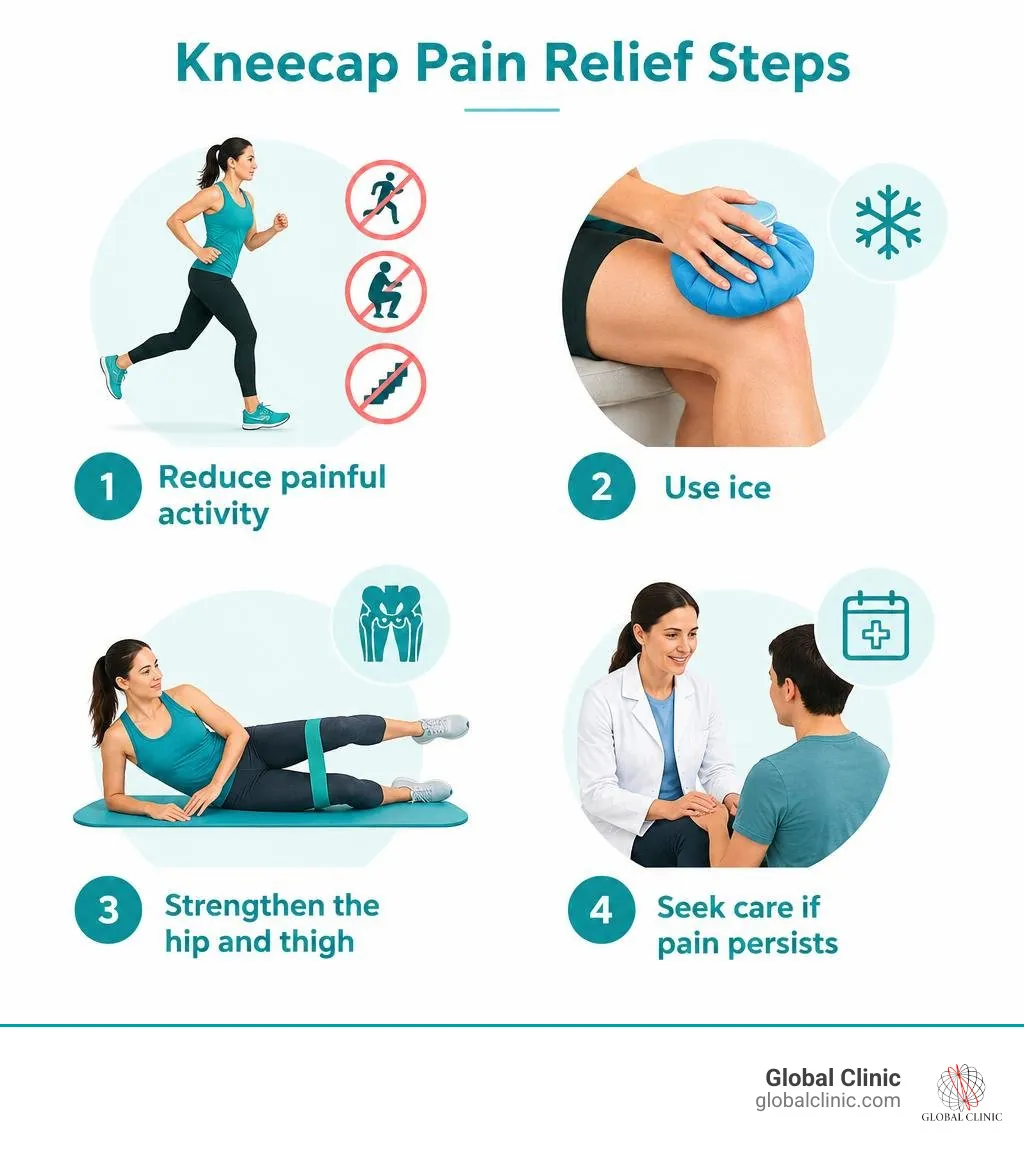
Handy resources for knee relief:
Understanding the Causes of Pain Under the Kneecap
The patellofemoral joint is a marvel of human biomechanics. Your patella (kneecap) acts as a mechanical pulley, sliding through a specialized groove at the end of the femur (thigh bone) called the trochlea. When your knee functions smoothly, articular cartilage protects these surfaces, distributing high contact loads seamlessly across the joint.
However, when mechanical tracking goes awry or repetitive stress overloads the joint, friction builds. Many individuals who seek a thorough clinical evaluation for persistent knee pain discover that their discomfort stems from muscular imbalances or tracking dysfunction rather than a single acute injury.
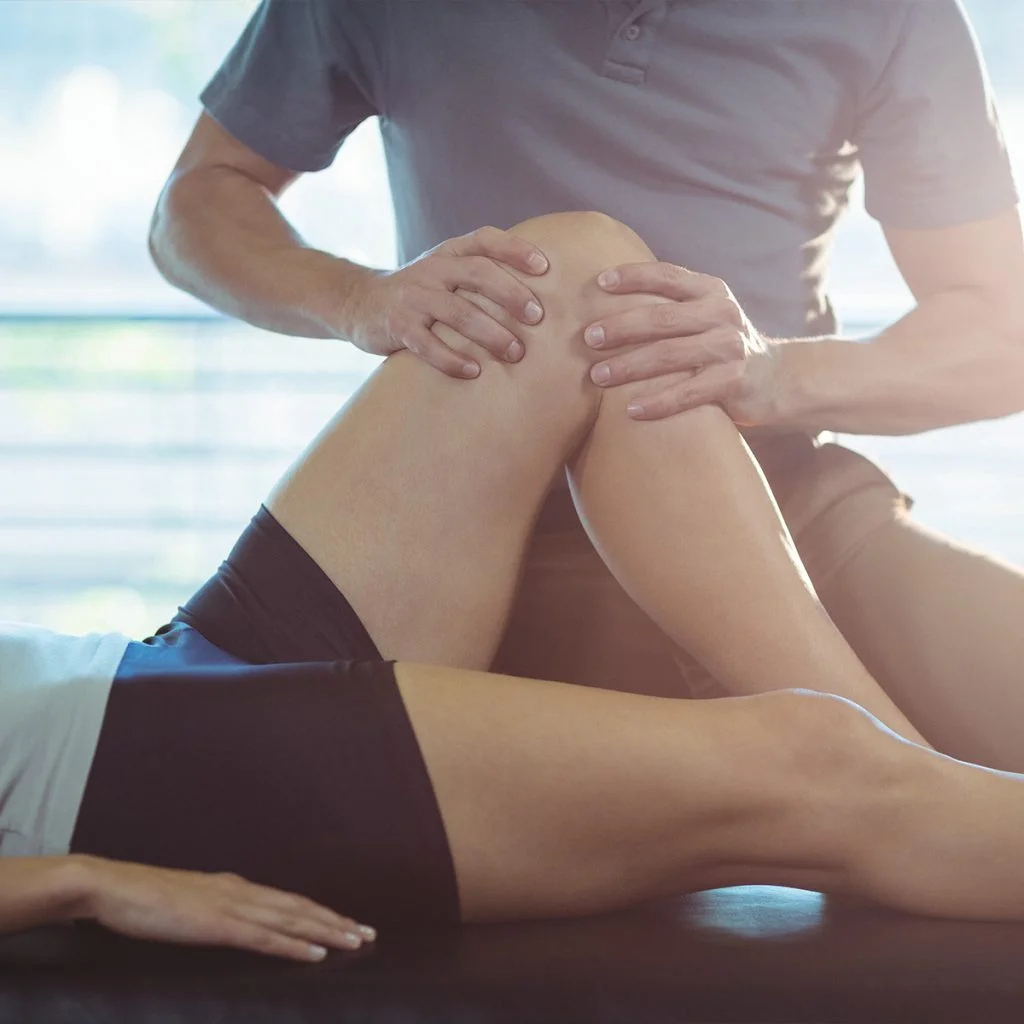
Patellofemoral Pain Syndrome and Runner’s Knee
Patellofemoral pain syndrome (PFPS), widely known as runner’s knee, is one of the most common causes of anterior knee discomfort. Clinical research by Post and Fithian (2013) indicates that the prevalence of anterior knee pain in females ranges between 13% and 27%, and pre-participation screening has shown anterior knee pain present in 26.6% of adolescent female basketball athletes (McCarthy & Strickland, 2013).
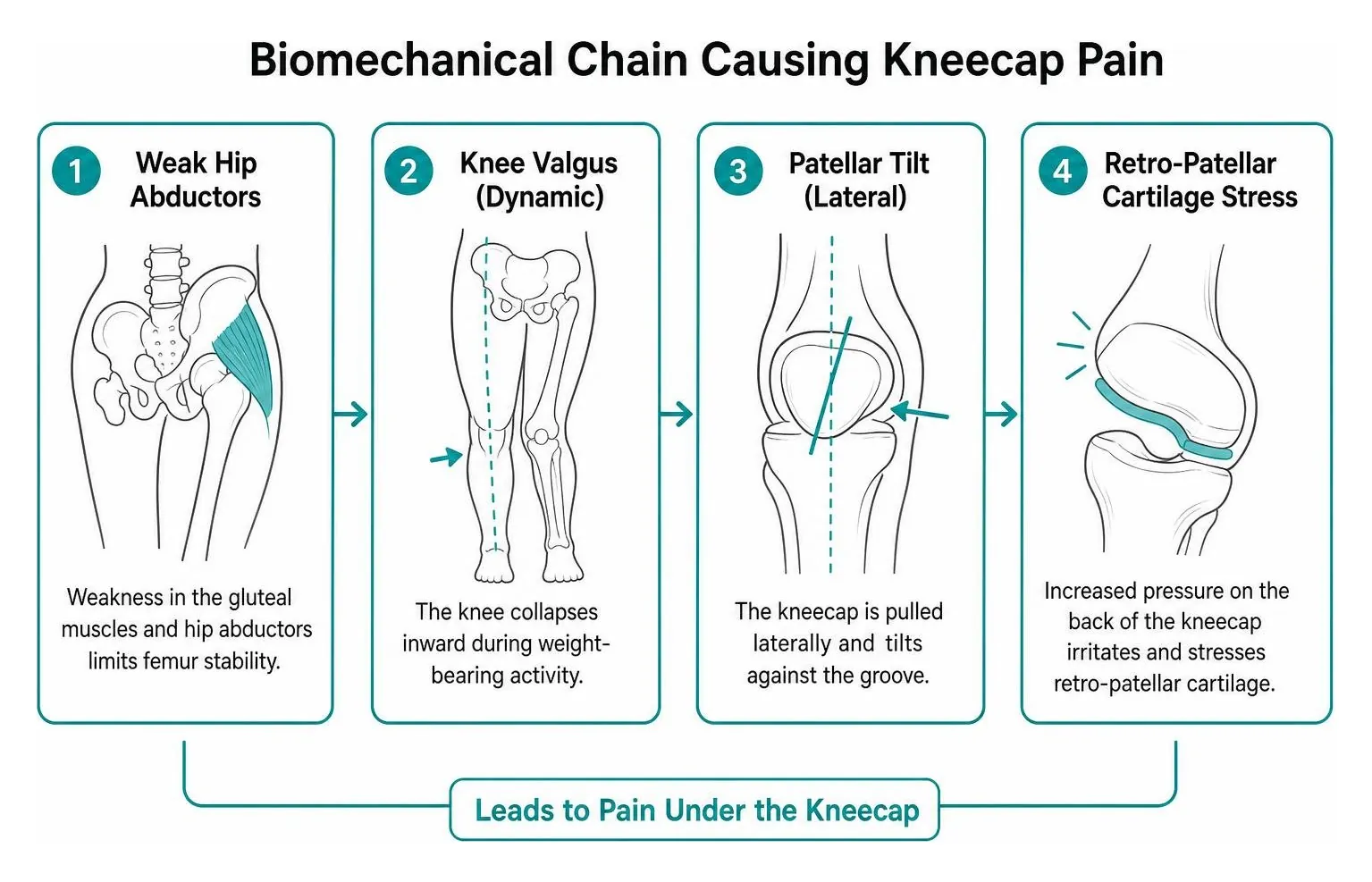
PFPS typically develops from repetitive loading stress combined with subtle biomechanical malalignment. A classic contributor is “dynamic knee valgus,” where the knee collapses slightly inward during weight-bearing activities such as running, jumping, or landing. This inward movement is frequently driven by weakness in the gluteal muscles and hip abductors rather than a problem originating purely in the knee itself. When the hip cannot properly stabilize the femur, the kneecap is pulled laterally against the trochlear groove, irritating the surrounding soft tissues and retinaculum. The NHS inform guide on patellofemoral pain syndrome highlights that altered joint loading remains a primary mechanical driver of this discomfort.
Chondromalacia Patella and Structural Irritation
When tracking problems or high compressive forces persist over time, the articular cartilage lining the underside of the patella can begin to soften, fray, or break down. This specific wear is detailed in medical research on chondromalacia patella, which can occur in young athletes as well as active older adults. Furthermore, Merck Manual clinical guidance on chondromalacia patellae explains that repetitive physical stress and joint misalignment are primary drivers of this retro-patellar irritation.
Other structural issues can mimic or worsen kneecap pain:
- Prepatellar Bursitis: Irritation of the fluid-filled sac situated in front of the kneecap, often triggered by frequent direct pressure or repetitive friction, as outlined by the AAOS overview on prepatellar kneecap bursitis.
- Patellar Tendinopathy: Strain and micro-tearing of the patellar tendon below the kneecap, detailed in Massachusetts General Hospital resources on patellar tendonitis.
- Patellofemoral Arthrosis: Thinning of cartilage in mature adults. Patients dealing with long-term wear can find practical strategies for living comfortably with knee arthritis through tailored non-surgical care.
Comprehensive Pain Under Kneecap Treatment Options
Managing discomfort behind the kneecap rarely requires aggressive interventions. In fact, clinical findings reported by Post and Fithian (2013) show that only about 2% of patients with severe patellofemoral malalignment ever require a tibial tubercle transfer surgery (McCarthy & Strickland, 2013). For the vast majority, conservative, non-surgical approaches successfully calm irritation, correct biomechanics, and restore joint function.
| Treatment Category | Common Modalities | Primary Mechanism | Best Suited For |
|---|---|---|---|
| Self-Care & Home | Activity pacing, ice, short-term OTC medication | Decreases acute tissue irritability and inflammation | Early flare-ups, post-exercise soreness |
| Physical Therapy | Quad/hip strengthening, manual therapy, taping | Corrects patellar tracking and offloads cartilage | Underlying biomechanical imbalances, PFPS |
| Supportive Devices | Patellar tracking braces, custom arch supports | Redistributes joint contact forces | Flat feet, dynamic knee collapse |
| Advanced Clinical Care | Therapeutic injections, regenerative joint therapy | Modulates inflammation and supports tissue recovery | Persistent pain unresponsive to basic rehab |
Home Remedies and Initial Pain Under Kneecap Treatment
When a flare-up occurs, immediate self-care helps calm acute tissue reactivity:
- Activity Modification: Temporarily reduce aggravating, high-impact activities like running downhill or jumping. It is helpful to review guidance on knee pain when squatting to understand why deep knee flexion places elevated compressive forces on the retro-patellar surface.
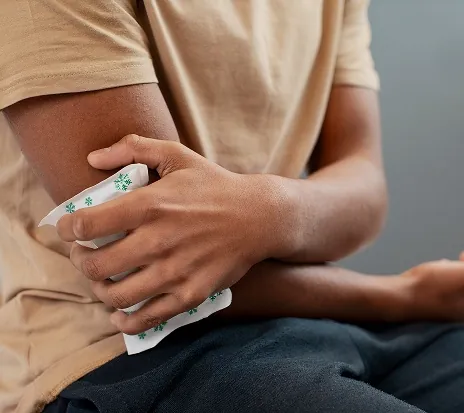
- Ice Application: Apply an ice pack wrapped in a cloth to the front of the knee for 15 to 20 minutes following activity to soothe localized soreness.
- Cross-Training: Switch to low-impact aerobic movements such as stationary cycling (with the seat adjusted high enough to avoid deep knee bends) or swimming to keep blood circulating without stressing the joint.
- Pain Relief: Over-the-counter options may be used for short periods to reduce discomfort during everyday tasks. Always ask your provider; never stop or change a prescribed medication without talking to your doctor.
Clinical and Advanced Treatment for Pain Under the Kneecap
When symptoms linger despite home adjustments, dedicated clinical interventions can help address deeper mechanical issues. At our clinic in Niles, our multidisciplinary team—including Peter Slavin, DC (Clinical Director), Valerie Shternberg, MSPT (Physical Therapy Director), Eliud Sierra, DC, and Amit Mehta, MD, MBA—evaluates patients from Chicago, Skokie, Glenview, Park Ridge, Morton Grove, Des Plaines, Mount Prospect, Norridge, and Rosemont to design comprehensive care plans.
Clinical options may include:
- Kinesio Taping & Bracing: Applying specialized taping techniques or a supportive patellofemoral tracking brace can stabilize patellar motion, giving immediate mechanical support during exercise.
- Supportive Footwear & Orthotics: Individuals with excessive foot pronation (flat feet) often experience inward tibial rotation that pulls the kneecap off course; arch supports help re-align the lower kinetic chain.
- Joint Injection Therapy: For severe irritation that prevents active rehab participation, targeted therapeutic injections administered by a medical physician can help quiet severe inflammation.
- Regenerative Modalities: Platelet-rich plasma (PRP) is an in-office therapeutic option designed to deliver concentrated growth factors directly to irritated joint structures to encourage natural recovery.
Physical Therapy and Targeted Exercises for Knee Rehabilitation
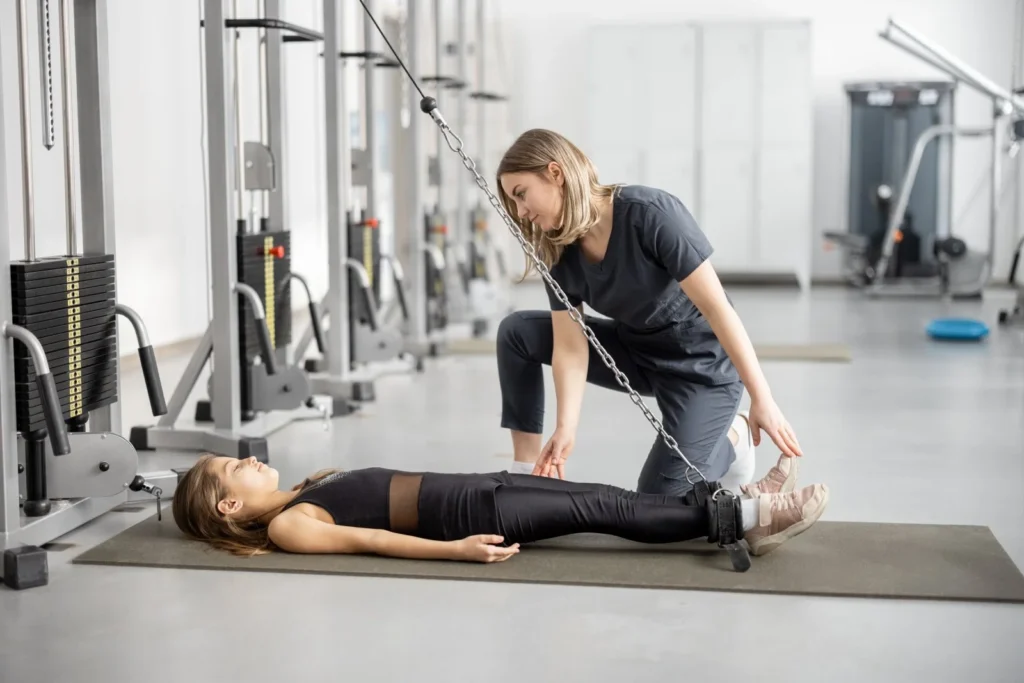
Targeted exercise remains the cornerstone of long-term recovery for pain beneath the kneecap. A complete rehabilitation plan targets the entire lower-body chain—from the hips down to the feet—rather than focusing only on the joint itself.
Working with our team through structured physical therapy incorporates specific exercise progressions:
- Quadriceps & VMO Activation: Strengthening the vastus medialis oblique (the inner quad muscle) helps counteract lateral patellar drift. Straight leg raises, terminal knee extensions, and isometric quad sets build strength without putting excessive compressive force across the joint.
- Hip Abductor & Gluteal Conditioning: Exercises such as side-lying leg lifts, clamshells, and resistance-band lateral walks build the gluteus medius, preventing the femur from rotating inward during dynamic loading.
- Posterior Chain Flexibility: Gently stretching tight hamstrings, calves, and the iliotibial band reduces backward pull and excessive pressure against the patella.
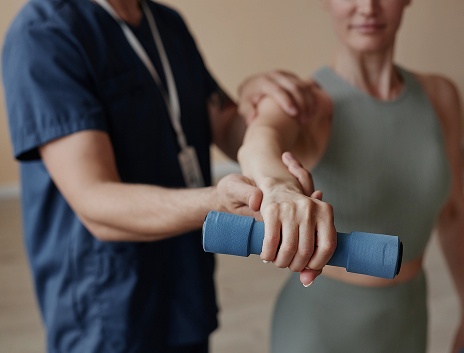
- Manual Therapy & Supportive Care: Hands-on manual therapy, joint mobilization, kinesio taping, and therapeutic modalities like LightForce XLi laser therapy, heat, or electrical stimulation help ease soft-tissue restriction and improve joint mobility.
By addressing the root mechanical drivers, patients achieve lasting relief and experience how effective pain management supports sustainable movement.
Safe Recovery Timelines and Activity Resumption
Tissue healing and movement retraining take time. Most people need a month or two to recover from runner’s knee when following a consistent rehabilitation program.
Safe milestones for resuming full activity include:
- Full, pain-free range of motion during flexion and extension.
- Complete absence of swelling following daily activities.
- Symmetrical strength and control in hip abductors and quadriceps.
- Ability to perform functional movements—such as single-leg step-downs and gentle jogging—without pain or compensatory limping.
When returning to running or sports, increase your training volume gradually (increasing overall weekly mileage or intensity by no more than 10% per week) to give joint tissues ample time to adapt.
Frequently Asked Questions About Kneecap Pain Relief
When should I consult a doctor for pain under my kneecap?
You should seek a clinical evaluation if your knee pain persists beyond a few weeks of rest, progressively worsens, or causes instability. Red-flag symptoms—such as an inability to bear weight, severe sudden swelling, localized heat with fever, or joint locking—require prompt evaluation. Red-flag symptoms like sudden weakness or loss of bladder or bowel control necessitate immediate emergency medical care.
How long does recovery typically take for patellofemoral pain?
Mild to moderate patellofemoral pain syndrome typically resolves within 6 to 8 weeks with a dedicated home exercise and physical therapy program. Chronic cases involving cartilage softening or longstanding muscular imbalances may take several months of progressive rehabilitation to achieve optimal joint function.
Are knee braces and taping effective for anterior knee pain?
Yes, patellar taping and dynamic tracking braces can be very helpful as temporary adjuncts. They mechanically assist patellar glide within the femoral groove, reducing retro-patellar contact pressure during exercise. However, they are most effective when combined with active strengthening exercises for the hips and quadriceps rather than used as standalone fixes.
Conclusion
Overcoming pain under your kneecap requires understanding the underlying mechanics of your lower body, modifying stressful activities, and progressively strengthening supporting muscles. By taking a whole-body approach that integrates physical therapy, joint mobilization, and advanced non-surgical modalities, you can protect your joint cartilage and return to the active lifestyle you love. To explore a complete approach to joint wellness, review our multidisciplinary pain management guide.
For patients in Northern Chicago, insurance coverage accepted strictly includes Medicare, Aetna, AARP, BCBS, CIGNA, and United Healthcare PPO plans, as well as personal injury and workers’ compensation (coverage depends on your plan – our team can help you check).
Call Global Clinic in Niles at (847) 299-7000 to schedule an appointment.
References
McCarthy MM, Strickland SM. “Patellofemoral pain: an update on diagnostic and treatment options..” Current reviews in musculoskeletal medicine, 2013. PMCID PMC3702777.