





Start Inner Foot Arch Pain Treatment With Support and Smart Activity Changes
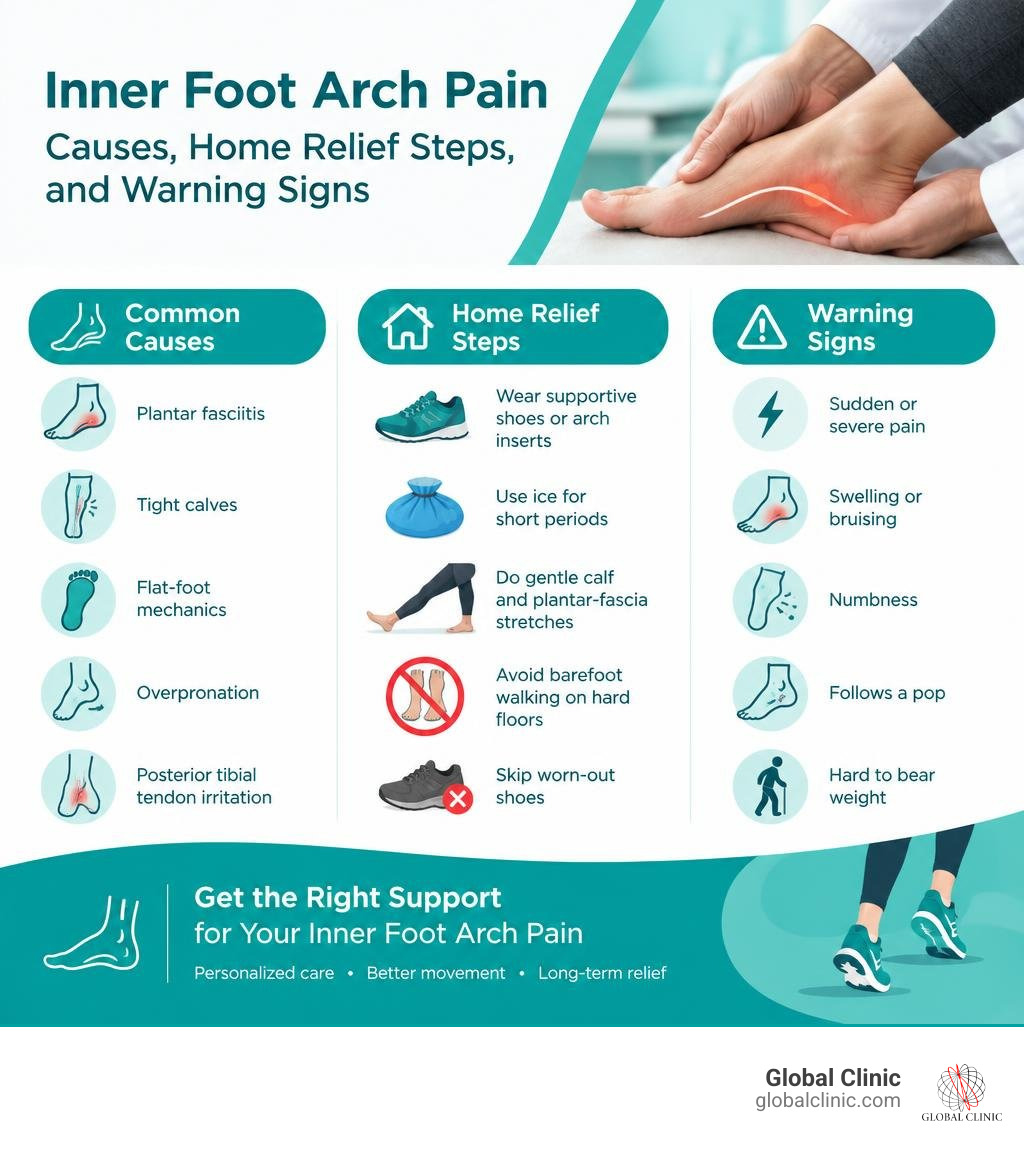
For most people, inner foot arch pain treatment starts with reducing painful impact activities, wearing supportive shoes or arch inserts, using ice for short periods, and doing gentle calf and plantar-fascia stretches each day. Avoid barefoot walking on hard floors and worn-out shoes while the area is sore.
Pain along the inner arch may come from plantar fasciitis, tight calves, flat-foot mechanics and overpronation, or irritation of the posterior tibial tendon. If pain is sudden, severe, causes swelling or bruising, includes numbness, follows a pop, or makes it hard to bear weight, seek prompt medical care. These signs can point to a stress fracture, tendon injury, or another problem that needs an exam.
At Global Clinic, patients in Niles, Skokie, Park Ridge, Glenview, Morton Grove, Des Plaines, Mount Prospect, and Chicago can benefit from a multidisciplinary assessment of foot mechanics, activity demands, and related ankle, knee, hip, or back symptoms.
I am Anna Slavin, Practice Manager at Global Pain & Spine Clinic, where our team draws on more than 20 years of global clinical experience in non-surgical rehabilitation, podiatric care, physical therapy, and pain management. This guide explains practical inner foot arch pain treatment steps and when a personalized clinical plan may be the safer next move.
Common inner foot arch pain treatment vocab:
Identifying the Root Causes of Medial Foot and Arch Discomfort

The medial arch is the natural shock absorber of the human body. Supported by an intricate network of bones, ligaments, and tendons, it flexes under load to disperse impact force across the foot and up the lower limb kinetic chain. When this biomechanical system is overloaded, inflammation and structural strain quickly follow.
Medial arch pain rarely stems from a single isolated trigger. Overuse from running, standing on unforgiving concrete surfaces, sudden weight changes, tight calf muscles, or unsupportive footwear (yes, those flat flip-flops) can disrupt the arch’s equilibrium. Identifying the precise anatomical structure under strain is the cornerstone of lasting recovery.
Understanding why your foot hurts is essential before starting any therapeutic regimen. Reviewing clinical insights on sore arches along with resources on understanding foot pain solutions can help clarify how everyday mechanics contribute to recurring symptoms.
| Condition | Primary Pain Location | Hallmark Symptoms | Typical Onset |
|---|---|---|---|
| Plantar Fasciitis | Medial calcaneal tubercle and central arch | Severe morning “first-step” stabbing pain, eases after moving | Gradual repetitive strain |
| Posterior Tibial Tendon Dysfunction (PTTD) | Medial arch, inner ankle, running up into the calf | Aching pain along inner ankle, arch collapse, difficulty with heel raises | Progressive, degenerative |
| Navicular Stress Fracture | Dorsal or deep medial midfoot arch | Deep throbbing ache, focal bone tenderness, pain increases with weight-bearing | Subacute overuse in high-impact athletes |
Differentiating Plantar Fasciitis from Posterior Tibial Tendon Dysfunction
Plantar fasciitis is the most common cause of inner foot arch pain and one of the most frequent orthopedic complaints seen in clinical practice, affecting millions worldwide. The plantar fascia is a thick band of connective tissue running from the heel bone to the base of the toes. When subjected to repetitive micro-tears, it manifests as sharp, stabbing pain localized to the inner heel and arch. This discomfort is notoriously intense during the first steps after waking up or following prolonged rest, as the shortened tissue is abruptly stretched under body weight.
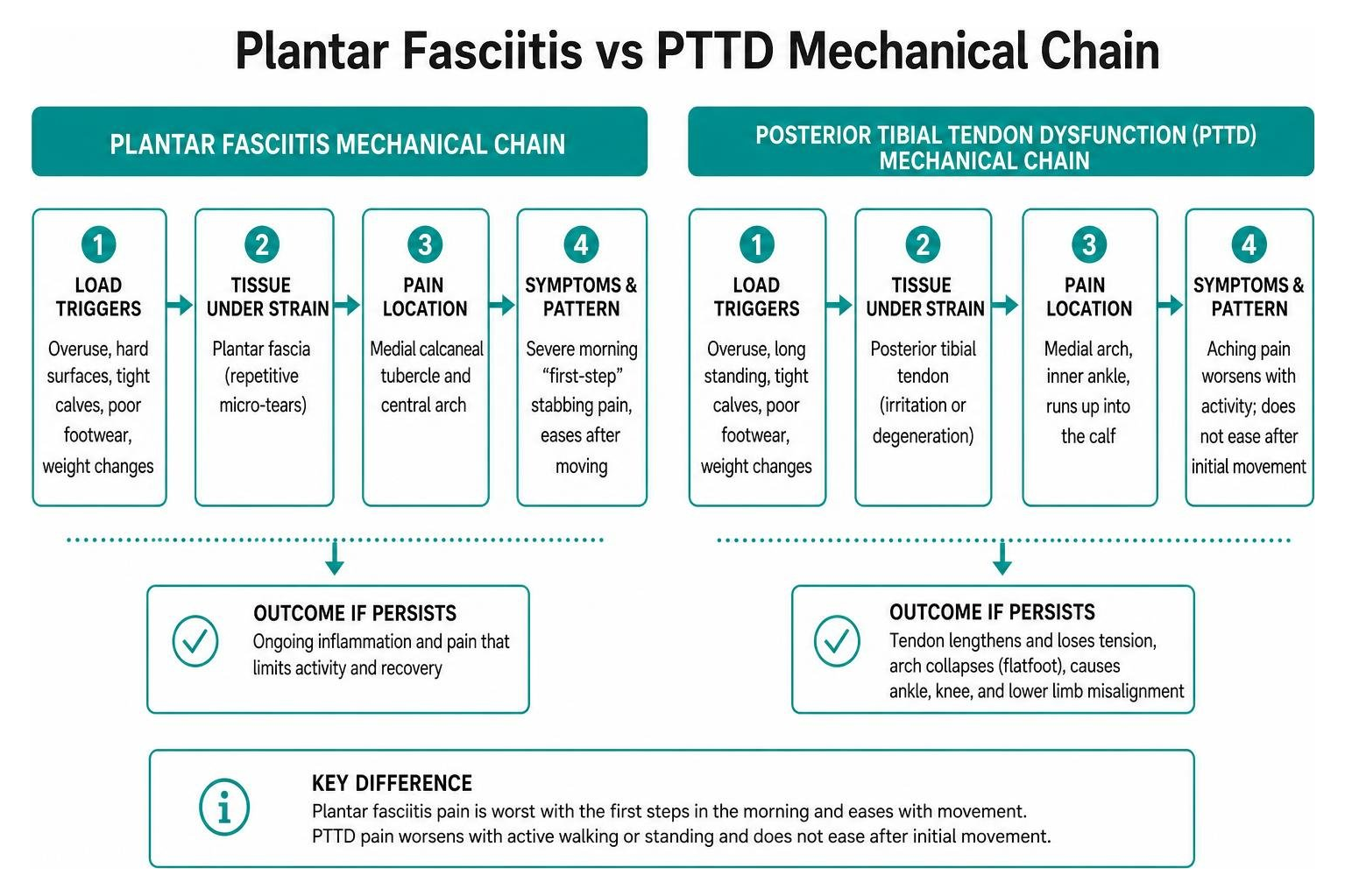
In contrast, Posterior Tibial Tendon Dysfunction (PTTD) involves the primary dynamic stabilizer of the medial arch: the posterior tibial tendon. This tendon originates in the deep calf, wraps behind the inside bump of the ankle (medial malleolus), and attaches beneath the midfoot bones. When irritated or degenerated, PTTD creates a dull, throbbing ache along the inner ankle and medial arch that worsens with active walking or standing, rather than easing after initial movement. Over time, an untreated posterior tibial tendon may stretch and lose tension, leading to adult-acquired flatfoot (fallen arches) and secondary ankle or knee misalignment.
Serious Conditions: Stress Fractures, Nerve Entrapment, and Structural Collapses
Not all medial arch discomfort stems from simple soft tissue inflammation. Structural bone injuries, such as a stress fracture of the navicular or medial cuneiform bones, present as localized, deep aching that escalates with any weight-bearing activity and does not improve with routine stretching.
Nerve entrapment syndromes, specifically Tarsal Tunnel Syndrome, occur when the tibial nerve is compressed within the narrow canal behind the medial ankle. This produces burning sensations, shooting pains, tingling, or numbness radiating directly into the arch and sole.
If you notice acute swelling, visible bruising, an inability to bear weight, or sudden flattening of the arch, it is crucial to recognize these signs that indicate when to see a foot specialist immediately to prevent permanent structural instability.
At-Home Relief Strategies and Targeted Rehabilitation Exercises

When medial arch discomfort flares up, early conservative management helps calm local inflammation and offload compromised tissues before chronic damage sets in.
At-Home Inner Foot Arch Pain Treatment and Daily Care
A structured at-home self-care routine combines mechanical offloading with active symptom relief:
- RICE Protocol & Ice Massage: Rest from high-impact activities like running or jumping. Apply an ice pack wrapped in a cloth to the arch for 15 to 20 minutes every 2 to 3 hours during acute flare-ups. A frozen water bottle rolled gently under the sole of the foot provides both soothing cold therapy and active soft-tissue mobilization.
- Supportive Arch Taping: Using kinesiology tape or rigid athletic tape to apply a supportive “low-Dye” taping pattern across the plantar surface can immediately reduce tensile strain on the arch and posterior tibial tendon during daily walking.
- Environmental & Footwear Modifications: Never walk barefoot on hard surfaces such as tile or hardwood floors. Wear cushioned, supportive house shoes or recovery slides with contoured arches indoors, and place anti-fatigue mats in areas where you stand for long periods, such as the kitchen or standing workstation.
- Over-the-Counter Anti-Inflammatory Support: Over-the-counter NSAIDs (such as ibuprofen or naproxen) can temporarily alleviate pain and reduce swelling when used according to package directions and approved by your healthcare provider.
For structured exercise guidance, working through evidence-based physical therapy for foot conditions ensures that movements are completed safely and effectively.
Targeted Physical Therapy Stretches and Strengthening Moves
Restoring tissue elasticity and strengthening intrinsic foot muscles creates internal arch stability. Perform these foundational exercises daily:
- Seated Plantar Fascia Stretch: Sit with your affected foot crossed over the opposite knee. Grasp the base of your toes with your hand and gently pull them upward toward your shin until you feel a firm, comfortable stretch along the bottom of your foot. Hold for 20 to 30 seconds. Repeat 3 times.
- Standing Gastroc and Soleus Calf Stretches: Stand facing a wall with your hands supported. Step the affected foot backward, keeping the heel firmly planted and the back knee straight to stretch the gastrocnemius. Hold for 30 seconds. Next, slightly bend the back knee while keeping the heel down to target the deeper soleus muscle. Repeat 3 times each.
- Towel Scrunches and Marble Pickups: Sit in a chair with your bare feet on a flat towel placed over a smooth floor. Use your toes to scrunch the towel toward you, engaging the intrinsic arch muscles. Progress by placing a light weight on the far edge of the towel. Alternatively, pick up 10 to 12 marbles one by one with your toes and place them into a small cup.
- Eccentric Heel Raises on a Step: Stand with the balls of your feet on the edge of a sturdy step, holding a handrail for balance. Raise up onto both sets of toes, shift your weight primarily to the affected foot, and slowly lower your heel below the step level over a 3- to 5-second count. Perform 2 to 3 sets of 8 to 10 repetitions to build tendon resilience.
Comprehensive Inner Foot Arch Pain Treatment Options and Protocols
When at-home conservative measures do not yield sufficient improvement within 2 to 3 weeks, a thorough medical assessment is essential. Understanding the depth of podiatric care allows patients to access targeted diagnostic tools and advanced therapeutic protocols.
Our clinical evaluation begins with a detailed biomechanical gait assessment and weight-bearing physical examination. We palpate specific anatomical landmarks, evaluate joint mobility, assess muscle strength, and utilize in-office diagnostic imaging:
- Digital Weight-Bearing X-rays: Evaluates skeletal alignment, identifies bone spurs, assesses joint spaces, and rules out structural collapses or arthritis.
- High-Resolution Diagnostic Ultrasound: Provides real-time visualization of soft tissues, measuring plantar fascia thickness, identifying partial tears, and assessing tendon sheath inflammation.
- Magnetic Resonance Imaging (MRI): Reserved for complex presentations, deep stress injuries, or persistent pain unresponsive to standard therapies.
Consulting a specialized foot doctor ensures that subtle structural defects, such as coexisting bunions or gait compensations, are properly addressed alongside the arch discomfort.
Clinical Inner Foot Arch Pain Treatment and Advanced Therapies
At Global Pain & Spine Clinic in Niles, IL, our multidisciplinary team coordinates advanced clinical modalities to resolve stubborn arch conditions:
- Custom Functional Orthotics: Unlike generic retail insoles, custom medical orthotics are fabricated from precise digital scans or 3D molds of your feet. They are engineered to correct abnormal foot pronation, offload focal pressure points, and restore optimal dynamic alignment.
- Extracorporeal Shockwave Therapy (ESWT): A non-invasive technology that delivers acoustic sound waves into damaged connective tissues, stimulating microcirculation, breaking down scar tissue, and accelerating the body’s natural cellular repair mechanisms.
- Regenerative Medicine (PRP & Collagen Therapy): Platelet-Rich Plasma (PRP) therapy utilizes concentrated growth factors harvested from your own blood to promote tissue regeneration in chronically degenerated tendons or fascia. Collagen-based therapies further support the structural matrix of healing ligaments.
- Targeted Corticosteroid Injections: Administered with ultrasound guidance to reduce acute, debilitating inflammatory flares within the peritendinous space or fascia, enabling patients to engage productively in physical rehabilitation.
- Custom Bracing & Temporary Immobilization: In severe cases of stage II PTTD or acute ligament tears, specialized walking boots or custom ankle-foot orthoses (AFOs) are used temporarily to fully rest the structures.
For comprehensive clinical management, our expert foot pain podiatry services integrate physical therapy, chiropractic adjustments, and podiatric medicine under one roof.
When Surgical Intervention Is Necessary
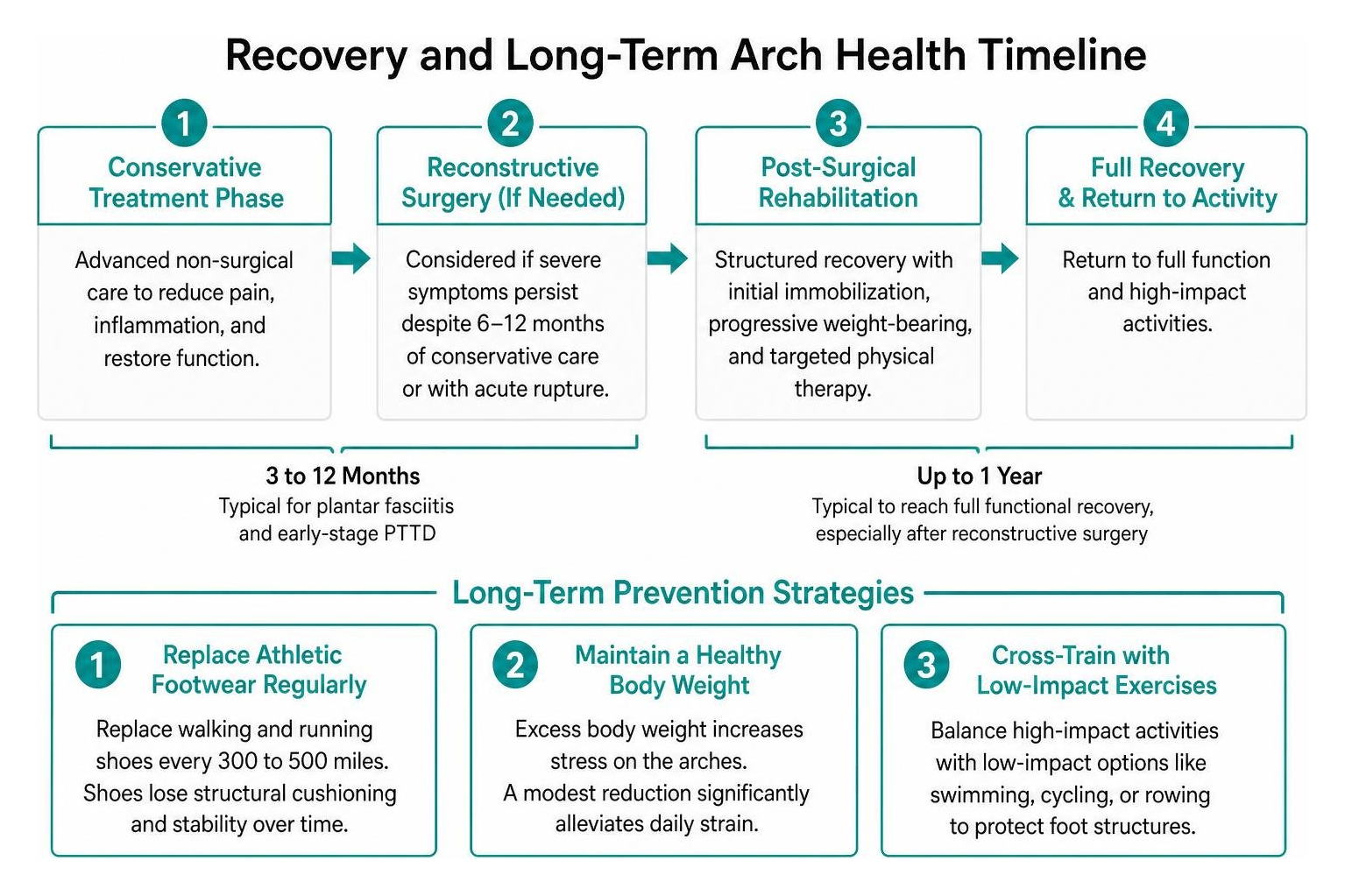
The vast majority of arch conditions resolve successfully with conservative and advanced non-surgical care. However, surgical intervention may be considered when severe symptoms persist despite 6 to 12 months of exhaustive conservative management, or when acute structural rupture occurs.
Surgical options are customized to the specific underlying deformity and may include:
- Gastrocnemius Recession: Lengthening tight calf muscles to eliminate abnormal downward pulling forces on the arch and forefoot.
- Partial Plantar Fascia Release: Selectively relieving excessive mechanical tension on the plantar fascia band.
- Posterior Tibial Tendon Reconstruction & Calcaneal Osteotomy: Transferring an adjacent tendon (such as the flexor digitorum longus) combined with precise heel-bone realignment to rebuild a collapsed arch.
Post-surgical rehabilitation requires a structured timeline involving initial non-weight-bearing immobilization, progressive weight-bearing in a boot, and several months of targeted physical therapy to rebuild strength, range of motion, and balance.
Recovery Timelines and Long-Term Prevention Strategies
Recovery from inner arch pain requires patience and consistency. Because the feet bear your total body weight with every step, connective tissues remodel gradually under controlled mechanical loads.
For conditions like plantar fasciitis and early-stage PTTD, typical non-surgical recovery spans 3 to 12 months, depending on chronicity, baseline activity levels, body weight, and adherence to physical therapy. If reconstructive surgery is required, reaching full functional recovery and returning to high-impact activities often takes up to one year.
To protect your arches and prevent symptoms from recurring over the long term:
- Replace Athletic Footwear Regularly: Athletic shoes lose their structural cushioning and torsional stability every 300 to 500 miles. Replace walking and running shoes systematically, even if the outer tread appears intact.
- Maintain a Healthy Body Weight: Excess body mass places exponential compressive and tensile forces across the medial arch during walking. A modest reduction in body weight significantly alleviates daily strain on the plantar fascia and supporting tendons.
- Cross-Train with Low-Impact Exercises: Balance running and high-impact sports with low-impact cardiovascular workouts such as swimming, stationary cycling, or rowing to maintain fitness without overloading foot structures.
- Incorporate Daily Lower-Leg Mobility: Make calf stretching and intrinsic foot muscle exercises a permanent part of your morning or post-workout routine to maintain soft-tissue pliability.
Patients seeking long-term wellness can benefit from advanced foot care solutions tailored to their unique occupational and athletic needs. If you live in or around Cook County, consulting an experienced podiatrist in Chicago, IL ensures proactive care for every phase of recovery.
Frequently Asked Questions about Medial Arch Pain
How long does inner foot arch pain take to heal?
Healing timelines depend on the specific cause, symptom severity, and how early treatment begins. Mild acute arch strains may resolve in 4 to 6 weeks with proper rest, supportive shoes, and stretching. However, chronic conditions like plantar fasciitis or posterior tibial tendon dysfunction often require 3 to 12 months of consistent conservative management to achieve full recovery. Consistent adherence to orthotic use, home exercises, and activity modification is the single biggest factor influencing your recovery speed.
What type of shoes and orthotics provide the best arch support?
The most effective footwear features a firm, stable heel counter (the back cup of the shoe should not easily collapse when squeezed), a rigid or semi-rigid midsole that flexes only at the ball of the foot (not in the middle of the arch), and adequate cushioning to absorb ground forces. Overpronators generally benefit from motion-control or stability running shoes. Over-the-counter insoles with rigid arch contours offer decent baseline support, but custom functional orthotics crafted by a podiatrist provide the highest level of biomechanical control by matching the exact contours and corrective needs of your foot.
When is inner arch pain an emergency that requires immediate medical care?
You should seek urgent medical evaluation if your arch pain:
- Follows an audible pop, snap, or tearing sensation during activity
- Is accompanied by severe swelling, visible bruising, or an inability to put any weight on your foot
- Causes noticeable numbness, burning, or loss of sensation across your toes or sole
- Involves an open wound, localized heat, redness, and fever (especially critical for individuals with diabetes or peripheral vascular disease)
- Results in a sudden, visible collapse of your foot’s shape
Restoring Foot Function and Lasting Mobility
Inner foot arch pain does not have to dictate your daily routine or keep you on the sidelines. Whether your discomfort stems from early plantar fascia irritation, progressive flatfoot biomechanics, or repetitive sports overuse, early intervention with the right combination of conservative therapies is key to lasting relief.
At Global Pain & Spine Clinic, located in Niles, IL, we have proudly served Northern Chicago communities—including Skokie, Glenview, Park Ridge, Morton Grove, Des Plaines, Mount Prospect, and Chicago—for over 20 years. Our multidisciplinary medical team brings together podiatric care, physical therapy, chiropractic medicine, pain management, and advanced regenerative therapies to build personalized recovery plans tailored to your lifestyle.
Explore our comprehensive pain management guide to learn more about how multidisciplinary care can help resolve chronic musculoskeletal conditions.
If you are experiencing persistent inner foot arch discomfort, contact our clinic today to speak with our specialists and schedule an appointment to begin your path toward comfortable, pain-free movement.