






Why So Many People Are Turning to PRP Injections Under the Eyes
PRP injections under eyes are one of the fastest-growing non-surgical treatments for dark circles, fine lines, and hollowing in the under-eye area — and for good reason.
Here is a quick snapshot of what you need to know:
| Question | Quick Answer |
|---|---|
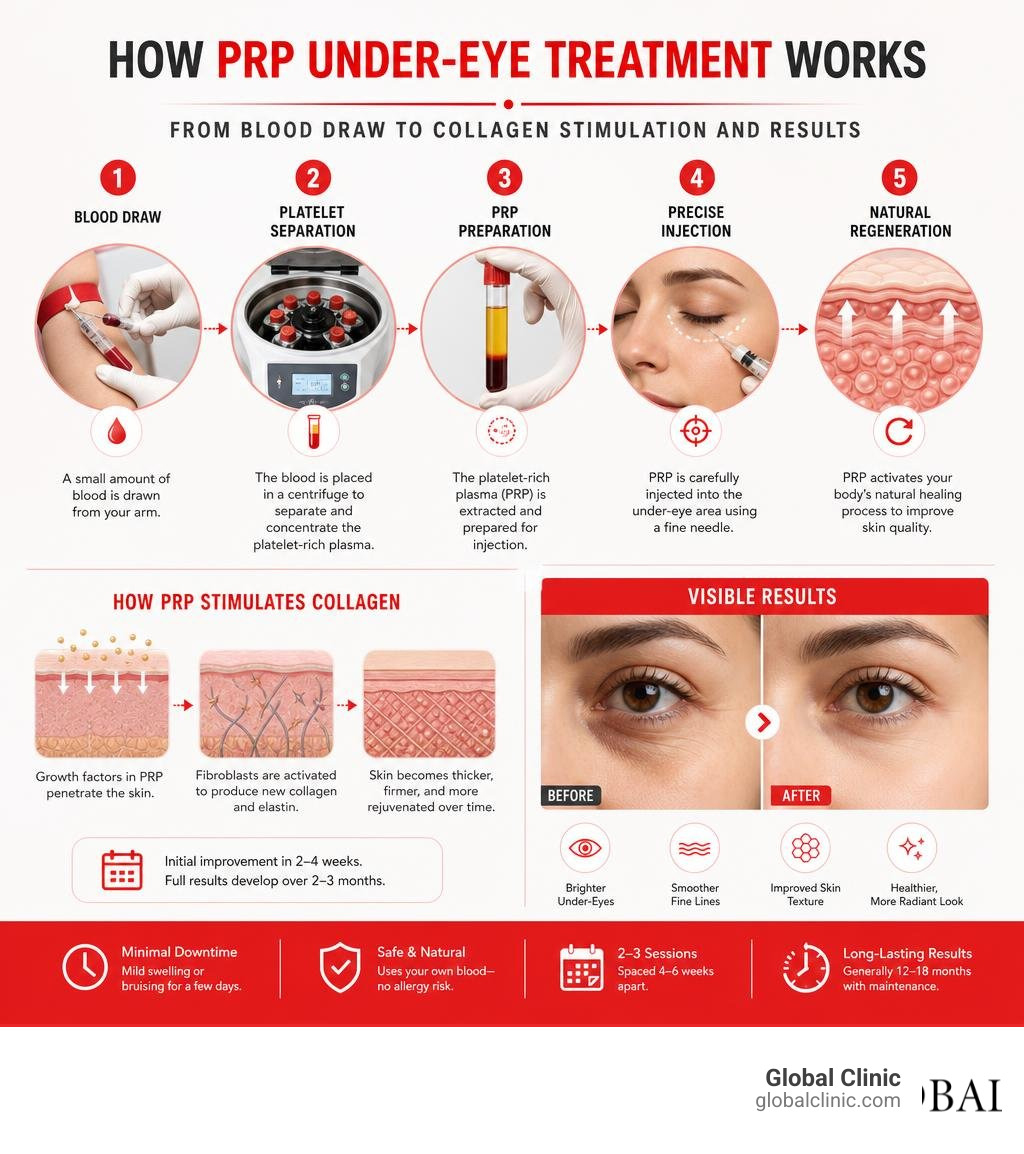
| What is it? | Platelet-rich plasma from your own blood, injected under the eyes to stimulate collagen and improve skin quality |
| What does it treat? | Dark circles, fine lines, crepey skin, mild hollowing, puffiness |
| How many sessions? | Typically 2–3 sessions spaced 4–6 weeks apart |
| When do results show? | Initial improvement in 2–4 weeks; full results over 2–3 months |
| How long do results last? | Generally 12–18 months, with maintenance every 6–12 months |
| Is there downtime? | Minimal — mild swelling or bruising lasting a few days |
| Is it safe? | Yes, when performed by a trained provider; uses your own blood, so no allergy risk |
The under-eye area is one of the first places the face shows signs of aging. The skin there is exceptionally thin — with no underlying fatty layer — which makes it highly vulnerable to dark circles, fine lines, and that hollow, tired look that no amount of sleep seems to fix.
For years, the main options were heavy-duty concealer, dermal fillers, or surgery. But many patients want something different: a natural approach that improves the skin itself rather than just masking the problem or adding foreign volume.
That is exactly what PRP therapy offers. By drawing a small sample of your own blood, concentrating its healing platelets, and injecting that solution into the under-eye tissue, PRP triggers your body’s own collagen-building and repair processes — from the inside out.
A 20-patient clinical study published in the Journal of Plastic and Reconstructive Surgery found that PRP injections in the lower eyelid area produced statistically significant improvements in skin firmness and elasticity, with no serious adverse events beyond temporary swelling lasting one to three days.
I’m Ana Vinikov, Practice Manager at Global Clinic, where our multidisciplinary team has over 20 years of experience delivering regenerative medicine treatments — including PRP injections under eyes — to patients across the Northern Chicago area. In this guide, I’ll walk you through everything you need to know to decide if this treatment is right for you.
Must-know prp injections under eyes terms:
Rejuvenating the Periorbital Region: How prp injections under eyes Work
To truly appreciate why prp injections under eyes have taken the aesthetic world by storm, it helps to understand the biological magic happening beneath the surface. The periorbital region (the delicate area surrounding your eyes) is highly sensitive to environmental damage, stress, and chronological aging. Over time, the skin loses its structural proteins, and the microscopic blood vessels underneath become more visible, casting a dark, shadowed hue.
When we introduce platelet-rich plasma into this area, we are essentially sending in a highly concentrated team of biological first responders. Platelets are natural powerhouses packed with growth factors and cytokines. When injected, they stimulate local fibroblasts, which are the specialized cells responsible for producing collagen and elastin.
This process is extensively documented in clinical research, such as the landmark scientific study on lower eyelid PRP rejuvenation, which demonstrated that PRP directly increases skin thickness and enhances the tone of the underlying ligaments. By thickening the skin barrier, PRP reduces the visibility of the dark blood vessels and muscle fibers underneath, leading to a brighter, smoother, and more youthful appearance. To learn more about how plasma rejuvenates other areas of the face, you can explore our detailed guide on the platelet plasma facial.

The Science of Platelet-Rich Plasma (PRP) vs. Platelet-Rich Fibrin (PRF)
If you have been researching autologous therapies, you have likely run across two acronyms: PRP and PRF. While both leverage the regenerative power of your own blood, they are prepared and behave differently once injected:
- Platelet-Rich Plasma (PRP): To create PRP, your blood is drawn into a tube containing an anticoagulant (to prevent clotting) and spun at a high speed in a centrifuge. This rapid spinning separates the red blood cells from the plasma, leaving a golden, platelet-dense liquid. PRP provides a rapid, concentrated burst of growth factors to jumpstart cellular repair.
- Platelet-Rich Fibrin (PRF): Often called “PRP on steroids,” PRF is spun at a lower speed without any anticoagulants. This allows a natural fibrin scaffold to form. When injected, this gel-like matrix releases growth factors slowly over a period of several days, providing sustained tissue regeneration.
Both options are highly effective. PRP is particularly well-suited for improving overall skin quality, texture, and pigmentation, while PRF is often favored when a slightly thicker consistency is desired to address early structural hollowing.
Addressing Dark Circles, Puffiness, and Fine Lines
Under-eye concerns are rarely one-dimensional. Most patients present with a combination of dark circles, fine lines (crow’s feet), and occasional puffiness. Fortunately, the biological mechanisms of platelet-rich plasma target each of these issues simultaneously:
- Dark Circles: Many dark circles are vascular, meaning they are caused by thin, translucent skin showing the dark blood vessels underneath. PRP stimulates collagen synthesis to thicken the dermis, effectively “opacifying” the skin so those vessels are no longer visible.
- Fine Lines and Crepey Skin: By boosting elastin and collagen production, PRP restores elasticity, smoothing out fine lines and tightening loose, crepey skin.
- Puffiness: While severe under-eye bags (fat herniation) may require surgical intervention, mild puffiness is often a result of poor lymphatic drainage or sluggish microcirculation. PRP promotes neovascularization (the formation of new, healthy blood vessels), which improves circulation and fluid clearance in the periorbital area.
The Treatment Protocol: What to Expect
Embarking on any aesthetic journey can feel a bit intimidating, but knowing what happens during your appointment can completely demystify the experience. A typical session for under-eye PRP is straightforward, highly sterile, and completed in under an hour.
What to Expect During Your prp injections under eyes Procedure
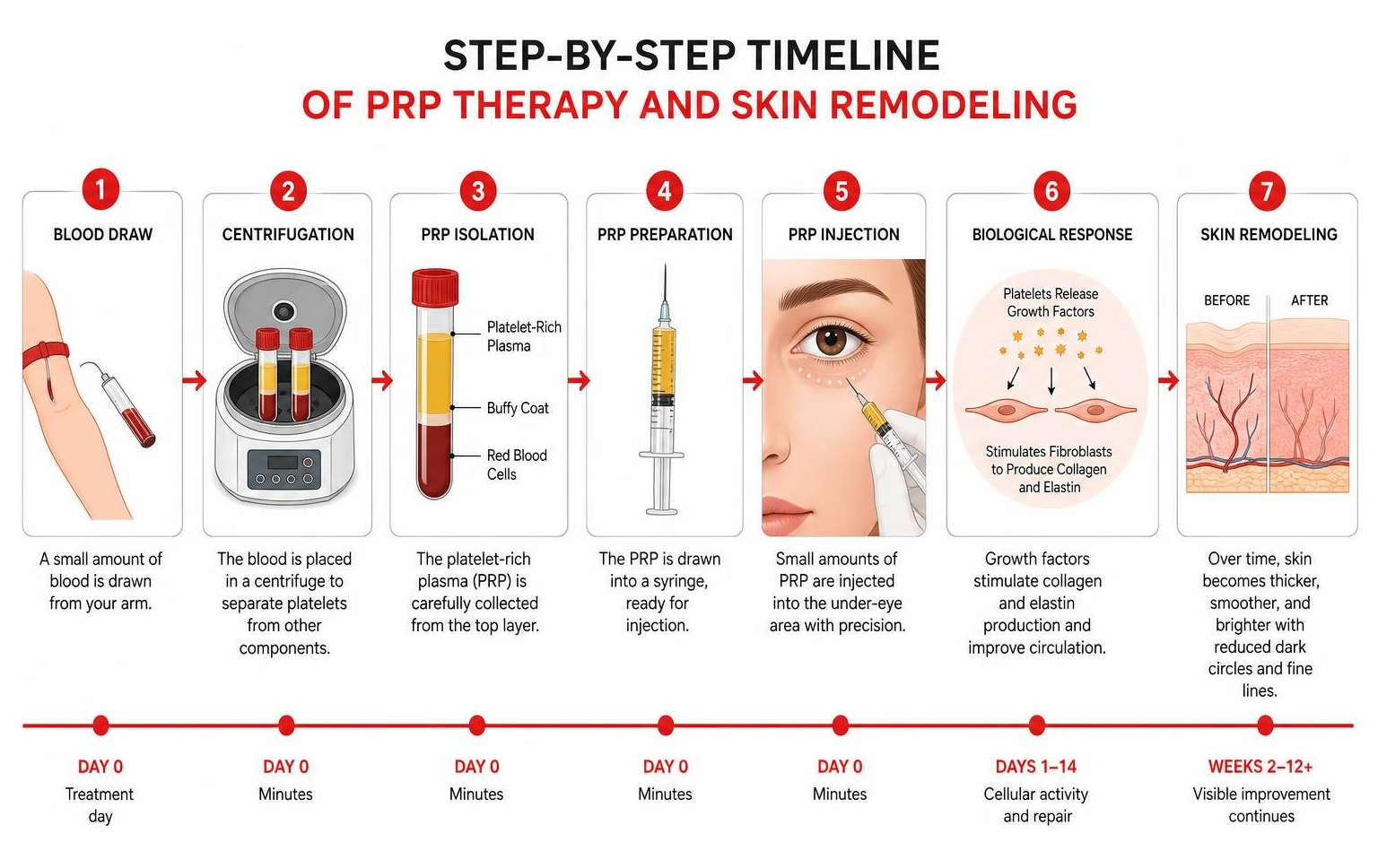
When you visit our state-of-the-art facility in Northern Chicago, your treatment will follow a precise, clinical step-by-step sequence:
- The Blood Draw: We begin by drawing a small sample of blood (usually just one to two vials) from your arm, much like a routine medical blood test.
- Centrifugation: The blood vial is placed into a specialized centrifuge, where it is spun for roughly 5 to 15 minutes. This separates the healing platelets and golden plasma from the red and white blood cells.
- Numbing: While your blood is processing, a highly effective topical numbing cream is applied to your under-eye area to ensure your comfort throughout the procedure.
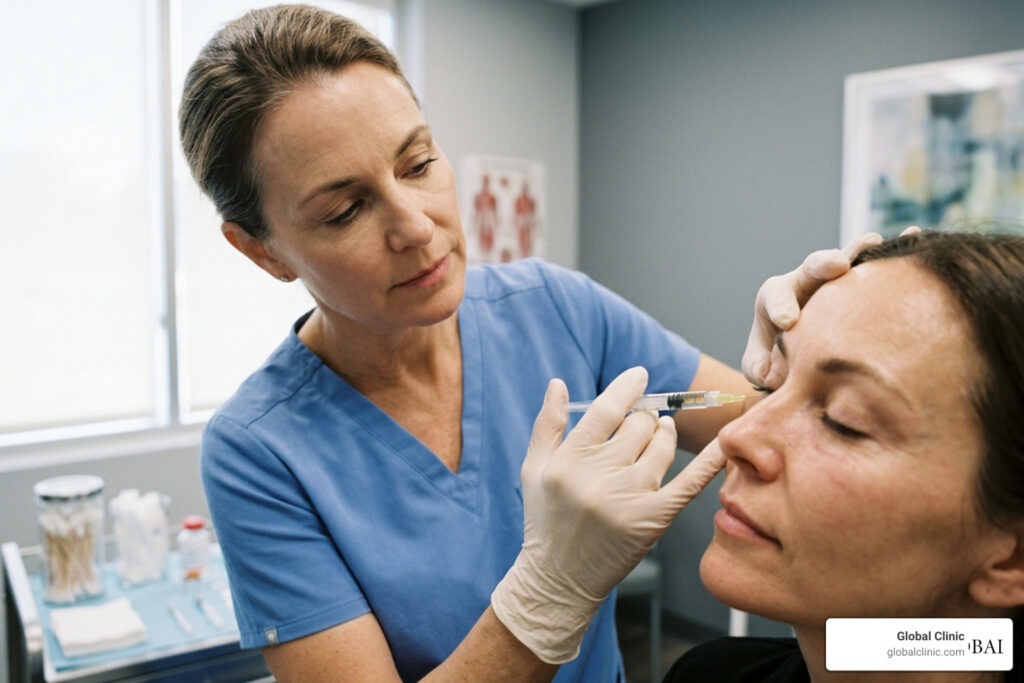
- The Injection: Using an ultra-fine needle or a specialized, blunt-tipped microcannula, our skilled medical injector carefully deposits the concentrated PRP into the target areas under your eyes. The use of a cannula is highly favored in the periorbital region as it glides smoothly beneath the skin, significantly reducing the risk of bruising and swelling.
The active injection portion of the treatment takes only about 5 to 10 minutes. Once completed, we apply a cool compress to soothe the skin.
Results Timeline and Longevity
Because PRP depends on your body’s natural cellular renewal, it is not an overnight fix. Instead, it is a gradual, beautiful transformation.
- Days 1–3: You will notice some initial fullness or swelling. This is actually a good sign, as it indicates the inflammatory cascade has been triggered to begin the healing process.
- Weeks 2–4: The initial swelling subsides, and you will begin to notice a subtle improvement in skin hydration, brightness, and texture.
- Months 2–3: This is when the real magic happens. As new collagen and elastin fibers mature, the skin becomes visibly thicker, firmer, and more radiant. Dark circles fade, and fine lines begin to smooth out.
- Longevity: For most patients, the rejuvenating effects of an initial series of treatments last between 12 and 18 months. To maintain your refreshed appearance, we generally recommend a single maintenance session every 6 to 12 months.
To read a candid, first-hand account of the physical sensations and visual progression of this treatment, you can check out this real-world patient experience with under-eye PRP.
Safety, Side Effects, and Crucial Aftercare
As an autologous treatment, PRP has an exemplary safety profile. Because we are using an injection for platelets derived entirely from your own blood, there is virtually zero risk of allergic reaction, rejection, or foreign-body granulomas. However, because the skin around the eyes is incredibly delicate, proper clinical technique and strict aftercare are vital.

Who is the Ideal Candidate for prp injections under eyes?
Most individuals looking to refresh tired-looking eyes are excellent candidates for this procedure. It is particularly beneficial for:
- Patients with early signs of aging, fine lines, and crepey skin.
- Individuals struggling with dark circles caused by thin skin or poor microcirculation.
- People who prefer a natural, filler-free alternative to synthetic injectables.
Who should avoid it? While highly safe, certain medical conditions make PRP unsuitable. You should avoid this treatment if you have:
- Active skin infections or open wounds in the periorbital area.
- Platelet dysfunction syndromes or severe thrombocytopenia.
- Systemic cancers or active autoimmune diseases.
- An ongoing regimen of high-dose anticoagulants (blood thinners) that cannot be safely paused.
For a deeper dive into the clinical profiles and safety protocols of platelet therapies, read our comprehensive article on understanding PRP benefits and risks.
Minimizing Risks and Post-Treatment Aftercare
While minor side effects like transient swelling, redness, and mild bruising are common and typically resolve within a few days, serious vascular risks (such as vascular occlusion) can occur if injections are performed by untrained individuals. This highlights the absolute necessity of choosing a highly experienced, medically licensed injector who possesses a profound understanding of facial vascular anatomy.
To optimize your healing and protect your results, we recommend the following aftercare guidelines:
- Keep it Cool: Apply a clean, cool compress to the area for 10 minutes at a time during the first 24 hours to minimize swelling.
- Elevate Your Head: Sleep with your head elevated on an extra pillow for the first two nights to assist with lymphatic drainage.
- Hands Off: Avoid rubbing, massaging, or vigorously cleansing the under-eye area for at least 48 hours.
- Skip the Heat: Avoid hot tubs, saunas, strenuous exercise, and direct sun exposure for 3 days post-treatment.
- Avoid Blood Thinners: Refrain from alcohol, aspirin, and anti-inflammatory medications (like ibuprofen) for 72 hours, as these can increase the risk of bruising.
Comparing Under-Eye Rejuvenation Options
When deciding how to address under-eye concerns, it is helpful to look at how autologous platelet therapy stacks up against other popular non-surgical treatments.
| Feature | PRP Injections | Dermal Fillers (Hyaluronic Acid) | Microneedling | Laser Resurfacing |
|---|---|---|---|---|
| Mechanism | Stimulates natural collagen and tissue regeneration | Physically adds volume to hollow spaces | Creates micro-injuries to trigger surface healing | Uses light energy to peel and rebuild skin |
| Material Used | Your own blood (100% natural) | Synthetic gel (Hyaluronic Acid) | None (mechanical needles) | Light/heat energy |
| Primary Benefit | Improves skin quality, thickness, and dark circles | Instantly fills deep hollowing and tear troughs | Smooths fine lines and refines surface texture | Tightens skin and targets deep wrinkles |
| Longevity | 12–18 months (gradual build) | 6–12 months (instant results) | Requires ongoing series | Up to several years |
| Risk Profile | Extremely low (no allergy or Tyndall effect) | Risk of swelling, migration, or Tyndall effect | Low (minimal risk of hyperpigmentation) | Moderate (requires strict sun protection) |
Choosing the right approach depends on your specific anatomy. If you have deep, structural hollows, dermal fillers may be needed to physically lift the tissue. However, if your primary concerns are dark circles, thin skin, and fine lines, PRP is often the superior choice because it actually repairs the skin barrier. For a thorough understanding of how autologous therapies compare to synthetic options, you can learn how plasma therapy works in our detailed overview.
Frequently Asked Questions about Periorbital PRP
To help you make a fully informed decision, we have compiled the most common questions our patients ask during their consultations.
Is the under-eye PRP procedure painful?
Thanks to the application of a high-strength topical numbing cream prior to the treatment, most patients find the procedure highly tolerable. You may feel a slight pinch during the initial blood draw, and a mild pressure or warm, stinging sensation as the PRP is gently placed under the skin. Most patients rate the discomfort as a mild 2 or 3 out of 10.
How many sessions are typically required for optimal results?
While some patients notice a beautiful glow after just one session, we typically recommend an initial series of 2 to 3 treatments spaced 4 to 6 weeks apart. This spacing allows the cumulative collagen-building effects to fully compound, yielding the most dramatic and long-lasting results.
Can PRP be combined with other aesthetic treatments?
Absolutely. In fact, combination therapy often yields the most impressive outcomes. PRP pairs beautifully with microneedling to address surface texture, or can be strategically layered with dermal fillers to provide both instant structural volume and long-term skin rejuvenation. Our medical team will customize a treatment plan tailored specifically to your facial anatomy.
Conclusion
The delicate under-eye area deserves specialized, thoughtful care. Rather than simply masking dark circles and fine lines with makeup or relying on synthetic fillers that can sometimes look puffy or unnatural, prp injections under eyes offer a scientifically backed, 100% natural solution that regenerates your skin from within.
At Global Clinic, we have spent over two decades serving communities across Northern Chicago, including Niles, IL, Skokie, IL, Glenview, IL, Park Ridge, IL, Morton Grove, IL, Des Plaines, IL, and Mount Prospect, IL. Our multidisciplinary team is dedicated to providing personalized, state-of-the-art regenerative treatments in a warm, welcoming environment.
If you are ready to wake up looking refreshed, vibrant, and naturally rejuvenated, we invite you to take the next step. Schedule a consultation for PRP injections with our specialists today, and let us help you look as energetic on the outside as you feel on the inside.