





How Many PRP Treatment Options Are There?
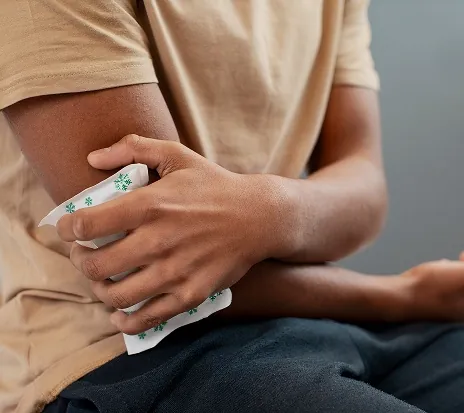
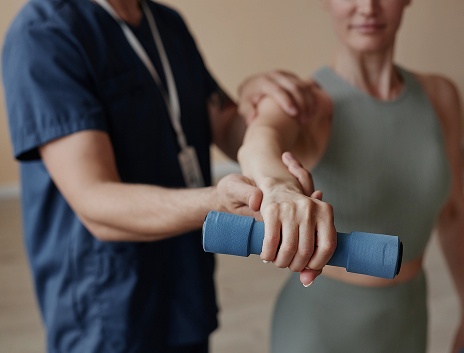
PRP treatment options span a surprisingly wide range of conditions — from chronic joint pain and sports injuries to hair loss and skin rejuvenation. Here is a quick overview of the main categories (at our Niles clinic, PRP is used for musculoskeletal conditions, skin rejuvenation, and hair loss):
| PRP Treatment Category | Common Conditions Treated |
|---|---|
| Orthopedic / Musculoskeletal | Knee osteoarthritis, tendonitis, rotator cuff injuries, plantar fasciitis, ligament sprains |
| Hair Restoration | Androgenetic alopecia (male and female pattern hair loss), post-transplant support |
| Aesthetic / Skin | Skin rejuvenation, acne scars, fine lines (often combined with microneedling) |
| Post-Surgical Recovery | Soft tissue and tendon healing after orthopedic procedures |
PRP therapy works by drawing a small sample of your own blood, concentrating its platelets in a centrifuge, and injecting that concentrated solution into damaged or affected tissue. The result is a higher-than-normal dose of growth factors delivered exactly where your body needs them most.
What makes PRP especially interesting is that it is not a drug. Because it comes from your own blood, the risk of allergic reaction is very low — and the healing signals it delivers are entirely natural.
Research now shows level I evidence supporting PRP for conditions like knee osteoarthritis, lateral epicondylitis, plantar fasciitis, and carpal tunnel syndrome. That is a meaningful shift from just a decade ago, when PRP was considered largely experimental.
I’m Anna Slavin, Practice Manager at Global Clinic, a multidisciplinary center whose team brings over 20 years of global medical experience to helping patients across the Northern Chicago area navigate PRP treatment options as part of a personalized, non-surgical care plan. Whether you are dealing with a stubborn tendon injury or exploring regenerative approaches to joint pain, this guide will walk you through every major option available today.
What is Platelet-Rich Plasma and How Does It Work?
To understand why there are so many PRP treatment options available today, we have to look at the simple science of our own blood.
Human blood is primarily made of a liquid called plasma, which carries red blood cells, white blood cells, and platelets. While we often think of platelets as the cells responsible for clotting blood when we get a paper cut, they are actually tiny powerhouses of cellular regeneration. Platelets measure only about 2 to 5 micrometers in diameter, yet they contain hundreds of proteins called growth factors that play an essential role in healing injuries.
To create platelet-rich plasma, we perform a simple, routine blood draw from your arm. We then place this blood sample into a specialized machine called a centrifuge. By spinning the blood at incredibly high speeds, the centrifuge uses centrifugal force to separate the different blood components based on their density.
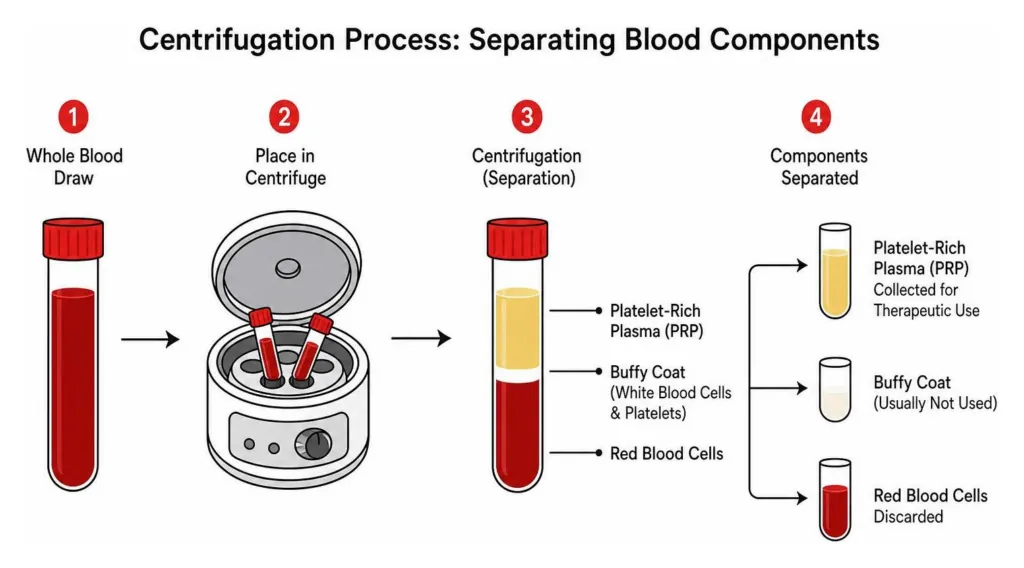
This separation allows us to isolate the platelets and a small amount of plasma, discarding the red blood cells that do not contribute to tissue healing. The resulting solution is what we call PRP—a highly concentrated formula containing five to ten times the concentration of platelets found in normal, unprocessed blood.
To dive deeper into the biology of this treatment, you can review the latest scientific research on molecular mechanisms of PRP.
The Biological Mechanism of Action
Once injected into the target site, these concentrated platelets get straight to work. Within the platelets are tiny storage sacs called alpha-granules. When platelets are activated—either by coming into contact with damaged tissue or through a preparing agent—these alpha-granules open up and release a massive wave of growth factors and cytokines.
These signaling proteins act like a biological construction crew, calling in local stem cells, boosting collagen production, and encouraging neovascularization (the growth of new blood vessels). By improving blood flow and cellular activity, PRP may support the repair of damaged tissue from the inside out.
Furthermore, PRP modulates the local inflammatory environment. While it initially triggers a brief, helpful inflammatory response to kickstart healing, its long-term effect is actually to reduce chronic, painful inflammation. This dual action may explain why some patients experience longer-lasting relief. You can explore more info about how PRP works wonders to see how this cellular cascade translates to real-world recovery.
An Overview of Clinical PRP Treatment Options
Because platelets play a role in healing throughout the body, the clinical applications of PRP have expanded rapidly. Today, healthcare providers utilize PRP treatment options across multiple medical specialties, ranging from sports medicine to medical aesthetics.

Whether you are trying to heal a torn ligament, soothe an arthritic knee, or restore thinning hair, PRP offers a highly customizable, natural approach to recovery.
Orthopedic and Musculoskeletal PRP Treatment Options
In the realm of pain management and sports medicine, PRP has become a go-to therapy for patients who want to avoid surgery or long-term steroid use. Chronic tendon injuries, such as tennis elbow (lateral epicondylitis) or jumper’s knee (patellar tendinopathy), often heal very slowly because tendons naturally have a limited blood supply. By delivering a concentrated dose of growth factors directly to the tendon, PRP jumpstarts the repair process.
Research also supports PRP for joint pain, particularly mild-to-moderate knee osteoarthritis. While corticosteroids relieve pain by temporarily reducing inflammation, PRP works to support the health of the joint environment over time.
To help you understand where PRP is most effective, here is a comparison of clinical efficacy across common musculoskeletal conditions:
| Joint / Muscle Condition | Level of Clinical Evidence | Typical Clinical Response |
|---|---|---|
| Knee Osteoarthritis | Level I Evidence | Pain relief and improved joint mobility for many patients; results vary |
| Lateral Epicondylitis (Tennis Elbow) | Level I Evidence | Improvement for many chronic cases resistant to physical therapy; results vary |
| Plantar Fasciitis | Level I Evidence | Reduction in heel pain for many patients; results vary |
| Rotator Cuff Tendinopathy | Level II/III Evidence | Promising pain reduction, especially when paired with targeted physical therapy |
| Achilles Tendinopathy | Mixed Evidence | Best used as an adjunct therapy alongside eccentric exercise protocols |
If you are exploring regenerative care for joint issues, check out more info on PRP for joint relief or read more info on PRP for shoulder pain.
Aesthetic and Dermatological PRP Treatment Options
Beyond orthopedic care, PRP has made waves in dermatology and aesthetic medicine. One of its most popular uses is hair restoration for individuals experiencing androgenetic alopecia (pattern baldness).
When injected into the scalp, the growth factors in PRP help reactivate dormant hair follicles, increase blood flow to the hair bulb, and prolong the active growing phase of the hair cycle. Studies have reported measurable improvements in hair density and shaft thickness. To learn more about the clinical data supporting this, you can read the scientific research on PRP for hair regrowth.
In skin rejuvenation, PRP is frequently paired with microneedling—a treatment often referred to as a “platelet plasma facial.” The microneedling device creates tiny micro-channels in the skin, allowing the PRP to penetrate deeply and stimulate collagen and elastin production. This helps reduce the appearance of acne scars, fine lines, and uneven skin texture. For details on how this works, read more info on platelet plasma facials.
What to Expect During and After the Procedure
If you are considering PRP treatment options, knowing what to expect during your visit can help ease any anxiety. The entire process is performed right in our office and typically takes about an hour from start to finish.
For deeper joints and tendons, image guidance may be used during the injection to help place the platelets accurately.
The Step-by-Step Injection Process
- Step 1: The Blood Draw: We begin by drawing a small amount of blood (usually between 20 to 50 mL) from a vein in your arm, similar to a routine lab test. We collect this blood in specialized tubes containing sodium citrate, an anticoagulant that preserves the viability of the platelets.
- Step 2: Centrifugation: The blood sample is placed in a centrifuge. Many advanced protocols utilize a “double-spin” method. The first “soft spin” separates the red blood cells from the plasma and platelets. The second “hard spin” further concentrates the platelets into a highly potent pellet at the bottom of the tube.
- Step 3: Preparation and Guidance: We gently draw the concentrated platelet-rich plasma into a syringe. If we are treating a deep joint or tendon, we apply a local anesthetic to the skin and may use image guidance to direct the needle to the injured site.
- Step 4: The Injection: We slowly inject the PRP solution into the target area. You may feel a sensation of pressure or temporary fullness during this step, but discomfort is usually minimal.
For a comprehensive breakdown of the preparation steps, check out more info on what to expect during PRP injections.
Recovery, Side Effects, and Long-Term Results
Because PRP relies on triggering a localized healing response, it is completely normal to experience some mild soreness, swelling, and bruising at the injection site for 24 to 48 hours after the procedure. This is actually a sign that the healing cascade has begun!
Your provider may ask you to avoid anti-inflammatory medications (like ibuprofen or naproxen) for a period before and after the injection, as these drugs can interfere with the platelets’ natural healing process. Do not stop any prescribed medication without your doctor’s guidance. Most patients can return to light, daily activities within a day or two, though we may suggest holding off on strenuous exercise for a short period depending on the joint treated.
Improvement is typically gradual, with many patients noticing a reduction in pain and improved function within 2 to 6 weeks. The regenerative benefits can continue to build for up to three to six months. To understand how these long-term outcomes compare to other therapies, read more info on PRP therapy benefits.
Frequently Asked Questions About PRP Therapy
How many PRP injections are typically needed?
The number of sessions depends heavily on the condition we are treating and your body’s individual response. For mild-to-moderate joint osteoarthritis or chronic tendon pain, some patients improve after a single injection. Others may benefit from a structured series of two to three injections spaced several weeks apart.
For hair restoration and skin rejuvenation, a series of three to four initial monthly sessions is standard, followed by maintenance treatments every six to twelve months to sustain the cellular signaling. You can find more info on quality PRP injection services to help guide your treatment planning.
Who is a good candidate for PRP treatment?
An ideal candidate for orthopedic PRP is someone experiencing chronic joint or tendon pain who has not found lasting relief from conservative measures like rest and physical therapy, but who wants to avoid joint surgery or steroid injections.
PRP may not be appropriate for individuals with active infections, certain skin diseases, low platelet counts (thrombocytopenia), or severe bleeding disorders. During your initial consultation, we will thoroughly review your medical history to determine whether PRP is an appropriate option for you.
Conclusion
At Global Clinic, we believe that the best healthcare is personalized, multidisciplinary, and focused on helping you return to the activities you love without unnecessary surgery. Serving the Northern Chicago area, our team combines physical therapy, chiropractic care, and state-of-the-art regenerative medicine to build treatment plans tailored to your unique lifestyle.
Whether you live in Niles, IL, Chicago, IL, Skokie, IL, Glenview, IL, Park Ridge, IL, Morton Grove, IL, Des Plaines, IL, or Mount Prospect, IL, we are here to help you explore your PRP treatment options in a warm, professional clinical environment.
Ready to find out if platelet-rich plasma is the right choice for your recovery? Call our Niles clinic at (847) 299-7000 to schedule a consultation for PRP injections.